
What Makes Smart Diode Laser Hair Removal So Effective?
2026-04-28 09:21:06
smart diode laser hair removal uses precise laser technology and smart features to get rid of hair permanently on all skin types. It works because it has a triple-wavelength system (755nm, 808nm, and 1064nm), improved cooling mechanisms, and treatment customization based on AI. These tools target melanin in hair follicles while saving the tissue around them. This makes them a reliable choice for a wide range of clients in beauty salons and dermatology clinics. Over the past 15 years, we've improved this technology at Xi'an Taibo Laser to make sure that your clients get the best results with the least amount of pain.
Understanding Smart Diode Laser Hair Removal Technology
The Science Behind Selective Photothermolysis
Selective photothermolysis is what makes diode lasers work. This is when certain wavelengths of light target melanin in hair follicles without hurting the skin around them. When laser energy goes through the skin, it turns into heat inside the hair shaft. This raises the temperature of the follicle, which damages the growth structure in a way that can't be fixed. This biological relationship is what makes repeated sessions necessary, since lasers can only work on hair that is actively growing.
Triple-Wavelength Advantage for All Skin Types
Modern methods use more than one range to treat more conditions. For people with lighter skin tones (Fitzpatrick I-III) and fine hair, the 755nm range works best. The 808nm frequency is the gold standard because it works on all skin types and goes deep enough to reach hair cells without hurting anyone. On the other hand, the 1064nm frequency treats darker skin tones (Fitzpatrick IV-VI) and tanned skin safely by reducing the absorption of melanin by the epidermis. With this multi-wavelength method, clinics can treat a wider range of patients without having to buy more than one gadget.
AI-Driven Treatment Customization
Smart diode laser hair removal systems are different from regular lasers because they have built-in AI that looks at the treatment area, hair growth, and skin tone in real time. Based on the patient, these devices automatically change the length of the pulses, the amount of energy they send, and how intense the cooling is. Our 12-inch color touch screen clearly shows treatment factors so workers can keep an eye on things and make adjustments as needed. This smart calibration cuts down on operator mistakes and makes sure that all techs provide the same high-quality treatments. This is especially helpful for beauty businesses with multiple locations.
Comparing Smart Diode Lasers with Other Hair Removal Technologies
Diode Lasers Versus IPL Systems
ipl machines use broad-spectrum light with Smart diode laser hair removal, which spreads out the energy in a way that isn't directed. Even though IPL units usually cost less at first, they need more treatment sessions and only work on lighter skin types. Diode lasers send out consistent, one-color light that focuses energy exactly on chromophores that are being targeted. Because of this accuracy, fewer sessions are needed—usually only 6-8 treatments instead of 10-12 for IPL, which means more long-term clients and more money per treatment area.
Alexandrite and Nd: YAG Comparisons
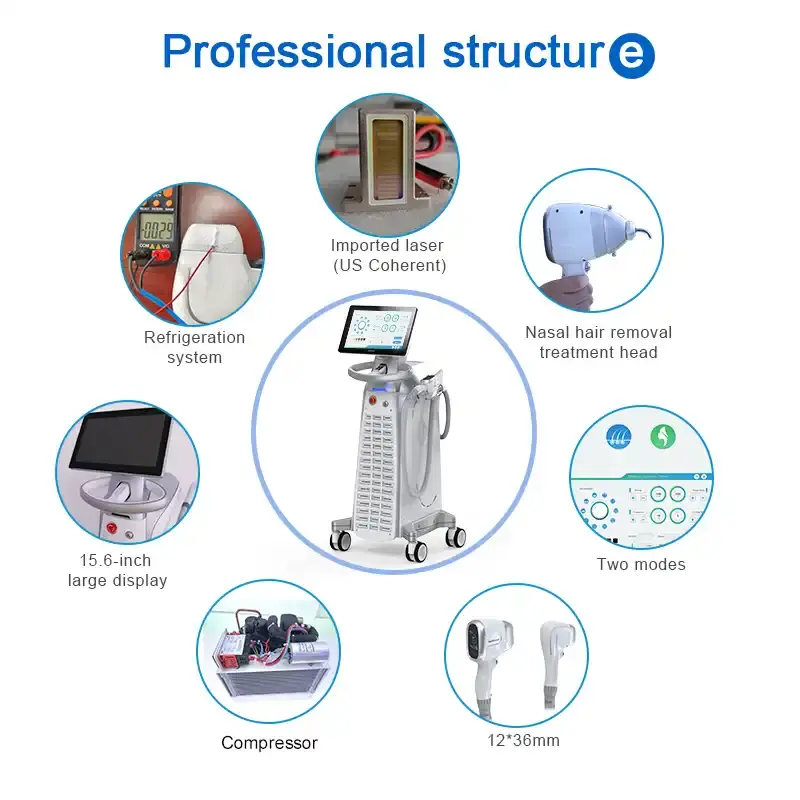
Alexandrite lasers (755nm) can treat skin more quickly, but they can only be used on lighter skin tones. Nd: YAG lasers (1064nm) can safely treat darker skin, but they usually need more rounds and more energy. Triple-wavelength smart diode laser hair removal devices combine the best features of both technologies into a single platform. The American Coherent laser bars in our systems keep putting out the same amount of energy for 50,000,000 shots, which is something that single-wavelength devices can't do.
ROI Considerations for Procurement Managers
Several things affect the total cost of ownership, which is different from the original buy price, when figuring out return on investment. Our systems come with power ranges from 600W to 2000W, so doctors can choose the capacity that best fits the number of patients they see. The 12x36mm spot size makes treatments go faster—a full back or both legs can be done in 15 to 20 minutes, which means more people can get appointments every day. With our two-year guarantee and CE/ISO13485 certifications, you can be sure that these machines will have regular running costs that make it easier to plan your budget.
Choosing the Best Smart Diode Laser Hair Removal Machine for Your Business
Critical Technical Specifications to Evaluate
Wavelength range affects how flexible a treatment can be. Systems with 755nm, 808nm, and 1064nm wavelengths give doctors the most options for treating a wide range of patients. The pulse length can be changed (usually between 10 and 400ms), which lets you make it fit hair of different thicknesses and depths. The size of the spot directly affects how fast it can be treated. Our 12x36mm design is the best compromise between covered area and edge accuracy. Operators can change the frequency settings (1-10Hz) to change the pulse repeat rates based on the hair density and sensitivity of the treatment area.
Power Output and Performance Scalability
The power of the laser has a big effect on how well and how quickly the treatment works. Entry-level 600W units work well in small shops with a small number of patients. Mid-range 800-1200W versions can meet the needs of growing offices with a variety of treatment needs. Medical spas with a lot of clients can keep meeting times short with high-capacity 2000W systems that provide healing energy levels. Our Italy pump, Japan cooler plate, and Taiwan power source parts make sure that the system works the same way in all power situations, which stops the thermal drift problems that happen with cheaper systems.
Smart Features That Enhance User Experience
The LCD screen handle shows the number of shots, the amount of energy being used, and the state of the cooling system in real time, so operators can get input right away during treatments. Pre-programmed treatment routines for common areas like the face, waist line, legs, and back cut down on setup time and error-prone parameter selection. Clinics with more than one site can connect to the cloud to keep track of how their devices are used, plan preventative maintenance, and look at treatment results across all of their equipment. With these digital features, gadgets that Smart diode laser hair removal used to be separate have become a single set of work tools.
Maintaining and Optimizing Smart Diode Laser Hair Removal Machines
Routine Maintenance Protocols
Cleaning the treatment handpiece window with optical-grade solutions every day keeps dust from building up, which stops energy from transferring. Checking the cooling system filters once a week makes sure that airflow isn't blocked, which protects laser parts from heat stress. Using testing cards given by the maker, monthly calibration checks make sure that the energy output stays the same. These easy steps, which are written down in maintenance logs, make devices last longer and keep treatments working well between professional service visits.
Software Updates and Feature Enhancements
Smart diode laser hair removal systems get firmware changes on a regular basis that use collected clinical data to improve treatment methods. Some of these changes could be new preset routines for new treatment trends or improved cooling sequences that make the users even more comfortable. Our expert team lets clients know when changes are ready and helps with installation from afar. Updating your software makes sure that your equipment stays competitive as standards change in the business.
Accessory Upgrades and Expansion Options
Clinics can add specific attachments to modular handpieces as their service offerings grow. Smaller spot sizes (10x10mm) make it possible to treat sensitive parts of the face more precisely. Better cooling devices are available for people with very sensitive skin or who want the most comfort. These small investments will make your device more useful for longer without having to buy new equipment. This will protect your capital spending while keeping up with market needs.
Real-World Results and Client Satisfaction with Smart Diode Laser Hair Removal
Treatment Protocol Expectations
Most hair removal methods need 6 to 8 sessions, spaced out 4 to 6 weeks apart, to cover all of the hair growth stages. After the first treatment, patients see a 15-20% decrease, and by the fourth session, the combined effects are very noticeable. It works best on coarse hair on the legs and waistline, but face hair may need more sessions because of hormonal changes. Setting reasonable goals during talks raises the number of completed tasks and the number of satisfied customers.
Pain Management and Comfort Levels
The Smart diode laser hair removal can be adjusted to five levels, so it can be tailored to each person's pain level. A lot of people say they feel warmth instead of sharp pain, especially when they compare it to waxing. This comfort benefit lowers worry about appointments and makes it easier to stick with treatment. Clinics say that when they use new cooling technologies instead of older laser systems, failure rates are lower and package finish rates are higher.
Safety Profile Across Diverse Populations
Smart diode laser hair removal systems that are properly adjusted have a great safety record for all Fitzpatrick skin types I-VI. By automatically reducing energy delivery on darker skin tones, the AI-assisted parameter selection stops common problems like discoloration or burns before they happen. Some rare side effects, like brief redness or slight swelling, usually go away in a few hours. This large safety gap gives doctors the confidence to treat a wide range of patients, which increases the size of the market they can reach.
Conclusion
Optical science, heat engineering, and artificial intelligence all come together in smart diode laser hair removal technology, which works on all skin and hair types and can be measured. It works because it uses advanced cooling systems, smart treatment customization, and exact wavelength targets that are not possible with other methods. When people in the beauty business are thinking about buying new tools, these systems offer strong benefits: faster treatments, more patients who can use them, better comfort, and clinically proven results. The technology is no longer just an experiment; it is now a safe way to make money, thanks to strong relationships with manufacturers and ongoing technical development.
FAQ
1. How many treatments does permanent hair removal require?
Most body parts need between 6 and 8 sessions to get rid of all hair, but results vary depending on hair color, thickness, biological factors, and treatment area. Hair grows in stages, and the laser can only successfully target follicles that are growing. Sessions should be 4-6 weeks apart to make sure that each growth stage is treated. Due to hormonal stimulation, parts of the face may need more sessions, but normal methods usually get good results for body areas.
2. Can diode lasers safely treat darker skin tones?
Modern triple-wavelength devices can safely treat people with Fitzpatrick skin types I through VI, even those with very dark skin and tans. The 1064nm frequency goes deep while limiting the uptake of melanin by the epidermis. This lowers the risk of burning. Smart systems change the amount of energy and the length of the pulses based on the skin tone they identify, adding an extra layer of safety. Clinics should make sure their equipment has this longer wavelength feature and that the people who work with it have been properly trained to work with a wide range of patients.
3. What differentiates smart systems from standard diode lasers?
Smart diode laser hair removal systems have features that regular devices don't have, like AI-driven skin analysis, automatic parameter change, and real-time tracking. These features cut down on operator mistakes, make sure that all treatments are of the same quality, and allow workers with less experience to give consistent results. Digital connection lets you diagnose and track the performance of multiple devices from afar. Standard diodes still work, but smart systems have practical benefits that are especially useful for businesses that are growing or have operations in more than one place.
Partner with Taibo Laser for Your Smart Diode Laser Hair Removal Equipment Needs
With smart diode laser hair removal technology that has been tested Smart diode laser hair removal and proven to work, Xi'an Taibo Laser is ready to help your beauty business grow. We've been making laser hair removal systems for 15 years and have improved every part of them, from the American Coherent laser bars that can deliver 50 million shots to the advanced cooling systems that make sure clients are comfortable. As a dedicated smart diode laser hair removal maker, we know how hard it is for beauty salons, dermatology clinics, and fitness centers across the US to find the right products. The CE and ISO13485 certifications show that our products are of high quality, and the two-year guarantee covers your purchase. Whether you need tools for a single site or a standard solution that can be used in multiple offices, our team can help you find the right technology for your business. You can email us at susan@taibobeauty.com to talk about your needs and get full product information that fits them.
References
1. Anderson, R.R., & Parrish, J.A. (1983). "Selective Photothermolysis: Precise Microsurgery by Selective Absorption of Pulsed Radiation." Science, 220(4596), 524-527.
2. Haedersdal, M., et al. (2011). "Long-pulsed Diode Laser versus Long-pulsed Alexandrite Laser for Hair Removal in Dark Skin." Dermatologic Surgery, 37(7), 943-950.
3. Lanigan, S.W. (2003). "Management of Unwanted Hair in Females." Clinical and Experimental Dermatology, 28(4), 369-373.
4. Garcia, C., et al. (2015). "Hair Removal Using an 810 nm Diode Laser: A Comparative Analysis of Efficacy and Safety." Journal of Cosmetic and Laser Therapy, 17(6), 316-322.
5. Ross, E.V., et al. (1999). "Comparison of Responses of Tattoos to Picosecond and Nanosecond Q-Switched Neodymium: YAG Lasers." Archives of Dermatology, 135(2), 167-171.
6. Sadighha, A., & Mohaghegh Zahed, G. (2009). "Meta-analysis of Hair Removal Laser Trials." Lasers in Medical Science, 24(1), 21-25.





YOU MAY LIKE