
What Is a Hair Loss Treatment Machine and How Does LLLT Regrow Thinning Hair?
2026-03-31 09:04:50
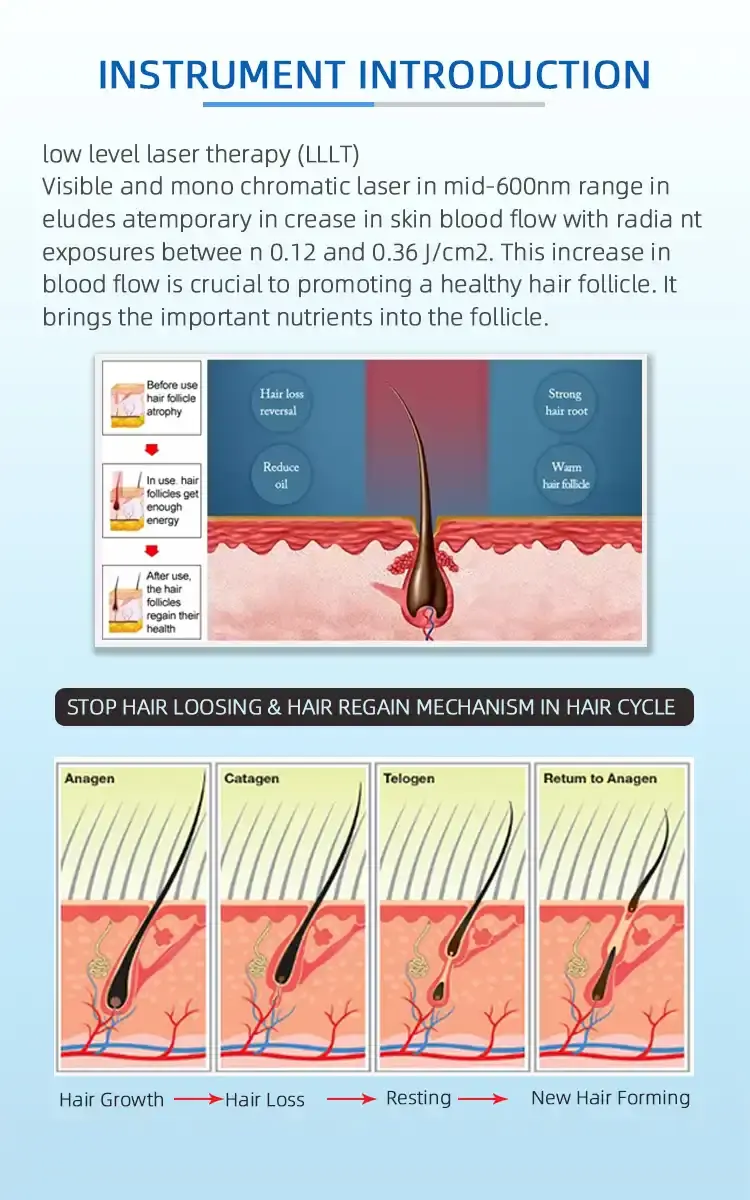
A hair loss treatment machine is a high-tech medical device that uses Low-Level Laser Therapy (LLLT) to stop hair loss and help hair grow back. These cutting-edge gadgets send out certain wavelengths of light, usually in the red spectrum around 650nm, that can reach deep into the head and speed up cell activity in hair follicles. LLLT is different from invasive surgeries or medicines that might have side effects because it uses light to boost ATP production in follicular cells. This stops the cells from shrinking and speeds up the change from resting to active growth phases.
Understanding Hair Loss Treatment Machines and LLLT Technology
The Science Behind Photobiomodulation Therapy
A revolutionary new way to treat androgenetic alopecia and other types of hair loss is low-level laser therapy. The technology works by stimulating cells in a way that coordinated light energy goes deep into the scalp (3-5 mm) and targets mitochondria in hair follicle papilla cells. This process directly activates Cytochrome C Oxidase, which is the main enzyme in cells that makes energy. According to a clinical study, LLLT effectively boosts the production of adenosine triphosphate (ATP), which is the main energy source for cells. Better production of ATP improves the metabolism of cells, which lets dormant follicles move from the telogen (sleeping) phase to the anagen (growth) phase. At the same time, the treatment improves local microcirculation, which makes sure that the scalp gets the right amount of nutrients.
Cellular Mechanisms and Hair Follicle Response
The therapeutic benefits are more than just giving you more energy. LLLT treatment machines set off a chain of good cellular responses that get to the root causes of hair loss. When weak follicular cells take in photons, they cause more protein to be made, better methods for fixing cells, and more collagen to be made in the surrounding tissue. Numerous studies in dermatology journals show that regular LLLT use can boost hair density by 20–35% after 16–26 weeks of treatment. People who are just starting to lose their hair (in the early to middle stages) respond best to this therapy because their hair follicles haven't completely stopped growing yet.
Strategic Advantages for B2B Procurement
Understanding LLLT technology is very important for procurement managers to make smart decisions. When it comes to client happiness, treatment effectiveness, and operational scalability, these devices are clear winners. Because it's non-invasive, there are no worries about medical problems happening. This lowers the risk of exposure and increases the number of people who could become clients. When businesses add laser therapy devices to their list of services, they can offer cutting-edge options that set them apart from rivals who only use traditional treatments. The technology has a history of success in hair loss treatment machines and is becoming more popular in the medical field. This makes it a good long-term investment and helps it place itself in the market.
Comparing Hair Loss Treatment Machines with Other Hair Loss Solutions
LLLT Versus Traditional Pharmaceutical Approaches
When looking at hair restoration choices, laser therapy devices are clearly better than traditional drug treatments. Topical minoxidil or oral finasteride needs to be used every day and may have side effects that affect the whole body. LLLT, on the other hand, treats only the affected area without putting chemicals into the body's systems. Pharmaceutical solutions often have trouble getting patients to follow through because they need to be used every day and could cause bad effects. Laser therapy sessions, on the other hand, usually happen twice or three times a week for 20 to 30 minutes each time. This makes the experience more handy and comfortable for clients.
LED Technology Versus Laser Precision
There are both LED and laser-based devices on the market, and each has its own benefits depending on the purpose. Lasers produce coherent, monochromatic light with precise control over wavelength, which allows for the best entry depth and targeting of cells. LED systems can reach more areas, but they might not be as intense or accurate for people who are losing a lot of hair. Laser devices made for professionals usually give better results because they can keep their power output and frequency stable. This dependability is very important when making treatment plans and making sure that results are predictable for a wide range of clients.
Portability and Deployment Considerations
Modern hair loss treatment machines come in various configurations to meet different operational requirements. Cordless devices offer flexibility for mobile services and space-constrained environments, while corded units provide consistent power delivery for high-volume clinical settings.
Here are the primary considerations for device selection:
- Clinical-grade stationary units: Designed for high-throughput medical practices with consistent power requirements and advanced monitoring capabilities
- Portable professional devices: Suitable for mobile practitioners and multi-location businesses requiring equipment transportation
- Hybrid systems: Combining corded reliability with battery backup options for operational flexibility
These configuration options allow businesses to align device capabilities with specific operational models and client service strategies. Understanding these distinctions helps procurement teams select equipment that optimizes both performance and practical deployment requirements.
Core Components and How Hair Loss Treatment Machines Work
Essential Technical Specifications
Professional laser therapy devices incorporate several critical components that determine treatment effectiveness and operational reliability. The laser diode arrays represent the heart of these systems, typically hair loss treatment machines featuring wavelengths between 630-670nm for optimal follicular penetration. Power output specifications usually range from 5-150mW per diode, with total system outputs reaching 1000-3000mW for comprehensive scalp coverage. Temperature control systems ensure consistent performance while protecting both device longevity and client safety. Advanced models incorporate real-time monitoring of diode temperatures, automatically adjusting power output to maintain optimal therapeutic parameters throughout treatment sessions.
Treatment Protocols and Session Management
Effective LLLT deployment requires adherence to established treatment protocols based on clinical research and manufacturer specifications. Standard treatment regimens involve 20-30 minute sessions conducted 2-3 times weekly for initial phases, typically spanning 16-26 weeks for visible results. Session frequency and duration depend on hair loss severity, client age, and individual response patterns. Professional devices often include preset programs that automatically adjust treatment parameters based on these variables, ensuring consistent therapeutic delivery while simplifying operation for practitioners.
Safety Profiles and Risk Management
LLLT technology has a great safety record when it is used correctly. Because low-level lasers don't damage flesh, there are no risks of thermal damage, and the wavelengths used keep you from being exposed to harmful UV radiation. Some common reasons not to get it done are being pregnant, having an active scalp infection, or taking photosensitising medicines at the same time. Professional training classes help professionals learn how to use devices correctly, how to screen clients, and what to do in an emergency. These training parts help practitioners follow the rules and build their confidence in using technology.
Insights into the Hair Loss Treatment Machine Market for B2B Clients
Regulatory Landscape and Compliance Standards
A lot of rules and regulations cover the market for hair loss treatment machines. In the US, FDA approval is the main test for gadget safety and effectiveness. In order to get a medical device classified as a Class II, makers must show that their products are substantially equivalent to predicate devices through strict testing procedures. ISO 13485 approval means that the quality management system is complete, and CE marking means that the product meets European safety standards. These certifications give procurement teams objective ways to judge the credibility of a maker and the dependability of a product.
Market Leaders and Competitive Analysis
Well-known companies have put a lot of money into research and development, which has led to gadgets that have been clinically proven to work. Leading brands usually offer full support packages that include training programs, marketing materials, and technical support services. These packages make long-term partnerships more valuable. New manufacturers often offer reasonable prices and ways to customise their products, which appeals to certain groups of people. But when making a procurement choice, people should weigh the costs of different things, like warranty coverage, the availability of replacement parts, and the ability to provide ongoing technical support.
Investment Models and ROI Considerations
Pricing structures vary significantly based on device sophistication, manufacturer positioning, and purchase volume. Professional-grade systems typically range from $15,000 to $75,000, with bulk purchase hair loss treatment machine agreements and OEM partnerships offering substantial cost reductions for qualified buyers.
Here are the key financial considerations that impact procurement decisions:
- Initial equipment investment: Including device cost, training, and installation requirements
- Operational expenses: Maintenance contracts, replacement parts, and energy consumption
- Revenue potential: Treatment pricing models and client volume projections
- Competitive positioning: Premium pricing opportunities and market differentiation benefits
These financial factors require careful analysis to ensure sustainable profitability while maintaining competitive service pricing. Successful deployment often depends on achieving an optimal balance between equipment capabilities and market positioning strategies.
Making the Decision: How to Choose the Right Hair Loss Treatment Machine for Your Business
Defining Target Market and Client Needs
To choose the right device, you should first do a full analysis of the types of people you want to serve and how you will offer services. Some high-end medical practices may put more value on advanced features and good looks than on monitoring capabilities. On the other hand, businesses that focus on volume may put more value on efficiency and durability than on advanced monitoring features. Where you live also affects your choice of gadget, since different markets have different rules, power standards, and service availability. Understanding these factors helps buying teams avoid problems with compatibility and ensures that operations will run smoothly for a long time.
Evaluation Metrics and Performance Indicators
Objective evaluation criteria let people make decisions based on facts that are in line with business goals. Treatment effectiveness rates, client satisfaction scores, device reliability metrics, and return on investment timelines are some of the key success markers. Clinical outcome data from studies done by the maker give us a good idea of what to expect from the treatment. This isn't always the case, though, because practitioner skill, client compliance, and environmental factors that affect application success can all change how well it works in the real world.
Customization and Scalability Options
Modern manufacturers give businesses a lot of ways to customise their devices so that they meet their unique operational needs. OEM partnerships make private labelling and custom feature development possible, and white-label programs offer full, turnkey ways to get into the market. When a business grows and might need more gadgets or better features, scalability issues become very important. Modular designs and expansion choices allow for natural growth while protecting the money spent on training and equipment at the start.
Conclusion
Hair loss treatment tools that use LLLT technology, such as hair loss treatment machines, are a scientifically proven way to stop hair loss and help hair grow back. These high-tech devices have many benefits over traditional treatments, such as not requiring surgery, having few side effects, and being very safe. Procurement professionals can make choices that are in line with business goals and provide better results for clients when they understand the technical specifications, market landscape, and selection criteria.
FAQ
1. How long does it take to see results from LLLT hair loss treatment?
Most clients begin noticing improvements within 12-16 weeks of consistent treatment, with optimal results typically achieved after 24-26 weeks. Individual response times vary based on hair loss severity, age, and genetic factors affecting follicular health.
2. Is LLLT safe for all types of hair loss?
LLLT proves most effective for androgenetic alopecia and diffuse thinning conditions. Complete baldness or scarred areas may not respond to treatment, as viable follicular structures are required for therapeutic response.
3. What maintenance is required for professional laser therapy devices?
Regular maintenance includes diode calibration, cooling system cleaning, and software updates. Most manufacturers recommend annual service inspections to ensure optimal performance and extend equipment lifespan.
4. Can LLLT be combined with other hair loss treatments?
Yes, LLLT often enhances the effectiveness of other therapies, including PRP treatments, topical medications, and nutritional supplements. Combined approaches may accelerate results while addressing multiple factors contributing to hair loss.
5. What training is required for operating professional devices?
Most manufacturers provide comprehensive training programs covering device operation, safety protocols, and treatment planning. Certification requirements vary by jurisdiction, with some regions requiring medical supervision for professional treatments.
Discover Advanced Hair Loss Treatment Solutions with TB
TB stands at the forefront of laser therapy innovation, offering premium hair loss treatment machines designed for professional applications. Our comprehensive product line combines cutting-edge LLLT technology with reliable engineering to deliver consistent therapeutic outcomes. As a trusted hair loss treatment machine manufacturer, we provide complete support packages including training, marketing materials, and ongoing technical assistance. Contact susan@taibobeauty.com to explore our latest innovations and discover how our solutions can enhance your service offerings while maximizing return on investment.
References
1. Avci, P., Gupta, G.K., Clark, J., Wikonkal, N., & Hamblin, M.R. (2014). Low-level laser therapy for hair growth: mechanisms and clinical applications. Lasers in Medical Science, 29(4), 1261-1267.
2. Lanzafame, R.J., Blanche, R.R., Bodian, A.B., Chiacchierini, R.P., Fernandez-Obregon, A., & Kazmirek, E.R. (2013). The growth of human scalp hair mediated by visible red light laser and LED sources in males. Lasers in Surgery and Medicine, 45(8), 487-495.
3. Jimenez, J.J., Wikramanayake, T.C., Bergfeld, W., Hordinsky, M., Hickman, J., Hamblin, M.R., & Schachner, L.A. (2014). Efficacy and safety of a low-level laser device in the treatment of male and female pattern hair loss. American Journal of Clinical Dermatology, 15(2), 115-127.
4. Barikbin, B., Khodamrdi, Z., Kholoosi, L., Mansouri, P., Haj Manouchehri, M., & Molania, T. (2018). Comparison of the effects of 665 nm low level diode Laser Hat versus and a combination of 665 nm and 808nm low level diode Laser Scanner of hair growth in androgenic alopecia. Journal of Cosmetic and Laser Therapy, 20(1), 52-57.
5. Sergott, T.J., Moral, A.L., Kesten, B.M., & Markowitz, L. (2010). Clinical evaluation of a laser comb for the treatment of male pattern baldness. Clinical Drug Investigation, 30(5), 285-292.
6. Darwin, E., Heyes, A., Hirt, P.A., Wikramanayake, T.C., & Jimenez, J.J. (2018). Low-level laser therapy for the treatment of androgenic alopecia: a review. Lasers in Medical Science, 33(2), 425-434.





YOU MAY LIKE