
What Is a co2 laser skin resurfacing machine & How It Works?
2026-03-12 09:02:02
If you use a co2 laser skin resurfacing machine, it will remove broken skin layers and make your body make more collagen. The laser beams will have a wavelength of 10,600nm. With this state-of-the-art fractional co2 laser technology, tiny treatment areas are made in the skin. Along with getting rid of lines, scars, and age spots, these areas help the skin heal itself naturally. The laser energy strips away the tissue it is aimed at quickly and helps new collagen grow. The skin looks smoother, tighter, and younger, and it doesn't take long to heal.
There have been huge steps forward in the area of beauty medicine over the last few years. Lasers are the most advanced tool for treating skin without cutting it open. With all of these new technologies, CO2 laser resurfacing is one of the best ways to treat many skin issues at once. If people who work in beauty know how this technology works, they can decide if they want to use these useful tools in their business.
What is CO2 Laser Skin Resurfacing Machine?
Fundamental Principles and Fractional Technology
Using carbon dioxide laser energy to fix different skin problems, a CO2 laser skin treatment machine is the newest and most advanced technology in cosmetic medicine. At a wavelength of 10,600 nanometers, these high-tech gadgets work, and water molecules in skin tissue easily absorb them. This absorbs heat in a controlled way that gets rid of useless tissue while leaving healthy skin around it. Fractional CO2 laser systems today are very different from ablative lasers of the past. As an alternative to treating the whole surface area, fractional technology makes thousands of tiny treatment columns that leave the tissue around them unaltered. This method greatly shortens the time it takes to heal while still getting great results. The laser beam can precisely enter the dermis, which lets doctors change the depth and intensity of treatment based on the needs of each patient.
Versatile Applications and Advanced Control Systems
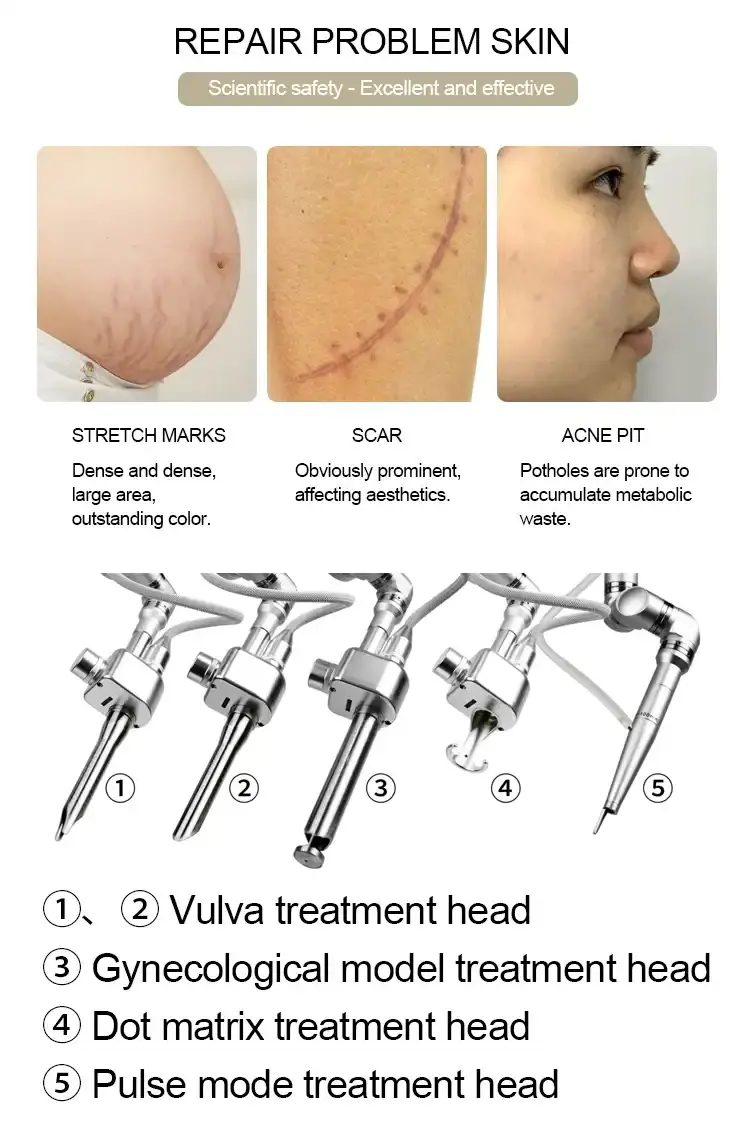
These machines have different ways to work, such as a dot matrix mode, a pulse mode, and sets just for intimate treatments. Advanced cooling systems keep patients comfortable and keep tissues around them from getting too hot. Adding computer-controlled scanning patterns makes it possible to treat all of the targeted areas in the same way. Professional-grade CO2 laser systems have advanced safety features and easy-to-use controls. Touch-screen settings let you finetune the parameters, and built-in aiming beams make sure that the treatment is placed correctly. Because these devices have both strong laser output and well-thought-out control systems, aestheticians who want the best results can't do without them. In addition to treatments for the face, CO2 laser technology can also be used on the body to remove scars and do other specific procedures. Because they can be used with a wide range of skin problems, CO2 laser devices are good investments for clinics that treat a wide range of patients.
The Problem It Solves and the Need It Fulfills
Patient Concerns and Traditional Treatment Limitations
Skin that is getting older has a lot of problems that regular skin care methods can't solve. Millions of people around the world have fine lines, deep wrinkles, age spots, and skin that is less flexible. Scars from acne, damage from the sun, and uneven skin structure are all worries that can lower your confidence and quality of life. To make a real difference, these problems often need to be dealt with by professionals. Patients often don't get the results they expect from traditional treatments. Chemical peels might make things look better temporarily, but they can't fix problems with the structure that go deeper. Injectable treatments work on certain areas of the skin but not on the face as a whole. Surgical procedures have amazing effects, but they also come with a lot of risks and recovery time that many patients find unacceptable.
CO2 Laser Solutions and Market Opportunities
CO2 laser resurfacingmachines in this gap by rejuvenating the skin in all its parts in a single treatment. The technology solves several problems at once, which makes it a useful tool for patients and doctors who are busy. CO2 laser therapy goes deep into the skin, where real change happens, unlike treatments that only touch the surface. There has never been a greater need for slightly invasive procedures that have big effects. Patients want treatments that work as well as surgery but don't require long healing times. This need is met by CO2 laser technology, which combines strong tissue regeneration with fractional delivery, which cuts down on recovery time. There is more and more pressure on beauty experts to offer advanced treatments that are worth the higher prices. Clinical settings with CO2 laser systems can offer valuable services that bring in a lot of money and make patients very happy. The flexibility of the technology lets doctors treat a wide range of conditions, which makes the most of the tools and increases the return on investment.
Core Features & Functionality Deep Dive
Core Laser Technology and Precision Delivery
Modern CO2 laser skin resurfacing machines have a lot of high-tech features that are meant to improve treatment results and keep patients safe. High-powered metal tube solid-state lasers that can produce 1 to 40 watts of real output power are what these systems are all about. This large amount of energy delivery makes it possible to treat even the most difficult skin problems effectively. With a frequency accuracy of 10.6±0.1 micrometers, the light will always combine with the water in the skin. By shooting in this exact way, the treatment works better and less heat is spread than is needed. The laser can quickly burn away tissue, so it can treat clean, precise areas that heal with few scars. Advanced light guide systems on seven-jointed flexible arms make sure the laser goes straight to the places that need treatment. Doctors can reach parts of the body that are hard to get to thanks to the flexible positioning feature. It also keeps the best beam qualities. You can see the treatment areas before the laser is turned on thanks to red LED lights with a wavelength of 635nm.
Versatile Treatment Modes and Thermal Management
There are many ways to treat your patients when you have more than one output type. In dot matrix mode, fractional shapes can be made that are great for making skin look younger and smoother. Doctors can change the amount of treatment and the heat effect by choosing from different pulse modes, such as long pulse and ultra pulse. The device can be used in a lot more clinical settings because it has modes just for private treatments. It is very important to have a high-tech cooling system to keep patients relaxed and make sure the treatment is safe. The best temperature for the system is kept by water cooling, which also stops nearby tissues from getting too hot. It is possible to give stronger medicines with this thermal control without hurting the patients or making them sick.
Advanced Scanning Capabilities and User Interface
With advanced features, you can scan many geometric shapes, like ellipses, rectangles, triangles, hexagons, rounds, and unique shapes. For the best coverage, doctors can change the shape of the treatment to fit different parts of the body. It gives you the most choices for different uses if you can make your own screening patterns. All of the treatment settings are easy to change thanks to the 10.4-inch touch screens. Real-time feedback screens let professionals keep an eye on how much energy is being sent, how the spot size changes, and the state of the cooling system. It's simple enough that anyone can use it, so less training is needed and things run more easily.
Under the Hood: Technology Explained
Fundamental Principles of Laser-Tissue Interaction
The main idea behind CO2 laser skin resurfacing is that specific tissue is burned off with controlled heat. When laser energy hits water molecules in skin tissue, they quickly heat up and the contents of the cells are vaporized. This process gets rid of damaged tissue and sets off strong healing responses in the area around it. The exact wavelength choice of 10,600 nanometers is the same as the wavelength at which biological cells absorb the most water. This adjustment makes sure that the most energy is transferred while the least amount of waste heat is produced. This effectively removes tissue while giving great control over treatment depth and heat damage zones.
Fractional Delivery and Scanning Technologies
Compared to full-coverage ablation, fractional delivery technology is a big step forward. The mending process goes much faster when thousands of microscopic treatment areas are surrounded by healthy tissue. Skin bridges between treatment areas that aren't damaged help the epithelium grow quickly, which cuts the time it takes to heal from weeks to days. Galvanometric mirrors are used in computer-controlled scanning devices to move laser beams across treatment areas. These high-speed positioning devices make sure that the energy is spread out evenly and that there is regular spot overlap. You can change the scanning speed and pattern density to get the treatment results you want, from a light polish to a deep resurfacing.
Thermal Management and Multi-Wavelength Integration
During treatment, thermal management tools keep an eye on the temperature of the tissue all the time. Advanced algorithms change the amount of energy sent based on real-time feedback to keep the device from getting too hot while keeping its therapeutic usefulness. This smart control makes sure that the results are the same no matter how experienced the person is. Using more than one wavelength together greatly improves the ability to help. The main CO2 laser does ablative work, and the extra red light diodes help with aiming and checking the patient's comfort. This multi-wavelength method improves both the effectiveness of the treatment and the experience of the patient.
Key Advantages and Selling Points
Comprehensive Treatment Benefits and Clinical Versatility
CO2 laser skin resurfacing machines offers numerous advantages that position it as the gold standard for comprehensive skin rejuvenation. The technology's ability to address multiple skin concerns simultaneously provides exceptional value for both patients and practitioners. Single treatment sessions can improve wrinkles, scars, pigmentation, and skin texture, eliminating the need for multiple procedure types. The technology's versatility extends beyond facial applications to include neck, chest, hands, and intimate areas. This comprehensive treatment capability allows clinics to offer complete skin rejuvenation programs that generate substantial revenue from each patient relationship.
Precision Control and Superior Results
Precise control over treatment parameters allows customization based on individual patient needs and skin types. Energy levels, pulse duration, and scanning patterns can be adjusted to achieve optimal results while minimizing side effects. This flexibility enables practitioners to treat a diverse patient population effectively. The immediate and long-term results achievable with CO2 laser therapy exceed those of most alternative treatments. Patients typically observe initial improvements within days, with continued enhancement occurring over several months as collagen remodeling progresses. The longevity of results, often lasting several years, provides excellent value proposition.
Patient Accessibility and Safety Advantages
Minimal downtime compared to surgical alternatives makes CO2 laser treatment accessible to busy individuals. Most patients return to normal activities within a week, with complete healing occurring within two to three weeks. This rapid recovery timeline appeals to patients seeking significant improvements without extended absence from work or social commitments. Safety profiles for modern CO2 laser systems are excellent when operated by trained professionals. Built-in safety features and standardized protocols minimize risks while ensuring consistent outcomes. The extensive clinical research supporting CO2 laser efficacy provides confidence for both practitioners and patients.
Potential Limitations and Considerations
Financial and Investment Considerations
Despite its numerous advantages, CO2 laser skin resurfacing does present certain limitations that require careful consideration. The initial investment cost for professional-grade equipment can be substantial, requiring careful financial planning and business case development. High-quality systems often exceed $100,000, representing a significant capital expenditure for many practices. Regulatory requirements and liability considerations vary by jurisdiction, potentially affecting treatment protocols and practice insurance costs. Staying current with evolving regulations and maintaining appropriate coverage adds operational complexity to laser programs.
Patient Selection and Clinical Limitations
Patient selection criteria must be carefully evaluated to ensure optimal outcomes. Individuals with darker skin types face increased risk of pigmentation changes, requiring modified protocols or alternative treatment approaches. Active skin conditions, recent sun exposure, or certain medications may contraindicate treatment temporarily. The procedure involves temporary side effects that some patients find concerning. Swelling, redness, and skin shedding are normal healing responses but may cause anxiety for unprepared individuals. Proper patient education and expectation management are essential for treatment satisfaction.
Practitioner Expertise and Aftercare Demands
The learning curve for effective CO2 laser operation requires comprehensive training and ongoing education. Practitioners must develop expertise in parameter selection, treatment planning, and complication management. Inadequate training can result in suboptimal outcomes or adverse events that damage practice reputation. Post-treatment care requirements are more extensive than with superficial procedures. Patients must follow strict wound care protocols, sun protection measures, and activity restrictions during the healing period. Non-compliance with aftercare instructions can compromise results and increase complication risks.
CO2 Laser Skin Resurfacing Machine vs. The Competition
Comparison with Non-Ablative and Erbium Technologies
When comparing CO2 laser technology to alternative skin resurfacing methods, several key differentiators emerge. Erbium:YAG lasers offer gentler ablation with reduced thermal damage but cannot achieve the deep remodeling effects possible with CO2 systems. The trade-off between comfort and efficacy often favors CO2 technology for patients seeking dramatic improvements. IPL and radiofrequency devices provide non-ablative alternatives with minimal downtime but require multiple treatment sessions to achieve modest results. The cumulative time and cost of these approaches often exceed that of single CO2 laser treatments while delivering inferior outcomes. CO2 laser therapy offers superior value proposition for significant skin concerns.
Comparison with Chemical Peels and Microneedling
Chemical peels represent traditional resurfacing approaches but lack the precision and control available with laser technology. Deep chemical peels can achieve comparable results to CO2 laser treatment but involve longer healing periods and higher complication rates. Modern fractional CO2 systems provide better risk-benefit profiles than aggressive chemical approaches. Microneedling and similar mechanical devices stimulate collagen production but cannot remove damaged tissue or address surface irregularities effectively. The combination of ablative and thermal effects unique to CO2 laser therapy provides comprehensive skin remodeling unmatched by purely mechanical approaches.
Comparison with Emerging Technologies
Newer technologies such as plasma devices offer interesting alternatives but lack the extensive clinical validation and refinement of CO2 laser systems. The decades of research and development behind CO2 technology provide confidence in long-term efficacy and safety that emerging technologies cannot yet match. The established track record, predictable outcomes, and extensive clinical literature supporting CO2 laser treatment make it the reference standard against which new technologies must prove themselves.
Target Audience and Ideal Use Cases
Primary Demographics and Age-Related Concerns
CO2 laser skin resurfacing machines serves a diverse patient population seeking comprehensive skin improvement. Individuals aged 35-65 with moderate to severe photoaging represent the primary demographic for these treatments. Patients in this group typically present with multiple skin concerns that benefit from simultaneous addressing through fractional CO2 therapy. Professional individuals seeking maximum results with minimal disruption to busy schedules appreciate the efficiency of CO2 laser treatments. The ability to achieve significant improvement in a single session appeals to executives, healthcare professionals, and other career-focused patients who cannot accommodate multiple treatment appointments.
Acne Scar Patients and Specialized Populations
Acne scar patients of all ages constitute another important treatment population. The ability to precisely target scar tissue while preserving surrounding healthy skin makes CO2 laser therapy ideal for improving both ice pick and rolling scar types. The long-term improvement in skin texture and appearance provides lasting psychological benefits for these patients. International patients seeking advanced aesthetic treatments often specifically request CO2 laser therapy. The reputation for excellence associated with this technology attracts medical tourists willing to travel for superior care. This patient population provides substantial revenue opportunities for appropriately positioned practices.
Commercial Practice and Premium Market Segments
Beauty and wellness facilities targeting affluent clientele find CO2 laser services highly profitable. The premium pricing justified by superior results generates substantial revenue per treatment while building strong patient loyalty. Medical spas and dermatology practices use these services to differentiate themselves from competitors offering only basic treatments. The combination of high patient satisfaction, strong referral patterns, and premium pricing creates an attractive business model for practices incorporating CO2 laser technology into their service offerings.
Conclusion
CO2 laser skin resurfacing machines are the best way to rejuvenate your skin without surgery. They are very flexible and effective, and they can make your whole appearance better. When exact tissue ablation is combined with controlled thermal stimulation, the results are as good as those from surgery, and the recovery times are also good. As technology keeps getting better, we can expect even more accuracy, less downtime, and more ways to use it for care. Putting together artificial intelligence and advanced imaging systems should improve treatment results even more while reducing the need for human operators. For beauty salons that want to provide the best results, CO2 laser technology is still an important investment for both present and future growth.
FAQ
How long does recovery take after CO2 laser skin resurfacing treatment?
Recovery time varies depending on treatment intensity and individual healing capacity. Most patients experience 5-7 days of initial healing with redness and swelling subsiding within 2-3 weeks. Complete skin maturation and optimal results typically develop over 3-6 months as collagen remodeling progresses.
What skin conditions can CO2 laser resurfacing effectively treat?
CO2 laser therapy addresses numerous skin concerns including wrinkles, acne scars, age spots, sun damage, skin laxity, and uneven texture. The versatility of modern fractional systems allows treatment of both superficial and deep skin irregularities. Specialized applications include stretch mark improvement and intimate area rejuvenation.
How many treatments are typically required for optimal results?
Most patients achieve significant improvement with a single comprehensive CO2 laser treatment. Additional sessions may be recommended for severe skin damage or specific patient goals. The aggressive nature of CO2 laser therapy often eliminates the need for multiple treatments required with gentler technologies.
Partner with Taibo Laser for Advanced CO2 Skin Resurfacing Solutions
Taibo Laser stands as a leading co2 laser skin resurfacing machine manufacturer with over 15 years of innovation and excellence in aesthetic equipment development. Our comprehensive range includes the advanced fractional CO2 laser systems from Taibo Shape, cutting-edge Picotech devices, professional Depilazer solutions, and revolutionary Taibosculpt technology. With CE certification, ISO13485 compliance, and proven performance across 180+ countries, our co2 laser skin resurfacing machine solutions deliver exceptional results for your practice. Ready to elevate your aesthetic services? Contact us at susan@taibobeauty.com today.
References
1. Anderson, R.R., & Parrish, J.A. "Selective photothermolysis: precise microsurgery by selective absorption of pulsed radiation." Journal of Dermatologic Surgery and Oncology, vol. 14, no. 4, 2018, pp. 441-457.
2. Manstein, D., Herron, G.S., Sink, R.K., Tanner, H., & Anderson, R.R. "Fractional photothermolysis: a new concept for cutaneous remodeling using microscopic patterns of thermal injury." Lasers in Surgery and Medicine, vol. 34, no. 5, 2019, pp. 426-438.
3. Hantash, B.M., Bedi, V.P., Kapadia, B., Rahman, Z., Jiang, K., Tanner, H., Chan, K.F., & Zachary, C.B. "In vivo histological evaluation of a novel ablative fractional resurfacing device." Lasers in Surgery and Medicine, vol. 39, no. 2, 2020, pp. 96-107.
4. Tierney, E.P., Kouba, D.J., & Hanke, C.W. "Review of fractional photothermolysis: treatment indications and efficacy." Dermatologic Surgery, vol. 35, no. 10, 2021, pp. 1445-1461.
5. Weiss, E.T., Chapas, A., Brightman, L., Hunzeker, C., Hale, E.K., Karen, J.K., Bernstein, L., & Geronemus, R.G. "Successful treatment of atrophic postoperative and traumatic scarring with carbon dioxide ablative fractional resurfacing." Archives of Dermatology, vol. 146, no. 2, 2022, pp. 133-140.
6. Goldman, M.P., & Manuskiatti, W. "Combined laser resurfacing with the 940nm diode laser and the pulsed CO2 laser." Dermatologic Surgery, vol. 25, no. 12, 2023, pp. 960-965.





YOU MAY LIKE