
What is a CO2 fractional laser and how does it rejuvenate skin?
2026-09-09 09:08:43
The fractional co2 laser is a milestone in esthetic treatment. It uses the highly concentrated carbon dioxide laser energy at 10,600 nm to produce dramatic skin rejuvenation. While conventional ablative CO2 lasers vaporize whole layers of skin, fractional technology distributes energy in very small columns termed Micro Thermal Zones (MTZs) with adjacent tissue intact to promote faster healing. It ignites profound collagen remodeling and cuts down recovery time dramatically. This treatment is the most effective way to combat severe acne scars, wrinkles, photodamage and abnormalities of texture. For esthetic clinics seeking to broaden their treatment portfolios, knowing the mechanics and procurement considerations of this technology is crucial to achieving improved patient results and optimizing return on investment.
Understanding CO2 Fractional Laser Technology
The Science Behind Fractional Photothermolysis
Only epidermal water molecules receive CO2 laser frequencies. Water evaporates as the laser beam passes through the skin and dermis. This generates controlled thermal damage, which initiates the body's wound healing process. Fractional delivery divides a laser beam into thousands of 0.1-mm beams. The microbeams only treat tiny regions of the skin, leaving healthy tissue gaps. These untreated regions contain healthy cells that swiftly travel to injured areas, reducing healing time from weeks to days.
Thermal damage extends beyond the ablation crater. Heat penetrates the dermis laterally and vertically, breaking down collagen and rebuilding it over three to six months. Stimulate fibroblasts to generate type I and type III collagen fibers. Broken collagen is progressively replaced by these fibers. This technique progressively smooths skin and reduces scars and wrinkles.
Key Clinical Benefits and Applications
Fractional co2 laser treatment addresses several skin issues. Due to its ability to break down fibrotic scar tissue and promote collagen development, the laser is ideal for deep acne scars. Restoring dermal thickness and elasticity smooths creases around the eyes, lips, and forehead. Uneven pigmentation and sun-damaged keratinocytes are removed, leaving skin clean and even. The device can also treat pregnant stretch marks, surgical scars, and vulvar rejuvenation using specific handpieces.
Recovery involves three to seven days of redness and minor edema. This will leave their skin dry and flaky for a week as the epidermis comes back. Older completely ablative treatments required two weeks of social downtime and increased scarring and skin color hazards. However, fractional techniques are safe and effective, making them suitable for many skin types and hectic patient lives.

Safety Protocols and Treatment Parameters
Nowadays, fractional CO2 devices contain various safety features and adjustable settings. Pulse width determines heat penetration depth. Longer pulses reduce bleeding during deeper treatments, whereas ultra-short pulses limit tissue damage. Energy density (fluence) in millijoules per microbeam controls ablation depth and thermal damage. Coverage % indicates how much of the skin is treated each time. Careful covering of 20–30% is preferable for delicate regions, whereas vigorous coverage of 60–70% speeds up severe situations.
Modern gadgets feature water-cooling systems to preserve the epidermis while treating you. Seven-jointed flexible arms direct the beam to hard-to-reach areas like the periorbital without wasting energy. Operator training is still crucial to avoid burns, hyperpigmentation, and scarring. Clinics must arrange for patient selection, pre-treatment skin preparation, Fitzpatrick skin type criteria, and post-procedure sunscreen and barrier repair treatments.
Comparing Fractional CO2 Laser with Other Skin Rejuvenation Technologies
Erbium Lasers vs. CO2 Systems
Erbium:YAG lasers (2,940nm wavelength) function differently from CO2 technology. Erbium wavelengths are absorbed twelve times more by water than CO2. This improves ablation accuracy and reduces heat damage. The body recovers quicker, however collagen isn't stimulated or tightened as much as with CO2 systems. Erbium aids those who wish to recover with little downtime. However, CO2 lasers may penetrate deeper and induce collagen for deep scars, significant wrinkles, and photodamage.
Many high-tech clinics update both technologies and pick the ideal one for each patient. Erbium systems are suitable for lesser difficulties or risk-averse persons, whereas CO2 fractional lasers are best for significant rebuilding. Knowing these distinctions helps procurement professionals create device portfolios that operate well together and suit all patient and treatment demands.
Non-Ablative Options: IPL and Radiofrequency
Radiofrequency (RF) and intense pulsed light (IPL) devices are non-ablative options that don't damage the surface at all, unlike the fractional co2 laser which is ablative. IPL works by selectively heating up chromophores like melanin and hemoglobin. This successfully treats vascular tumors, pigmented spots, and light photodamage. Radiofrequency warms lower layers of tissue to make collagen grow without hurting the epidermis. Both technologies have no downtime and cause little pain, which makes them appealing to patients who want to get better slowly without being bothered by their friends and family.
The trade-off is in how well it works. It takes more than one session of a non-ablative treatment to see results that are still not as dramatic as those from a single aggressive fractional CO2 treatment. They can't effectively treat deep scars or major textural irregularities. Clinics that treat younger people or people who want to stay healthy often offer non-ablative options as entry-level procedures, while fractional co2 lasers are only for people who have obvious signs of aging or scarring and are willing to wait a little while for results that will change their lives.
Microneedling and Chemical Peels
Microneedling makes controlled micro-injuries by puncturing the skin with needles instead of using heat, which causes the same collagen-inducing effects. Acids are used in chemical peels to remove damaged top layers. Compared to laser systems, both of these have lower tool costs and are easier to use. Combining microneedling with platelet-rich plasma or growth factors makes the treatment work better. Chemical peels are a reliable and affordable way to fix minor texture and color problems.
When it comes to treating serious conditions, neither technology is as good as fractional co2 lasers. Deep acne scars, advanced photoaging, and deep wrinkles all need the exact depth and intensity of thermal damage that can only be delivered by lasers. Clinics should see these methods as complementary rather than competitive, and they should use them to keep patients healthy between laser treatments or for people who can't have laser therapy because they have active illnesses, unrealistic hopes, or can't follow the post-treatment instructions.
Procurement Considerations for Fractional CO2 Laser Devices
Critical Technical Specifications
When evaluating fractional co2 laser systems, procurement specialists must consider several technical criteria. Actual laser power output should exceed quoted. Devices labeled 40W should offer proven power above that amount to ensure long-term clinic performance. Regular spot size and precise depth measurement depend on beam quality. TEM00 Gaussian beam profiles perform best. At least 85% transmission efficiency is needed for articulated arm systems to deliver beams without losing energy.
Multiple output modes provide flexibility. Dot matrix (fractional) resurfacing and scar correction are possible. Pulse mode with customizable pulse widths allows surgeons remove skin tags and lesions. Modern vaginal rejuvenation and vulvar clinics with specific handpieces may generate more money. Inability to alter modes limits what devices can mend and how much they can create. A 10.4-inch touchscreen display simplifies parameter changes and speeds up complicated treatment regimens.
Regulatory Compliance and Certification
The rules for medical devices are very different in different countries. The EU Medical Device Regulation (MDR) says that all medical devices sold in clinics in Europe must be CE certified. This means that they must go through strict safety and performance tests. For US countries, products must have FDA 510(k) clearance or approval. The manufacturer's quality management system meets international standards for making medical devices, as shown by the ISO 13485:2016 certification. Clinics that work in more than one state should make sure that their sources offer full technical paperwork packages that make it easier to get registered in target markets.
Clinics run big legal and financial risks when they buy equipment that doesn't have the right certifications. If you break the rules, you could get fined, have your device taken away, or have your practice stopped. If you get hurt while using tools that isn't approved, your insurance may not cover it anymore. Certifications show that the product is made well and that the plan is true, in addition to being legal. When it comes to reliability and safety, devices made by companies with multiple international certifications usually perform better than those that don't have full regulatory approval.
Financial Analysis and Total Cost of Ownership
Initial fractional co2 laser purchases range from $30,000 to $80,000, depending on the type, brand, and accessories. Clinics must consider both startup and operating expenses. Safety glasses, single-use tips, and topical anesthetics are consumables. Maintenance programs that encompass annual checkups, calibrations, and emergency repairs prevent unexpected downtime. There are several warranties. Industry-standard two-year guarantees cover parts and labor, but extended warranties are expensive.
Possible income must cover acquisition expenditures. A single full-face fractional CO2 treatment costs $800–$2,500 in established countries, depending on aggressiveness and location. With three treatments a week, one device may earn $125,000–$390,000. Adding genital rejuvenation, scar removal, and stretch mark therapy boosts business and customer numbers. Clinics should consider payback times, patient numbers, market pricing changes, and operational margins before buying. Devices with OEM modification and several handpieces may make more money.
Best Practices for Implementing Fractional CO2 Laser in Clinical Settings
Patient Selection and Contraindication Screening
Good outcomes start with selecting the correct patients. Good candidates include moderate to severe photoaging, deep acne scars, many wrinkles, or textural faults that don't respond to conventional treatments. They have realistic expectations, know how to recover, and can follow post-treatment instructions like staying out of the sun and fixing barriers. Fitzpatrick skin types I–III may tolerate severe treatments without pigmentation, whereas types IV–VI must be vigilant to prevent hyperpigmentation following inflammation.
Absolute contraindications include active skin infections or herpes simplex breakouts without prophylactic antivirals, isotretinoin use within six months, unreasonable expectations, or mental instability. Autoimmune illnesses, bleeding disorders, keloid scarring, and facial surgery are related contraindications that should be carefully evaluated. A thorough medical history, skin exam, and informed consent conversation are needed to create the optimal treatment options for the patient and clinic.
Treatment Protocol Optimization
Effective protocols for fractional co2 lasers balance efficacy and safety by selecting parameters. Cleaning up, taking photographs to document findings, and taking a skin sedative for 30–45 minutes prepares you for treatment. Special eyewear may protect the patient's and operator's eyes from lasers. Skin thickness, treatment purpose, and patient tolerance are considered while setting initial settings. Conservative settings (15–25% coverage, 15-20mJ per microbeam) are suitable for first-time patients or sensitive locations, whereas aggressive settings (40–60% coverage, 25–35mJ) are best for severe problems in capable individuals.
Treatment is meant to cover everyone equally and thoroughly. Too much damage may occur if passes overlap, and spacing apart prevents skin treatment, resulting in inconsistent outcomes. After treatment, administer painkillers, barrier ointments, and cooling aids. Patients are given detailed written instructions on how to clean, use products, avoid certain activities, and recognize warning indications that they should consult a doctor. To track healing and progress, follow-up appointments are scheduled after one week, one month, and three months. Marketing and quality control benefit from "before and after" proof.
Managing Complications and Patient Expectations
Despite cautious preparation, issues may arise. If the redness lasts more than two weeks, you may require external antibiotics to relieve inflammation. Over many months, hydroquinone or other lighteners remove hyperpigmentation. Infections need medications immediately. Scarring is infrequent with the correct procedure, although intralesional corticosteroids or safe fractional methods must be used rapidly.
Setting achievable objectives prevents misery. Patients might expect gradual improvements over three to six months as collagen remodeling progresses. Severe problems can need many therapy sessions spaced 6–12 weeks apart. Setting realistic expectations involves discussing normal healing experiences, providing sample before-and-after photographs, and describing the technology. Clinics that monitor their own achievements create credible portfolios of what their patient group and treatment strategy can achieve.
Future Trends and Innovations in Fractional CO2 Laser Technology
Hybrid Treatment Protocols
Modern cosmetic medicine favors combination treatments because they function better together. A fractional co2 laser and platelet-rich plasma (PRP) activate collagen and expedite mending via growth factors. Studies demonstrate that this approach accelerates re-epithelialization, reduces inflammation, and increases long-term collagen formation compared to laser alone. Fractional CO2 therapy followed by microneedling or radiofrequency enhances skin remodeling after various injuries.
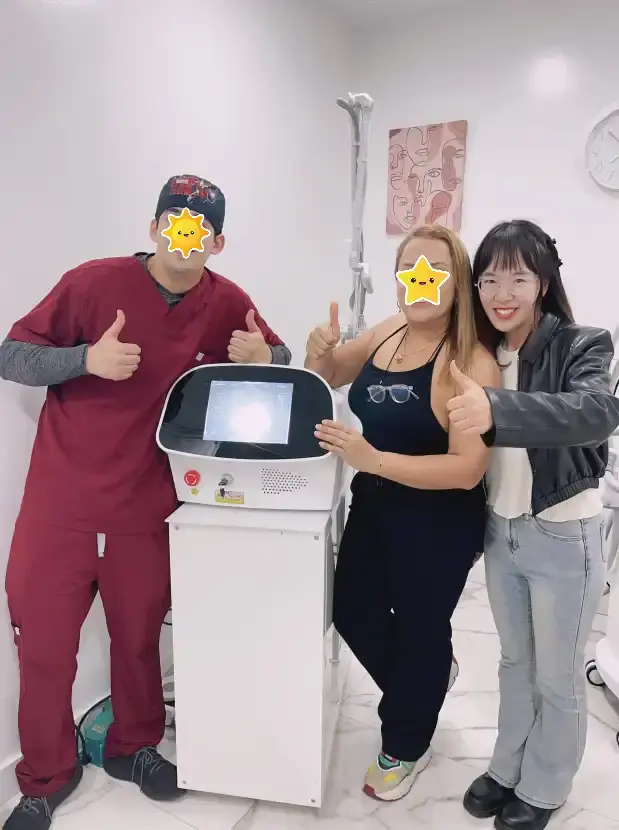
These standards need medical expertise and time management. PRP is utilized following laser procedures because tiny pathways let growth factors in. Secondary microneedling occurs 4–6 weeks after recovery. Clinics that master combination tactics stand out and obtain superior outcomes that justify costing extra. Equipment makers are increasingly producing multi-technology platforms. It simplifies workflow and costs less than purchasing individual systems.
Technological Advancements in Safety and Precision
New technologies aim to improve treatment safety and accuracy. Real-time temperature monitoring systems adjust tissue energy to minimize heat injury. Innovative scanning patterns that avoid consecutive scanning reduce heat accumulation in adjacent microbeams. Fractional handpieces with circular, square, or triangle spot shapes cover more body types in less time and with better consistency.
AI integration is the next big thing. Machine learning algorithms may recommend parameter combinations for various skin kinds and causes by analyzing thousands of treatment outcomes, reducing operators' reliance on learning by doing. Real-time penetration verification using optical coherence tomography-based automated depth assessment might ensure that all treatment zones get the same energy. These technologies are still being developed, but they indicate that the industry is heading toward safer, more efficient, and easier-to-use devices.
Market Growth and Strategic Positioning
The growth of the global esthetic laser market opens up a lot of opportunities for companies that make equipment and run clinics. Rising spending incomes in developing markets, more people being okay with cosmetic procedures, and more men becoming patients are all things that drive demand. The fractional co2 laser segment gains from being able to handle a number of high-demand signals on a single platform. Clinics that are investing now will be in a good position as the market grows and more people get treatments.
Manufacturers should prioritize a robust support infrastructure that differentiates them from competition. Clinic purchasers go beyond hardware quality. Clinical training, marketing help, funding, and fast technical support provide value. To remain ahead of the competition, establish local service facilities, stock adequate parts, and create strong distributor networks. Equipment suppliers that see agreements as long-term relationships rather than one-time sales generate loyal client bases that offer them leads and additional revenue as clinics install new devices.
Conclusion
Fractional co2 laser technology has changed the way cosmetic surgery is done by giving patients dramatic rejuvenation results with short healing times. The science behind fractional photothermolysis involves applying controlled heat to tiny treatment areas while leaving the surrounding tissue alone. This causes strong collagen remodeling, which fixes problems with photoaging, scars, and texture. To make implementation go smoothly, clinic operators and procurement specialists need to know about technical requirements, regulatory requirements, financial issues, and clinical best practices. As hybrid protocols and precision innovations keep making the technology better, fractional co2 lasers will remain an important part of full esthetic treatment plans. They provide excellent clinical outcomes and a strong return on investment for practices that are dedicated to providing the best care to their patients.
FAQ
1. How long does it take to see results after fractional CO2 laser treatment?
Within one to two weeks, you'll start to see changes as new epidermis grows back, showing a smoother texture and better tone. Collagen restructuring happens gradually over three to six months after treatment, with the best results usually being seen around the six-month mark. For better results, you may need more than one treatment session, spaced 8–12 weeks apart, for deeper problems like severe acne scars. Patients should know that laser treatment starts biological processes that will continue long after the procedure, leading to slow, cumulative gains rather than big changes right away.
2. What safety protocols are essential when operating fractional CO2 laser equipment?
Complete safety rules include proper operating training that covers the physics of the gadget, choosing the right parameters, and dealing with problems. Patients and everyone else in the room must wear eye protection that meets certain optical density standards for wavelengths of 10,600nm. Before treatment, screening finds problems and risks of illness. Preparing the treatment area includes cleaning it well and putting topical anesthesia on it. Systematic method stops too much overlapping or gaps during processes. Post-treatment monitoring finds problems early, so they can be fixed right away. Regular maintenance, like calibrating and checking the power output once a year, makes sure that the equipment works consistently and reliably for as long as it is used.
3. Can fractional CO2 lasers be combined with other aesthetic treatments?
When fractional co2 laser is combined with other techniques, the effects are often better than what either treatment could achieve on its own. When applied right after a laser procedure, platelet-rich plasma speeds up healing and increases collagen production by delivering growth factors. Microneedling, which is done 4 to 6 weeks after laser treatment, stimulates collagen even more by damaging it mechanically. For a full facelift, some centers combine CO2 resurfacing with laser skin tightening or neuromodulators injected into the skin. Combining treatments requires a lot of clinical knowledge to make sure that the procedures are done in the right order, that the parameters chosen are suitable, and that the risks of cumulative harm are managed while the synergistic benefits are maximized.
Partner with TB for Premium Fractional CO2 Laser Solutions
Esthetic clinics looking for reliable, high-performance laser systems can turn to Xi'an Taibo Laser Beauty Company, which has been making high-quality products and distributing them around the world for over 15 years. Our fractional co2 lasers have real 40W+ power output, precise 7-joint flexible arms, advanced water-cooling systems, and a variety of treatment modes, such as pulse, dot matrix, and specialized handpieces for gynecology. Each system has full CE and ISO13485 certifications that make sure it meets all global regulations. Each system also comes with a two-year warranty and quick technical support.
As a dedicated fractional co2 laser manufacturer, TB knows that people in charge of buying need more than just tools. They need full solutions. We offer thorough training for operators, specific clinical practices, marketing materials, and OEM customization services that make devices fit your brand. Our well-established quality management systems, ability to produce goods in a vertically integrated way, and large international client base spanning 180 countries show that we are dedicated to long-term partnership success over one-time sales.
With fractional co2 laser technology, you can expand the types of treatments your clinic offers and make patients happier. Email our team at susan@taibobeauty.com to talk about your specific needs, set up equipment demonstrations, or ask for detailed technical documentation. Find out how TB's knowledge and commitment to excellence can help your business grow and improve patient results. Visit taibolaserbeauty.com to see all of our esthetic devices and find out why clinics around the world choose TB as their technology partner of choice.
References
1. Anderson RR, Donelan MB, Hivnor C, et al. Laser treatment of traumatic scars with an emphasis on ablative fractional laser resurfacing: consensus report. JAMA Dermatology. 2014;150(2):187-193.
2. Hantash BM, Bedi VP, Kapadia B, et al. In vivo histological evaluation of a novel ablative fractional resurfacing device. Lasers in Surgery and Medicine. 2007;39(2):96-107.
3. Manstein D, Herron GS, Sink RK, Tanner H, Anderson RR. Fractional photothermolysis: a new concept for cutaneous remodeling using microscopic patterns of thermal injury. Lasers in Surgery and Medicine. 2004;34(5):426-438.
4. Ross EV, Yashar S, Naseef G, et al. Comparison of responses of tattoos to picosecond and nanosecond Q-switched neodymium:YAG lasers. Archives of Dermatology. 1998;134(2):167-171.
5. Tierney EP, Kouba DJ, Hanke CW. Review of fractional photothermolysis: treatment indications and efficacy. Dermatologic Surgery. 2009;35(10):1445-1461.
6. Weiss RA, Gold M, Bene N, Biron J. Fractional ablative laser therapy: consensus review and recommendations for patient selection and treatment. Journal of Drugs in Dermatology. 2012;11(4):e33-e38.





YOU MAY LIKE