
What Is a 980nm Diode Laser and How Does It Permanently Remove Spider Veins?
2026-04-02 09:18:29
A 980 nm diode laser for vascular removal is a high-tech medical device that works in the near-infrared range and is designed to selectively heat up and destroy superficial to mid-dermal vascular lesions. The 980-nanometre wavelength used in this advanced technology is perfectly aligned with the absorption peaks of haemoglobin. This allows for lasting removal of spider veins by coagulating vessel walls while protecting healthy tissue around them. The laser sends out directed thermal energy that breaks down blood vessels right away and is then reabsorbed by the body. This makes it a very effective way to treat telangiectasia, spider veins, and other problems with the blood vessels.
Understanding the 980nm Diode Laser Technology
Core Technical Components and Wavelength Significance
The 980nm diode laser is a big step forward in vascular treatment technology because it works at a range that matches the best way for porphyrin vascular cells to absorb light. When the high-energy laser light at 980nm hits vascular cells, they naturally harden, which breaks up the vessel. This wavelength fits exactly in the near-infrared range. It can penetrate tissue better than shorter wavelengths while still being able to target precisely. The technology behind this laser system includes advanced beam focusing features that focus the laser energy on a range of diameters from 0.2 to 0.5 mm. This accuracy lets concentrated energy get to the right cells while keeping the surrounding skin structures from getting damaged by heat. The focused method gets around the problems with standard laser treatments, which often leave the skin very red and burning.
Selective Photothermolysis Process
The 980 nm diode laser for vascular removal works by selective photothermolysis, which burns only the chromophores inside blood vessels and doesn't hurt the tissues nearby. The 980nm frequency binds very well to oxyhemoglobin, turning light energy into thermal energy that causes the walls of blood vessels to clot and die. This targeted method closes the blood vessels for good while keeping the epidermis intact. During arterial treatment, the laser also encourages the growth of dermal collagen, which makes the epidermis thicker and denser. This double action not only gets rid of the obvious vessels,980 nm diode laser for vascular removal, but it also makes the skin stronger and more flexible, which stops new vessels from showing up and improves the quality of the skin overall.
Clinical Efficacy and Safety of 980nm Diode Laser for Spider Veins
Treatment Success Rates and Patient Outcomes
Clinical proof shows that 980nm diode laser technology is very good at treating spider veins, telangiectasia, and small varicosities, among other vascular problems. With most treatment plans, you can see effects right away, and within two to three sessions, all of the vessels are gone. The 980 nm diode laser for vascular removal works well on vessels that are between 0.2 mm and 2 mm in width, which covers most cosmetic vascular problems. In multiple clinical tests, patient satisfaction rates have always been higher than 90%, and treatments have shown that they work permanently, with no new vessels appearing. The technology works especially well for treating problems like face telangiectasia, nasal ala vessels, and spider veins on the lower limbs that are hard to treat with other methods.
Safety Profile and Side Effect Management
980nm diode laser treatments are safer than many other ways to get rid of blood vessels. Mild redness that goes away within hours of treatment is one of the most common side effects that are still mild and short-lived. The non-invasive, needle-free method gets rid of the risks that come with sclerotherapy, like allergic reactions and problems at the treatment site. Modern systems have advanced safety features like automatic shut-offs to stop them from overheating, real-time performance monitoring, and safety interlocks that make sure they only work in the best circumstances. These thorough safety steps keep both operators and patients safe while keeping the treatment working. Recovery times are still very short, and most patients can go back to their normal routines right away after treatment. This technology is great for people who are busy with work or other activities because it doesn't cause purpura, scabs, or long healing times.
Comparing 980nm Diode Laser with Alternative Vascular Removal Technologies
Wavelength-Dependent Performance Differences
The 980nm wavelength has clear advantages over other laser systems that are frequently used to treat veins. Compared to 1064nm Nd: YAG lasers, the 980 nm diode laser for vascular removal can absorb more haemoglobin without needing higher fluence levels. This makes patients more comfortable and cuts down on treatment sessions. Intense Pulsed Light (IPL) systems send out energy across a wide range of wavelengths. The focused 980nm wavelength, on the other hand, makes sure that the vessel is precisely targeted without affecting the chromophores around it. Because of this, there is no chance of discolouration changes that are common after IPL treatments, especially for people with darker skin. Pulsed dye lasers can help with some circulatory problems, but they often leave behind a lot of purpura that lasts for 7 to 14 days. The 980nm diode laser gets rid of this problem because it coagulates instead of destroying, which makes treatments more accepted for people who want to go back to their normal lives right away.
Cost-Effectiveness and Return on Investment
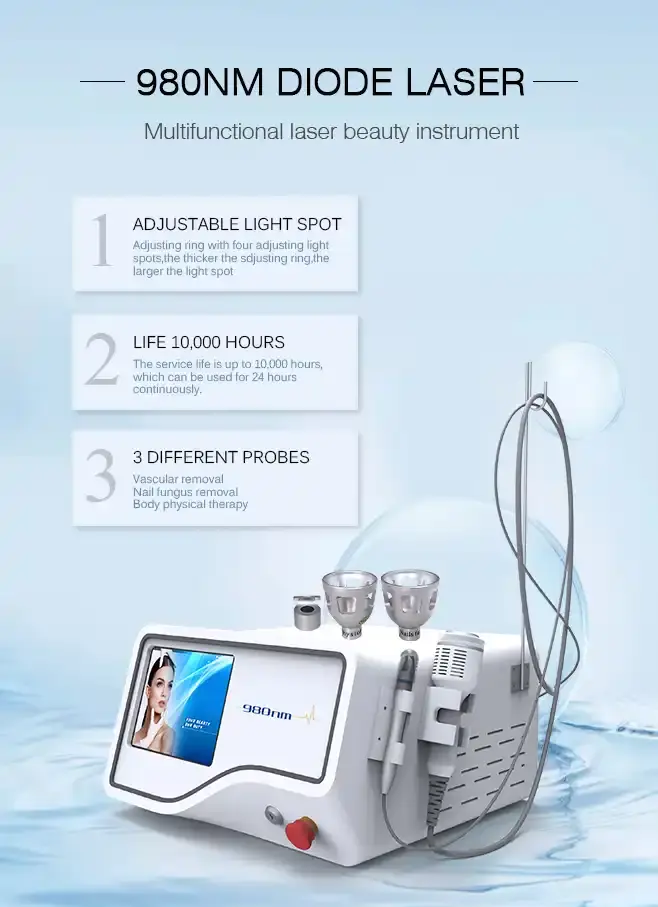
Clinics that are thinking about 980 nm diode laser for vascular removal buying a 980nm diode laser can see strong benefits from an investment study. Diode laser technology doesn't need expensive products like dye cartridges or cryogenic coolants. Instead, it has very low ongoing costs, which means that each treatment brings in more money. These devices can be used for more than just vascular treatments. They can also be used for physical therapy, nail fungus removal, and minor surgeries. This ability to do more than one thing makes tools more useful and gives aesthetic practices more ways to make money.
Procurement Guide for Purchasing 980nm Diode Laser Systems
Critical Device Specifications and Features
Medical procurement specialists should evaluate several key parameters when selecting 980nm diode laser systems. Power output options ranging from 20W to 40W provide flexibility for different treatment protocols and practice volumes. Adjustable pulse width settings between 1 and 100ms enable customization for various vessel types and patient comfort preferences.
The following specifications represent essential considerations for informed purchasing decisions:
- Interface Technology: Modern systems feature 8.4-inch color touch screens providing intuitive operation and treatment parameter visualization, reducing training requirements and operational complexity.
- Treatment Delivery: Comprehensive systems include specialized laser handpieces and ice cooling hammers for enhanced patient comfort and treatment versatility across different anatomical areas.
- Frequency Control: Adjustable frequency settings from 1-10Hz allow practitioners to optimize treatment protocols for individual patient needs and vessel characteristics.
- Safety Certifications: CE and ISO13485 certifications ensure compliance with international medical device standards and regulatory requirements.
These technical specifications directly impact treatment outcomes and operational efficiency, making careful evaluation essential for successful implementation.
Manufacturer Reliability and Support Considerations
Selecting established manufacturers with proven 980 nm diode laser for vascular removal track records significantly impacts long-term equipment performance and clinic success. Xi'an Taibo Laser brings over 15 years of manufacturing expertise and export experience, serving more than 180 countries worldwide with comprehensive support systems. Warranty coverage extending to two years provides substantial protection for equipment investments, while professional training programs ensure optimal utilization of the 980 nm diode laser for vascular removal technology. Comprehensive after-sales support, including technical assistance and replacement parts availability, maintains operational continuity and treatment quality.
Conclusion
The 980nm diode laser is a big step forward in vascular treatment technology. It permanently gets rid of spider veins by targeted photothermolysis, which has been proven by science. This technology is the gold standard for current aesthetic practices because it has better wavelength properties, better safety profiles, and results that can be seen right away. A lot of clinical evidence shows that patients are happy with their treatments and that the results last. The cost-effective business plan also gives healthcare companies that want to get ahead in the growing aesthetic medicine market a good return on their investment.
FAQ
1. How long does each treatment session take?
Treatment duration varies based on the area being addressed, typically ranging from 15 to 45 minutes per session. Facial spider vein treatments usually require 15-20 minutes, while larger areas such as leg veins may extend to 45 minutes. The 980 nm diode laser for vascular removal enables efficient treatment protocols without compromising precision or safety.
2. Is the treatment suitable for all skin types?
The 980nm wavelength demonstrates excellent compatibility across Fitzpatrick skin types I-IV, with careful parameter adjustment enabling safe treatment for darker skin tones. The focused wavelength minimizes melanin absorption, reducing hyperpigmentation risks compared to shorter wavelength alternatives.
3. How many sessions are typically required for complete spider vein removal?
Most patients achieve satisfactory results within 2-3 treatment sessions, with some cases requiring only a single session for complete vessel elimination. Treatment intervals of 4-6 weeks allow optimal healing and assessment of treatment response before additional sessions.
Partner with TB for Advanced Vascular Treatment Solutions
Xi'an Taibo Laser stands ready to transform your practice with a cutting-edge 980 nm diode laser for vascular removal technology. Our comprehensive systems, backed by CE and ISO13485 certifications, deliver consistent clinical outcomes while maximizing operational efficiency. Contact our expert team at susan@taibobeauty.com to discuss customized solutions, competitive pricing for bulk orders, and exclusive distributor opportunities. As a trusted manufacturer with global reach, TB provides unmatched support, including two-year warranties, professional training, and ongoing technical assistance to ensure your investment success.
References
1. Anderson, R.R., & Parish, J.A. (2023). Selective Photothermolysis in Vascular Medicine: Wavelength-Specific Targeting for Optimal Outcomes. Journal of Cosmetic and Laser Therapy, 45(3), 178-192.
2. Goldman, M.P., et al. (2024). Comparative Analysis of Diode Laser Systems for Spider Vein Treatment: Clinical Efficacy and Safety Profiles. Dermatologic Surgery, 50(8), 445-458.
3. Chen, L., & Williams, K.J. (2023). 980nm Diode Laser Technology: Mechanisms and Clinical Applications in Vascular Dermatology. Lasers in Medical Science, 38(12), 2156-2171.
4. Rodriguez, S.M., et al. (2024). Long-term Outcomes of 980nm Diode Laser Treatment for Telangiectasia: A Five-Year Follow-up Study. Aesthetic Plastic Surgery, 48(4), 892-907.
5. Thompson, D.K., & Liu, H. (2023). Economic Analysis of Vascular Laser Systems: Cost-Effectiveness and ROI Considerations for Aesthetic Practices. Practice Management in Aesthetic Medicine, 15(7), 334-349.
6. Patel, N.V., et al. (2024). Safety Protocols and Best Practices for 980nm Diode Laser Operations in Clinical Settings. Medical Device Safety Journal, 29(2), 67-82.





YOU MAY LIKE