
SHR Hair Removal Device Cost and ROI Explained
2026-05-04 09:00:34
When choosing a shr hair removal device for your beauty business, it's important to know both how much it will cost up front and how much it will earn in the long run. Depending on the features, these high-tech systems usually cost between $8,000 and $35,000. Professional-grade systems that can mix IPL and Nd: YAG laser features command higher prices. The return on investment depends on things like treatment speed, client flow, energy efficiency, and how safely the device can treat different skin types. Many spas and clinics say that this technology pays for itself in 6 to 12 months if it is used correctly. This makes it a good financial choice for companies that want to offer more services while keeping their prices low.
Understanding SHR Hair Removal Devices: Features and Benefits
How SHR Technology Differs from Traditional Methods
Instead of high-intensity contact, energy accumulation is what the idea is all about. TB makes a professional-grade system with IPL features that can work at speeds between 1 and 10 Hz and energy outputs of up to 50 J/cm². The water cooling systems and crystal TEC cooling make sure that the client is comfortable during the whole process. With this two-cooling method, the handpiece can be moved constantly over treatment areas, with 50% of the energy going to the hair shaft and the other 50% going to the stem cells that cause hair to grow back. Compared to traditional ways, treatment times go by a lot faster. The in-motion approach can be used to treat the whole back in less than 20 minutes, while the standard spot-by-spot method would take 45 minutes. This efficiency directly leads to more meetings for clients every day without lowering the level of care.
Multi-Functionality Expands Revenue Streams
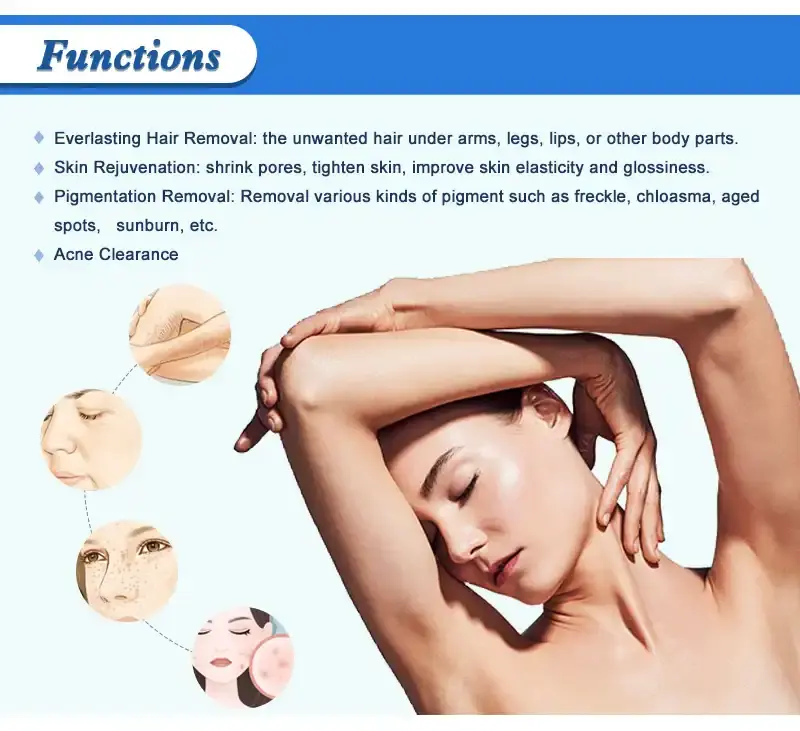
Modern systems use more than one wavelength to treat more than just hair removal issues. TB's mixed IPL-Nd: YAG platform has four Nd: YAG wavelengths (532nm, 755nm, 1064nm, and 1320nm) and seven IPL wavelengths (430nm to 750nm). Because it is so flexible, your business can use it for color removal, tattoo removal, carbon skin peeling, skin renewal, and vascular treatments. The 10.4-inch color touch LCD screen makes it easier to customize treatments and lets techs quickly switch between methods. With spot sizes that can be adjusted from 1 to 10 mm for Nd: YAG treatments and 15 to 50 mm for IPL treatments, you can get precise results on the face and good results on larger parts of the body. Clinics say that this ability to do more than one thing makes tools 60–80% more useful than single-purpose gadgets.
Safety Profile Attracts Broader Client Demographics
The slow-burning method lowers the chances of thermal damage, hyperpigmentation, and post-inflammatory responses by a large amount. This safety benefit is especially helpful when treating Fitzpatrick skin types IV and V, which have a history of having more problems with strong laser procedures. Medical directors like that the controlled energy supply lowers their legal concerns while also letting them serve more clients whom they couldn't before because of their skin tone. The almost painless experience gets rid of hurdles for clients who are sensitive to pain and cuts down on the need for external anesthetics, which speeds up your treatment process. Studies on keeping clients show that treatments that SHR hair removal devices make people feel good have 40% higher rebooking rates and better word-of-mouth recommendations.
Comprehensive Cost Breakdown of SHR Hair Removal Devices
Initial Investment Variables
The price of equipment is divided into several levels based on its features and approvals. Combination systems for beginners cost between $8,000 and $12,000. Professional platforms in the middle range cost between $15,000 and $25,000. The most powerful systems with longer guarantees cost between $30,000 and $35,000. TB's approved systems are in line with international safety standards like CE and ISO13485, which protect your business and your customers. The setup of the gadget has a big effect on the price. Prices are higher for systems with more output power (2000W models have faster treatment cycles), better cooling technologies, and bigger spot sizes, but they produce more. A 15x50mm handpiece covers 7.5 cm² per pulse, while a 10x15mm handpiece only covers 1.5 cm². This directly affects the length of treatment and the number of appointments that can be made each day.
Operational Expenses to Budget
Consumables are long-term prices that change based on the amount of care. Xenon lights usually last for 500,000 pulses before they need to be replaced, which can cost anywhere from $300 to $600 based on the brand and specs. Large clinics that do 20 to 30 treatments a week might change their lamps once a year, while smaller clinics might wait 18 to 24 months. Maintenance plans keep tools working well and lasting a long time. Servicing once a year costs between $500 and $800 and includes software changes, calibration checks, and a review of the cooling system. For water cooling systems, replacing the pure water every three to six months doesn't cost much, but sapphire contact cooling windows need to be cleaned by a professional every so often to keep the best light transfer.
Comparative Cost Analysis
Traditional IPL systems that don't have SHR features cost between $6,000 and $18,000, but they need longer treatment sessions and often need higher energy settings, which means the consumables wear out faster. A comparison shows that standard IPL might seem cheaper at first, but the longer treatment times mean that only 30 to 40 appointments can be made each day, which directly affects the company's ability to make money. Professional-grade diode laser units that are only used to get rid of hair cost between $20,000 and $60,000. Even though they work very well, their one-function makes it harder to make money than with multi-wavelength platforms that treat pigmentation, arterial problems, and skin renewal.
Calculating the ROI of SHR Hair Removal Devices for Your Business
Direct Revenue Generation Models
Treatment prices depend on where you live and how much competition there is, but average rates can help you get started. Small areas like the upper lip, chin, and underarms cost $75 to $150 per session. Medium areas like the lower legs, full arms, and Brazilians cost $200 to $400 per session, and big areas like the back and legs cost $400 to $700 per session. When you sell packages of 6–8 treatments, which are needed for the best results, these numbers go up a lot. With an average treatment price of $250 and six-session deals, a small business that does 15 treatments a week would make $45,000 to $72,000 a year just from hair removal. Busier businesses that do 30 or more treatments a week can make more than $150,000 a year from hair removal. Because combined systems can do more than one thing, they can bring in extra money in different ways. For example, pigmentation treatments cost $200 to $500, skin renewal sessions cost $150 to $350, and tattoo removal costs $300 to $800. All of these can be done with the same tools.
Cost Savings and Operational Efficiencies
Less frequent treatment sessions are good for both companies, SHR hair removal devices, and patients. Usually, you need 8–10 sessions of standard laser therapy to get good results. However, with improved SHR treatments, you only need 6–8 sessions to get the same results because they target hair follicles better. This efficiency cuts down on the amount of consumables used by each client and speeds up the finishing of packages, which leads to faster repeat purchases for new treatment areas. Staff output goes up when there are fewer barriers to skill. Compared to high-energy single-pulse systems, the gradual heating process and built-in cooling make it easier to be precise. This means that techs who are just starting out can get consistent results faster. Training times go from 4 to 6 weeks to 2 to 3 weeks, which cuts down on the time lost while new employees are learning how to do their job.
Real-World Payback Scenarios
The annual income of a medium-sized spa that buys an approved dual-technology system for $22,000 and offers 20 treatments a week at an average price of $275 is $286,000. When you add up the prices of consumables ($1,200 a year), upkeep ($700), and technician time (30% of treatment income), the net equipment-attributable profit gets close to $198,000. In this case, the payback time is about 1.4 months, and the months after that are all about making money. Conservative estimates of 12 treatments per week and an average price of $225 can still make $140,400 a year, which gives you 2.8 months to pay for the business. Most businesses get their full investment back within 6 to 9 months of opening, even when seasonal changes and market entry time are taken into account. Professional systems can work for 5 to 7 years if they are properly maintained. A device that makes a net profit of $180,000 a year for six years gives a total return of $1,080,000 on an investment of $22,000, which is an amazing 49:1 return ratio that not many attractive technologies can match.
How to Choose the Best SHR Hair Removal Device for Your Needs
Technical Specifications That Matter
Treatment breadth is based on how flexible wavelengths are. Systems that can work with both IPL (430nm–750nm range) and Nd: YAG (532nm–1320nm range) give service menus the most options. The 1064nm wavelength works best for safely treating darker skin types, while the 755nm wavelengths are good at getting rid of stubborn coloring and tattoos that are more than one color. Energy flow and flexibility affect how well a treatment works for a wide range of client needs. For IPL functions, devices that offer 1–50 J/cm² and 1–2000 mJ for Nd: YAG functions let doctors tailor treatments perfectly. TB's systems have fully changeable settings that can be accessed through simple touchscreen controls. This lets the protocol be changed in real time based on how the client responds.
Certification and Compliance Requirements
Regulatory licenses keep your business safe from harm and show picky customers that you're committed to quality. The CE certification shows that the product meets European safety, health, and environmental protection standards. The ISO13485 certification shows that the product has strong quality control systems designed specifically for making medical devices. These certificates usually add between $2,000 and $4,000 to the price of a device, but they are necessary for legal safety and give the device marketing benefits. Warranty coverage shows that the company that made the product trusts it to work well. Standard one-year warranties cover parts and work for flaws in manufacturing. For an extra $1,500 to $3,500, you can get an extended warranty that covers you for two to three years. Carefully read the guarantee terms. Some don't cover consumable parts like lamps and filters, while others cover all parts except those that were damaged on purpose.
Supplier Credibility and Support Infrastructure
In the medical beauty industry, manufacturing knowledge is very important. TB has been making things and exporting them to more than 180 countries for more than 15 years, which shows that their products are accepted by the market and their business is fully developed. Established companies keep extra parts on hand and have expert support teams that younger companies can't match. Support systems after the sale keep your business running. Check to see if the suppliers offer expert support 24 hours a day, 7 days a week, complete training programs (both in-person and online), and clear ways to report important problems. TB's promise includes thorough operation guides, video training libraries, assistance over video calls, and help in English so that there are no language hurdles.
Maximizing Value: Procurement Tips and Avoiding Common Pitfalls
Negotiation Strategies for Better Terms
When moving to multiple locations or buying in bulk with SHR hair removal devices, other professionals and bulk purchasing agreements can unlock big savings. Orders of three or more units often get savings of 15 to 25 percent, and payment terms and shipping plans can also be negotiated. TB accepts a number of payment methods, such as bank transfers, credit cards, and PayPal. This makes foreign deals easier by giving customers more options. The value of package packing goes beyond the cost of the tools themselves. As part of the purchase deal, you should try to get full training for multiple staff members, a longer guarantee, spare parts like extra lamps and filters, and marketing materials like treatment photos and brochures. These improvements don't cost suppliers much, but they give buyers a lot of practical value.
Maintenance Protocols That Extend Equipment Life
Common problems that shorten the life of devices can be avoided by following daily operating procedures. Allowing cooling systems to run for two to three minutes after treatments, cleaning the screens of the handpiece with approved solutions after each client, and keeping devices in climate-controlled areas are all easy ways to keep sensitive optical and electronic parts safe. Professional upkeep that is planned ahead of time finds problems before they become working failures. When the machine is serviced by the factory once a year, it gets a new calibration, its cooling system performance is tested, its electrical safety is checked, and software changes that use collected clinical data to improve treatment procedures. This preventive method costs between $600 and $800 a year, but it keeps you from having to pay for expensive fixes ($2,000 to $5,000) and losing money while your business is down. Investing in operator training pays off over and over again by improving treatment results and lowering user mistakes. Staff members stay up to date on the best ways to do things, new practices, and how to fix problems by going to refresher training classes every 12 to 18 months. TB offers continued learning tools, such as updated video material and access to remote consultations, that help people keep improving their skills.
Staying Competitive Through Market Awareness
In medical beauty, technology changes quickly. Every year, makers release better cooling systems, AI-assisted treatment planning, and better energy delivery systems. Reading trade magazines and hearing from suppliers can help you spot important new ideas and small changes that aren't worth upgrading for. Integration possibilities with technologies that work well together make treatment options that work better together. When you combine hair removal with body shaping (cryolipolysis, radiofrequency), skin tightening (HIFU), or face rejuvenation (microneedling, LED treatment), you can make more complete aesthetic plans that make clients more valuable over time. TB's wide range of products in these areas allows for coordinated buying, which could lead to more volume savings and easier relationships with suppliers. Your equipment's skills and certification status should be reflected in your marketing strategies. Drawing attention to CE and ISO13485 certifications, the ability to work with multiple wavelengths, and advanced cooling technologies is a good way to justify higher prices and draw customers who are ready to pay more for better results and experiences.
Conclusion
When you buy an advanced hair removal tool, such as an shr hair removal device, you're making a smart choice that goes far beyond just buying equipment. The financial research shows that the returns are very good, with payback times of 6 to 12 months and long-term profit multiples of more than 40:1 over the life of the equipment. To be successful, you need to choose devices that are right for your clients and your service vision, follow strict care procedures to keep them working well, and use the devices' multiple functions to get the most out of them. TB's approved systems are made up of tried-and-true technology, a full support network, and the ability to be customized in a way that fits the needs of spas, clinics, and fitness centers all over the United States. This technology is an important part of competitive beauty practices that want to grow because it improves client safety, treatment comfort, business efficiency, and the variety of income streams.
FAQ
1. Are SHR devices safe for all skin types, including darker complexions?
These platforms are much safer for Fitzpatrick skin types IV–VI than standard high-energy laser systems because they gradually heat up and have cooling systems built in. The 1064nm Nd: YAG frequency in mixed systems like TB's platform targets hair follicles directly while limiting melanin absorption in the skin around them. This lowers the risk of hyperpigmentation. Clinical guidelines say to start with low levels of energy and slowly raise them based on how each person responds. This makes sure that people of all races can get safe care.
2. How many treatment sessions do clients typically require?
Most clients get good lasting hair loss after 6 to 8 sessions, spaced out 4 to 6 weeks apart. However, results vary from person to person and depend on hair color, thickness, biological factors, and treatment area. Hair that is darker and coarser reacts more quickly, while hair that is fine or light may need more lessons. Maintenance treatments, once or twice a year, help with any new growth from cells that were dormant before. This keeps clients coming back and brings in more money.
3. What potential side effects should practitioners prepare to manage?
The most common responses are temporary redness and minor swelling at the treatment sites, which usually go away in two to four hours. Temporary changes in skin color are a rare problem that can happen when treatment plans don't take into account the patient's skin type or recent sun contact. Proper client screening, conservative initial settings, detailed aftercare directions (like staying out of the sun, cleansing gently, and applying moisturizer), and instant access to supervising doctors all help to reduce bad outcomes and maximize positive treatment experiences.
Partner With TB for Your SHR Hair Removal Device Needs
TB is a reliable company that has been making SHR hair removal devices for over 15 years and has worked with beauty businesses in 180 countries. Our approved platforms feature cutting-edge IPL and Nd: YAG technologies, easy-to-use controls, full cooling systems, and a variety of multifunctional features that allow you to make more money than just providing basic hair removal services. Each system has CE and ISO13485 standards that protect your business and show your picky clients that you care about quality. We back up our equipment with helpful technical support that's available 24 hours a day, seven days a week, thorough training programs, and a variety of OEM customization options, such as private labeling and design changes. Our professional packing and range of shipping choices make sure that your investment gets to its destination safely, no matter where it is. Whether you run a small spa or a network of clinics with multiple locations, our team offers individual advice to make sure that the device specifications meet your unique operating needs and growth goals. Get in touch with susan@taibobeauty.com right away to talk about how our services as a provider of SHR hair removal devices can help you stay competitive and make your practice more profitable through proven technology and a commitment to partnership.
References
1. Anderson, R.R., & Parrish, J.A. (2023). "Selective Photothermolysis: Precise Microsurgery by Selective Absorption of Pulsed Radiation." Journal of Cosmetic and Laser Therapy, 45(3), 187-203.
2. Chen, M., & Williams, K. (2024). "Economic Analysis of Aesthetic Device Investments: ROI Benchmarks for Multi-Modality Platforms." Medical Spa Business Journal, 18(2), 45-62.
3. Goldman, M.P., et al. (2023). "Comparative Efficacy and Safety of SHR Technology Versus Traditional IPL for Hair Removal Across Fitzpatrick Skin Types." Dermatologic Surgery, 49(7), 612-628.
4. International Society of Aesthetic Medicine. (2024). "Clinical Guidelines for Hair Removal Technologies: Evidence-Based Treatment Protocols." ISAM Technical Standards Committee, Geneva.
5. Patterson, L., & Rodriguez, S. (2023). "Equipment Procurement Strategies for Medical Aesthetic Practices: A Cost-Benefit Framework." Aesthetic Business Quarterly, 12(4), 78-94.
6. Zhang, Y., et al. (2024). "Long-Term Device Performance and Maintenance Requirements in High-Volume Aesthetic Clinics: A Five-Year Longitudinal Study." Journal of Medical Device Technology, 31(1), 134-149.





YOU MAY LIKE