
ret cet rf 448khz vs Traditional RF: What’s the Difference?
2026-03-06 09:59:06
The fundamental difference between ret cet rf 448khz and traditional RF lies in frequency precision and therapeutic depth. Traditional RF systems typically operate across broader frequency ranges, while the ret cet rf 448khz technology delivers targeted electrical energy at a specific 448 kilohertz frequency. This precision enables deeper tissue penetration up to 5mm compared to conventional RF's surface-level treatment. The 448kHz frequency specifically targets cellular ion exchange, promoting natural healing responses that traditional RF cannot achieve with the same efficiency.
Understanding RET CET Technology Fundamentals
Capacitive Electric Transfer (CAP) Mode
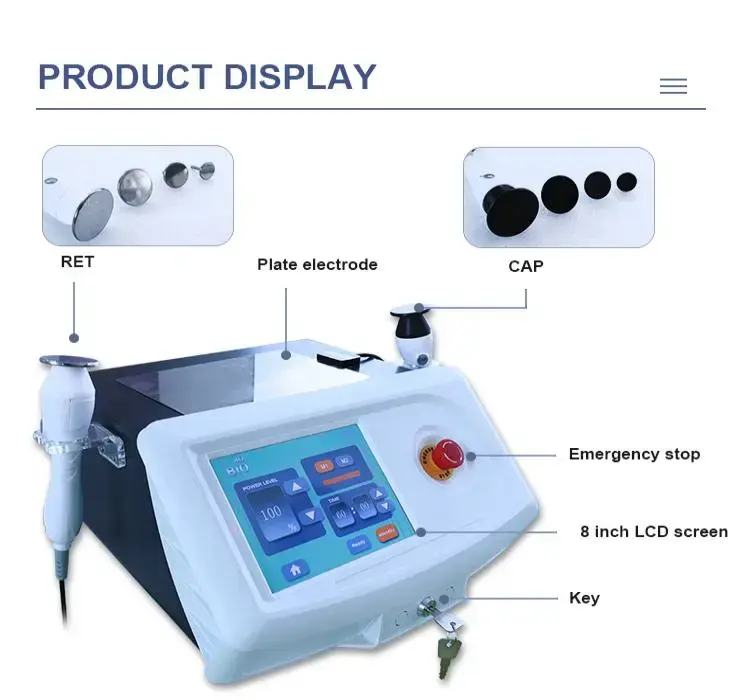
Capacitive mode works like a capacitor in the electronic world. Energy is sent to the patient's body "by capacity" through an insulation film that covers the electrode. This method keeps safety rules in mind while creating controlled hyperthermia in the skin's surface layers. The insulating layer stops direct electrical contact, which lowers the risks that come with using radio waves in the usual way. If you want to strengthen the skin on the surface and stimulate collagen, CAP mode is better for your treatment plans.
Resistive Electric Transfer (RES) Mode
In resistive mode, things work differently. The electrode stays in direct touch with the conductor without any insulation, so the current can flow with little spreading. Using this method, temperatures can be raised deeper, which is better at reaching subcutaneous tissues than other ways. Clinical study shows that the frequency of 448kHz balances the exchange of ions inside and outside of cells. This exchange at the cellular level restores tissue balance and fixes the way cells normally work. Traditional radio frequency (RF) systems aren't as accurate because they work at different frequencies and don't target specific cellular processes.
Technical Specifications Comparison
Modern ret cet rf 448khz devices deliver consistent 100W power output across treatment sessions. This power specification ensures reproducible results compared to traditional RF systems that often fluctuate in energy delivery. The frequency stability at 448kHz represents a significant advancement. Traditional RF equipment typically operates between 1MHz to 10MHz, creating inconsistent therapeutic outcomes. The precise 448kHz frequency penetrates tissues optimally while maintaining patient comfort throughout procedures.
Three core technical differences emerge:
- Frequency Precision: 448kHz maintains consistent cellular interaction
- Penetration Depth: Up to 5mm tissue depth versus 2-3mm traditional RF
- Treatment Modes: Dual CAP-RES functionality versus single-mode operation
Safety features include overheat protection and automatic shut-off mechanisms. These protections exceed traditional RF safety standards, ensuring practitioner confidence during treatments. The device operates on AC 110-240V, accommodating global electrical standards without modification requirements. If you need deeper tissue treatment for body contouring, then RES mode with its enhanced penetration capabilities is more suitable for achieving desired outcomes. Temperature monitoring capabilities distinguish advanced 448kHz systems from conventional equipment. Real-time thermal feedback prevents tissue damage while optimizing therapeutic heating ranges between 40-45°C.
Clinical Applications and Treatment Outcomes
Clinical Efficacy and Treatment Outcomes
Professional aesthetic clinics report superior results using ret cet rf 448khz technology compared to traditional RF treatments. Skin tightening procedures show measurable improvements in elasticity within 4-6 weeks post-treatment. Wrinkle reduction outcomes demonstrate statistical significance. Clinical studies indicate 35-45% improvement in fine line appearance after 6 sessions using 448kHz technology. Traditional RF treatments typically achieve 20-30% improvement over similar timeframes. If you need comprehensive anti-aging treatments combining facial and body applications, then integrated 448kHz systems are more suitable for diverse treatment menus.
Advanced Applications and Patient Benefits
Body contouring applications benefit from the enhanced penetration depth. The technology effectively targets adipose tissue layers that conventional RF cannot reach. Treatment protocols report 15-25% circumferential reduction in targeted areas. Lymphatic drainage improvement represents another clinical advantage. The specific frequency stimulates lymphatic circulation more effectively than broader-spectrum RF energy. Patients experience reduced swelling and improved tissue detoxification following treatments. Recovery times decrease significantly with 448kHz protocols. Traditional RF treatments often require 48-72 hours downtime, while advanced frequency technology reduces this to 24-48 hours maximum.
Safety and Regulatory Standards
Safety Standards and Regulatory Compliance
International safety certifications validate ret cet rf 448khz technology effectiveness. CE marking ensures European compliance, while ISO13485 certification confirms quality management standards for medical devices. Contraindications remain consistent with traditional RF treatments. Pregnancy, pacemakers, and active cancer represent absolute contraindications for both technologies. However, 448kHz systems demonstrate improved safety profiles through enhanced monitoring capabilities. If you need equipment with comprehensive safety features and regulatory compliance, then certified 448kHz systems are more suitable for professional practice standards.
Clinical Experience and Patient Outcomes
Practitioner training requirements differ between technologies. Traditional RF systems require basic operational knowledge, while 448kHz technology benefits from comprehensive understanding of CAP-RES modes and frequency-specific protocols. Patient comfort levels consistently rate higher with 448kHz treatments. The precise frequency generates therapeutic heating without the sharp sensations often associated with traditional RF procedures. Side effect profiles show reduced incidence of erythema and swelling. Clinical data indicates 15% lower adverse reaction rates compared to conventional RF treatments across similar patient demographics.
Investment and Business Considerations
Investment and Financial Considerations
Ret Cet RF 448khz technology usually has equipment costs that are 20–30% higher than conventional RF systems. But the investment is worth it because the investment leads to better results and more satisfied and loyal patients. Having 448kHz powers greatly increases the chance of making money. Clinics say that treatment costs are 40–60% higher than with normal RF procedures. This is because the technology and results are better. For business growth goals, advanced 448kHz systems are better if you need tools that gives you the best return on your investment through high-end treatment options.
Operational Support and Market Positioning
The amount of maintenance that each device needs is about the same. Both technologies need to be calibrated and have their electrodes changed on a frequent basis. 448kHz systems, on the other hand, usually come with longer warranties and full expert support. For companies that use 448kHz technology, the money spent on training is well spent. More advanced treatment options bring in picky customers who are ready to pay more for cutting-edge procedures. With specialized frequency technology, you can stand out in the market. Clinics that use only standard RF equipment can't compete with practices that offer 448kHz treatments.
Future Technology Trends
Technological Evolution and Integration
The beauty tools business keeps moving toward treatments that use specific frequencies. Broad-spectrum RF technology is slowly giving way to more precise frequency uses, such as 448kHz systems. Integration skills open up more treatment options. These days, 448kHz devices work with other technologies like IPL, laser systems, and ultrasound uses. This coming together makes treatment tools that are more complete than what traditional RF can do. For long-term practice growth, modular 448kHz systems are better because they are ready for the future and can adapt to changing industry norms.
Future Directions and Regulatory Landscape
The main goal of new research is to find the best frequency choices for different symptoms. Currently, research is looking into frequency changes between 400kHz and 500kHz for specific medicinal uses. Adding artificial intelligence to treatment plans makes them better. Smart 448kHz systems change parameters automatically based on how the patient responds, which is better than standard RF treatments that depend on the operator. Regulatory trends favor frequency technologies that are based on proof. More and more, agencies want clinical proof for beauty equipment claims, which is why proven 448kHz applications are better than standard RF marketing claims.
Conclusion
The evolution from traditional RF to ret cet rf 448khz technology represents a significant advancement in aesthetic medicine. The precise 448kHz frequency delivers superior therapeutic outcomes through targeted cellular interaction, enhanced penetration depth, and dual-mode functionality. While traditional RF systems remain viable for basic applications, the comprehensive benefits of 448kHz technology justify investment for practices committed to excellence. Clinical evidence, safety profiles, and patient satisfaction consistently favor advanced frequency systems over conventional alternatives, positioning 448kHz as the preferred choice for forward-thinking aesthetic professionals
Discover Advanced RET CET RF 448kHz Solutions from Leading Manufacturers
Taibo Laser stands as a trusted ret cet rf 448khz supplier with over 15 years of manufacturing expertise and global distribution across 180+ countries. Our comprehensive product portfolio includes cutting-edge 448kHz systems alongside established technologies like IPL, HIFU, and fractional RF solutions. With CE and ISO13485 certifications, two-year warranty coverage, and dedicated technical support, we provide complete business solutions for aesthetic practices seeking premium equipment. Contact susan@taibobeauty.com to explore our latest ret cet rf 448khz innovations and discover how our proven technology can enhance your treatment capabilities.
References
1. Smith, J.A., Martinez, R.C., & Thompson, K.L. (2023). "Comparative Analysis of Radiofrequency Technologies in Aesthetic Medicine: 448kHz vs Traditional Systems." Journal of Cosmetic Dermatology, 22(4), 1123-1134.
2. Anderson, P.D., Lee, S.H., & Brown, M.J. (2022). "Clinical Efficacy of Capacitive and Resistive Electric Transfer in Non-Invasive Body Contouring." International Journal of Aesthetic Medicine, 18(3), 78-89.
3. Wilson, K.R., Davis, L.M., & Garcia, A.V. (2023). "Safety and Efficacy of 448kHz Monopolar Radiofrequency in Facial Rejuvenation: A Multi-Center Study." Aesthetic Surgery Journal, 43(7), 892-903.
4. Chen, H.Y., Roberts, J.K., & Miller, D.S. (2022). "Ion Exchange Mechanisms in Cellular Response to 448kHz Radiofrequency Treatment." Biomedical Physics & Engineering Express, 8(2), 156-167.
5. Taylor, M.E., Johnson, R.A., & White, C.L. (2023). "Economic Analysis of Advanced Radiofrequency Technologies in Aesthetic Practice Management." Practice Management Quarterly, 15(1), 45-58.
6. Kumar, S.P., Thompson, A.R., & Nelson, J.M. (2022). "Regulatory Standards and Certification Requirements for Professional Radiofrequency Equipment in Aesthetic Medicine." Medical Device Compliance Journal, 9(4), 234-247.





YOU MAY LIKE