
Q Switch 1064 Laser Applications in Modern Skin Treatments
2026-09-01 09:02:24
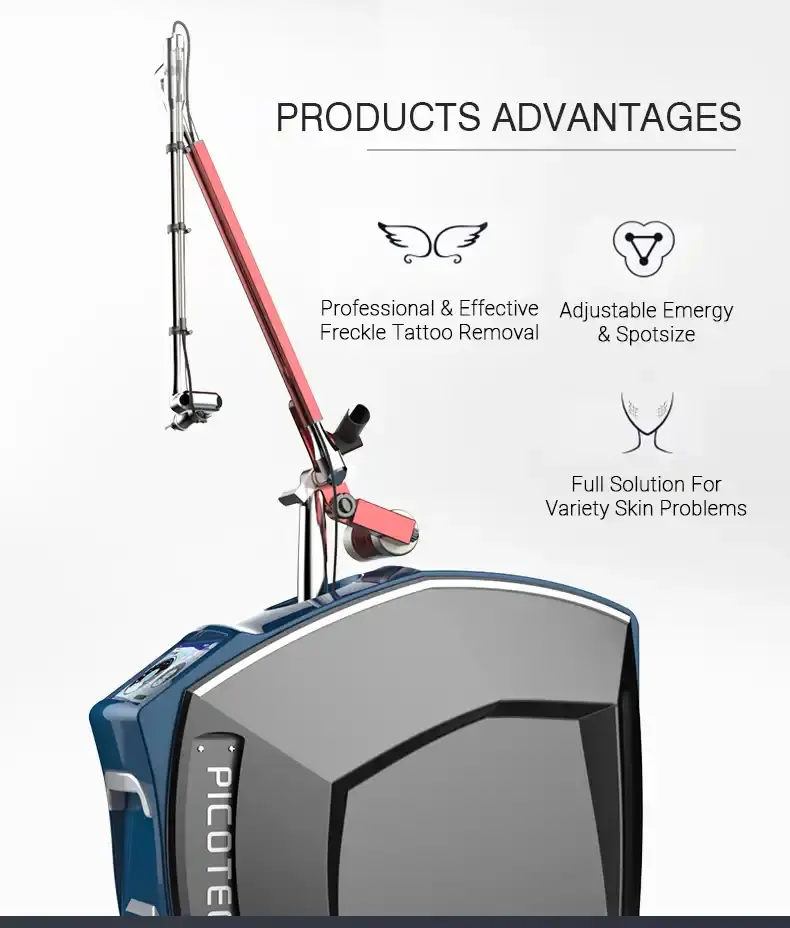
The q switch 1064 laser stands as a transformative tool in modern dermatology, utilizing Nd:YAG crystal technology to emit high-intensity light pulses at 1064 nm wavelength. This nanosecond-domain laser delivers concentrated energy bursts—typically within 6ns pulse duration—that shatter pigment particles through photoacoustic action rather than thermal damage. Tattoo studios expanding into removal services find this technology particularly valuable because it addresses deep dermal pigmentation while preserving surrounding tissue integrity. The laser's ability to handle multiple wavelengths (755nm, 1064nm, 532nm) makes it versatile for treating everything from multicolored tattoos to age spots, positioning it as an essential investment for studios seeking high-margin service diversification.
Understanding Q Switch 1064 Laser Technology
How Nanosecond Pulse Technology Works
The best thing about this laser is its Q-switching mechanism, which stores energy in the Nd:YAG crystal and then sends it out in very short bursts. When the operators fire the device, a 6-nanosecond spark sends out strong photomechanical shock waves that break up melanin groups and tattoo ink particles into tiny dust particles. Unlike older continuous-wave lasers that rely on long-term heat exposure, this rapid-fire method limits the spread of heat to nearby skin layers, making scarring much less likely.
Modern systems made by well-known companies include precise energy control that works with bands range from 100mj to 2000mj. The 1064nm level goes about 3–5 mm deep into the dermis, which makes it perfect for getting rid of stubborn coloring issues like Nevus of Ota or high-quality tattoos. The 532nm range, on the other hand, is used to treat skin problems that are close to the surface, like red spots or freckles. With this dual-wavelength feature, studio owners don't have to buy as many devices, which makes their work easier.
Safety Protocols and Skin Compatibility
Safety rules must be followed to the letter when using these machines, especially the NOHD (Nominal Ocular Hazard Distance) rating of 1 km, which requires technicians and clients to wear protective goggles. The air-plus-water cooling system keeps the output quality stable across 1-10Hz working frequencies and keeps the unit from boiling during long sessions. Mild redness and swelling that go away on their own in 48 hours for most people are the only side effects that happen.
Fitzpatrick skin types III–V gain the most from the lower melanin absorption rate of the 1064nm wavelength compared to shorter wavelengths. This trait lowers the risk of post-inflammatory hyperpigmentation that has been a problem in the past for darker clients getting laser treatments. Depending on the size of the treatment area, sessions last between 15 and 30 minutes on average. Most cases of pigmentation need 6 to 8 sessions, spaced out by two months, so that the pigment can be completely broken down.
Core Applications of Q Switch 1064 Laser in Skin Treatments
Tattoo Removal for Professional and Amateur Ink
Tattoo removal is the most successful service for companies that are transitioning. Black and dark blue inks absorb 1064nm wavelengths very well, breaking them up into pieces small enough to be cleared by the lymphatic system. The explosive photoacoustic effect breaks up the cohesion of the ink without vaporizing the collagen structures around it. This keeps the skin's texture intact during treatment courses.
Professional tattoos with a lot of color density need higher energy settings, which are usually at the device's highest output of 2000mj/cm² and are sent through spot sizes that can be adjusted from 2 to 10 mm. Tattoos done by amateurs heal faster because the ink is placed less deeply and isn't as dense. Adding the 755nm wavelength helps a lot with green and blue pigments that are hard to get rid of with regular ways. The 532nm wavelength helps with red, orange, and yellow colors. The technology is better than single-wavelength competitors because it can work at three different wavelengths. This directly addresses the popular trend of getting multiple colored tattoos in Western markets.
Pigmentation Disorders and Melasma Treatment
In addition to getting rid of tattoos, this laser is very good at healing inherited pigmentation disorders, which is why there is a lot of demand for it. Targeted 1064nm pulses work very well on age spots, sunspots, and café-au-lait birthmarks; after 4-6 treatments, 80% or more of them are gone, according to clinical studies. The selective photothermolysis principle of the laser makes sure that pigmented cells absorb energy more efficiently than surrounding tissue.
Because melasma is caused by hormones and tends to come back, treating it technically can be hard. However, the q switch 1064 laser method works better than cosmetic treatments alone. Nanosecond pulses cause controlled dermal remodeling, which encourages collagen regeneration and pigment clearance. This corrects skin tone and improves texture at the same time.
Carbon Peeling and Skin Rejuvenation
The carbon peeling process, which is also known as the "Hollywood Peel," uses the laser to work with carbon bits that are put on the skin's surface. When the 1064nm wavelength hits skin that is coated in carbon, it vaporizes explosively, removing dead skin cells, cleaning pores, and encouraging collagen production all at the same time. This non-invasive technique for rejuvenation brings in clients who want treatments that will make them glow without any downtime, which means that studios can make money over and over again.
The controlled thermal effect speeds up wound healing in the old skin, which means that the treatment can also help fade acne scars and smooth out fine lines. Most clients see smaller pores and brighter skin after just one session, but maintenance treatments every three months give them the best results.
Comparing Q Switch 1064 Laser with Other Laser Technologies
Picosecond vs Nanosecond: Understanding the Differences
As picosecond lasers became available, they caused a discussion about whether they were better than nanosecond systems in terms of efficiency. Picosecond devices send pulses that last trillionths of a second (350ps for more advanced models). This should break up pigments more efficiently while producing less heat. In most cases, though, the differences aren't as big in real life as marketing makes them out to be.
Nanosecond q-switched lasers are still better at treating deeper wounds and handling thicker ink, especially for older tattoos that were put by a professional. The longer pulse length lets more energy build up in the target chromophores, which is necessary to break up particles that are tightly packed together. Nanosecond systems are also more cost-effective than picosecond systems. The original investment is usually 40–60% less, and upkeep costs are kept low thanks to the modular design of the components.
Multi-Wavelength Advantages Over Single-Spectrum Devices
Single-wavelength gadgets make it much harder to help people. A 1064nm-only system works well with dark pigments but not with the red, yellow, or green tattoo inks that are common today. The triple-wavelength configuration (755nm, 1064nm, 532nm) gets rid of these limits, so companies can take on all clients without sending them to rivals.
Because it goes so deeply into the skin, the 532nm setting is the only way to treat epidermal problems like lentigines and red vascular lesions. The 755nm setting, on the other hand, gets rid of the notorious "stubborn greens" that stump many removal specialists. This flexibility directly leads to a faster return on investment, since studios can sell full removal services instead of limited ones.
Procurement Considerations for Q Switch 1064 Laser Systems
Evaluating Manufacturers and Quality Certifications
Choosing trusted equipment sources is important for the long-term success of a business. Companies that have been around for a while and have proven CE and ISO13485 certifications show that their medical devices meet European standards. This is necessary to legally sell their products in controlled Western markets. Full quality control protocols, such as energy stability testing and beam profile analysis, show that manufacturing is advanced, which means that devices will last longer.
When studio owners are looking at providers, they should give more weight to those who give clear technical specs over those who make vague marketing claims. When devices list exact parameters like pulse duration, energy ranges, and spot size variability, it's easier to make comparisons based on clinical needs. Professional-grade sellers are also different from opportunistic vendors because they offer longer warranty coverage (at least two years) and easy access to technical support channels.
Return on Investment Calculations
Tattoo removal services charge a lot—$200 to $500 per session, depending on the area being treated—and clients need more than one visit to get rid of their tattoos completely. If a studio does just five removal sessions a week at an average price of $300 each, it makes $78,000 a year, which usually covers the cost of the tools within 6 to 9 months. Adding color treatments and carbon peeling processes shortens the time it takes to get your money back and increases the number of ways you can make money.
After the initial purchase, operational costs for the q switch 1064 laser stay surprisingly low. The maintenance-free modular design keeps repair costs to a minimum, and monthly costs for consumables like carbon solution for peeling and replacement cooling water rarely go over $50. Standard 110-220V needs mean that minimal energy is used, so no special electrical setups are needed.
If a company adds a laser service, it gets these strategic and financial benefits:
- Diversifying your income: Adding removal and coloring services makes you less reliant on standard tattooing income, which changes with the economy and the seasons. When tattooing isn't as popular, people often book more removal appointments to fix their tattoos before summer or other important events.
- Client Lifetime Value Enhancement: People who already have tattoos are naturally interested in getting them removed or having them changed. Instead of sending unhappy customers somewhere else, companies make more money from the same customers. Keeping a relationship going also makes it more likely that someone will get another tattoo after the first one is removed.
- Competitive Market Positioning: Most tattoo shops still can't remove tattoos, which gives them a chance to stand out. Studios that advertize full-service options, from making the art to fixing it, get more customers and become authorities in their local markets.
These long-term ideas and clear financial numbers show that buying new equipment is a good idea, especially for studios that already have a steady client base and want to offer more services.
Future Trends and Innovations in Q Switch 1064 Laser Technology
Hybrid Systems and Multi-Modality Integration
New types of tools blend q-switched lasers with technologies that work well with them, like fractional RF or IPL systems, on the same platforms. These hybrid approaches allow for sequential treatment combinations that address multiple skin problems in a single appointment. This makes the client happier and the appointment go more quickly.
Using artificial intelligence to improve parameter optimization is a new area of research. When smart systems look at a person's skin type, pigmentation, and treatment history, they can suggest personalized energy settings. This takes the guessing out of the treatment and makes the results more consistent. These kinds of innovations help new operators who are still learning how to use their clinical judgment the most.
Market Growth and Investment Opportunities
The world market for tattoo removal is still growing at double-digit rates every year. This is because tattoos have become more popular over the past few decades, and 20 to 25 percent of people who have tattoos regret getting them. Because of these demographics, there is a steady demand for laser equipment, which makes it a more stable investment than beauty services that people don't have to pay for.
Across developed markets, regulations are getting stricter at the same time, requiring more and more certifications for medical equipment and proof of operator training. As enforcement steps up, studios that invest in certified, compliant systems gain a competitive edge, while lower-quality operators risk being forced out of the market. As a result, companies that get professional-grade technology early on get a bigger part of the market during times when industries are becoming more professional.
Conclusion
Tattoo studios that are adapting to changes in the market can use q switch 1064 laser technology to grow. The ability to use three wavelengths effectively treats a range of pigmentation issues while keeping safety levels fit for all skin types. Financial measures show that investments quickly recover thanks to high-margin removal services and complimentary skin-lifting treatments. As rules get stricter and customers' expectations rise, studios that have certified, flexible laser systems will be better able to stay successful in markets that are getting more competitive.
FAQ
1. What Makes 1064nm Wavelength Effective for Deep Pigmentation?
The 1064nm wavelength can go through 3–5 mm of skin because epidermal melanin doesn't scatter or absorb it as much. This long wavelength lets you target dermal pigmentation like Nevus of Ota and professional tattoo inks that are put in lower layers of skin, which shorter wavelengths can't do well without hurting the epidermis too much.
2. How Many Sessions Does Typical Tattoo Removal Require?
Professional tattoos usually need 8–12 sessions, spaced 8–10 weeks apart so that the pigment has time to fully break down between sessions. Tattoos done by amateurs with less detailed ink placement usually fade after 4 to 6 sessions. Ink density, color variety, tattoo age, and how well a person's immune system works are some of the things that affect session counts.
3. Can Q Switch Lasers Treat All Skin Types Safely?
Modern q-switched systems that can handle wavelengths of 1064nm can safely treat Fitzpatrick types I–VI because they absorb less melanin than shorter wavelengths. Darker skin types (V–VI), on the other hand, need lower energy settings and longer treatment intervals to lower the risk of post-inflammatory hyperpigmentation. For safe results with a wide range of clients, proper operator training is still necessary.
Partner With TB for Advanced Laser Solutions
Studio owners who want to add more laser services will find that TB (Taibo Laser Beauty) is a helpful q switch 1064 laser maker with a lot of infrastructure designed for crossover operators. Our factory in Xi'an has been making professional-grade beauty equipment since 2009. We have CE and ISO13485 certifications, which prove that we meet the quality standards needed in Western markets. Our three-wavelength systems give off 100–2000mJ of energy at 755nm, 1064nm, and 532nm settings, with an exact 6ns pulse time, so they can treat all of your clients' removal and pigmentation problems.
Our partnership method is different because we offer a lot of help after the sale, such as language-specific operation guides, thorough video training libraries, and treatment plan advice for common case scenarios. Our two-year guarantee and easy-to-reach technical team (susan@taibobeauty.com) give you peace of mind as you increase the number of cleanup services you offer. In addition to selling equipment, we also offer OEM customization for studios that want unique gadget presentations that help them stand out as professionals. Check out taibolaserbeauty.com to see how the right manufacturer relationship can help you quickly add more services while keeping safety and results that protect your studio's image in mind.
References
1. Anderson, R.R., & Parrish, J.A. (1983). Selective photothermolysis: precise microsurgery by selective absorption of pulsed radiation. Science, 220(4596), 524-527.
2. Chan, H.H., Lam, L.K., Wong, D.S., Kono, T., & Trendell-Smith, N. (2004). Use of 1064 nm Q-switched Nd:YAG laser for removal of tattoos in Chinese patients. Lasers in Surgery and Medicine, 34(2), 98-103.
3. Goldman, M.P., & Fitzpatrick, R.E. (2019). Cutaneous Laser Surgery: The Art and Science of Selective Photothermolysis (3rd ed.). Philadelphia: Elsevier.
4. Kossida, T., Rigopoulos, D., Katsambas, A., & Anderson, R.R. (2012). Optimal tattoo removal in a single laser session based on the method of repeated exposures. Journal of the American Academy of Dermatology, 66(2), 271-277.
5. Ross, E.V., Yashar, S., Michaud, N., Fitzpatrick, R., & Geronemus, R. (1998). Tattoo darkening and nonresponse after laser treatment: a possible role of titanium dioxide. Archives of Dermatology, 134(3), 349-350.
6. Taylor, C.R., Gange, R.W., Dover, J.S., Flotte, T.J., Gonzalez, E., Michaud, N., & Anderson, R.R. (1990). Treatment of tattoos by Q-switched ruby laser: a dose-response study. Archives of Dermatology, 126(7), 893-899.





YOU MAY LIKE