
How Q Switch 1064 Laser Targets Pigmentation and Dark Spots
2026-09-01 09:02:25
The q switch 1064 laser operates through a precise photoacoustic mechanism that disrupts melanin clusters in both the epidermis and dermis. Using nanosecond pulses at 1064 nm wavelength, it delivers concentrated energy to pigmented cells without causing significant thermal damage to surrounding tissue. This selective targeting allows the pigment particles to fragment into microscopic pieces, which the body's lymphatic system naturally eliminates over several weeks, making it highly effective for treating stubborn dark spots, melasma, and deep dermal pigmentation concerns.
Understanding Q Switch 1064 nm Laser Technology
The Science Behind Selective Photothermolysis
Q-switched Nd:YAG lasers are a big step forward in the treatment of pigmentation problems. The technology stores energy in a crystal and then sends it out in very short bursts, measured in nanoseconds. In a flash of 6ns, the laser sends out waves at 1064 nm, 755 nm, and 532 nm, each of which targets a different color and level of pigment. The wavelength of 1064 nm goes deepest, reaching pigmentation in the skin that regular lasers can't reach.
This photoacoustic effect is very different from thermal ablation. When the laser pulse hits melanin particles, the fast absorption of energy leads to micro-explosions that break the pigment into pieces that look like dust. Because the pulse lasts shorter than the target chromophore's temperature relaxation time, it doesn't affect much of the surrounding tissue. This level of accuracy is why tattoo artists who are starting to offer removal services think the new technology is better than older ones.
Key Technical Specifications That Matter
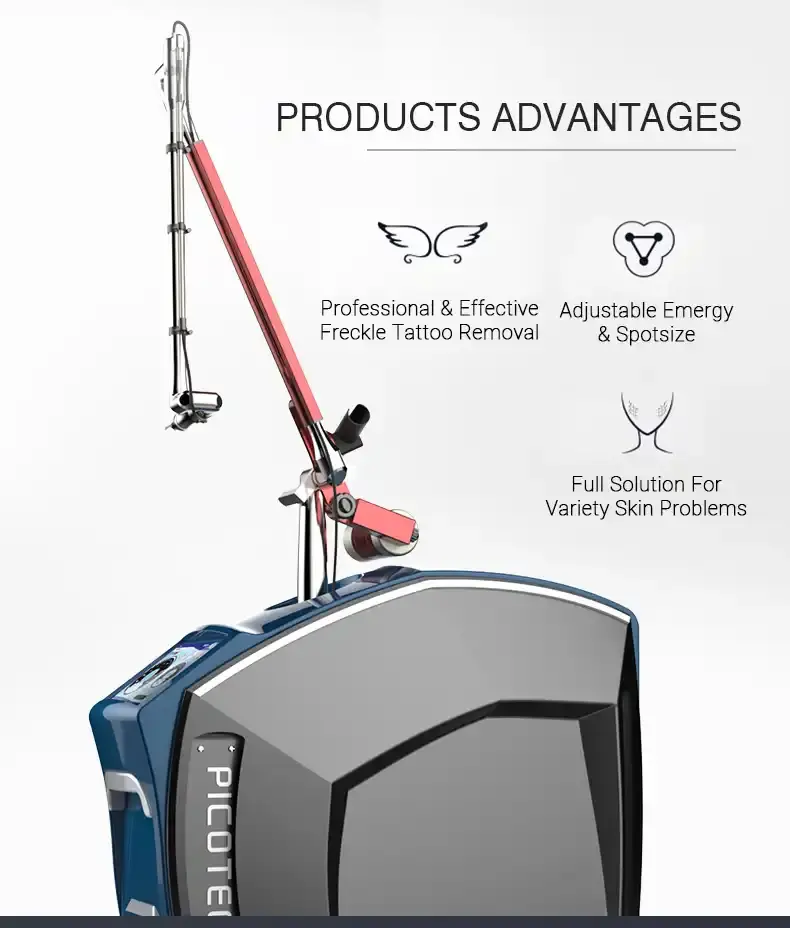
When studio owners look at laser systems, they should look at a number of success factors. The energy output runs from 100 to 2000 mJ across different wavelengths, so it can be used on a wide range of skin types and levels of color. The spot size can be changed from 2 mm to 10 mm, which lets workers tailor treatment areas and make sessions more efficient and accurate.

The two-cooling system that uses both air and water movement keeps the machine from getting too hot during long treatment sessions, so it works the same way all day. A frequency range of 1 to 10 Hz lets workers change the speed of treatment based on the client's comfort and the size of the area being treated. These requirements have a direct effect on both the results of treatment and the practitioner's ability to handle many clients at once.
Safety Protocols and Operator Protection
When using a laser professionally, safety rules must be followed to the letter. The nominal ocular hazard distance is 1 km, which means that both the operator and the client must wear certified protective goggles during the treatment. This gear usually has CE and ISO13485 certification, which means it meets international safety standards for medical esthetic devices.
Comparing Laser Technologies for Pigmentation Treatment
Wavelength Variations and Their Clinical Impact
In pigmentation treatment, different wavelengths are used for different things. The 532 nm wavelength is good at targeting freckles and sunspots on the top layer of skin because it absorbs red and brown melanin very well. The 755 nm frequency works well on mid-dermal coloring and is especially good at getting rid of green and blue tattoo ink. As it can reach up to 7–7 mm below the skin's surface, the 1064 nm wavelength is great for treating deep skin problems like Nevus of Ota and stubborn melasma.
Triple-wavelength systems are very helpful for tattoo removal companies because they remove multiple colors of ink at once. Before, they had to buy multiple devices. A complete system that includes all three bands lets professionals meet the needs of a wide range of clients with just one investment, which makes ROI estimates much more accurate.
Nanosecond vs. Picosecond Technology
At the moment, the market has choices for both nanosecond and picosecond pulse length. Traditional Q-switched systems with 6ns pulse widths have been used in hospitals for decades and have been shown to work reliably and affordably. Newer picosecond technology uses 350ps pulses to break up pigment even more finely, which could theoretically cut down on treatment sessions.
When studio owners look at these choices, they have to weigh the up-front cost against the effectiveness of the treatment, especially with a q switch 1064 laser. Nanosecond systems usually cost 40–60% less and get similar results at the endpoint, but they need an extra one to two sessions on average. Picosecond devices are very expensive, but they may bring in customers who want the newest technology, which could justify the higher service fees.
Treatment Speed and Client Downtime
Customer satisfaction has a big effect on a business's reputation and the number of referrals it gets. With Q-switched nanosecond lasers, color is usually removed in 4–8 sessions, split 6–8 weeks apart, with little downtime in between. After treatment, clients may have temporary redness that lasts for two to four hours and possibly some minor crusting that goes away in a week.
Because of this reasonable healing profile, studios can market treatments as "lunchtime procedures" that don't require long absences from work or social activities. Compared to chemical peels that need a week of recovery or ablative lasers that need two to three weeks of downtime, this is a clear economic edge for tactics that bring in new clients.
Real-World Applications and Treatment Outcomes
Addressing Common Pigmentation Disorders
Melasma is one of the hardest skin conditions to treat. It mostly affects women with Fitzpatrick skin types III–V. Because it goes deeper into the skin and absorbs less melanin, the 1064 nm wavelength is better for darker skin tones than shorter wavelengths, which can cause paradoxical hyperpigmentation. Treatment plans usually include 6 to 10 sessions with low energy levels (800 to 1200 mj/cm²) and strict rules for staying out of the sun.
This technology works amazingly well on age spots and lentigines. After two to three rounds of treatment with the 532 nm wavelength at mild fluences, these superficial pigmented spots usually go away 70 to 80% of the time. Studio owners say that clients are very happy with these quick-fix treatments, which often leads to them buying packages for other problems.
Post-inflammatory hyperpigmentation from acne scars is a rising market area, especially among younger people who want to look better. Because the laser can target pigment without making redness worse, it can help people with intense acne when used with the right skin care routines.
Tattoo Removal Service Expansion
When tattoo artists get into the removal business, they find a good way to make money that has a lot of room to grow. Industry data shows that 23% of people who have tattoos regret at least one of them, which means that people will continue to need reverse services. When people choose removal procedures, they often don't care as much about price as they do about cosmetic treatments, which supports high-priced strategies.
The 1064 nm wavelength is best absorbed by black and dark blue inks. Professional tattoos need between 6 and 10 sessions to be completely cleared. The 532 nm wavelength works with red, orange, and yellow inks. The 755 nm wavelength works with green and blue inks. Tattoos done by amateurs with less color usually fade 30–40% faster than tattoos done by professionals. This makes package deals and recommendations possible.
The same equipment is used for carbon peeling treatments, which are an extra service. Before the laser passes, carbon lotion is put on the skin to target big pores and uneven coloring on the skin's surface while also increasing collagen production. The treatment only needs the carbon solution, so it's a high-margin service that can be used for monthly upkeep packages.
Documented Client Outcomes
When studio owners add laser services, their average sales go up by 45-70% in the first six months after the equipment is set up. When compared to one-time tattoo services, laser treatments create steady lines of income because they are done over and over again. On average, 68% of clients who get pigmentation treatments return for more work after the first one is over. This is because they can see the results and trust the practitioner.
One company in Miami kept track of their first year after adding laser services. They had 340 treatment sessions and made $87,000 from their $32,000 investment in equipment. With an average treatment price of $256 and session packages, they were able to start making money right away and build a network of people who now send 41% of their new laser clients.
Essential Buying Considerations for Studio Owners
Technical Specifications to Evaluate
Pulse length has a direct effect on how safe and effective a treatment is. The 6ns standard strikes the best mix between breaking up pigments and keeping heat inside, as shown by decades of clinical use. Shorter pulses only slightly better things, but they also make tools much more expensive, which makes them less useful for companies setting up services.
Energy densities of up to 2000 mj/cm² make treatment possible for all skin types and levels of pigmentation. Operators who work with a wide range of clients need to make sure they have enough energy to safely treat people with darker skin tones while still being effective. Not enough maximum energy limits the ability to treat, which could mean losing out on lucrative client groups.
The spot size can be changed from 2 mm to 10 mm, which makes it easy to treat both big areas, like back tattoos, and small areas, like those around face features. Because it can do so many things, it gets rid of the need for multiple handpieces, which saves money and makes maintenance easier for small studios.
Identifying Reliable Equipment Suppliers
For people who are buying their first laser, going with a manufacturer with a good track record is very important. Taiwan Beauty Equipment (TB) is an example of a company that helps studios make the switch by offering thorough training programs and quick technical support. Their position in over 180 countries and 15 years of production experience show that they are stable enough for long-term equipment relationships.
Some important things to look for in a manufacturer of the q switch 1064 laser are certification paperwork (CE, ISO13485), a warranty that lasts at least two years, and the ability to get replacement parts quickly. Studios should make sure that suppliers offer operation training, either in-person or through detailed video lessons, because technical skill has a direct effect on both safety and treatment outcomes.
Payment choices like installment plans or leasing equipment can make it a lot easier for companies to add laser services without having to worry about money. Some sellers offer discounts on big purchases for people who buy more than one unit or who add technologies that work well together. This could cut the cost of buying each unit by 15 to 25 percent.
After-Sales Support and Training Programs
Laser service launches that go well and ones that don't depend on thorough operator training. Tattoo artists know a lot about skin, but they need to learn more about how lasers work with tissue, how to keep people safe, and how to choose the right treatment parameters. Reputable makers offer organized training that includes academic background, hands-on practice, and ways to fix problems.
When you run into new situations or problems with your equipment, you need ongoing technical support. Manufacturers giving 24-hour help channels through various time zones ensure minimal service disruption. Before buying, studios should make sure they understand the reaction time commitments and escalation processes, since equipment downtime directly leads to lost income.
A warranty that lasts for two years protects your finances during the important early stages of starting a business. When it comes to value, comprehensive warranties that cover parts, labor, and shipping costs for repairs are better than limited warranties that need separate service contracts. Before making a purchase, studios should make sure they understand what the guarantee doesn't cover and write down all of the coverage that is included.
Emerging Developments in Laser Pigmentation Treatment
Integration of Smart Technology
Newer laser systems have diagnostic tools that look at the type of skin and its color before offering treatment settings. This technology lowers the chance of operator error, which is especially helpful for artists who are moving from artistic work to medical esthetic services. Real-time energy tracking and automatic safety shutoffs make treatment even more consistent and keep clients safer.
Modern cooling systems now work with pulse delivery, so cooling happens at the same time before, during, and after laser pulses. This new technology makes clients much more comfortable and allows for higher energy transfer for stubborn coloring, which means fewer treatment sessions are needed to get rid of it all.
Expanding Application Scope
As research goes on, it becomes clear that Q-switched laser technology can be used for more than just treating color. Treatment for onychomycosis looks good; studies show that laser treatment of infected nails can get rid of the fungus. This app gives schools that serve older people more ways to make money, especially since older people are more likely to get nail fungus diseases.
Low-fluence multiple passes used in skin rejuvenation protocols encourage collagen remodeling without any visible downtime. People who want subtle gains rather than big changes are drawn to this "laser facial" method. They are part of an overlooked market group that values natural results and flexible treatment plans.
Strategic Partnership Opportunities
Forward-thinking studios build referral networks with dermatologists, plastic surgeons, and medical spas that don't have lasers or want to get certain treatments done by someone else. These relationships bring in a steady stream of clients and boost professionals' reputation in the healthcare field. When studios refer clients who need medical help that is outside of their expertise, the referrals are mutually beneficial.
More and more, companies that make equipment offer business development help in addition to expert training. This support includes marketing templates, social media content, and materials for educating clients. Studios should ask suppliers about these value-added services when they are comparing suppliers because they make launching new service categories much easier in terms of marketing.
Conclusion
Q-switched laser technology, exemplified by the q switch 1064 laser, is a tried-and-true way for tattoo studios and esthetic practices to offer more services that make money. Because the 1064 nm wavelength can easily treat a wide range of pigmentation problems in different skin kinds, it opens up a lot of ways to make money, and people want to use it. Technical details like nanosecond pulse time, adjustable energy output, and the ability to work with multiple wavelengths decide how well treatments work and how safe they are, which is important for having a good reputation for the practice. Instead of just looking at the price, studio owners should compare equipment suppliers based on their certification standards, warranty coverage, training depth, and support after the sale. The cost of the tattoo usually pays for itself in 6 to 12 months through treatment packages and return sessions. This creates long-term income lines outside of traditional tattoo services and meets clients' changing esthetic needs.
FAQ
1. What skin types can be safely treated with 1064 nm lasers?
All six Fitzpatrick skin types (I–VI) are very safe with the 1064 nm wavelength. This includes darker skin tones that are more likely to have problems with shorter wavelengths. The deeper penetration and lower melanin absorption lower the risk of epidermal damage. However, for darker skin to avoid paradoxical hyperpigmentation, conservative energy settings and proper cooling are still needed.
2. How many treatment sessions typically achieve pigmentation clearance?
Treatment needs depend on the type of pigmentation, its depth, and its density. Age spots on the skin's surface usually go away after two to three sessions, but conditions deeper in the skin, like melasma, need six to ten sessions. Professional tattoo removal takes 8 to 12 sessions, while home tattoo removal works faster. Six to eight weeks between sessions give the skin time to heal and get rid of pigment fragments.
3. What maintenance requirements do these laser systems need?
Quality systems don't need much regular care besides cleaning the outside and checking the settings every so often. Every three to six months, distilled water needs to be replaced in water cooling systems, and air filters need to be checked every three months. Professional calibration once a year makes sure that the energy output stays the same, but daily self-checks with test firings make sure that everything is working properly before treating clients.
Partner with TB for Your Laser Equipment Needs
TB is a reliable Q switch 1064 laser manufacturer that has been making high-quality lasers for 15 years and ships them to over 180 countries around the world. Our wide range of equipment includes triple-wavelength systems (532/755/1064 nm) that can produce up to 2000 mJ/cm² of energy, have pulse durations of 6ns, and use modern air-water cooling to keep working well during long treatment sessions. Each system is certified by CE and ISO13485 and comes with a two-year guarantee that covers all parts and expert support.
Studios that work with TB get organized operator training through video lessons and live consultations. They also get troubleshooting help from our experienced technical team, who are available 24 hours a day, seven days a week. Finally, they get marketing tools like treatment protocols and client education materials. Our flexible purchasing options can fit a range of budgets, and our OEM/ODM services let established practices that want to stand out in the market customize branded equipment.
You can talk about your specific needs, get detailed specifications, or set up equipment demonstrations by emailing susan@taibobeauty.com. Visit taibolaserbeauty.com to see all of our products and get access to technical tools that will help you start your laser service successfully.
References
1. Anderson, R.R., & Parrish, J.A. (1983). Selective photothermolysis: Precise microsurgery by selective absorption of pulsed radiation. Science, 220(4596), 524-527.
2. Chan, H.H., Ying, S.Y., & Ho, W.S. (2004). An in vivo trial comparing the use of different types of 532 nm Nd:YAG lasers in the treatment of facial lentigines in Oriental patients. Dermatologic Surgery, 30(10), 1321-1325.
3. Negishi, K., Akita, H., & Matsunaga, Y. (2018). Prospective study of removing benign pigmented lesions and tattoos with a novel Q-switched Alexandrite laser. Lasers in Surgery and Medicine, 50(7), 704-709.
4. Ortiz, A.E., & Goldman, M.P. (2016). Ablative laser resurfacing for cosmetic and reconstructive purposes: New technology and outcomes. Facial Plastic Surgery Clinics of North America, 24(2), 155-163.
5. Sardana, K., & Garg, V.K. (2014). Lasers in dermatology: An overview of types of lasers and their applications. Indian Journal of Dermatology, Venereology and Leprology, 80(3), 205-211.
6. Taylor, M.B., & Stern, R.S. (1997). Q-switched ruby laser treatment of tattoos: A 9-year experience. Archives of Dermatology, 133(12), 1541-1546.





YOU MAY LIKE