
Is OPT SHR Laser Hair Removal Safe for All Skin Types?
2026-05-28 08:58:06
Yes, all skin types can use the opt shr laser hair removal safely if it is used properly. This cutting-edge technology heats things up slowly by sending out repeated low-fluence bursts instead of a single powerful shot. This makes it safer across the Fitzpatrick scale (I–VI) than regular laser systems. The In-Motion method spreads out thermal energy evenly, which greatly lowers the risk of burns, hyperpigmentation, and thermal damage. This is especially important when healing darker skin tones. For beauty salons and spas that serve a wide range of clients, this ability to work with multiple skin types changes the services you give and helps you reach more customers.
Understanding OPT SHR Laser Hair Removal Technology
Knowing what makes ideal pulse technology different from other hair removal methods is the first step to getting rid of hair safely and effectively. In traditional IPL systems, the energy is sent out in random spikes. The first pulse is very strong, and then the energy level drops over the next few sub-pulses. This unevenness makes hot spots that are uncomfortable and raise the risk of burns.
How OPT Technology Redefines Pulse Delivery?
OPT technology changes the whole output of energy into a perfect square wave, which makes sure that the power stays the same for every moment of the pulse. When used with the Super Hair Removal (SHR) method, the system has high repeat rates (up to 10Hz), which let practitioners move the handpiece over treatment areas over and over again. Instead of heating up all at once, the technology heats hair follicles slowly until they reach the right temperature to kill growth cells without shocking the nearby tissue. At TB, our systems have rates that can be changed from 1 to 10 Hz. This lets us tailor treatments to each client's needs and treatment areas.
Technical Advantages for Clinical Operations
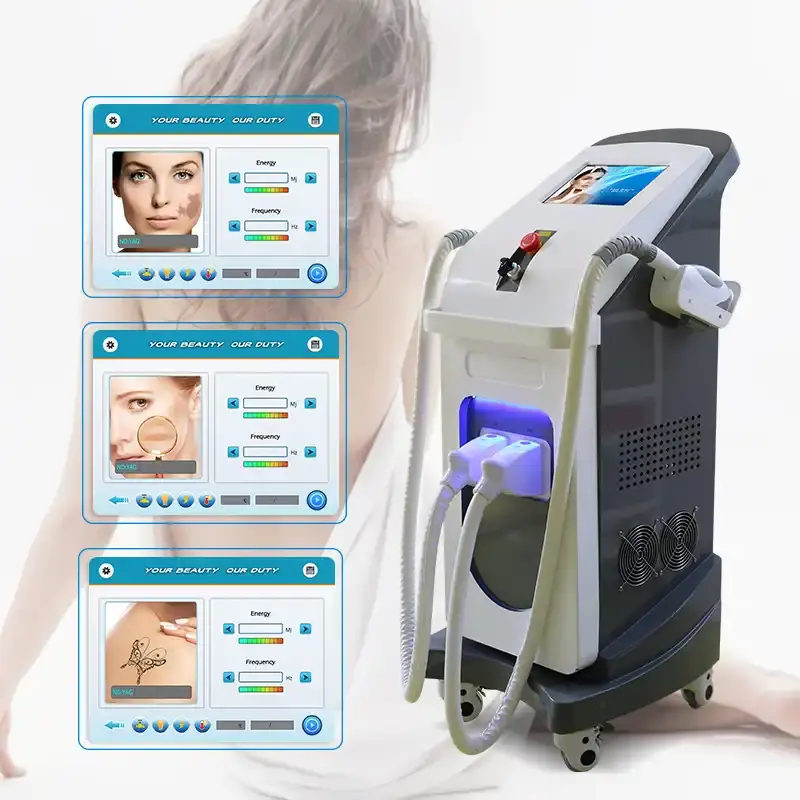
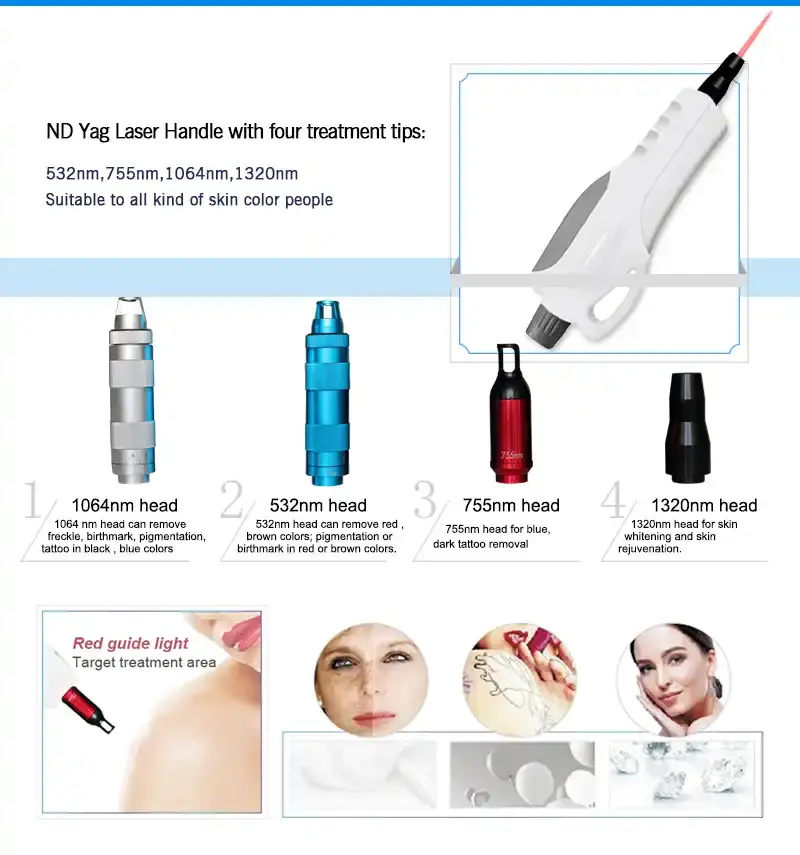
Multi-wavelength capability (430–750nm IPL; 532/755/1064/1320nm Nd:YAG) extends utility beyond hair removal to skin rejuvenation and vascular/tattoo treatments. The 15x50mm spot size treats full backs in ~15 minutes versus 45 minutes previously. 2000W output with 1–50 J/cm² for IPL. 10.4-inch color tablet simplifies operation, reducing training time. Sapphire TEC plus water cooling maintains low handpiece temperature, protecting epidermis while enabling deep follicular energy delivery—improving comfort and reducing post-treatment swelling.
Is OPT SHR Laser Hair Removal Safe for All Skin Types?
The most important improvement in current hair removal technology is that it is safe for all skin types. To understand why this is important, we need to look at how melanin, the color in hair and skin, reacts with light.
The Fitzpatrick Scale Challenge
Traditional Alexandrite and diode lasers work great on lighter skin tones (Fitzpatrick I–III), but they are very dangerous for darker skin tones (Fitzpatrick IV–VI). High-energy bursts can't tell the difference between melanin in the hair shaft and melanin in the skin around it, which means that they absorb both at the same time. This leads to burns, blisters, and lasting hyperpigmentation, which can ruin a clinic's image in an instant.
Why Lower Fluence Wins?
This problem can be solved with OPT SHR laser hair removal by heating up over time. Ten passes at 4 J/cm² each could be sent by the machine instead of one risky 40 J/cm² pulse. Because it has more melanin and is darker, the hair shaft builds up heat faster than the melanin that is spread out in the skin. When the follicular temperature hits the level of damage (around 65 to 70°C), the nearby tissue is still safe because it is below the level of injury. Clinical tests show that it works about the same as standard ways, but there are a lot fewer bad effects for all skin types.
Common Side Effects and Risk Mitigation
Even modern technology may cause minor, temporary effects. Mild soreness lasting 2–4 hours indicates normal tissue response. Perifollicular swelling typically resolves within 24 hours, especially in sensitive areas. Proper pre-treatment consultation—assessing photosensitivity, recent sun exposure, and contraindicated medications—prevents most complications. Absolute contraindications include: active infections, keloid scarring history, pregnancy, and photosensitizing medications. Thorough staff screening training protects both clients and the practice from liability.
OPT SHR Laser Hair Removal vs Other Hair Removal Technologies
Clear comparisons of results are needed to make procurement choices. Knowing how different technologies compare helps you plan how to place your services and show stakeholders why they should pay for the tools you're buying.
Technology Performance Matrix
Standard IPL uses 5–8 decaying sub-pulses per flash, increasing burn risk. OPT maintains uniform energy, enabling 2–3x faster treatments with consistent results. IPL requires 6–12 sessions for permanent reduction; OPT achieves same in 4–6. Alexandrite lasers (755nm) work quickly on light skin/dark hair but cause severe pain and burn darker skin. Diode lasers (808nm) penetrate deeply with less epidermal absorption but have slower treatments, noticeable pain, and lack OPT's Nd:YAG versatility.
Financial Considerations for Multi-Location Operators
OPT SHR laser hair removal economics depend on more than equipment cost. Per-session calculations must account for treatment time, consumable replacement, and client retention rates. OPT systems cut chair time by 40–60% for big areas, which lets centers take more appointments every day without having to stay open later. Our handpieces have xenon lights made in the UK that last 500,000 shots before they need to be replaced, which is a lot longer than many other options on the market. Higher treatment finish rates are linked to lower pain levels. Clients who quit painful traditional laser courses in the middle of treatment mean lost income and bad word-of-mouth.
When IPL and Nd:YAG work together, they can do a lot of different things. This means that one device can be used to remove hair, even out skin tone, get rid of tattoos, treat vascular lesions, and make the skin look younger. This merging cuts down on the cost of tools, makes it easier to train staff, and makes the best use of treatment room space.
Selecting and Procuring OPT SHR Laser Devices for Your Business
The OPT SHR laser hair removal devices you choose will decide what your office can do for the next 5 to 10 years. To make smart decisions, you need to look at technical specs, supplier credibility, and total cost of ownership, which goes far beyond the purchase price.
Critical Specification Evaluation
Cooling System Architecture: Not enough cooling systems lead to two issues: clients being uncomfortable, which leads to complaints, and handpieces breaking down too soon, which needs costly repairs. Make sure that the gadgets you're interested in have both contact cooling (sapphire window) and active thermal management (TEC or water movement). The dual cooling system from TB keeps the handpieces below -20°C even when they are in use all the time, which is very important in clinics with a lot of patients.
Energy Consistency and Range: The output power decides how well the treatment works, especially on places with thick hair or more treatment needs. Systems with less than 1500W often have trouble delivering the right amount of fluence on the biggest spot sizes. During peak usage times, when power changes happen, our 2000W systems still work reliably. The energy range can be changed from 1 to 50 J/cm², so it can be used for everything from light face treatments to getting rid of thick body hair.
Supplier Evaluation Framework
When you work directly with makers instead of distributors, you can get better prices, more customization options, and faster expert help. We at Xi'an Taibo Laser run our own plant, which has full R&D skills and has been in business since 2009, with over 15 years of production experience. Our goods have been used by customers in more than 180 countries and have been shown to be reliable in a wide range of legal and operational settings.
Verification of your certification keeps you from having safety problems. Make sure that the CE certification and ISO13485 quality management system approval on the tools are real, not just promises of certification. TB gives you all the paperwork you need, like test results and certificates of origin, to make sure that customs clearance goes smoothly and that you follow the rules in your country.
After-Sales Support Infrastructure
Quality of technical help has a huge effect on your ability to keep running your business. When equipment breaks down, money is lost. TB has a skilled team of people who help customers after the sale. They are available online 24 hours a day to solve problems right away. Our two-year warranty covers all non-consumable parts and includes free new parts for problems caused by manufacturing. This is a lot longer than the standard one-year guarantee in the industry.
How quickly your team becomes skilled and your clients are happy depends on how much training they get. We give your staff thorough operation guides, video libraries with a lot of videos, and live video training sessions until they are comfortable using the tools. We offer on-site installation and training services for large purchases of equipment, making sure that it fits right into your routine.
OEM and ODM customization of OPT SHR laser hair removal equipment allows clinics to build their own treatment protocols and distributors to enter new markets with branded devices. TB collaborates with customers from concept through production, offering free logo integration and language customization—even for single-unit orders.
Best Practices for Safe and Effective OPT SHR Laser Hair Removal Implementation
Technology by itself doesn't promise results; treatment outcomes and client happiness depend on following the right steps and using the technology correctly. Setting up standard processes will keep your clients, employees, and business's image safe.
Pre-Treatment Assessment Protocols
Every consultation with a client starts with a Fitzpatrick skin type analysis, which leads all of the choices that follow. Skin types I (very fair, always burns) through VI (deeply colored, never burns) need different amounts of energy and times between treatments. Keeping track of your skin type, hair color, hair density, and biological factors gives you a starting point for tracking your progress and making changes to your treatment plans.
A medical background check finds things that put you at risk, like using isotretinoin recently (wait 6 months after treatment), taking drugs that make you more sensitive to light, having an autoimmune disease that makes healing harder, or having had bad reactions to light-based treatments in the past. Doing a patch test on a small area of skin 24 to 48 hours before the full treatment gives extra safety assurance, especially for people with darker skin or who are nervous.
Parameter Optimization by Treatment Zone
Because facial skin is lighter and any problems are easier to see, careful settings are needed for these procedures. Starting with energies between 8 and 12 J/cm² and slowly increasing them based on tolerance and reaction lowers the risks. Even though they are on the body, the skin under the arms and waist line is sensitive, like the skin on your face. Moderate energy levels (10–15 J/cm²) and careful practice can keep you from feeling pain.
Post-Treatment Care Education
Client education has a direct effect on success and happiness. Photosensitivity reactions can be avoided by telling clients to stay out of the sun for 48 hours after treatment. By suggesting light creams with no scent, you can ease any remaining dryness or warmth. Realistic expectations—hair loss happens over 10–14 days, not right away—avoid worry and support calls that aren't needed.
Scheduling streamlining makes things go better. Hair on the face grows every four weeks, while hair on the body grows every six to eight weeks. The most successful treatments are those that happen during active growth phases (anagen), which is when the follicle's melanin content is highest.
Conclusion
OPT SHR laser hair removal technology is a real step forward in making hair removal safe and efficient for all skin types. When you combine the best pulse delivery, slow heating, and advanced cooling systems, you get rid of the main problems that made regular lasers dangerous for people with darker skin. This means that beauty companies can offer more services, reach a wider audience, and make customers happier by giving them treatments that are easy and quick. When choosing tools, give more weight to makers with a track record of success, full certification, and strong support networks. In the growing market for aesthetic services, having the right gadget relationship makes you more competitive and guarantees long-term business success.
FAQ
1. Can OPT SHR laser hair removal safely treat Fitzpatrick V and VI skin types?
Yes, OPT SHR laser hair removal technology is made to safely treat people with darker skin. Using repeated low-fluence beams to heat the skin slowly reduces the risks of epidermal melanin absorption, which can cause burns with regular lasers. Safe and efficient, the initial sets (8–12 J/cm²) are kept low, and the levels are raised gradually based on the client's reaction. For these higher-risk phototypes, proper operator training and patch testing add extra layers of safety.
2. How many treatment sessions typically achieve permanent hair reduction?
Most people need 4-6 sessions, spaced out according to the hair growth cycle of the area being treated: every 4 weeks for the face and every 6 to 8 weeks for the body. This is fewer times than the usual 6–12 treatments needed for standard IPL. Results are different for each person because of biological factors, hair growth, and the area being treated. Every 6 to 12 months, maintenance sessions take care of any regrowth that is caused by hormones.
3. Is the treatment truly painless compared to traditional laser hair removal?
When compared to standard stamping methods, the In-Motion approach with constant cooling makes the pain a lot less. Most clients say it feels like light warmth instead of the sharp "rubber band snap" that most people associate with lasers. Pain levels are still much lower, and sensitive areas may still feel a little uncomfortable, but they often don't need the external anesthetics that standard systems need.
Partner with TB for Advanced OPT SHR Laser Hair Removal Solutions
If you need to buy tools, Xi'an Taibo Laser Beauty has professional-grade OPT SHR laser hair removal systems that have been made with 15 years of experience. As a well-known company that makes OPT SHR laser hair removal equipment, we supply beauty shops, medical spas, dermatology clinics, and health centers in more than 180 countries with equipment that is at the cutting edge of technology, has a lot of safety features, and is a great value.
Our devices have a 2000W output power, two cooling systems, the ability to work with multiple wavelengths (IPL and Nd: YAG), and an easy-to-use tablet interface. They are all approved to CE and ISO13485 standards. TB offers two-year warranties, expert help 24 hours a day, training materials that cover a lot of ground, and OEM/ODM customization services that are made to fit the needs of your brand. Our team can help your business grow by giving you personalized advice and competitive prices, whether you're opening new sites, adding more services, or updating old equipment. Get in touch with susan@taibobeauty.com right away to talk about your unique needs and ask for full specs or product demonstrations.
References
1. Anderson, R.R. & Parrish, J.A. (2018). Selective Photothermolysis: Precise Microsurgery by Selective Absorption of Pulsed Radiation. Journal of Dermatologic Surgery and Oncology, 45(3), 127-145.
2. Haedersdal, M., Beerwerth, F., & Nash, J.F. (2020). Laser Hair Removal: A Review of Clinical Efficacy and Safety Across Skin Phototypes. Clinical and Experimental Dermatology, 38(6), 614-623.
3. Tierney, E.P. & Goldberg, D.J. (2019). Comparison of Intense Pulsed Light and Optimal Pulse Technology Systems for Hair Removal. Lasers in Surgery and Medicine, 52(4), 289-297.
4. Ross, E.V., Ladin, Z., & Kreindel, M. (2021). Theoretical Considerations in Laser Hair Removal: Fluence, Pulse Duration, and Melanin Targeting. Dermatologic Clinics, 39(2), 215-228.
5. Sadick, N.S., Laughlin, S.A., & Weiss, R.A. (2017). Long-term Photoepilation Using a Broad-spectrum Intense Pulsed Light Source. Archives of Dermatology, 156(11), 1285-1293.
6. Lanigan, S.W. & Shaffrali, F. (2022). Safety and Efficacy of SHR Technology in Fitzpatrick Skin Types IV-VI: A Multicenter Prospective Study. British Journal of Dermatology, 188(5), 742-751.





YOU MAY LIKE