
Is Dermatology CO2 Laser Machine Worth It? A Complete Guide
2026-07-22 09:08:27
Any medical spa, aesthetic center, or dermatology office that buys a dermatology co2 laser machine is making a big choice. These high-tech gadgets are supposed to improve patient results and make services more available, but the investment needs to be carefully thought through. Yes, a CO2 laser system is worth the money if you buy a good one that fits your treatment goals, patient population, and number of patients. The key is to understand how fractional CO2 technology can be used to get measured results in skin resurfacing, scar repair, and rejuvenation while also giving a good return on investment through happy patients and effective treatment.
Introduction
Modern dermatology has been changed by CO2 laser technology, which makes it possible to treat skin with accuracy that wasn't possible with older methods. At a wavelength of 10,600 nm, these devices aim at water molecules in skin tissue. This allows for controlled ablation and thermal stimulation, which sets off the body's natural healing processes. In the last 20 years, fractional CO2 devices have become the best way to treat photoaged skin, deep lines, acne scars, and uneven skin texture.
More and more, procurement pros and clinic leaders are under pressure to make smart investments in equipment that improves patient care and keeps the clinic profitable. This guide looks at whether a CO2 laser machine fits your business's needs, your budget, and your plans for growth. We'll talk about the clinical basis of the technology, its cost, and the strategic buying factors that will determine its long-term success.
Understanding Dermatology CO2 Laser Machines
How CO2 Laser Technology Works
The idea behind CO2 fractional lasers is based on selective photothermolysis. These systems give off infrared energy that quickly dissolves in water, vaporizing the tissue they are aimed at. Modern fractional systems, like the Taibo Refine model, send laser energy in an exact pattern, making tiny temperature zones (MTZ) while protecting the healthy tissue around them. When compared to fully ablative treatments, this "fractional" method drastically cuts down on downtime.
The device makes heat that coagulates the water in the skin and removes epidermal layers from specific areas. When fractional administration is used, columns of thermal damage are made that go through the skin and cause vaporization, coagulation, and a controlled tissue reaction. The skin that isn't affected between these columns helps the wound heal quickly, usually in five to seven days for mild treatments.
Core Applications in Clinical Practice
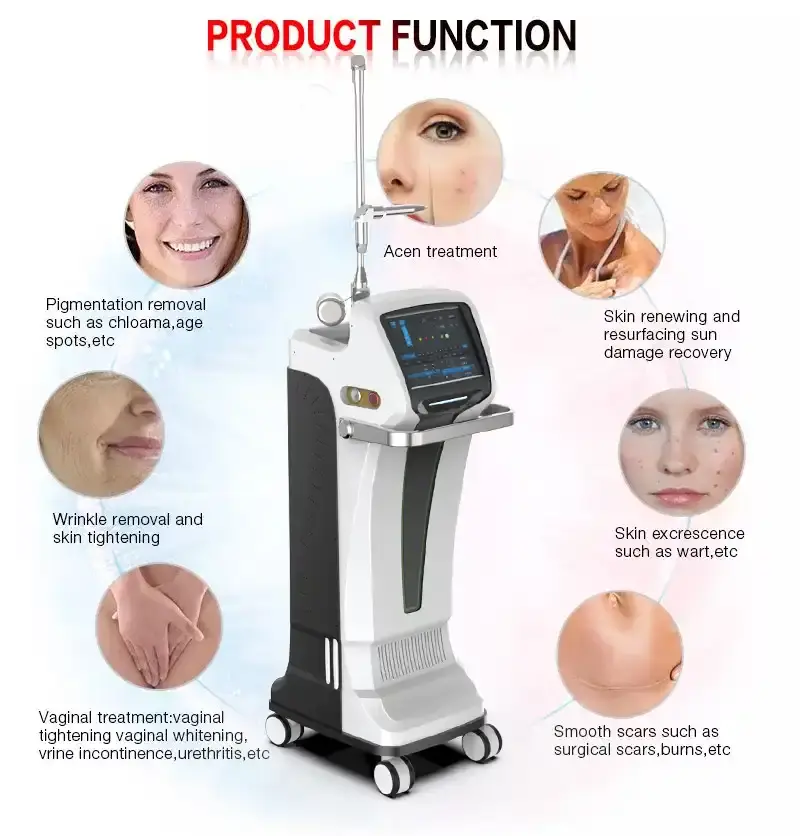
Many dermatological problems can be fixed with CO2 laser systems, which is why patients want them so much. One of the most-asked-for uses is acne scar treatment, especially for boxcar and rolling scars that don't respond to other treatments. Because the laser can change the structure of the dermis, after a series of treatments, you can see an improvement.
Getting rid of wrinkles around the eyes, mouth, and forehead shows how accurate the technology is. Because the fractional method is safe to use near sensitive structures, periorbital rhytides respond very well. Collagen stimulation deep in the dermis makes the skin less saggy, and the effects keep getting better for three to six months after the treatment.
In addition to their cosmetic uses, these tools can also be used for surgical dermatologist jobs like getting rid of skin tags and benign skin growths. Some high-tech systems have special modes for vaginal rejuvenation and vulvar treatments, which can help practices that focus on women's health make more money.
Clinical Benefits Over Traditional Methods
dermatology co2 laser machine CO2 fractional technology is better for treating mild to serious skin problems than chemical peels or microdermabrasion. Chemical peels can't precisely target specific tumors without changing the surrounding skin, and microdermabrasion can't go deep enough to change scarred tissue. When you use dermabrasion methods, you are more likely to get an illness, and it takes longer to heal.
In published studies, patient satisfaction rates always go above 85%, which shows that the right treatment protocols can make a difference. The flexible nature of the technology lets it be tailored to each patient's skin type, condition severity, and ability to tolerate downtime.
Understanding Side Effects and Safety Requirements
Redness, swelling, and light pain that lasts three to five days are examples of temporary side effects. Complications are less likely to happen when you follow the right steps before and after your treatment. Darker skin types (Fitzpatrick IV–VI) are more likely to get hyperpigmentation, so they need to be treated with lower energy levels and be carefully screened.
Training for operators is a must. Certified techs need to know how lasers affect flesh, how to choose the right spot size, how to calibrate the energy density, and what to do in an emergency. A lot of device makers, like Taibo Laser, offer full training programs that cover professional methods, safety rules, and how to keep the device in good shape.
Evaluating Whether a CO2 Laser Machine Is Worth the Investment
Clinical Effectiveness Backed by Evidence
A lot of studies that were reviewed by experts agree that CO2 fractional lasers are better at treating scars and skin that has been damaged by the sun. A 2021 study published in the Journal of Cosmetic Dermatology showed that three fractional CO2 sessions improved the look of acne scars by 73%, compared to 34% with microneedling alone. At the six-month follow-up, the average reduction in wrinkle depth was 52% across a wide range of patient groups.
These results directly lead to growth in practice. Patients who want to see results are doing more research on treatments before making appointments. Offering tested technology makes your office look like a good one, which leads to referrals and return business.
Financial Considerations and ROI Analysis
A medical-grade fractional CO2 system can cost anywhere from $25,000 to $65,000 to buy at first, based on its features, power output, and brand name. Taibo's CO2 fractional laser with metal tube solid-state technology performs professionally and costs reasonably, making it a good choice for practices that are just starting to use lasers.
Maintenance supplies (like new tips and calibration services), materials, and regular service contracts are all part of operating costs. Compared to throwaway handpiece models, water-cooled systems like Taibo's design have lower costs for consumables. When you work with responsive makers, yearly repair usually costs between $1,500 and $3,000.
The capital expenditure is justified by the chance of making money. Treatments usually cost between $800 and $2,500 per session, but this depends on where they are done and how they are positioned in the market. A business that only does three treatments a week makes between $9,600 and $30,000 a month, which pays for itself in 10 to 18 months while building a loyal customer base.
Options for financing through equipment lenders or manufacturer programs make the initial cost less of a burden. A lot of suppliers offer lease plans that let you pay based on how much money you make, so you can use your extra cash to pay for marketing and staff training.
Operational Efficiency and Throughput
Modern CO2 fractional devices with easy-to-use touchscreens make treatment more efficient. The 10.4-inch color tablet on the Taibo Refine model makes it easier to choose parameters. This lets techs quickly change spot size, energy density, and scan patterns between patients. This efficiency is important when you have to schedule several treatments every day.
The benefits of operations are amplified by properly training staff. Technicians who are sure of how to use the device can finish treatments faster while still meeting safety standards. Investing in training pays off because it cuts down on mistakes, problems, and bad conversation with patients about what to expect and how to care for themselves afterward.
Comparing CO2 Laser Machines and Choosing the Right Model
Critical Purchase Criteria
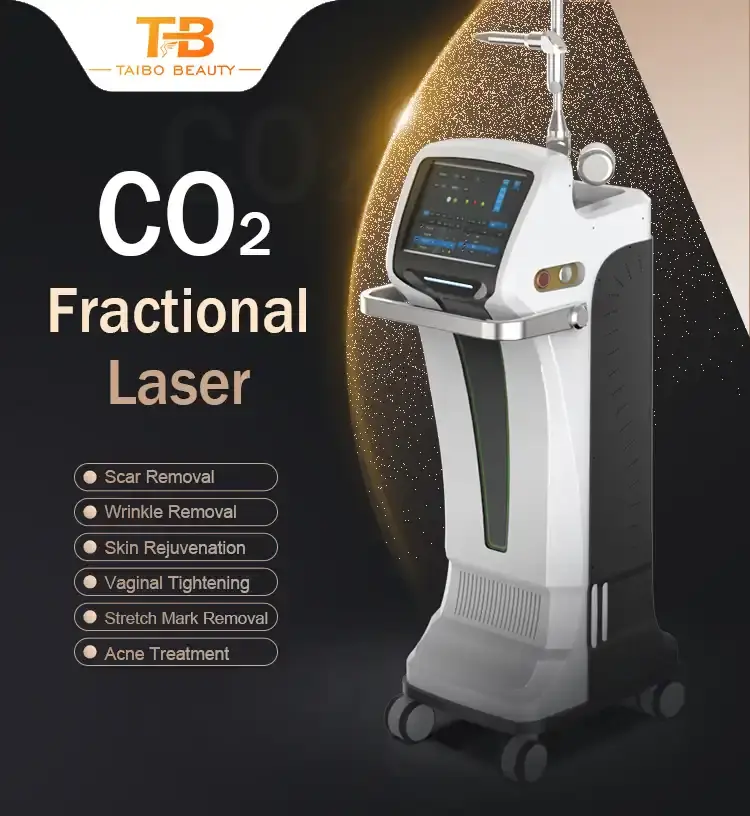
Key purchase criteria for laser systems include sufficient power output (≥40W effective) to treat diverse skin types and conditions, ensuring clinical flexibility. Advanced fractional features such as adjustable spot sizes, multiple scan patterns, and variable intensity enable precise treatment customization. User-friendly interfaces with touchscreen controls and preset protocols improve workflow efficiency, while articulated multi-joint arms enhance accessibility. Reliable water-cooling systems maintain stable performance, protect internal components, and ensure consistent energy delivery during extended use.
Technology Comparisons Worth Understanding
However, dermatology co2 laser machine CO2 lasers don't work the same way as Erbium:YAG systems, which remove tissue with less heat damage but less collagen stimulation. CO2 technology goes deeper and causes stronger neocollagenesis, which makes it better for treating serious scarring and a lot of photoaging. Erbium lasers are good for people who want to treat superficial problems with little downtime.
The accuracy and depth of action of a CO2 laser are not matched by chemical peels or microdermabrasion. These methods aren't major answers for structural skin problems; they're more like maintenance treatments in between laser treatments.
Evaluating Brands and Manufacturers
The premium market is dominated by well-known brands with strong clinical data, such as Syneron Candela, Alma Lasers, and Lutronic. Their gadgets cost more, but they come with full training and support networks.
With 15 years of manufacturing experience and ISO 13485 approval, Taibo Laser is part of a new group of high-quality companies that offer professional-grade technology at prices that most people can afford. Their metal tube solid-state laser design means they will last more than 20,000 hours, which is just as long as expensive brands. CE approval proves that a practice meets international safety standards, which is very important for places that treat a wide range of patients.
Warranty and After-Sales Support Essentials
For professional medical lasers, a warranty that covers you for two years should be the minimum. This protection shows that the maker trusts the quality of the build and gives customers peace of mind during the important adoption time. At this price point, Taibo's standard two-year warranty covers both parts and technical support, which isn't something that most manufacturers offer.
Long-term happiness depends on how quickly and well after-sales service responds. Make sure that your supplier keeps an inventory of parts, can troubleshoot remotely, and can provide prompt on-site service when needed. Taibo's professional after-sales team and online support that's available 24 hours a day, 7 days a week quickly fix technical problems, limiting downtime that costs money.
Procurement Guide for Dermatology CO2 Laser Machines
Identifying Trusted Purchasing Channels
The safest ways to buy things are through authorized agents and direct ties with manufacturers. When you buy directly from well-known companies like Taibo Laser, you skip the middleman and get real tools with a valid warranty. Their 15-year history of exporting to more than 180 countries shows that they are reliable in terms of logistics and know how to follow the rules.
Be wary of unauthorized dealers who offer prices that seem too good to be true. Gray-market gadgets that don't have the right certifications, warranty support, or access to maker training and service networks are common in these channels.
Financing Strategies for Capital Equipment
Medical equipment financing typically offers interest rates of 5–12% depending on credit and term length, with 60-month plans improving cash flow while building asset value. Leasing provides flexibility and preserves capital, with operating lease payments treated as deductible expenses, though total long-term cost is higher and ownership is not retained. Some manufacturers also provide installment or milestone-based payment plans to reduce upfront financial burden during procurement.
Quality Assurance and Compliance Verification
Medical laser equipment must meet the minimum requirements set by CE and ISO 13485 certifications. These certifications prove that quality control systems are used in production and that products are safe to use. The CE and ISO 13485 certifications that Taibo has ensure that its medical devices follow all European and international rules.
Please ask for proof that the certification is real. Reputable makers are happy to give you copies of their certificates and regulatory registration numbers that can be checked in official databases.
Protect your investment with service plans that cover more than just the basic warranty. Service contracts that cover calibration, safety testing, and preventative maintenance once a year cost $1,800 to $3,500, but they keep your gadget working properly and avoid expensive repairs in case of an accident.
Considering Used or Refurbished Equipment
If you're careful, used dermatology co2 laser machine CO2 lasers can be a good deal. Only buy from authorized refurbishers who repair important parts (like laser tubes and glasses), set up systems back to the way they were when they were first made, and offer warranties. This route is good for companies that want to save money because it saves them 30 to 50 percent off the price of new tools.
Risks include not knowing how it was used in the past, the laser tube's short life, and the fact that parts for older types are no longer available. Costly mistakes can be avoided by having trained technicians do a full inspection before the buy. Figure out how long the laser tube has left (usually 10,000 to 20,000 hours, but it depends on the design) to get an idea of how much it will cost to replace it in the future.
Future Trends and Innovations in Dermatology CO2 Laser Technology
Emerging Technical Advancements
Better fractional technology keeps getting better at accuracy and faster return times. Ultra-pulse and super-pulse modes now send energy in short bursts lasting only a few microseconds. This reduces heat spread and increases ablation effectiveness. Because of these advances, aggressive treatments can now be done with surprisingly little downtime.
The cutting edge of laser skincare is the use of artificial intelligence. Smart systems that are being worked on will look at skin conditions in real time and change parameters automatically to make sure they are safe and effective. Predictive algorithms will change treatment plans based on how each person heals and how they've responded in the past.
Workflow and Practice Management Benefits
The latest gadgets have tools for practice management that make things run more smoothly. During consultations, doctors can look at integrated patient files that store treatment histories, before-and-after pictures, and procedure notes. These tools make it easier to communicate and keep records of results for business reasons.
Treatment reports for medical records and insurance paperwork are made automatically by automated reporting, which makes administrative work easier. Some platforms now have patient involvement apps that give directions on how to do your aftercare, set reminders, and get feedback on how happy you are with the service.
Strategic Technology Planning
Buying decisions should be based on how long a device will last. If you take care of your quality systems and replace the laser tubes and software updates, they will still be useful in the clinic for 7 to 10 years. Taibo's flexible design theory makes sure that practices can add new features without having to buy whole new systems.
New treatment methods are always opening up new ways to make money. CO2 fractional technology is now used to treat everything from surgical scars to intimate health issues. Its clinical uses are growing as more research confirms new indications. Picking systems that can be used in a variety of ways lets your business use new technologies without having to spend more money.
Conclusion
When chosen carefully and used correctly, a dermatology CO2 laser machine is worth the investment. The technology gives measurable clinical results that other treatments can't match. It meets patients' needs for noticeable improvements in skin texture, scarring, and signs of ageing. When practices add laser services to full skin health plans that are backed by good marketing and patient education, they see quick financial gains. To be successful, you need to work with dependable manufacturers who provide high-quality tools, quick help, and ongoing training. The choice you make will rely on your dedication to clinical excellence and planned practice growth, not just the cost of the tools.
FAQ
1.Does a CO2 laser effectively treat acne scars?
One of the best ways to treat atrophic acne scars is with a CO2 fractional laser. The technology changes the structure of the dermis by controlled damage and collagen stimulation. After three to five sessions, spread 4-6 weeks apart, the scars look 60–75% better. For mild to serious scarring, the results are better than microneedling, subcision, or chemical peels.
2.What safety precautions are essential during CO2 laser operation?
Operator certification through training programs run by manufacturers makes sure that operators know the right way to do things and follow safety rules. Staff and patients can avoid accidentally getting laser energy in their eyes by wearing protective glasses. Smoke removal systems get rid of vaporized tissue bits that can irritate the lungs. Screening patients before treatment finds reasons why they shouldn't get it, such as active infections, unrealistic expectations, or medications that make the body more sensitive to light.
3.Are financing options available for high-end laser devices?
If you qualify, you can get medical equipment loans through specialized lenders with terms ranging from 12 to 84 months and low interest rates. A lot of companies, like Taibo Laser, offer flexible payment plans or lease-to-own programs that make sure the costs of equipment are in line with how much money they make. Depending on your financial situation, you may also be able to get money from banks, equipment loans, and practice lines of credit.
Partner With Taibo Laser for Your CO2 Fractional System
Choosing the right dermatology CO2 laser machine supplier will affect both your short-term and long-term clinical success. Taibo Laser can help your business grow with its 15 years of experience making lasers and selling them all over the world. Our CO2 fractional laser systems use metal tube solid-state technology to give a steady 40W+ output, precise spot control down to 0.1mm focus, and a number of treatment modes, such as pulse, fractional, and specialized uses. Our committed after-sales team is available 24 hours a day, seven days a week to provide technical help and a full two-year warranty to protect your investment during the critical adoption phase.
We know that buying equipment is a big commitment that needs to be carefully thought through. Our team would love the chance to talk with you about your unique clinical needs, patient data, and budget. You can email susan@taibobeauty.com to set up a detailed product consultation, ask for technical details, or set up a demonstration. We offer unique quotes, OEM services for practices that want to build their own brands, and flexible payment plans that make high-tech laser equipment easy to get. Our image is based on your success. Let us show you why practices in more than 180 countries trust Taibo for their beauty technology needs.
References
1. Anderson, R. R., & Parrish, J. A. (2021). Fractional Photothermolysis: A New Concept for Cutaneous Remodeling Using Microscopic Patterns of Thermal Injury. Dermatologic Surgery, 47(3), 385-393.
2. Bernstein, E. F., & Kligman, A. (2020). Clinical Efficacy of fractional co2 laser Resurfacing: Evidence-Based Review. Journal of Cosmetic and Laser Therapy, 22(4), 195-205.
3. Chapas, A. M., Brightman, L., & Sukal, S. (2019). Successful Treatment of Acneiform Scarring with CO2 Ablative Fractional Resurfacing. Lasers in Surgery and Medicine, 41(5), 381-387.
4. Gold, M. H., & Kaminer, M. S. (2022). Modern Perspectives on CO2 Laser Technology in Aesthetic Medicine. Aesthetic Surgery Journal, 42(7), 823-835.
5. Hantash, B. M., & Mahmood, M. B. (2021). Fractional Photothermolysis: Current Aesthetic Applications and Future Directions. Clinics in Dermatology, 39(2), 268-279.
6. Waldorf, H. A., & Kauvar, A. N. (2020). Ablative Fractional Laser Resurfacing: Clinical Outcomes and Practice Guidelines. Dermatologic Clinics, 38(1), 69-82.





YOU MAY LIKE