
How to Use a 9D HIFU Machine Safely in Aesthetic Clinics
2026-05-14 08:56:07
To use a 9D HIFU Machine safely in an aesthetic center, the person must fully understand the technology, strictly follow safety rules, and have had the right training. Through seven specialized cartridges, this advanced ultrasound device provides focused energy to different areas of skin. This increases collagen production to lift the face and shape the body without surgery. To make sure the machine is safe to use, it needs to be properly adjusted, have the right cartridges for the treatment areas, and be watched over during every session to make sure there are no bad responses and the best possible therapeutic results.
Introduction
High-Intensity Focused Ultrasound represents a major advance in non-surgical rejuvenation. Clinic owners and procurement managers face pressure to deliver effective treatments while maintaining safety standards. The 9D HIFU machine solves both problems with advanced ultrasound technology, user-friendly controls, and built-in safety features. This guide helps B2B decision-makers understand technology, risk mitigation, and purchasing considerations for smart investments.
Understanding the 9D HIFU Machine and Its Technology
Evolution from Traditional HIFU Systems
In the past, HIFU machines only sent out single-line energy patterns, which took a long time to fix and required great accuracy from the user. The 9D improvement is a big change in the way ultrasounds are used. Modern systems send up to twelve energy lines at the same time, covering a 10mm width in a single shot, unlike their 3D or 4D predecessors that only handled small areas of tissue per pulse. This multi-line grid cuts the process time by a huge amount while making sure that the energy is spread evenly across all treatment zones.
Core Technology and Mechanism
Focused ultrasound waves penetrate deeply without harming superficial layers, targeting specific points where thermal energy triggers biological responses. Tissue temperature rises to 65–75°C at focal points in dermis and SMAS layer. Controlled thermal damage initiates wound healing cascade, stimulating fibroblasts to produce new collagen and elastin fibers over subsequent weeks. This mechanism distinguishes ultrasound from surface-level treatments.
Clinical Benefits and Market Positioning
As people learn more about the risks and downtime of surgery, the demand for non-invasive treatments like the 9D HIFU machine keeps going up. Clinics that have cutting edge ultrasound equipment are ahead of the curve on this trend. Treatments don't need anesthesia, cause little to no pain, and let you go back to your normal tasks right away. Neocollagenesis takes two to three months to start showing results, and the benefits last for twelve to eighteen months. This schedule tells the difference between ultrasound treatments and short-term fixes, and it stays away from permanent surgeries, which some clients find scary.
Common Safety Challenges and How to Address Them?
Identifying Potential Adverse Effects
Even though ultrasound treatments are generally very safe, it is still important to know what problems could happen. Mild redness and swelling usually go away in a few hours, which is a normal reaction to inflammation. When energy hits surface nerves, you might feel numbness or tingling for a short time. This generally goes away in a few days. More worrying side effects are burns from too much energy, delayed edema that suggests tissue damage, or imbalance from applying the force unevenly.
Root Causes of Safety Incidents
Most bad things happen because of things that could have been avoided. The biggest problem is that operators don't get enough training—technicians who don't know how to use the tools may choose the wrong energy levels or treatment depths. When meetings have to be rushed to fit into tight schedules, care is lost and mistakes are more likely to happen. When you don't maintain your tools, it loses safety margins and performance stability. Another major weakness is bad client selection; treating people who shouldn't be treated causes problems no matter how skilled the operator is.
Establishing Robust Safety Protocols
Standardized patient screening begins with written medical history documentation noting pregnancy, active infections, autoimmune diseases, and metal implants. Visual assessment determines skin type, tissue laxity, and realistic outcome expectations. Patch tests identify unusually sensitive individuals before full treatment. Pre-treatment equipment verification checks cartridge integrity, energy settings, and cooling systems. Maintain treatment logs recording parameters, treated areas, and patient responses for outcome tracking and liability protection.
Step-by-Step Safe Usage Process of 9D HIFU Machine in Clinics
Pre-Treatment Preparation and Assessment
Review client's medical history, current medications, and aesthetic goals. Some medications (blood thinners, immunosuppressants) may require physician clearance. Document treatment area condition with photographs from standardized angles establishing baseline appearance. Obtain written informed consent explaining procedure, expectations, results timeline, and potential side effects. Inform clients that results develop gradually, possibly requiring multiple sessions. Clean treatment area thoroughly and mark zones requiring attention.
Operational Guidelines and Session Monitoring
In a 9D HIFU machine, select an appropriate cartridge based on treatment depth: 3.0/4.5mm for facial rejuvenation, 6.0–13.0mm for body applications. Each cartridge provides ~20,000 shots—sufficient for multiple full-face treatments. Set energy levels based on treatment area and patient tolerance: 0.8–1.2J for face, up to 2.0J for body. Dual-handle operation enables simultaneous treatment with independent parameter adjustment. Maintain consistent contact pressure and movement speed across all treatment zones.
Post-Treatment Care and Follow-Up
Once the treatment plan is done, take off the ultrasound gel and use cooling cloths if needed. Mild heat and swelling are normal reactions that usually go away in a few hours. Tell your clients to stay out of the sun, do intense exercise, and avoid getting their faces massaged for 24 to 48 hours after treatment. Assist the mending process by suggesting gentle skin care and enough water. Set up a follow-up call for 48 hours to check on healing and talk about any worries. Most patients say they start to feel better around week two, and the best results are seen two to three months later, when the collagen remodeling is fully developed. Record results by taking pictures again at regular times, creating an album that shows the treatment worked.
Selecting the Right 9D HIFU Machine for Your Clinic or Business
Critical Evaluation Criteria
When buying equipment, choices that go beyond the price of the item need to be carefully thought through. The treatment's effectiveness is directly affected by how stable the energy output is; machines with unstable energy transfer produce uncertain results. Treatment depth flexibility determines clinical uses; wide cartridge ranges allow for a wide range of services, from gentle treatments around the eyes to forceful body contouring. Legal protection for your business comes from following the rules; at the very least, check that your quality management system has CE certification and ISO13485 certification.
Comparing Manufacturers and Technology Features
Established manufacturers with extensive production experience offer greater reliability and support infrastructure. Companies operating since 2009 have witnessed market evolution and refined products through continuous improvement. In-house R&D capability demonstrates innovation commitment versus merely rebranding generic products. Technical specifications matter: cartridge longevity (20,000 shots = 40–50 full-face treatments) affects operating costs. Adjustable dot spacing (1.0–2.0mm in 0.1mm steps) enables treatment customization.
Financial Analysis and Procurement Strategy
Total ownership cost includes machine price plus maintenance, consumables, and training expenses. Equipment initial cost varies widely, but higher-quality devices lasting longer prove more cost-effective long-term. Warranty terms reflect manufacturer confidence—parts-and-labor coverage for 1–2 years indicates quality construction. Volume purchasing benefits multi-location owners or distributors. Experienced exporters understand international logistics, documentation, and post-sale customer service requirements.
Building Long-Term Success with 9D HIFU Technology
Investing in Comprehensive Training Programs
A piece of equipment isn't very useful if it can't be used to its full potential by skilled users. Structured training programs, whether they are on-site, online, or at the workplace, help employees get better at what they do faster. A good training program includes the basic ideas of ultrasound physics, anatomical factors, guided hands-on practice, and how to fix common problems. Continuing education keeps professionals up-to-date on new methods and advances in practical knowledge. Access to training is very important when staff is changing; makers who offer endless remote help and large video libraries make it easy to bring new team members on board without stopping production.
Maintaining Equipment Performance
Preventive maintenance keeps 9D HIFU machine treatments consistent and extends the life of the device. Set up cleaning procedures for each use to keep sensitive parts safe from gel waste and external contamination. Transducer parts will not get damaged if you store cartridges the right way. Professional service checks should be done once a year, even if the devices seem to be working fine, because calibration drift happens over time. How quickly a manufacturer fixes technology problems has a huge impact on how the clinic works. Companies with specialized after-sales teams that offer help 24 hours a day, seven days a week have less downtime that hurts their sales. Repair times depend on how quickly replacement parts can be found. Manufacturers with large stocks can fix problems faster than those that need longer buying processes.
Leveraging Client Outcomes for Growth
Results that have been proven increase trust and bring in new people. Photograph treatments in a planned way, making sure the lighting and angles are always the same. Get recommendations from patients and make sure they give you permission to use them in marketing. Case studies that show specific treatment approaches and how they worked teach possible clients and show off your knowledge at the same time. Look at treatment records to find the best procedures for each type of patient. This method is based on facts and leads to better results, fewer bad things happening, and higher prices for better service quality. Sharing wins through professional networks makes your business look better in the world of aesthetic medicine.
Conclusion
For cosmetic centers to use 9D HIFU machine ultrasound technology safely and effectively, they need to have technical knowledge, follow strict guidelines, and use high-quality tools. The 9D technology is more efficient and produces better results than older generations. This puts clinics in a good situation to meet the growing demand for non-invasive regeneration. To be successful, you need to do more than just buy tools. You need to invest in thorough training, keep safety standards high, and work with makers who offer strong support systems. When making purchases, people should focus on long-term value over short-term cost saves. Both patients and the business's image are protected by technology that works and technical help that is quick to respond. As the aesthetics market gets more complex, clinics with good safety records, consistent results, and new tools will be able to take market share from rivals who offer similar services.
FAQ
1. What distinguishes 9D HIFU technology from traditional surgical facelifts?
Surgical facelifts require cuts, drugs, and healing times of several weeks. Ultrasound treatments, on the other hand, don't require cutting, cause little to no pain, and let you go back to your normal activities right away. Surgical effects show up right away, but they come with more risks and cost more. Over the course of several months, ultrasound results slowly improve as the body's natural collagen production rises. This type of healing is more subtle and doesn't cause the stretched look that can come with surgery.
2. What side effects should clinic operators anticipate?
Most people only have mild heat and swelling that go away in a few hours. In treated areas, temporary stiffness or tingling may happen, but it usually goes away in a few days. Some rare problems that can happen are burns from using too much energy, prolonged swelling that means tissue damage, or nerve damage from using the wrong method. These risks can be greatly reduced by getting the right training, choosing the right energy, and carefully evaluating each patient.
3. How do regulatory requirements affect equipment selection?
Using beauty tools without the right certifications puts clinics at risk of being sued and could force them to close. The CE mark shows that the product meets European safety standards, and the ISO13485 mark shows that the quality management system meets the standards for medical devices used around the world. Instead of depending only on what the maker says, check the authenticity of the documentation directly with the certifying bodies. In the market for aesthetic goods, fake certificates do spread.
Partner with Xi'an Taibo Laser Beauty for Premium HIFU Solutions
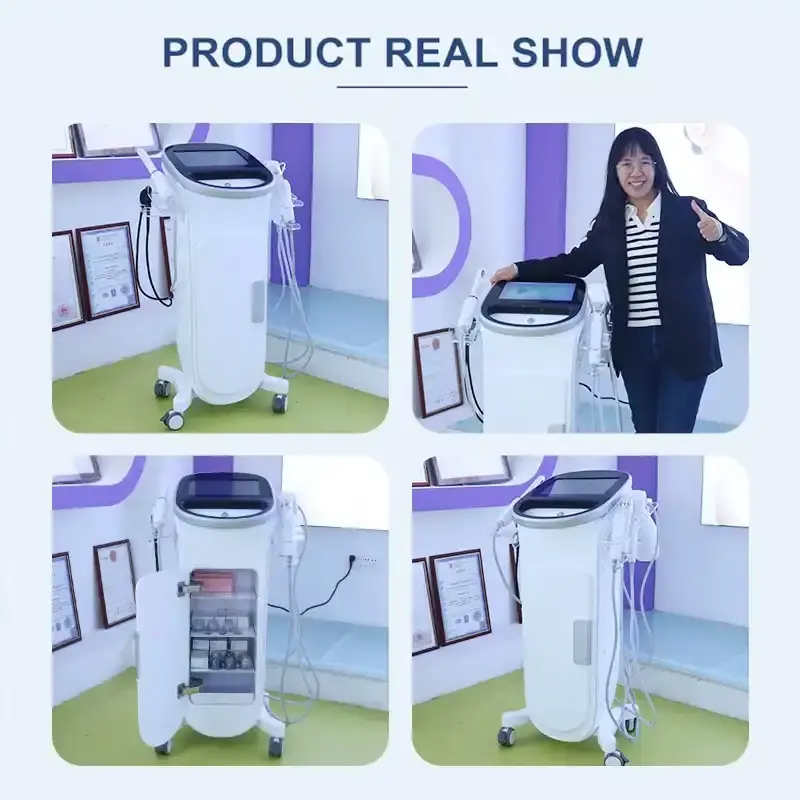
Since 2009, Xi'an Taibo Laser Beauty has been making high-tech beauty tools, learning a lot about study, production, and shipping to other countries. Our qualifications as a 9D HIFU machine provider include CE and ISO13485 certifications, which show that we meet strict safety and quality standards. We've been working with clinics in more than 180 countries for over 15 years, so we know the problems that beauty businesses face and come up with solutions that work in the real world. Our five-handle system combines different technologies—7D HIFU, radiofrequency, VMAX, Lipo HIFU, and vaginal tightening—into a single platform. This makes treatments more flexible and increases your return on investment. The devices come with seven cartridges that can be used for both face and body uses, as well as full training materials and technical help available 24 hours a day, 7 days a week. We offer flexible OEM and ODM services for doctors and wholesalers who are making their own names. Email susan@taibobeauty.com to talk about your unique needs. We offer personalized talks where we look at your clinical needs, the demographics of your patients, and your business goals to suggest the best equipment combinations. See what a difference it makes when you have focused manufacturing knowledge and real relationship support to help you build a successful aesthetic practice.
References
1. Chen, M.H., et al. "High-Intensity Focused Ultrasound for Non-Invasive Body Contouring: Clinical Efficacy and Safety Considerations." Journal of Cosmetic Dermatology, 2022.
2. Thompson, S.R. and Williams, K.L. "Collagen Stimulation Mechanisms in Focused Ultrasound Treatments: A Comprehensive Review." Aesthetic Surgery Journal, 2021.
3. Park, J.Y., et al. "Comparison of Multi-Line HIFU Systems Versus Traditional Single-Line Devices: Treatment Efficiency and Patient Outcomes." Dermatologic Surgery, 2023.
4. Anderson, R.D. "Safety Protocols for High-Intensity Focused Ultrasound in Aesthetic Medicine: Evidence-Based Guidelines." Plastic and Reconstructive Surgery, 2022.
5. Liu, H. and Zhang, W. "Long-Term Efficacy and Patient Satisfaction Following HIFU Treatments: A Five-Year Follow-Up Study." International Journal of Cosmetic Science, 2023.
6. Roberts, M.J. "Procurement Strategies for Aesthetic Medical Devices: Quality Assessment and Vendor Selection Criteria." Medical Device Technology, 2021.





YOU MAY LIKE