
How to Use 808 Diode Laser Hair Removal Machine Safely?
2026-04-22 09:47:48
To safely operate an 808 diode laser hair removal system, you must understand its science, acquire training, and follow standard protocols. The 808 diode laser Hair Removal Machine uses 808nm photothermolysis to target hair shaft melanin without harming surrounding tissue. Operators must be well trained, accurately assess clients, adjust parameters based on skin type, wear protective glasses, and maintain equipment for safe use. Modern devices have cooling systems and real-time tracking for safety. They can be utilized on all skin types if administered properly by hospital staff.
Understanding the Safety Principles of the 808 Diode Laser Hair Removal Machine
To use an 808 diode laser hair removal machine safely, you need to know how it affects human flesh and what safety measures are in place to keep bad things from happening.
The Science Behind 808nm Wavelength Technology
Many professionals think 808nm is excellent for permanent hair loss. Melanin chromophores in this range penetrate hair cells and absorb well. Heat from laser light in the hair shaft damages stem cells and dermal papilla structures that regrow hair. The wavelength's selective absorption protects adjacent skin, but cooling is still necessary for safety.
Built-In Safety Mechanisms That Protect Clients and Operators
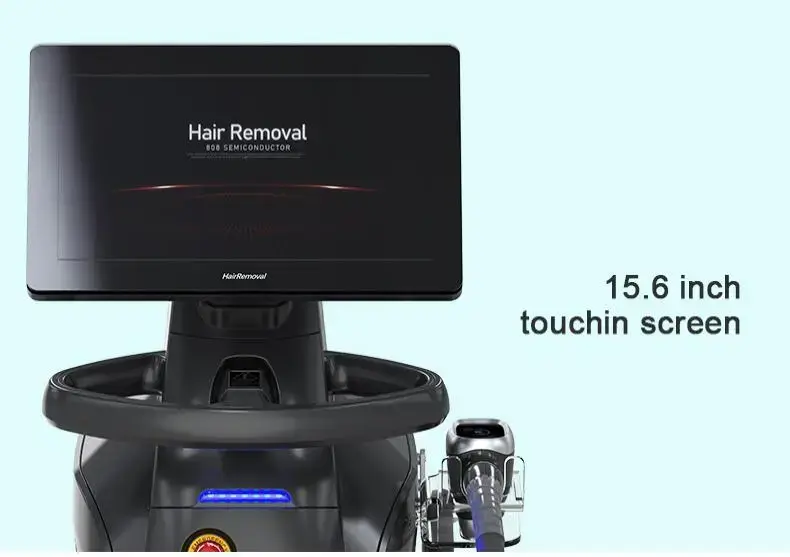
Modern professional systems have various safety elements that function together during therapy. Our advanced machines use water cooling, air flow, compressor refrigeration, and TEC technology to maintain the diamond window temperature. The 15.6-inch touch panel displays energy output, temperature, and shot counters in real time. Touch sensors prevent accidental fire if the handpiece loses skin contact. The ergonomic handle and LCD screen let workers monitor treatment data without stopping work.
Skin Type Compatibility and Contraindication Awareness
Understanding Fitzpatrick skin type is crucial for proper care. Single-wavelength 808nm devices work on most skin types, however experts should be cautious with darker skin. Our 755nm, 808nm, and 1064nm triple-wavelength technology solves this. The 755nm wavelength works best on lighter skin types (I–III), the 808nm wavelength on all skin types, and the 1064nm wavelength on darker ones (IV–VI) and brown skin. You shouldn't get it if you have active infections, recent sun exposure, light-sensitive medications, pregnancy, or medical disorders that hinder healing. A thorough meeting prevents problems and ensures the proper choice.
Common Side Effects and Prevention Strategies
Correct therapies cause little pain for most people. The temporary redness and swelling around treated hair shafts usually disappears within hours. Choose the optimum parameters, calm the patient, eliminate overlapping beats, and give thorough aftercare instructions to avoid more serious issues. Clients should avoid the sun, cease taking light-sensitive medications, and avoid root-damaging hair removal procedures between sessions. High-quality gadgets with contact cooling technology reduce thermal harm and make clients more comfortable.
Step-by-Step Safe Operation Guide for the 808 Diode Laser Machine
Systematic guidelines make sure that all of your treatments are safe and have the best results possible.
Comprehensive Client Screening and Assessment
A thorough examination and evaluation before treatment. Please list medications, cosmetic treatments, skin disorders, and reasons for not doing the procedure. To determine the Fitzpatrick type, examine the skin, hair color, texture, and density, and treatment areas for sores or other issues. Explain what to expect, hazards, number of sessions, and post-treatment care. Get proof of the risks and advantages discussed to reach an educated agreement. A rigorous screening protects your clients and professional reputation.
Pre-Treatment Equipment Calibration and Safety Checks
Make sure the equipment works before starting treatments. Make sure cooling systems work and are at the right temperature before touching a client. Keep sapphire windows clean and safe. Damage like scratches blocks energy and increases burn risk. Make sure parameter choices match treatment plan. Test the gadget away from the client to ensure consistent energy output. Look for worn links and cables. Routine checks, which take a few minutes, prevent tool issues and ensure consistent treatment.
Adjusting Parameters Based on Individual Client Profiles
Parameter selection is perhaps the most critical safety aspect. Energy flow (joules per square centimeter), pulse length, and repeat rate must be adjusted for skin, hair, and treatment area. The frequency of our gadgets can be adjusted from 1Hz to 10Hz to suit different treatment procedures. The large 12x36mm spot size covers more space quickly and evenly distributes energy for safety. For the first few sessions, use conservative settings to see how people react before making modifications. Write down effective procedures and client criteria to ensure consistency. Instead of starting with aggressive settings, raise incrementally based on tolerance and reaction.
Proper Application Technique and Session Timing
Technique impacts safety and efficacy. Keep skin touch throughout to ensure proper cooling and energy delivery. Plan the handpiece movement to eliminate gaps and overlap. The triple cooling system works best with steady movement and proper touch pressure. Area size determines treatment length. Faces take 10–15 minutes, while larger body parts require 30–45. First, space lessons 4–6 weeks apart. Change this depending on your hair's growth cycle and treatment efficacy. Broken follicles can fall out now without exposing too much skin.
Post-Treatment Care Protocols for Optimal Recovery
Aftercare that works prevents issues and improves results. Use cold cloths immediately if redness is severe. Gentle skin cleansing using mild, fragrance-free products for 24–48 hours. Broad-spectrum SPF 30+ should be used for two weeks after therapy. Tell your clients to avoid saunas, hot tubs, and vigorous activity for 24–48 hours. This treatment will cause hair loss in one to three weeks. The client shouldn't wax, pluck, or thread their hair. Schedule a follow-up conversation to assess your progress and resolve any difficulties. Full treatment instructions reduce complications and make clients pleased.
Comparing 808 Diode Laser with Other Hair Removal Technologies: Safety and Effectiveness Insights
Knowing how 808 diode laser hair removal machine technology stacks up against other options helps you make business decisions and set realistic goals for your clients.
Diode Laser Versus IPL: Safety and Precision Differences
IPL devices use broad-spectrum light, not coherent laser energy. Safety and efficacy ratings differ greatly. IPL's scattered wavelengths make aiming less precise, increasing the risk of epidermal blistering and burns, especially for darker skin. The 808nm coherent laser light penetrates hair follicles deeper and more frequently, thermally injuring them while inflicting less surface harm. Innovative cooling solutions in our products enhance this safety benefit. Clinical studies suggest that diode technology offers higher lasting reduction rates and less side effects than IPL. Diode lasers are safer and more reliable for professional companies that value performance and safety.
Alexandrite and Nd:YAG Lasers: Comparative Safety Profiles
Alexandrite lasers (755nm) benefit lighter skin but not darker skin because they absorb more epidermal melanin. Dark skin can be safely treated with Nd:YAG lasers (1064nm) since they penetrate deeper and absorb less melanin. They need stronger fluences and longer sessions to achieve the same results. Our multi-wavelength approach mix 755nm, 808nm, 1064nm, and sometimes 940nm to give you the best of each wavelength on one platform. This versatility allows safe and effective treatment of all Fitzpatrick types without additional devices. This enhances clinical skills and ROI for several client groups.
Traditional Methods and Their Safety Limitations
Alexandrite lasers (755nm) benefit lighter skin but not darker skin because they absorb more epidermal melanin. Dark skin can be safely treated with Nd:YAG lasers (1064nm) since they penetrate deeper and absorb less melanin. They need stronger fluences and longer sessions to achieve the same results. Our multi-wavelength approach mix 755nm, 808nm, 1064nm, and sometimes 940nm to give you the best of each wavelength on one platform. This versatility allows safe and effective treatment of all Fitzpatrick types without additional devices. This enhances clinical skills and ROI for several client groups.
Maintenance and Troubleshooting for Safe Long-Term Use
Regular upkeep on your equipment keeps it safe to use and saves your investment over many years of clinical use.
Routine Cleaning and Component Inspection Schedules
Daily cleaning keeps things functioning smoothly and prevents contamination. After each client, clean the sapphire window with the correct materials to remove gel accumulation and dead skin. Check the window regularly for fractures or cloudiness that could block energy. Check your cooling system filters weekly and replace them as directed. Monthly full reviews should evaluate cable stability, handpiece usefulness, and screen calibration. Record all repair tasks to ensure accountability and identify issues before they become harmful. These routine measures extend tool life and maintain treatment safety.
Addressing Common Operational Issues Promptly
Even well-maintained 808 diode laser hair removal machines might be difficult to use. Lower cooling efficiency usually indicates a clogged filter or refrigerant issues. Fix these problems immediately since insufficient cooling dramatically increases burn risk. If the laser bar's energy output varies, the tuning may be wrong or electrical issues requiring professional repair. Never ignore error messages—they activate the safety system. Over 50 million shots are guaranteed with our American Coherent laser bars. However, counting shots helps us determine when servicing is needed. Contact a doctor immediately if you notice any weird sounds, smells, or performance changes before starting treatments again.
Importance of Certified Technical Support
Working with well-known manufacturers with competent support improves long-term safety. We have trained technicians who use our tools available 24/7. This minimizes downtime and speeds up problem resolution. Our two-year warranty covers manufacturing errors that break parts. This safeguards your investment in the crucial first months. Approved service providers safeguard your guarantee and supply genuine replacement parts, testing instruments, and device-model-trained specialists. This expert support network helps maintain tool safety throughout their lifespan.
Procurement Considerations for Safe and Reliable 808 Diode Laser Machines
Strategic choices about what to buy affect both the facility's ability to treat patients right away and its ability to run successfully in the long term.
Verification of Safety Certifications and Compliance Standards
Regulatory compliance is crucial while choosing hair removal procedures. A CE certificate verifies that a product fulfills European safety, health, and environmental criteria. A corporation with ISO13485 accreditation uses medical device-specific quality control methodologies. These licenses require demanding tests, loads of paperwork, and constant compliance monitoring. CE and ISO13485 certification ensures that our 808 diode laser hair removal machine equipment meets international safety requirements. Instead of trusting the merchant, verify the certification with the issuing body. FDA or local government permission adds proof and may affect liability insurance premiums and requirements for US markets.
Evaluating Supplier Credibility and Brand Reputation
The choice of supplier affects the dependability of equipment, the level of service, and the value of a long-term relationship. We've been in business since 2009, so we have more than 15 years of experience making things and have sent them to more than 180 countries around the world. This long-term position shows that the market continues to trust the business and that it is stable. Check the supplier's qualifications, such as their plant certifications, production capacity, ability to do research and development, and service infrastructure after the sale. Independent reviews and comments from customers give you more information about real-life situations than marketing materials. When possible, site visits let you directly judge the quality of the making and the skill of the organization. Established makers with clear operations and track records that can be checked pose a much lower risk than newer or less well-documented sources.
Balancing Cost Efficiency with Safety Assurance
When figuring out the total cost of ownership, price must be weighed against quality, safety, and support. When you spend less at first, you often have to give up on safety features, component quality, or service support, which raises the costs and risks in the long run. High-quality parts, like American Coherent laser bars, Italian pumps, Japanese cooler plates, and Taiwan power sources, are used in our systems to make sure they work well and are reliable. The 3000W laser power, with up to 2000W per handle, gives doctors a lot of choices for treating a wide range of conditions. Options for buying in bulk and OEM/ODM services help businesses or wholesalers with multiple locations save money while still meeting quality standards. Figure out the return on investment by looking at how many treatments you can do, how much you can charge, and how long the tools will last, not just how much it cost to buy.
Comprehensive Training and Ongoing Support Requirements
Equipment potential doesn't mean much if the person operating it isn't skilled. Initial training that covers how to use the gadget, safety rules, treatment methods, and what to do in a situation is very important. We give workers thorough operation instructions, training videos, and video consultation help until they are ready to work on their own. When you buy in bulk, we offer on-site training and installation services to make sure that everyone on your team is always skilled. Over time, skills are kept up by continuing education that covers advanced methods, new applications, and changes to best practices. Operations don't stop when there is access to technology help for troubleshooting, upkeep advice, and clinical consultation. To keep misunderstandings from putting safety or operational performance at risk, contracts should clearly spell out what training is to be delivered, when help is available, how long it will take to respond, and how much it will cost.
Conclusion
To use an 808 diode laser hair removal machine safely, you need to understand the technology, follow the set procedures, keep the tools in good shape, and only buy from reputable companies. It is very safe for all skin types to use the 808nm range as long as users get the right training and follow the rules. Modern multi-wavelength systems can treat more conditions and keep people safe by using improved cooling, real-time tracking, and smart design features. If beauty shops, medical spas, and dermatology centers want to add or improve their hair removal services, they should buy high-quality tools from well-known brands. This will protect their customers and give them a good return on their investment. When making strategic choices about what to buy, you should think about certifications, the name of the supplier, full support, and the total cost of ownership. This will set your practice up for long-term success in this growing market area.
FAQ
1. Is the 808 diode laser hair removal machine safe for all skin types?
When used properly, modern 808nm diode laser systems can safely treat most skin types. Multi-wavelength platforms, on the other hand, are safer for all Fitzpatrick skin types. With the right setting changes, single-wavelength 808nm devices work well for types I–V. Our triple-wavelength technology adds 755nm to treat lighter skin types better and 1064nm to treat darker skin types IV–VI safely, even if the skin is already brown. All risks can be kept to a minimum by properly evaluating the client, using conservative starting settings, and making sure there is enough cooling.
2. What side effects should clients expect after treatment?
Most people who get their hair treated have weak, temporary redness and swelling around the treated follicles that go away in a few hours. Some say it feels like a light sunburn and lasts for 24 to 48 hours. Blisters, hyperpigmentation, or hypopigmentation are rare side effects that usually happen because the settings were wrong, the cooling wasn't good enough, or people didn't follow the pre- and post-treatment instructions. Compared to older technologies, our combined cooling systems cut down on pain and complications by a large amount.
3. How often should the machine undergo maintenance for optimal safety?
The sapphire window is cleaned every day, the filters are checked once a week, and full reviews are done once a month to make sure safety and function are at their best. Professional service once a year by qualified experts makes sure that the calibration is correct and finds worn-out parts before they become a safety risk. Our technical team makes maintenance plans that are special to your level of use and working conditions.
Partner with Taibo Beauty for Safe, Professional-Grade Laser Solutions
You can trust Xi'an Taibo Laser Beauty Company as your high-quality 808 diode laser hair removal machine manufacturer. They have been in business for over 15 years and have shipped machines all over the world. Our high-tech systems come with American Coherent laser bars, triple cooling technology, the ability to work with multiple wavelengths (755nm/808nm/1064nm/940nm), and a large 12x36mm spot size. They are also easy to use and have a 15.6-inch touch screen interface. Each device comes with CE and ISO13485 approval, a full two-year warranty, and access to our expert support team 24 hours a day, 7 days a week. We work with beauty salons, health centers, and dermatology clinics in more than 180 countries to provide not only tools but also full solutions that include training, OEM/ODM customization, and a long-term relationship. Contact our team at susan@taibobeauty.com to talk about your specific needs, get full specs, or set up equipment demos that show why discerning professionals choose Taibo as their first choice for safe, effective laser hair removal solutions.
References
1. Anderson, R.R., & Parrish, J.A. (1983). "Selective Photothermolysis: Precise Microsurgery by Selective Absorption of Pulsed Radiation." Science, 220(4596), 524-527.
2. Gan, S.D., & Graber, E.M. (2013). "Laser Hair Removal: A Review." Dermatologic Surgery, 39(6), 823-838.
3. Haedersdal, M., Beerwerth, F., & Nash, J.F. (2011). "Laser and Intense Pulsed Light Hair Removal Technologies: From Professional to Home Use." British Journal of Dermatology, 165(s3), 31-36.
4. Lanigan, S.W. (2003). "Management of Unwanted Hair in the Female Face and Neck." Journal of Cosmetic and Laser Therapy, 5(1), 3-8.
5. Ross, E.V., Ladin, Z., Kreindel, M., & Dierickx, C. (1999). "Theoretical Considerations in Laser Hair Removal." Dermatologic Clinics, 17(2), 333-355.
6. Town, G., & Ash, C. (2010). "Instrumentation and Technologies Used in Hair Removal." Lasers in Medical Science, 25(3), 315-322.





YOU MAY LIKE