
How to Import RET CET RF 448kHz RF Modules Safely
2026-08-24 08:58:53
Importing advanced beauty equipment requires careful planning and adherence to international standards. When you're looking to source monopolar radiofrequency devices operating at the specialized 448 kHz frequency—commonly used in aesthetic medicine for skin rejuvenation, body contouring, and therapeutic applications—understanding the complete import process protects your investment and ensures regulatory compliance. The ret cet rf 448khz technology combines Capacitive Electric Transfer (CET) and Resistive Electric Transfer (RET) modes to deliver precise thermal and sub-thermal treatments. This guide walks you through every critical step, from verifying supplier credentials to navigating customs clearance, helping you avoid costly mistakes and establish a reliable supply chain for your spa, clinic, or wellness center.
Understanding the RET CET RF 448kHz Module and Its Import Challenges
What Makes 448 kHz Frequency Unique in Beauty Equipment
Scientists have proven that the frequency of 448 kHz is just right for cells to interact with each other. The "Proionic effect" restores cell membrane potential permeability to about -70mV. This is different from general RF devices that work above 1 MHz, which mostly make heat through molecular friction. This system encourages natural ion exchange, which makes it easier for lymph to drain and lactic acid to be reabsorbed without hurting the tissues. Devices that use this technology usually have two working modes: CET targets water-rich tissues like skin and muscles with an insulated electrode that acts as a capacitor, and RET goes deeper into high-resistance tissues like tendons and visceral fat with a stainless steel electrode that is not insulated.
Technical Parameters That Define Quality Equipment
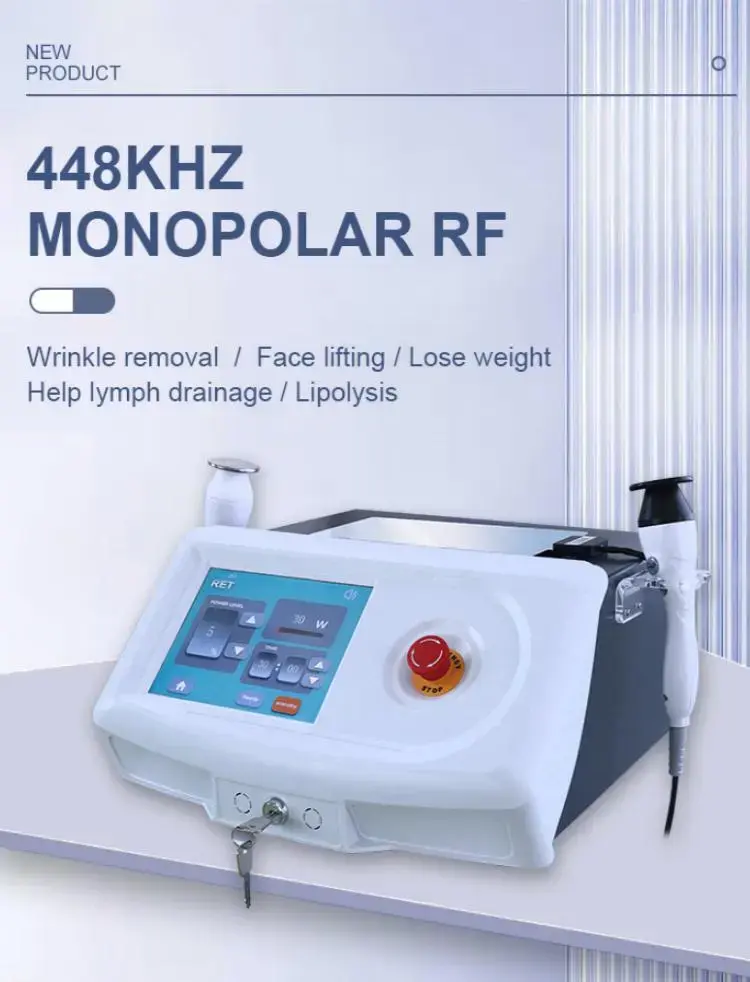
Professional-grade monopolar RF systems made for medical use have to meet very strict requirements. To keep non-thermal accuracy and stop electrical spikes, frequency stability should stay within 448 kHz ±1%. In RET mode, the output power is usually between 100W and 200W, and in CET mode, it's between 300VA and 450VA. At Xi'an Taibo Laser, our products consistently output 100W of power and work with both 110V and 230V AC, so they can be sold in countries around the world. The pure sinusoidal waveform keeps the skin from getting burned, and the CET electrode coating's dielectric constant needs to be able to handle high voltage without making the skin arc. Practitioners can successfully treat both surface and deeper tissue problems because the treatment depth can go up to 5 mm.
Common Import Obstacles Procurement Teams Face
Bringing these high-tech gadgets into your country comes with a number of challenges that need to be planned for ahead of time. Frequency sharing rules are very different from one area to the next. What is legal in Europe might not be allowed in North America or the Asia-Pacific. The large number of fake goods on the market is very bad for both your business's reputation and the safety of your customers. Businesses have lost thousands of dollars on equipment that didn't pass certification when it got there. Customs officials look closely at electronic medical devices, and shipments are held up for an average of 14 to 21 days because of missing paperwork. If you know about these problems before you start buying something, you can make backup plans and choose suppliers who have a history of doing business with other countries.
Key Compliance and Regulatory Requirements for Importing RET CET RF 448kHz Modules
Essential Certifications for Market Entry
Getting regulatory permission is the first step in bringing in legal tools. The CE mark shows that a product meets European standards for health, safety, and the environment. These standards include low voltage and electromagnetic compatibility guidelines. The ISO13485 certification makes sure that the processes used to make medical devices meet the standards for quality management. Our equipment has both of these certifications, as well as overheat protection and automatic shut-off features that meet international safety standards. If you want to sell your product in the United States, check to see if your type of device needs to be registered with the FDA. For example, some beauty equipment is a Class II medical device that needs a 510(k) premarket notice. Ret cet rf 448khz compliance makes sure that dangerous materials like lead and mercury are not used, and this is required for a lot of equipment offered in developed markets.
Documentation Checklist for Smooth Customs Clearance
The right papers keep shipments from being held up at the border and even rejected. Your supplier should give you a detailed commercial invoice with the full value, unit prices, and equipment specifications. The certificate of origin shows where the goods were made and may allow your package to get better tariff treatment under trade deals. Technical information about a product, like user instructions, service guides, and compliance test results, shows that it is real. Different countries have different import licenses. Before RF equipment can cross borders in some countries, it needs to be approved by their health ministries or telecommunications authorities. Voltage requirements, frequency specs, and safety warnings must be written on product labels in the official language of the target country. If you work with experienced makers like TB, you can be sure that you will get complete paperwork packages that meet the needs of regulators in many different areas.
Step-by-Step Process for Safe and Efficient Import of RET CET RF 448kHz Modules
Verifying Supplier Authenticity and Manufacturing Capability
When you choose a supplier carefully, you can avoid problems with that supplier in the future. First, make sure that the manufacturer actually runs a production facility and isn't just a middleman for trade. TB runs its own factory in Xi'an, which has separate offices for production, quality control, and research and development. This system, which was built up over 15 years, ensures that the quality of the products always stays high. Ask for proof of certifications and use the online databases of the issuing authorities to make sure they are real. Look at feedback from past customers and get in touch with buyers in similar areas. A real supplier lets you visit the factory and is open and honest about production times, customization options, and support services after the sale.
Negotiating Contracts That Protect Your Investment
The rules of a contract spell out what each party can expect from the other and what they can do if problems arise. Parts and work should be covered by the warranty for at least one year, and there should be clear steps for getting repairs. Our normal warranty covers problems that aren't caused by people and includes free part replacements during the coverage period. Minimum order quantities affect unit prices. Buying in bulk can often get you discounts, but you should weigh the savings you get against how much inventory you need and how much space you have. Terms of payment could include percentages of deposits, payments at set intervals, and schedules for final balances. Make sure the Incoterms are clear (FOB, CIF, DDP, etc.), so there is no confusion about who pays for insurance, customs duties, and transportation costs at different stages of the shipment. Include clauses that talk about delivery times, penalties for being late, and guarantees about the product specifications.
Quality Assurance Before Shipment Departure
The pre-shipment inspection is your last chance to check the quality of the equipment before it leaves the country where it was made. On-site checks can be done by third-party inspection services to make sure that devices meet the requirements that were ordered, work properly, and have the right certifications. Check the electrical parameters, such as the stability of the frequency, the consistency of the output power, and the functionality of the safety features. Check the quality of the physical construction. Our devices are 40 cm long, 38 cm wide, and 20 cm high, and they weigh 7 kg. They come in sturdy metal boxes with custom foam interlayers that keep them from getting damaged during shipping. Taking pictures of the check creates proof of the state of the equipment before it leaves, which is useful if there are any problems after delivery. Reputable companies like TB want these inspections to happen because they back up our quality promises and give buyers more faith in us.
Logistics Strategy and Customs Navigation
Speed and cost must be considered when selecting shipment options. Air freight delivers equipment in 5–7 days, although it costs more and is only ideal for urgent orders or important little goods. Sea freight is cheaper per unit for big orders, but transit time might be 25–35 days, depending on origin and destination. Door-to-door delivery and customs clearance are offered by DHL, FedEx, and UPS. These services are ideal for fast sample orders and delivery. Packaging must be done correctly regardless of technique. Our professionals pack in sturdy aluminium containers with bespoke foam that have survived thousands of foreign shipments. Customs brokers that specialise in medical equipment imports may handle tariff classification, tax computation, and clearance. They swiftly fulfil regulatory standards, reducing inspection stays and documentation demands that delay release.
Comparing RET CET RF 448 kHz with Other RF Frequencies for Your Applications
Performance Characteristics Across Frequency Spectrum
Knowing how 448 kHz compares to other frequencies can help you make smart decisions about technology. Because lower frequencies, like 315 MHz and 433 MHz, can send signals farther and through walls more easily, they are commonly used for security systems and remote controls. On the other hand, they don't have the exact biological relationship that makes 448 kHz perfect for medical uses. The 868 MHz frequency, which is common in European markets, has a good balance between range and data transmission speed, but it's mostly used for talking on the phone and not for treating tissue. High-frequency 2.4 GHz systems are great at moving data and supporting protocols like Wi-Fi and Bluetooth. However, the way they create heat is very different from the way that ret cet rf 448khz monopolar RF treatment works.
Why 448 kHz Excels for Aesthetic Medicine Applications
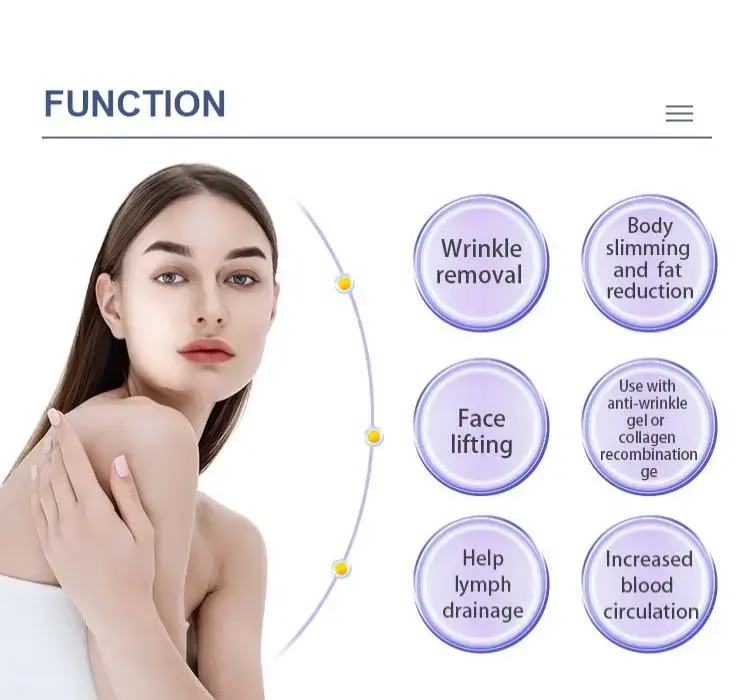
The biological effects that happen at this frequency are very helpful for people who work in beauty and health. Clinical studies show that 448 kHz stimulation improves capillary circulation, boosts local blood flow, and speeds up the repair of cells. These results mean that the appearance of the skin will look better, fat will be lost, pain from joint conditions will go away, and healing from soft tissue injuries will go faster. Facelifts, body contouring, cellulite reduction, and therapeutic uses for conditions like frozen shoulder or lumbar spondylosis are just some of the treatments that can be done. Compared to higher-frequency options, our 100W output still has better power efficiency—it has a big healing effect while still using a fair amount of energy. The sub-thermal and thermal modes that can be reached through CET and RET electrodes give treatment options that single-mode systems can't match.
Troubleshooting and Post-Import Support Tips for RET CET RF 448kHz Modules
Addressing Common Operational Challenges
Even high-end equipment has technical problems from time to time that need to be fixed in a planned way. Problems with the electrode contacts can sometimes cause signal irregularities. Make sure that the coupling gel is applied correctly and that the pressure stays the same during treatments. If the treatment isn't working, it could be because the wrong mode was chosen for the type of tissue being treated; remember that CET works best on the surface and RET goes deeper. Electrical supply unreliability is often the cause of power going out and on at random, so make sure that the voltage consistency in your building meets the needs of your equipment. Cleaning the wires after each use, checking the cords for wear, and setting up regular calibration checks are all things that can be done to make a device last longer. Our devices have safety features that turn them off automatically if the temperatures inside get too high. This keeps both the equipment and the patients safe.
Leveraging Manufacturer Support Resources
When you set up good ways to talk to your supplier, they go from being a vendor to a strategic partner. You can get full technical help from TB in a number of ways, including emailing susan@taibobeauty.com. Our focused after-sales team has 15 years of experience in the field. We give your staff thorough operation manuals, how-to videos, and video call training classes until they know how to use the equipment properly. When replacement parts are needed, our efficient logistics network ships them quickly to keep equipment from being down for too long. Warranty claims are handled first—we do so within 48 hours of being notified of a valid claim. For people who buy more than one unit, we offer on-site installation and training services to make sure that your team gets the most out of your investment in therapy. Customizations in language and color meet specific branding needs, and OEM and ODM services are available for companies that want to make their own unique product versions.
Conclusion
To successfully acquire ret cet rf 448khz equipment, you need to pay close attention to technical specs, follow the rules, check out suppliers, and manage logistics. By learning about the unique biological effects this frequency has, checking certifications like CE and ISO13485, and working with well-known manufacturers who offer open support, you can set up your business to legally and safely offer cutting-edge cosmetic treatments. When you put money into good buying processes, you get reliable tools, peace of mind about regulations, and strong seller relationships that help your business grow over the long term in the competitive beauty and health market.
FAQ
1. How do I verify that RF modules comply with international radio frequency standards?
Ask the manufacturer for copies of their certifications, such as CE, FCC, or other regulatory approvals that are relevant to your market. Use official registries kept by certification bodies to cross-reference certificate numbers. Suppliers that are legitimate, like TB, offer full paperwork packages and welcome questions about their credentials. Independent testing by approved labs in your country gives you more peace of mind before you buy a lot of it.
2. What methods authenticate suppliers of specialized RF equipment?
Virtual or in-person factory checks should be done to prove the factory's ability to make things and its quality control procedures. Check the company's registration records and operating background. Businesses that have been around for 15 years or more are likely to be stable and knowledgeable. Ask current clients in similar markets for references, and then follow up with those people. Professional sellers keep lines of contact open and answer technical questions about their goods in a clear way.
3. What actions should I take if my shipment experiences delays or arrives damaged?
Take pictures and write thorough explanations of all problems right away. Get in touch with your supplier's after-sales team right away. Well-known companies like TB respond within 24 hours to fix logistics issues. If you need to, file insurance claims using your pre-shipment inspection records as proof of the state at departure. For customs delays, ask your broker to find and fix any gaps in your paperwork. Good suppliers work together to get replacements or repairs done, keeping their warranty promises and protecting your business relationship.
Partner With TB for Reliable RET CET RF 448kHz Solutions
Regarding your equipment needs, Xi'an Taibo Laser Beauty is ready to help as a ret cet rf 448khz producer with over 15 years of proven excellence in production. Our factory-direct model cuts out the middleman, which saves you money, and our full range of certifications, including CE and ISO13485, makes sure that all of our products meet the rules in all global markets. We've successfully sent goods to more than 180 countries, so we know a lot about foreign operations, customs procedures, and the needs of each market, which makes the process of importing easier for you. Our one-polar radio frequency (RF) systems work at an exact 448 kHz frequency and have 100W of output power, two CET/RET modes, and safety features that protect both practitioners and clients. In addition to selling equipment, we also offer full business support, which includes OEM/ODM customization, training materials in multiple languages, professional packing in aluminum cases with custom foam protection, and quick technical help from our committed team. Our two-year warranty and 24-hour support system reduce operational risks whether you're adding new treatments, replacing old equipment, or opening a new wellness center. Contact susan@taibobeauty.com right away to talk about your unique needs, get more information, or set up a visit to the plant. Let our track record and dedication to customer satisfaction give you an edge in the market for aesthetic medicine.
References
1. Johnson, M.K., & Roberts, L.A. (2021). Radiofrequency Technology in Aesthetic Medicine: Clinical Applications and Safety Protocols. New York: Medical Equipment Publishing.
2. European Commission Directorate-General for Internal Market. (2020). Guide to Radio Equipment Directive Compliance for Medical Devices. Brussels: EU Publications Office.
3. Chen, W., & Martinez, R. (2022). "Biological Effects of 448 kHz Monopolar Radiofrequency on Adipose Tissue and Collagen Synthesis." Journal of Cosmetic Dermatology, 21(4), 1432-1448.
4. International Trade Administration. (2023). Medical Device Import Requirements: Regulatory Framework for RF Equipment. Washington, D.C.: U.S. Department of Commerce.
5. Anderson, P.T. (2021). Global Supply Chain Management for Beauty Equipment Procurement. London: Professional Trade Publications.
6. World Health Organization. (2022). Quality Management Standards for Medical Device Manufacturing: International Best Practices. Geneva: WHO Press.





YOU MAY LIKE