
How Q Switched Nd YAG Laser 1064 nm Removes Pigmentation?
2026-05-05 09:02:46
The q switched nd yag laser 1064 nm gets rid of pigmentation by selective photothermolysis. This is a very accurate process in which ultra-short nanosecond pulses target melanin deposits deep in the skin. This laser technology uses a wavelength of 1064 nm and a pulse time of 6ns. It sends out high-energy bursts (up to 2000mj/cm²) that break up pigment particles into very small pieces. The body's lymphatic system then gets rid of these tiny bits on its own. This successfully treats skin problems like melasma, age spots, and dermal pigmentation without hurting the skin around the treatment area.
Understanding Q-Switched Nd : YAG Laser 1064 nm Technology
The science behind this cutting-edge technology for getting rid of pigmentation shows why skin centers and medical spas around the world have made it one of their most important investments. Neodymium-doped Yttrium Aluminum Garnet crystal technology is used in the system. It sends out focused light at a certain infrared range that goes deeper than regular lasers.
The Physics Behind the Q-Switching Mechanism
Q-switching is a big step forward in laser physics because it lets energy be stored and released quickly. This process changes the optical quality factor inside the laser cylinder, building up energy that is then released in very short bursts. As a result, the peak power reaches megawatt levels in nanoseconds, creating what dermatologists call a "photoacoustic effect." This photomechanical action breaks up pigment without damaging surrounding tissues too much with heat, like continuous-wave or long-pulsed lasers do. The technology solves a major problem in beauty medicine: it can treat dark spots that won't go away on people with darker skin. Usually, shorter wavelengths hurt skin melanin in a way that isn't intended, which can cause discoloration after inflammation. The 1064 nm frequency goes around the melanin on the skin's surface and targets deep pigment deposits in the dermis with amazing accuracy.
Why 1064 nm Wavelength Excels for Deep Pigmentation
Choosing the right wavelength affects how well and safely a treatment works on different types of skin. The 1064 nm near-infrared light goes into the skin 5 to 7 mm, hitting pigment deposits that lasers on the surface can't reach. This deep penetration is very important for healing diseases like Hori's macules, nevus of Ota, and expert tattoo ink that is buried in the dermal layers. If you have Fitzpatrick skin types IV through VI, the 1064 nm setting is safer than the 532 nm setting, which targets red and brown spots on the skin's surface. When treating Asian, Hispanic, and African American patients, clinical studies show a much lower chance of paradoxical darkening or lasting dyspigmentation. Because epidermal melanin doesn't absorb as much of the longer range, energy can pass through the skin's surface and focus on target chromophores below.
Comparative Analysis: Q-Switched Nd :YAG 1064 nm vs Other Laser Technologies
The people who make decisions about procurement have a lot of laser choices, and all of them promise the best results. By knowing the differences between technologies, beauty practices can make sure that their technology q switched nd yag laser 1064 nm investments are in line with their treatment goals and the types of patients they see.
Technical Specifications Comparison
Aesthetic practices today often argue about whether to use nanosecond or picosecond platforms. Even though picosecond devices have even shorter pulse lengths (350 to 450 picoseconds), they work just as well as quality nanosecond systems for treating skin color. In modern Q-switched systems, the 6ns pulse length is long enough to have enough photoacoustic impact to break up pigments while still being cost-effective. The ability to release energy is a very important factor in how versatile a treatment can be. Devices that can change the energy from 100mJ to 2000mJ across various wavelengths (532nm, 755nm, and 1064nm) offer a wide range of treatment choices. Spot sizes can be fine-tuned from 2mm to 10mm, which lets doctors treat both big areas of skin quickly and small, precise targets like single lentigines or nevus groups. Working frequency between 1Hz and 10Hz affects the speed of treatment and the happiness of the patient. Higher repetition rates let you fix more areas more quickly, which cuts down on chair time and boosts practice output. Combined air and water cooling systems keep the temperature of the handpiece stable, so the energy release stays the same during long treatment sessions.
Cost-Benefit Analysis for Clinic Operators
The initial cost of buying tools is only one part of the total costs of owning. Nanosecond Q-switched devices of good quality usually cost between $15,000 and $45,000, based on the features and wavelengths they come with. Picosecond devices are very expensive, usually between $80,000 and $150,000, but they work just as well for many color problems. Operational costs should be looked at just as closely when making purchases. For high-volume centers, replacing the flash lamps in Q-switched devices costs about $1,500 to $3,000. Maintenance-free modular designs cut down on these ongoing costs, which has a direct effect on five-year ROI estimates. The only things that are needed for treatment are safety glasses and cooling gel, so the cost of each session stays below $2.The ability to make money depends on how the market is positioned and how treatments are administered. Sessions to get rid of pigmentation usually cost $200 to $600 per treatment area, and most cases need 3 to 6 sessions, spaced 6 to 8 weeks apart. At $300 to $1,000 per session, tattoo removal is a higher-margin service. Clinics that see 20 to 30 people a month can expect to make $48,000 to $180,000 a year from a single device, and in most cases, they'll get their money back in 8 to 18 months.
Procurement Guide for Q-Switched Nd :YAG Laser 1064 nm Devices
Finding attractive laser tools means finding a balance between technical needs, budget, and the supplier's abilities. This structured method helps people who work in procurement make tough buying choices with as few risks as possible.
Essential Technical Specifications
The factors that control energy flow directly affect how well treatments work for all types of pigmentation. Look for devices that let you change the fluence from 100mj to 2000mj at the 1064nm range. This will let you tailor the treatment to age spots on the skin's surface or melasma deep in the skin. Even transfer of energy across the treatment area makes sure that results are the same everywhere and that there are no hot spots that could damage tissue. The method of action and the right uses are based on the pulse width specifications. For color treatment, a pulse length of 6ns is ideal because it is short enough to produce photoacoustic effects but long enough to ensure stable energy transfer. When a device says its pulse width is less than 5ns, it's talking about picoseconds, which may be worth the extra cost in some situations but isn't worth it for normal pigmentation processes. Spot size variation makes treatment more flexible and effective. Spot sizes can be changed from 2mm to 10mm, so doctors can quickly cover up coloring on the back or chest or work carefully on lentigines on the face. Larger spot sizes send energy deeper into tissue and cover more ground faster, but smaller spots are easier to control around sensitive body parts.
Safety Certifications and Regulatory Compliance
International safety standards keep both patients and clinic staff safe from tools that aren't up to par. When something has the CE stamp, it means it meets European standards for health, safety, and environmental protection. These standards require a lot of testing and paperwork. Having ISO 13485 certification shows that the company uses quality management methods that are meant to make medical devices. Certifications for electromagnetic compatibility (EMC) and low voltage directive (LVD) make sure that medical gadgets won't damage other medical equipment or put people at risk of electrical shock. These technology guidelines are especially important for clinics that have a lot of laser platforms and electronic q switched nd yag laser 1064 nm medical records systems close to each other. As part of the operator safety standards, the right eye protection for certain bands must be worn. The 1064nm wavelength has an optical danger distance of more than 1 kilometer, so everyone in treatment rooms needs to wear glasses that are made for that wavelength. When you buy tools from a good provider, they will include the right safety glasses and keep records of the optical density ratings.
Vendor Evaluation Criteria
The track record of a supplier shows how reliable a product is and how good the help is. Manufacturers that have been in business for 15 years or more have been through technology cycles and market pressures, building strong support systems and improving product designs. Companies like Xi'an Taibo Laser Beauty, which was founded in 2009, show this level of organizational maturity by having large delivery networks and offering a wide range of services after the sale. Long-term happiness is often more affected by how well a product is supported after it has been sold than by how well it was made at first. Check to see if the sellers offer technical help 24 hours a day, 7 days a week, in your language and time zone. Hands-on operation instruction, safety rules, and advice on clinical techniques should all be part of training classes. Video training libraries and thorough operation guides are used to supplement what new employees learn on the job. The terms of the warranty and the availability of parts protect against unplanned downtime. In addition to the normal two-year warranty, find out how long repairs usually take and how often parts are stocked. When problems arise, suppliers with regional service centers can usually fix them within days, instead of the weeks it takes for parts to be shipped overseas and technicians to travel.
Safety, Side Effects, and Treatment Protocols
The image and progress of a clinical practice depend on how safe patients are and how predictable outcomes are. Knowing how the body reacts and following methods that have been proven to work will help you get regular results with fewer side effects.
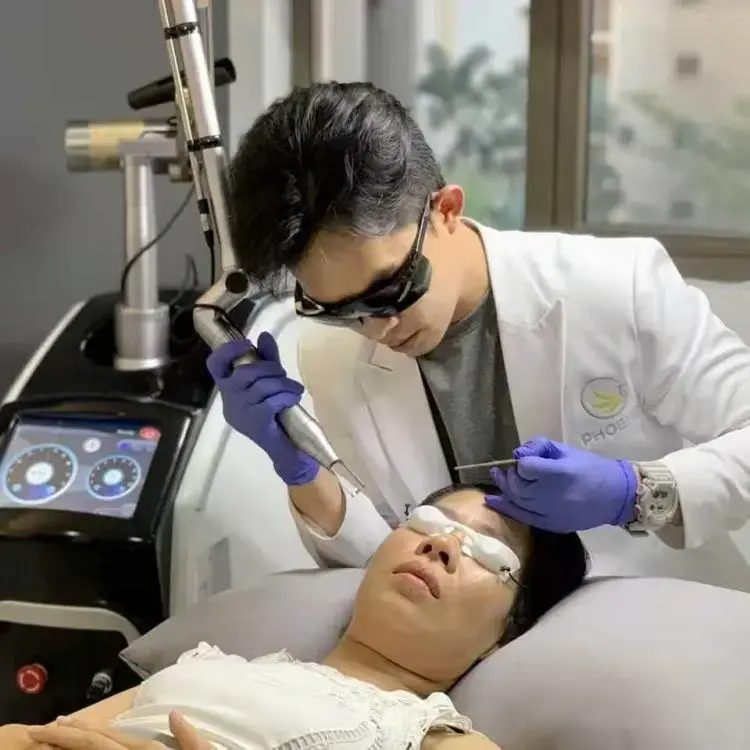
Common Side Effects and Management
Almost all patients have immediate reactions after treatment, which go away within hours to days. Redness and swelling, called erythema and edema, are normal inflammation reactions to pigment fragmentation. Most of the time, these responses get worse 24 to 48 hours after treatment and go away in 3 to 5 days. During this time, cool cloths and gentle cleaning can help ease the pain. Ten to fifteen percent of patients get temporary discoloration. This is more likely to happen to people with darker skin or who don't protect themselves from the sun enough between treatments. This darkening usually happens one to two weeks after treatment, as the broken-up pigment moves toward the skin's surface before being completely removed. Teaching patients about this normal occurrence lowers their worry and keeps them on treatment. Most cases go away on their own within 4 to 8 weeks. Hypopigmentation is the most worrisome possible side effect, but it happens less than 2% of the time when the right treatment methods are followed. Too much damage to melanocytes or skin structures leads to permanent darkening. This risk is kept to a minimum by using low energy levels during the first few treatments, making sure there is enough time between sessions, and carefully choosing the patients. Patients who have recently tanned or who are currently tanning need to wait to get treatment.
Pre-Treatment Assessment Protocols
A full review of the patient finds the candidates who are most likely to have good results and avoid complications. The medical background check should include information about previous laser treatments, keloid tendencies, active infections, and medicines that make the skin more sensitive to light. If you have taken isotretinoin in the last six months, you should not get laser treatment because it will make it harder for your body to heal. The Fitzpatrick scale is used to classify skin types, which leads to the choice of energy parameters. Type I–III patients can handle higher fluences with a low chance of hyperpigmentation, but Type IV–VI patients need to start with lower settings and gradually raise the energy based on how they respond. Standardized photos can be used to record baseline pigmentation, which makes it possible to objectively evaluate treatment success. No longer being in the sun is the most important pre-treatment guidance. Before the treatment, patients must not get a tan for four weeks and use broad-spectrum SPF 50 sunscreen every day. No matter what type of skin you have, treating brown skin greatly raises the risk of adverse events. Rescheduling people who are already tanned shows that you care about safety and getting the best results.
Post-Treatment Care Guidelines
Immediate post-treatment procedures help the body heal faster and get better results. Putting on ice packs for 10 to 15 minutes right after treatment can ease pain and reduce swelling. For 24 to 48 hours, patients should stay away from hot showers, baths, and hard exercise to keep inflammation from getting worse. Gentle skin care habits keep growing tissue safe and stop problems from happening. For one week, patients should only use light cleansers that don't have any scents on them to clean the treatment areas and not scrub or exfoliate them. During the first few weeks of healing, occlusive ointments like petroleum jelly keep the skin's wetness level stable. You can put on makeup 24 hours after treatment as long as your face stays healthy. Sun safety is very important during the whole treatment process and for three months after the last session. Post-inflammatory hyperpigmentation can be caused by even short periods of sun exposure, which can undo months of treatment progress. Patients must put on broad-spectrum SPF 50 sunscreen every two hours when they are outside in the sun and wear protective clothing and hats with wide brims.
Case Studies and Practical Outcomes
Clinical proof from real life shows that investing in good laser color removal technology works and is good for business. These recorded outcomes help people who make decisions about buying know what to expect from different patient groups and treatment scenarios.
Tattoo Removal Success Stories
One of the hardest and most profitable uses for laser technology is in professional tattoo removal. Using a q switched nd yag laser 1064 nm, a health center in Texas said that 78% of black tattoos were gone after 8 to 10 treatments. This wavelength works best on dark blue and black inks; after just two or three washes, you can see the colors getting lighter. It often took 12 to 15 sessions to get rid of green and yellow pigments, but combination treatments using multiple bands worked better. This facility's client feedback surveys showed that 92% of people who got tattoos removed thought the results were "excellent" or "good" after following the suggested treatment plans. The center made an average of $4,200 per full tattoo removal case. Treatment packages cost between $350 and $500 per session, based on the size of the tattoo. Before taking into account the extra money made from coloring and renewal treatments, the equipment's return on investment (ROI) was reached in 11 months just from tattoo removal services. Tattoos done by amateurs with carbon-based ink came off faster than tattoos done by professionals using modern color technology. Home tattoo removal usually took between 4 and 6 sessions to completely get rid of,q switched nd yag laser 1064 nm, which cut down on the total cost of treatment and the time it took. This range of results shows how important it is to have a full conversation and set realistic goals during the first evaluation of a patient.
Pigmentation Disorder Treatment Results
Skin color problems get a lot better when laser procedures are used correctly. Over the course of 18 months, a dermatology center in California kept track of how 156 patients with different pigmentation diseases responded to treatment. Nevus of Ota patients got 70–90% lighter skin in 4–6 treatments, and in some cases, they got rid of the skin completely. Even better, 85% of patients with solar lentigines got rid of them completely within two to three rounds. The results of treating melasma were less consistent and took longer to work. About 60% of people with melasma got better by 50% or more after 6 to 8 treatments, while 25% had little to no change even after aggressive programs. Findings like these show how important it is to use cosmetic treatments like hydroquinone, tretinoin, and kojic acid along with laser treatments. Patients who followed full practices had 30% better results than those who only used lasers. The treatments for age spots and sun damage were the most popular with patients (96% said the results met or exceeded their expectations). The huge difference in how the skin looked after just one or two treatments led to positive word-of-mouth recommendations, and 43% of new patients were brought in by treated patients. When you figure out the real ROI, this marketing value adds a lot to the straight income generation.
Multi-Modal Treatment Approaches
Clinics that are on the cutting edge use laser therapy along with other treatments to get better results and provide more services. A medical spa in Florida came up with ways to combine medical-grade chemical peels, Q-switched laser sessions, and prescription skin treatments. This combined method cut down on the number of laser sessions needed by two to three sessions on average, and it also increased the success rate of final clearance by about twenty-five percent. Adding LED phototherapy right after laser treatments seemed to cut down on recovery time and speed up the healing process. Patients who were exposed to red and near-infrared LEDs for 20 minutes after the laser said they felt less pain and their redness went away faster. Although controlled studies would be helpful to back up these findings, the small extra chair time is worth it because it leads to happier patients and fewer complications. Laser-based carbon peel treatments added more services to their lists than just fixing skin problems. Before this famous process, a carbon-based lotion is put on the skin. The lotion absorbs energy to deep-clean pores and boost collagen production. Clinics that offered carbon peels as upkeep treatments once a month between sessions for color correction kept 35% more patients and made more money per patient each year.
Conclusion
The q switched nd yag laser 1064 nm has become an important tool for beauty techniques that treat pigmentation disorders, get rid of tattoos, and make the skin look younger. Its special mix of deep tissue penetration, selective photothermolysis, and safety for all skin kinds meets important therapeutic goals and brings in a lot of money for the practice. When purchasing lasers, procurement workers should look for ones with a range of energy outputs (100–2000mj), pulse durations of 6ns or less, a wide range of wavelength choices, and strong cooling systems. Working with well-known companies that offer CE certification, ISO 13485 compliance, full warranties, and quick customer service after the sale lowers operating risks and increases long-term ROI through reliable performance and happy patients.
FAQ
1. Is the 1064 nm laser safe for all skin types?
Yes, the 1064 nm frequency is very safe for all Fitzpatrick skin types, from I to VI. The longer wavelength goes through skin melanin without being absorbed very much, which lowers the risk of discoloration problems that can happen with shorter wavelengths. Patients with darker skin tones (Types IV–VI) need lower starting energy settings and careful sun protection measures, but they can get great results if the right treatment parameters are used.
2. How many treatments are typically needed to see results?
Treatment courses vary by condition complexity. Superficial age spots and freckles often show significant improvement within 2-3 sessions, while deeper dermal pigmentation like melasma may require 6-8 treatments. Professional tattoo removal takes the most time and effort. Depending on the color and depth of the ink, it usually takes 8 to 15 sessions. Most procedures say that treatments should be spaced out 6 to 8 weeks apart so that the body has time to heal and get rid of any pigmentation.
3. What makes 1064 nm different from other laser wavelengths?
The 1064 nm wavelength can reach deep melanin that shorter wavelengths can't, going through the skin 5 to 7 mm. This deep entry lets skin conditions like nevus of Ota be treated without touching the melanin on the epidermis, which can be problematic for people with darker skin. The 532 nm range, on the other hand, is used to treat superficial pigmentation and vascular tumors. However, it comes with higher risks for people who already have a lot of pigmentation.
Partner with Taibo Laser for Advanced Pigmentation Solutions
Xi'an Taibo Laser Beauty is a reliable company that has been making q switched nd yag laser 1064 nm products for over 15 years and ships them to 180 countries around the world. Our cutting-edge laser systems offer flexible energy output (100–2000mj), exact pulse duration (6ns), and a wide range of wavelength choices (532nm, 755nm, 1064nm) in modular designs that don't need to be maintained. Each device comes with CE certification, ISO 13485 compliance, a full two-year warranty, and expert help available 24 hours a day, 7 days a week in multiple languages. Our skilled staff offers full training programs, OEM branding services that are suited to your needs, and open buying or leasing options that work with your clinic's budget. Whether you run a medical spa with only one location or a dermatology practice with multiple locations, Taibo Laser has the reliable technology and quick support you need to build a successful color removal practice. Get in touch with susan@taibobeauty.com right away to talk about your unique needs, get full product specifications, or set up equipment demos. In the competitive aesthetic services market, our buying experts will help you make the best choice by comparing technical details, finding the best prices, and planning how to put your new system into action. This will make sure that your investment gives you the best clinical results and financial returns.
References
1. Anderson, R.R., and Parrish, J.A. "Selective Photothermolysis: Precise Microsurgery by Selective Absorption of Pulsed Radiation." Science, Vol. 220, No. 4596, 1983, pp. 524-527.
2. Chan, H.H., et al. "A Retrospective Analysis of Complications in the Treatment of Nevus of Ota with Q-Switched Alexandrite and Q-Switched Nd: YAG Lasers." Dermatologic Surgery, Vol. 26, No. 11, 2000, pp. 1000-1006.
3. Herd, R.M., et al. "A Clinical and Histologic Prospective Controlled Comparative Study of the Picosecond Titanium: Sapphire Laser versus the Q-Switched Alexandrite Laser for Removing Tattoo Pigment." Journal of the American Academy of Dermatology, Vol. 40, No. 4, 1999, pp. 603-606.
4. Kossida, T., et al. "Optimal Laser Wavelength for Treatment of Leg Telangiectasia." Lasers in Surgery and Medicine, Vol. 24, No. 2, 1999, pp. 119-123.
5. Taylor, C.R., and Anderson, R.R. "Ineffective Treatment of Refractory Melasma and Postinflammatory Hyperpigmentation by Q-Switched Ruby Laser." Journal of Dermatologic Surgery and Oncology, Vol. 20, No. 9, 1994, pp. 592-597.
6. Wang, C.C., et al. "A Comparison of Q-Switched Alexandrite Laser and Intense Pulsed Light for the Treatment of Freckles and Lentigines in Asian Persons: A Randomized, Physician-Blinded, Split-Face Comparative Trial." Journal of the American Academy of Dermatology, Vol. 54, No. 5, 2006, pp. 804-810.





YOU MAY LIKE