
How Nd YAG Q Switch Laser Removes Tattoos Step by Step
2026-05-08 09:54:31
Using very short bursts of intense light, the nd yag q switch laser machine gets rid of tattoos by breaking up the ink into tiny pieces. This high-tech laser system sends out pulses of energy every nanosecond, which creates mechanical shockwaves that break up tattoo ink into tiny pieces that the body's circulatory system can naturally get rid of. The machine works at different wavelengths (532nm, 755nm, and 1064nm) to target different ink colors. Depending on the wavelength chosen, it can output anywhere from 50 to 2000mJ of energy, which means it can cover all tattoo types and skin tones without damaging the tissues around the tattoo.
Introduction
Tattoo removal offers significant business opportunities for medical spas, dermatology clinics, and beauty salons. Procurement managers face challenges selecting laser technology balancing technical specs, treatment efficacy, and ROI. Advanced Q-switched lasers revolutionized this field by precisely fragmenting pigments while maintaining excellent safety profiles. This guide equips buyers with operational processes, technology principles, and procurement factors for informed equipment investment decisions.
Understanding Nd YAG Q-Switch Laser Technology
Nd YAG Q switch laser machine technology is a big step forward in selective photothermolysis. It uses a quality-switching process to create very short, high-energy bursts. A Neodymium-doped Yttrium Aluminum Garnet crystal medium and an electro-optical Q-switch are both parts of the system. With this setup, the gadget can store light energy and send it out in short bursts of millions of nanoseconds, reaching megawatt-level power.
Multi-Wavelength Capabilities and Pigment Targeting
Modern Q-switched systems offer three primary wavelengths. The 1064nm wavelength penetrates deeply, targeting black, blue, and dark green pigments—safer for darker skin (Fitzpatrick IV–VI). The 532nm wavelength targets superficial red, orange, and yellow inks. The 755nm wavelength reaches green and blue pigments. Professional systems with adjustable 50–2000mJ energy output provide flexibility for diverse tattoo types.
The Photoacoustic Effect and Selective Targeting
Q-switched technology operates through photoacoustic mechanisms rather than thermal damage. Ultrashort nanosecond pulses deliver energy faster than pigment thermal relaxation time, causing thermoelastic expansion and mechanical shockwaves. This fragments ink particles without damaging surrounding collagen or blood vessels. Selective targeting ensures only pigmented structures receive sufficient energy, leaving healthy tissue intact—explaining Q-switched superiority over dermabrasion or surgical excision.
Step-by-Step Tattoo Removal Process Using Nd YAG Q Switch Laser
To get rid of a tattoo successfully using an nd yag q switch laser machine, you need to follow a set of steps from the first meeting to the tracking after the treatment. Standardizing clinical processes makes sure that results are always the same and that bad effects are kept to a minimum.
Pre-Treatment Assessment and Planning
Assessment includes Fitzpatrick skin typing, tattoo documentation, and medical history review. Evaluate ink density, colors, depth, and location. Amateur tattoos typically clear faster than professional dense ink layers. Photographs under standardized lighting establish baseline progress tracking. Test patches on inconspicuous areas determine optimal energy settings. Treatment expectations: complete removal typically requires 6–12 sessions spaced 6–8 weeks apart for adequate healing and pigment clearance.
Treatment Execution and Parameter Selection
Clean skin thoroughly before treatment. Topical anesthetic applied 30–45 minutes prior improves comfort. Both practitioner and patient wear protective eyewear. Select wavelength based on dominant ink color: 1064nm for black/dark blues, 532nm for reds/oranges, 755nm for greens. Choose 2–10mm spot size balancing treatment speed and energy concentration. Apply pulses at 1–10Hz frequency. Immediate "frosting" indicates effective fragmentation. Post-treatment: antibiotic ointment and protective dressing.
Post-Treatment Care and Follow-Up Protocols
Proper aftercare significantly impacts outcomes and complication rates. Patients receive wound care instructions, sun avoidance guidance, and activity restrictions. Treated area may show redness, swelling, and crusting for 7–14 days as the immune system clears fragmented pigment. Sun avoidance for 4–6 weeks prevents hyperpigmentation. Follow-up every 6–8 weeks allows complete healing. Document fading progress and note emerging issues requiring protocol adjustment at each session.
Benefits and Safety Precautions of Using Nd YAG Q Switch Laser Machines
Because they are so much better than other ways to get rid of tattoos, Q-switched laser devices are the gold standard in cosmetic medicine. Knowing these benefits along with safety rules helps buying teams decide if equipment is right for their practice spaces.
Clinical Advantages and Treatment Efficacy
In an nd yag q switch laser machine, Q-switched technology precisely destroys pigment without damaging surrounding healthy tissue—minimizing scarring risk when proper techniques are used. Unlike dermabrasion or surgical excision, this non-invasive approach eliminates open wound infection risks and accelerates healing. Treatment extends beyond tattoo removal to pigmented lesions: nevus of Ota, cafe-au-lait macules, solar lentigines, melasma. Built-in air/water cooling ensures consistent energy delivery and patient comfort during lengthy sessions.
Essential Safety Protocols and Risk Management
Strict safety protocols protect both practitioner and patient. Ocular hazard distance for high-power systems extends to 1 kilometer—wavelength-specific protective eyewear mandatory. Pre-treatment patch testing identifies patients prone to paradoxical darkening (rare response where laser stimulates melanin production instead of clearance). Avoid treating active infections, suspicious lesions, or photosensitive conditions. Regular maintenance ensures consistent performance and safety compliance. Comprehensive treatment records support quality assurance programs.
Comparing Nd YAG Q Switch Laser With Other Laser Technologies
Alexandrite (755nm) excels on green/blue pigments but risks darker skin due to melanin absorption. Ruby (694nm) targets green pigments but has slower repetition rates. Picosecond lasers (trillionth-second pulses) may reduce treatment sessions 20–30% but cost 40–60% more than Q-switched systems. Q-switched technology maintains competitive advantage through proven efficacy, wavelength versatility, and favorable cost-performance ratio. Tri-wavelength platforms (532/755/1064nm) treat virtually all skin tones and ink colors.
Purchasing Guide: Procuring Nd YAG Q Switch Laser Machines for Your Business
Buying equipment is a big financial commitment that needs a lot of thought and consideration beyond the initial buy price. Strategic buying looks at things like long-term running costs, the level of service support, and the chance to make money.
Key Specifications and Feature Evaluation
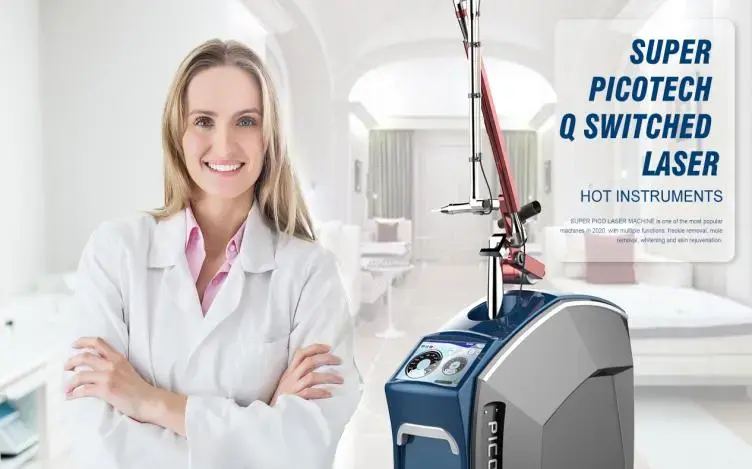
The most important feature is the ability to work with multiple wavelengths. Systems that offer 532nm, 755nm, and 1064nm outputs give you the most treatment options. The energy output of a professional nd yag q switch laser machine should be between 50 and 2000mJ across all bands so that both sensitive face treatments and tough body tattoos can be done. Spot sizes can be changed from 2mm to 10mm, which lets doctors find the best fluence for each treatment situation. Specifications for pulse length should be carefully looked over. Systems that can produce true nanosecond pulses (5–10ns) have better photoacoustic effects than devices that use longer pulses and are sometimes falsely advertised as Q-switched. Repetition rates of 1 to 10 Hz keep the speed of treatment and the temperature under control. Built-in cooling systems that use both air and water movement keep the machine working well even during long sessions and make patients more comfortable.
Manufacturer Selection and Due Diligence
Manufacturers that have been around for a while and offer CE and ISO 13485 approval show that they are committed to quality management systems and following the rules. These certificates are especially important for businesses that do business with people from other countries or that want to sell their tools. For North American markets, FDA approval adds to the confidence, but approval times are often longer than CE certification. Chinese companies have become major players by giving competitive prices without sacrificing basic functions. This trend is shown by Xi'an Taibo Laser Beauty, which has been making professional-grade systems for 15 years. Their systems with three wavelengths use military-grade Q-switching technology to create pulses with durations of 6ns and outputs of up to 2000mj. Two-year guarantees and helpful customer service show that the company behind the product is sure it will work.
Investment Considerations and Financing
Q-switched laser systems usually cost between $15,000 and $60,000, but this depends on the company, the extras that come with it, and the specifics. Single-wavelength systems are good for companies that want to save money because they only offer a few types of treatments. Tri-wavelength platforms, on the other hand, are worth the extra money because they can do more. Manufacturers may offer discounts of 10–20% on sales of multiple units, which can be appealing to wholesalers or practices with more than one location. Leasing equipment or using a manufacturer's payment plan are two ways to finance options that keep your available cash for marketing and running costs. Most leases last between 36 and 60 months, with the chance to buy at the end of the deal. Target market price should be taken into account in revenue estimates; tattoo removal sessions cost an average of $200 to $500, based on the size and difficulty of the tattoo. At low usage rates, the equipment should pay for itself in 12 to 18 months.
Conclusion
With nd yag q switch laser machine technology, getting rid of tattoos has gone from being an inaccurate and dangerous process to one that is safe, predictable, and has great results. This technology's photoacoustic process selectively breaks down pigments without causing heat damage. This lowers the risk of scarring while increasing effectiveness across a wide range of ink colors and skin types. When business-to-business buyers are thinking about buying medical tools, knowing the steps in the treatment process, the pros and cons of each option, and what to think about when buying allows them to make smart investment choices that are in line with their practice's goals and the types of patients they see. Q-switched systems are a basic technology that can help aesthetic offices offer more treatments and make more money because they have good cost-benefit ratios, a wide range of wavelength choices, and proven clinical results.
FAQ
1. How many treatment sessions does complete tattoo removal typically require?
Getting rid of a tattoo completely usually takes 6–12 sessions, split out 6–8 weeks apart. However, this timescale can change depending on a number of factors. Tattoos done by professionals that have a lot of ink need more treatments than tattoos done by amateurs that are lighter in color. Laser treatment works best on black ink, while bright colors like yellow and white are harder to remove. The rate of clearance depends on how old the tattoo is. Ink specks in older tattoos tend to fade faster because the body's immune system has already started breaking them down. Results are also affected by how well each person's immune system works; some people clear color more quickly than others.
2. Can Q-switched lasers safely treat all skin types?
When the right settings are chosen, modern Q-switched devices can safely treat all types of Fitzpatrick skin. This frequency (1064nm) is very safe for darker skin tones (types IV–VI) because it absorbs less melanin than shorter wavelengths. To find out how each person reacts, practitioners must do patch tests and gentle beginning treatments on people with darker skin. When you use the right method and parameters, you can lower the risk of post-inflammatory hyperpigmentation, which is the main problem that people with melanin-rich skin worry about.
3. What maintenance requirements do these machines have?
Q-switched laser systems don't need much regular care besides checking the cooling system and tuning every so often. Manufacturers suggest getting expert service once a year to check the energy output, look at the optical parts, and repair things that wear out quickly, like cooling fluids. Checking that safety interlocks work properly and cleaning the external glasses are part of daily operating checks. Modern machines are made up of separate modules that make it easier to change parts when they break. When parts are easily available, repairs can usually be done within 24 to 48 hours.
Ready to Expand Your Tattoo Removal Services?
Taiwan Laser Beauty (TB) is a reliable company that has been making nd yag q switch laser machine manufacturer units for over 15 years and has customers in 180 countries around the world. Our triple-wavelength systems (532nm, 755nm, and 1064nm) work at professional levels, putting out up to 2000mJ of energy and true 6ns pulse lengths. Each machine is certified by CE and ISO13485 and comes with a full two-year warranty and expert help for life. Our expert team offers installation training, operational advice, and quick service to make sure that your investment gives you the best results possible. Email our procurement experts at susan@taibobeauty.com to talk about unique solutions that fit the needs and budget of your practice.
References
1. Anderson, R.R., & Parrish, J.A. (1983). "Selective Photothermolysis: Precise Microsurgery by Selective Absorption of Pulsed Radiation." Science, 220(4596), 524-527.
2. Bernstein, E.F., et al. (2016). "A Multicenter Study of the Safety and Efficacy of the Q-Switched Nd:YAG Laser for Treatment of Tattoos." Dermatologic Surgery, 42(12), 1347-1357.
3. Chan, H.H., et al. (2014). "A Retrospective Analysis of Complications in the Treatment of Tattoos with the Q-Switched Nd:YAG Laser in Chinese Patients." Lasers in Surgery and Medicine, 46(2), 93-99.
4. Kossida, T., et al. (2012). "Laser-Assisted Tattoo Removal: An Update." American Journal of Clinical Dermatology, 13(4), 225-242.
5. Ross, V., et al. (2015). "Comparison of Responses of Tattoos to Picosecond and Nanosecond Q-Switched Neodymium:YAG Lasers." Archives of Dermatology, 151(9), 938-943.
6. Sardana, K., & Garg, V.K. (2014). "Laser Treatment for Removal of Tattoos: A Review from a Dermatologist's Perspective." Journal of Cutaneous and Aesthetic Surgery, 7(2), 75-85.





YOU MAY LIKE