
Can Laser Tattoo Removal Machine Remove All Ink Colors?
2026-05-08 09:54:30
Business-to-business buyers in the beauty equipment market must now know what laser tattoo removal machine technology is really capable of in order to make smart buying choices. People who work in procurement at beauty salons, dermatology clinics, and fitness centers across the United States still ask this question a lot: Can a laser tattoo removal machine get rid of all kinds of ink? Even though improvements in technology have made treatment results much better, the truth is more complicated: not all ink colors react the same way to laser energy, and to understand why, you need to understand how wavelengths and pigments interact. This guide explains the basic science behind tattoo removal lasers, looks at the problems that come up with different colors of ink, and gives you useful advice on how to choose equipment that works best with a wide range of colors. We will talk about how multi-wavelength systems, Q-switched technology, and picosecond innovations can get rid of stubborn pigments. We will also talk about important things to think about when buying, like power output, safety features, and after-sales support, which will have a direct effect on your clinic's ROI and client satisfaction.
Understanding How Laser Tattoo Removal Machines Work
The Science Behind Selective Photothermolysis
Selective photothermolysis targets dermal ink particles using specific laser wavelengths without harming adjacent tissue. Laser energy absorption creates a photo-acoustic effect—a mechanical shockwave breaking larger ink particles into fragments small enough for lymphatic elimination via macrophage activity. Effective removal requires matching wavelengths to colors: darker colors absorb longer wavelengths; lighter colors need shorter wavelengths for optimal fragmentation.
Comparing Laser Technologies: Q-Switched vs. Picosecond Systems
Q-switched lasers emit 6–10 nanosecond pulses, effectively breaking down common ink colors with multiple wavelengths (1064nm for dark colors, 532nm for red/orange). Picosecond technology uses trillionth-second pulses for stronger photomechanical effects with less heat damage. However, Q-switched systems often deliver higher power across broader wavelength ranges—critical for treating resistant tattoo inks effectively.
Wavelength-Pigment Compatibility Fundamentals
The 1064nm wavelength penetrates deeply, targeting black, dark blue, and brown pigments. The 532nm wavelength effectively treats red, orange, and yellow. Alexandrite's 755nm wavelength excels at removing green, blue, and stubborn colors. Professional tattoo inks are denser than amateur inks, requiring consistent, high-energy pulses across multiple sessions. Multi-wavelength platforms maximize treatable ink color range.
Can Laser Tattoo Removal Machines Remove All Ink Colors?
The simple answer is that even though current laser tattoo removal machine models can get rid of most colors of ink well, it is still hard to get rid of all colors. Laser treatment works very well on black ink because it absorbs all colors well. This makes it the easiest coloring to get rid of. Also, red and orange paints work well, especially with 532nm bands. There are some problems with green and blue pigments, but they can be handled successfully with 755nm wavelengths and enough energy output—our system can give up to 2000mJ/cm²—to break up the pigments effectively.
The Challenge of Yellow and White Pigments
Because it is reflective and absorbs light less quickly across normal wavelengths, yellow ink is very hard to work with. White ink, which usually has titanium dioxide in it, is especially troublesome because it can turn darker when exposed to certain laser bands. This is called oxidation. Similar problems can happen when pastel colors mix white with other colors. Recent improvements in technology have made it easier to work with these tough colors. Technicians can use multi-wavelength platforms to carefully mix different wavelengths during treatment sessions. Higher energy outputs help break up pigments that are difficult to removal. Our equipment has spot sizes that can be changed from 1 to 5 mm, which lets you aim precisely and focus more energy on tough ink layers.
Real-World Treatment Expectations
According to clinical statistics, most tattoos with more than one color need between six and ten treatments, spread four to eight weeks apart. Tattoos that are black or dark blue may fade faster, but tattoos that are green or yellow usually need more sessions. Final results depend on the type of skin, length of the tattoo, depth of the ink, and immune reaction of the patient. Dermatology clinics that use our equipment regularly report high customer happiness rates when clear standards are set from the start. Clear communication about problems that affect people of color builds trust and lowers unhappiness, which has a direct effect on your clinic's image and the number of people who stay with you.
Choosing the Right Laser Tattoo Removal Machine for Your Business
Critical Technical Specifications to Evaluate
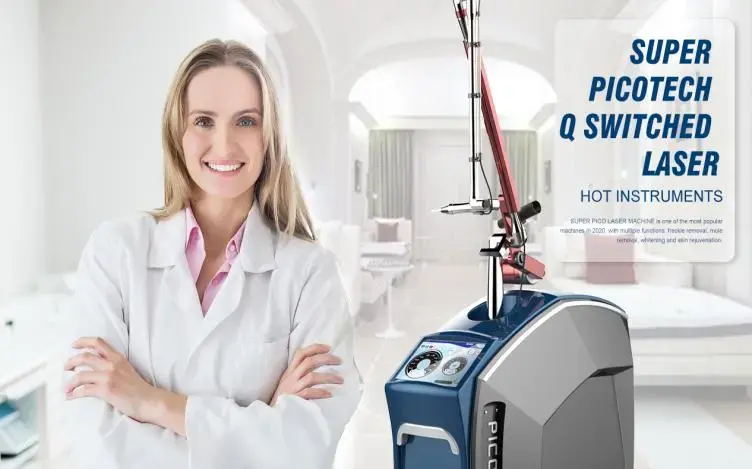
Beyond basic wavelength options, you need to look at a number of performance measures when choosing tools for your business. Power output directly impacts how fast and well a treatment works. Our 2000W system ensures stable energy supply even when it's being used for a long time. The length of the pulse is important because shorter pulses have stronger photomechanical impacts. Our Q-switched technology gives pulses that are 6 to 10 nanoseconds long for the best pigment shattering. For customer ease and machine longevity, cooling systems are a must. Combining air and water cooling into two separate cooling systems keeps things from getting too hot, protects delicate parts, and increases the life of the system. Our combined cooling system has a water pump from Germany that works quietly and effectively to remove heat, keeping treatment accuracy even when the clinic is very busy.
Comparing Equipment Types for Different Business Models
Smaller practices may want a small footprint and a smaller starting investment, while medical spas that do a lot of treatments every day need strong systems that can handle all of them. Portable units give mobile practitioners more choices, but they usually limit the power and wavelengths that can be used. Q-switched systems like the one we use combine the ability to treat a wide range of conditions with the need to be useful. The frequency can be changed from 1Hz to 10Hz to suit different treatment methods. It can also be used anywhere in the world because it is compatible with both 110V and 220V power supplies, which is useful for businesses that have more than one location or for people who buy a laser tattoo removal machine from other countries.
Supplier Credibility and Certification Standards
Working with well-known makers that offer certifications that can be checked saves your investment and makes sure you follow the rules. Our products are certified by CE and ISO13485, which means they meet international quality standards for medical devices that are accepted in both the US and European markets. These licenses aren't just pieces of paper; they're the result of strict testing procedures that prove safety, consistent performance, and quality control in production. Warranty coverage and help after the sale are what set trustworthy sellers apart from dishonest ones. Our full one-year warranty and specialized technical support teams give procurement workers peace of mind. We keep flexible lines of communication open, such as direct email at susan@taibobeauty.com, so that technical questions get quick answers from experts, no matter what time zone they are in.
Operating and Maintaining Laser Tattoo Removal Machines
Operator Training and Safety Protocols
To properly use tools, you must first go through a lot of training that covers how the laser affects flesh, how to choose parameters, and how to stay safe. Our team offers detailed how-to movies and remote training sessions until workers are sure of their method and can do it well. If you know how to choose the right pulse energy for your skin type, you can avoid problems like acne or blisters that hurt client relationships and raise legal concerns. Pain control techniques make patients feel better and push them to finish their treatment. Using topical numbing creams along with built-in cooling devices makes sessions less painful. Setting reasonable expectations about the sensation—often by comparing it to snapping a rubber band—helps clients get ready emotionally and lowers their nervousness.
Preventive Maintenance and Troubleshooting
Regular repair keeps treatment quality high and extends the life of tools. Automatic water flow tracking and audible warning in our systems stop operation right away if coolant levels drop. This keeps expensive laser parts from getting damaged. The cooling box is made of 316L stainless steel, which doesn't rust and keeps its temperature efficiency over years of use. Unexpected downtime can be avoided by checking ports, handpiece cords, and optical parts on a regular basis. When you use USA CPC water connectors and German Harting electrical connectors, you can be sure that the laser tattoo removal machine will work properly and not leak, even after daily clinical use. These high-quality parts show that we're dedicated to making equipment that works well all the time and doesn't need to be fixed often.
Regulatory Compliance and Documentation
Keeping accurate records of treatments and equipment upkeep is required by law and saves your business during audits or liability claims. Documentation shows that operators were properly trained, equipment was calibrated, and maker instructions were followed. These are all important parts of clinical practice that can be defended in the US market.
Maximizing ROI and Client Satisfaction with Laser Tattoo Removal Equipment
Tailoring Treatment Protocols for Optimal Outcomes
Planning treatments strategically based on the features of a tattoo improves both patient outcomes and business performance. By using photographic records and thorough consultations, you can keep track of your progress between meetings and see real proof of change that justifies continuing treatment. Changing the settings for certain ink colors—for example, using more energy for greens that won't fade or more than one wavelength for complicated colored work—shows high-level technical knowledge that earns high prices. Our multi-wavelength platform lets you offer different levels of service packages, including basic black ink removal at reasonable prices, full multicolor removal at higher prices, and specialized treatments for difficult colors that make your clinic the local authority on tough cases that other clinics can't handle well.
Leveraging Technology Features for Operational Efficiency
Advanced features have a direct effect on your bottom line by shortening treatment times and making results better. Our handpiece has an adjustable infrared focal length indicator that ensures exact aiming. This means that fewer pulses are wasted on nearby tissue and more energy is sent to ink deposits. Because of this accuracy, fewer lessons are needed overall with a professional laser tattoo removal machine, which makes patients happier and opens up appointments for more people. The tablet interface makes it easier for new employees to learn and makes it less likely that they will make mistakes when choosing parameters. Schedules stay on track during busy times by making quick changes between clients with different tattoos. This directly raises the daily revenue potential.
Building Client Trust Through Transparent Communication
When clients are taught about color-specific issues, they don't have unrealistic standards that make them unhappy. Giving them information about why their specific green or yellow ink needs more sessions than black ink shows that you know what you're talking about and boosts their trust in your skills. Setting realistic goals, like six to ten sessions spread out in the right way, builds trust, which pushes people to finish treatment instead of giving up too soon. By showing your customers the certifications and safety features of your tools, you can convince them that the treatment will be safe. By mentioning CE and ISO13485 compliance, dual cooling systems, and exact energy control, your clinic looks like it is spending in high-end technology for better patient care instead of skimping on equipment.
Conclusion
Today's laser tattoo removal machine technology has greatly increased the number of treatments that can be done. However, the full removal of all ink colors still depends on a number of factors, such as the wavelength chosen, the amount of energy output, and the chemistry of the ink pigment. While black ink works great and multi-wavelength systems can successfully handle most colors, yellow and white pigments continue to be problematic, so it's important to set realistic expectations. Instead of just looking at marketing claims, people who buy things need to look at how flexible the wavelengths are, how stable the power is, what safety features the equipment has, and how trustworthy the seller is. The Xi'an Taibo Laser Beauty Company has been making Laser Beauty Equipment for fifteen years and only sells approved, clinically effective equipment. This gives B2B buyers a solid base for starting successful tattoo removal services. If you buy the right tools and get full support for it, your clinic will be able to make money and keep clients happy in this growing aesthetic market area.
FAQ
1. Can a single laser machine remove all tattoo ink colors completely?
Not a single tool can get rid of all colors equally well. Black ink works best across all colors, while yellow and white pigments are still hard to work with, even though technology has improved. Multi-wavelength systems with 755nm, 1064nm, and 532nm wavelengths can treat the widest range of ink colors by strategically choosing which wavelengths to use.
2. How many treatment sessions do multicolored tattoos typically require?
Most multicolored tattoos need six to ten sessions, split four to eight weeks apart. However, results vary from person to person depending on the depth of the ink, the colors used, and other factors related to the patient. Colors that are hard to work with, like green and yellow, often need more lessons than what was originally planned.
3. What safety features should procurement teams prioritize when selecting equipment?
Dual cooling systems that keep tissues from getting damaged, energy output that can be changed for different skin kinds, water flow monitoring with automatic cutoff, and certification that it meets medical device standards like CE and ISO13485 are all important safety features. These features keep both clients and operators safe and make sure that the level of service is always the same.
Partner with Taibo Laser Beauty for Superior Tattoo Removal Solutions
Xi'an Taibo Laser Beauty Company has been making high-quality laser tattoo removal machines for over fifteen years. They offer advanced multi-wavelength systems that are designed to meet the special needs of professional beauty practices. Our Q-switched platform combines 755nm, 1064nm, and 532nm bands with a 2000mJ/cm² energy output that is the highest in the industry. It works with the widest range of print colors while still meeting the safety standards that U.S. clinics demand. We know that buying equipment is a big investment that needs to be backed by a solid supplier relationship. That's why every system comes with CE and ISO13485 certification, a full guarantee, and dedicated technical help that you can reach directly at susan@taibobeauty.com. Our skilled after-sales team offers training materials, help with fixing problems, and ongoing advice to make sure that your equipment keeps giving you the most value for the money. Taibo Laser Beauty offers customized solutions, such as OEM capabilities and competitive B2B prices for laser tattoo removal machine providers serving the North American market. This is true whether you're starting a new tattoo removal service or updating old equipment. Get in touch with us right away to talk about your unique needs and find out how our tried-and-true technology and manufacturing know-how can improve your clinic's skills while protecting your investment.
References
1. Anderson, R.R., & Parrish, J.A. (1983). Selective photothermolysis: precise microsurgery by selective absorption of pulsed radiation. Science, 220(4596), 524-527.
2. Bernstein, E.F. (2007). Laser treatment of tattoos. Clinics in Dermatology, 24(1), 43-55.
3. Geronemus, R.G. (2016). Update on laser tattoo removal: newer technologies and new horizons. Seminars in Cutaneous Medicine and Surgery, 35(2), 96-99.
4. Kilmer, S.L., & Anderson, R.R. (1993). Clinical use of the Q-switched ruby and the Q-switched Nd:YAG lasers for treatment of tattoos. Journal of Dermatologic Surgery and Oncology, 19(4), 330-338.
5. Ross, V., Naseef, G., Lin, G., Kelly, M., Michaud, N., Flotte, T.J., Raythen, J., & Anderson, R.R. (1998). Comparison of responses of tattoos to picosecond and nanosecond Q-switched neodymium:YAG lasers. Archives of Dermatology, 134(2), 167-171.
6. Sardana, K., & Garg, V.K. (2014). Laser tattoo removal: an update. Journal of Cutaneous and Aesthetic Surgery, 7(2), 63-72.





YOU MAY LIKE