
How Laser Tattoo Removal Machine Works: Full Guide?
2026-05-07 09:05:01
A laser tattoo removal machine targets and breaks up tattoo ink into tiny pieces by sending out very short bursts of focused light energy that go through the dermal layer of skin. The technology relies on selective photothermolysis, which means that certain bands (1064nm, 755nm, and 532nm) can absorb different colors of ink without hurting the flesh around them. The body's lymphatic system then gets rid of these broken-up pieces naturally over a few weeks, resulting in progressive tattoo fading and eventual clearance.
Understanding How Laser Tattoo Removal Machines Work
The science behind getting rid of tattoo ink is based on wavelength specificity and pulse duration. Laser energy that is sent out in short bursts of nanoseconds (6–10ns in Q-switched systems) doesn't harm things thermally, but instead causes a photoacoustic effect. This distinction matters tremendously in clinical outcomes—thermal methods risk scarring and hyperpigmentation, while photoacoustic fragmentation preserves tissue integrity.
The Role of Wavelength Selection in Pigment Targeting
Different types of tattoo colors soak up distinct wavelengths of light. 1064nm wavelengths, which penetrate deeply into the dermis, work best with black and dark blue inks. Red, orange, and yellow pigments require 532nm wavelengths for effective breakdown. The challenging green and light blue inks benefit from 755nm wavelengths, making tri-wavelength systems essential for comprehensive color coverage. At Taibo Laser Beauty Company, our advanced machines integrate these three wavelengths—755nm, 1064nm, and 532nm—enabling practitioners to address virtually any tattoo composition with clinical precision.
Q-Switched Versus Picosecond Technology Explained
Q-switched lasers have long been considered the gold standard in tattoo removal, delivering nanosecond pulses that create sufficient photoacoustic pressure to fragment ink particles. These systems have been shown to be reliable, maintain extensive clinical documentation, and operate cost-effectively for high-volume practices. Picosecond lasers represent newer technology, generating even shorter pulses (450–750 picoseconds) that produce a stronger mechanical impact on laser tattoo removal machine ink particles, potentially reducing total treatment sessions by 20–30%. However, the practical difference in real-world clinic settings often depends less on pulse duration and more on total energy delivery, spot size consistency, and operator skill. Many established dermatology practices continue achieving excellent results with well-maintained Q-switched systems that deliver stable energy output across thousands of treatment cycles. The choice between technologies should align with your patient demographics, treatment volume expectations, and budget parameters rather than following trends alone.
Key Benefits and Performance Considerations for Businesses
Investing in professional-grade laser tattoo removal machine equipment transforms your service menu and revenue potential. Recent industry data indicates the global tattoo removal market is expanding at approximately 15% annually, driven by evolving aesthetic preferences and workplace appearance standards. Clinics that offer comprehensive removal services capture clients who might otherwise seek competitors, creating both immediate revenue and long-term relationship opportunities.
Treatment Versatility Across Skin Types and Tattoo Complexity
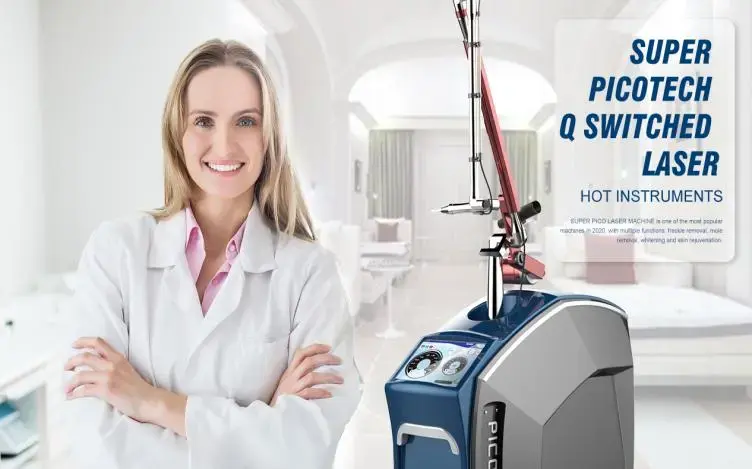
Advanced removal systems accommodate Fitzpatrick skin types I through VI when properly configured. The 1064nm wavelength specifically allows safe treatment of darker skin tones (types IV–VI) by bypassing much of the epidermal melanin absorption that causes hypopigmentation risks with shorter wavelengths. This versatility directly expands your addressable market—clinics limited to treating only lighter skin tones exclude significant demographic segments in diverse communities. Professional tattoos containing dense, layered pigments require high energy output to achieve satisfactory clearance. Machines capable of delivering up to 2000mJ energy levels per pulse provide the power necessary for recalcitrant ink breakdown. Taibo's system specifications include this high-energy capacity along with adjustable spot sizes (6mm in our picosecond mode), allowing operators to concentrate energy density precisely where needed for stubborn residual pigmentation.
Safety Features and Regulatory Compliance Requirements
Patient safety and regulatory adherence protect both clients and your business liability. Essential safety mechanisms include real-time cooling systems that prevent thermal accumulation in treated tissue. Our machines incorporate dual cooling technology—wind-cooled and water-cooled systems working simultaneously—to maintain consistent thermal management during intensive treatment sessions. The German-imported water pump operates silently while delivering substantial flow rates that extend both laser component lifespan and treatment comfort. Water flow monitoring adds another safety layer. Our equipment includes automatic alarm systems that detect insufficient coolant levels, immediately halting operation to prevent overheating damage to both the device and patient tissue. These protective features demonstrate the engineering attention required in medical-grade equipment versus consumer-grade alternatives. Certification credentials validate safety claims. CE marking confirms European regulatory conformity, while ISO13485 certification verifies quality management systems specific to medical device manufacturing. These certifications represent audited compliance with design controls, risk management protocols, and post-market surveillance requirements that protect end users and purchasing organizations from substandard equipment.
Maintenance Protocols That Maximize Equipment Longevity
Operational uptime directly impacts revenue potential and client satisfaction. Understanding maintenance requirements before purchase prevents unexpected service interruptions. Laser systems require periodic consumable replacements, primarily xenon flashlamps that typically deliver 1–2 million pulses before requiring replacement. Higher-quality lamps from European manufacturers offer longer service life and more consistent energy output throughout their operational span. Daily maintenance involves checking coolant levels, verifying calibration through test pulses, and cleaning optical surfaces that can accumulate carbon residue from tissue interaction. Weekly protocols should include detailed inspection of articulated arm joints and verification of aiming beam alignment with actual laser impact points. The 10.4-inch touchscreen interface on our systems provides intuitive maintenance reminder prompts and diagnostic information that simplifies these protocols for non-technical staff. Establishing relationships with suppliers who provide responsive technical support prevents minor issues from becoming operational crises. Taibo maintains a dedicated after-sales laser tattoo removal machine team offering 24-hour support, video troubleshooting assistance, and replacement part logistics that minimize downtime. This infrastructure matters particularly for practices in markets distant from manufacturing centers, where local service provider availability may be limited.
Comparing Leading Laser Tattoo Removal Technologies and Machines
When choosing a laser tattoo removal machine, it is important to evaluate competing technologies and specific product offerings with an objective mindset. Marketing claims often obscure practical performance differences that emerge during daily clinical use. Experienced procurement managers prioritize verified specifications, independent user feedback, and total cost of ownership calculations over promotional materials.
Performance Metrics: Q-Switched Versus Picosecond Systems
Treatment efficiency comparisons must account for multiple variables beyond pulse duration alone. Picosecond systems market faster clearance as a primary advantage, and clinical studies support modestly reduced treatment sessions for specific ink types. However, these studies typically involve ideal conditions with cooperative patients, optimal technique, and careful wavelength matching—variables that don't always align in busy clinic environments. Q-switched technology offers proven durability and simpler maintenance requirements. The established technology base means abundant trained service technicians, readily available replacement components, and extensive clinical literature documenting treatment protocols for unusual cases. Practices treating high volumes of standard black ink tattoos may find Q-switched systems provide superior cost-per-treatment economics despite slightly longer treatment courses. Energy stability represents a critical yet often overlooked specification. Inconsistent pulse energy creates unpredictable results—some areas receive insufficient energy for ink fragmentation while others experience excessive exposure, risking adverse effects. Professional-grade systems maintain energy output variance within ±5% across sustained operation, a specification often absent from entry-level equipment that may show ±15% or greater fluctuation.
Portable Versus Stationary System Considerations
Equipment mobility affects workflow efficiency and space utilization. Stationary systems typically incorporate more robust cooling infrastructure, larger treatment interfaces, and higher power capacity. These installations suit established practices with dedicated treatment rooms and consistent patient volumes. The permanence also signals professional commitment to clients, evaluating provider credibility. Portable systems offer flexibility for multi-location practices, mobile aesthetics services, or facilities with limited space. Modern portable units have narrowed the performance gap with stationary equipment, though compromises in cooling capacity and continuous operation limits remain. Practitioners should assess whether portability genuinely serves operational needs—many clinics discover equipment remains in a single location throughout its service life. Our equipment, while substantial at 35kg, incorporates wheels and thoughtful ergonomics that permit repositioning within a facility without sacrificing the thermal management and energy output characteristics of stationary professional systems. This design philosophy balances practical flexibility with uncompromised clinical performance.
Practical Guide to Procuring Laser Tattoo Removal Machines for B2B Clients
Strategic purchasing decisions for a laser tattoo removal machine require balancing immediate budget constraints against long-term operational costs and revenue generation potential. The lowest initial purchase price rarely correlates with optimal total cost of ownership when factoring in maintenance expenses, consumable costs, downtime frequency, and revenue loss from inadequate performance.
Evaluating Price-Performance Balance and Supplier Credibility
Equipment pricing spans enormous ranges—from under $10,000 for basic portable laser tattoo removal machine units to over $150,000 for top-tier picosecond systems with comprehensive wavelength coverage. This variation reflects genuine differences in component quality, manufacturing precision, safety features, and longevity. Mid-range professional equipment ($25,000–$60,000) typically provides the optimal balance for established practices seeking reliable performance without luxury-tier pricing. Supplier evaluation should emphasize manufacturing history and support infrastructure. Taibo Laser Beauty Company brings over 15 years of specialized production experience, with products exported to more than 180 countries. This global presence indicates both manufacturing capability and the support systems necessary to service international clients. Established manufacturers maintain component inventories, updated service documentation, and trained support personnel—resources often unavailable from newer market entrants or third-party resellers. Warranty coverage reveals manufacturer confidence in product reliability. Our standard one-year warranty on core components protects your investment during the critical initial operational period. Extended warranty options and service contracts deserve consideration for practices lacking in-house technical expertise. Calculate these costs into total ownership expenses rather than viewing them as optional add-ons.
Financing Options and Investment Return Calculations
Capital equipment purchases strain cash flow, particularly for expanding practices or new service lines. Multiple financing approaches provide alternatives to outright purchase. Equipment leasing preserves working capital while offering potential tax advantages through operational expense treatment rather than capital depreciation. Lease-to-own arrangements combine these benefits with eventual ownership without large upfront expenditures. Manufacturer financing programs sometimes offer favorable terms unavailable through traditional lenders. These arrangements may include deferred payments, seasonal adjustments for fluctuating revenue practices, or bundled consumable purchases that simplify budgeting. Evaluating the effective interest rate across all financing alternatives ensures truly advantageous terms rather than marketing-driven offers that prove costly over time. Revenue projection calculations should employ conservative assumptions—estimate 10–15 treatments weekly at $200–$400 per session, depending on tattoo size and local market rates. These parameters suggest a monthly revenue of $8,000–$24,000, reaching equipment payback within 6–18 months while covering operational expenses and labor costs. Urban markets with strong aesthetics demand may exceed these projections, while highly competitive markets might require extended timelines.
Logistics: Shipping, Installation, and Training Support
International equipment procurement involves coordinating freight logistics, customs clearance, and installation requirements. Reputable manufacturers provide comprehensive shipping services rather than transferring these complexities to buyers. Taibo utilizes professional packaging—customized aluminum alloy cases with precision foam interiors—that ensures safe transit via air freight, ocean shipping, or land transport, depending on destination and urgency. Installation support varies significantly across suppliers. Basic equipment arrives requiring buyer-arranged assembly and calibration, while premium service includes on-site installation, calibration verification, operator training, and initial treatment supervision. The latter approach reduces implementation risk and accelerates revenue generation by avoiding learning curve complications that delay service launch. Training comprehensiveness affects both safety and treatment outcomes. Effective programs address not only equipment operation but also treatment protocols for various tattoo types, client consultation procedures, adverse event management, and maintenance routines. Taibo provides detailed video training libraries, live video consultation sessions, and ongoing support until operators demonstrate confident proficiency.
Conclusion
Understanding tattoo removal technology mechanics, comparing available equipment options, and evaluating supplier capabilities represents essential groundwork for strategic procurement decisions. The laser tattoo removal machine operates through wavelength-specific light energy that fragments ink particles via photoacoustic effects, with Q-switched and picosecond systems offering different approaches to achieving similar endpoints. Professional-grade equipment distinguishes itself through energy stability, comprehensive safety features, regulatory compliance, and manufacturer support infrastructure. Successful implementation requires attention to operator training, maintenance protocols, and realistic revenue projections that justify investment levels. The expanding market for tattoo removal services creates a genuine opportunity for practices that deploy appropriate technology supported by credible suppliers.
FAQ
1. How effective is laser removal on different skin types?
Modern systems equipped with 1064nm wavelengths safely and effectively treat all Fitzpatrick skin types, including darker complexions (types IV–VI). This wavelength penetrates to dermal ink deposits while minimizing epidermal melanin absorption that causes pigmentation changes in darker skin. The 532nm wavelength requires caution on darker skin types due to higher melanin absorption. Treatment protocols should adjust energy levels, spot sizes, and session intervals based on individual skin characteristics.
2. What maintenance schedule should clinics expect?
Daily maintenance involves coolant level verification, optical window cleaning, and system functionality checks requiring approximately 10–15 minutes. Weekly detailed inspections examine cooling system performance, alignment verification, and calibration confirmation. The xenon flashlamp represents the primary consumable, typically requiring replacement after 1–2 million pulses, depending on settings. Water filter changes every 3–6 months, and annual comprehensive servicing completes the maintenance calendar.
3. Do higher-priced machines guarantee better results?
Price correlates with component quality, safety features, and manufacturer support rather than directly with treatment outcomes. Expensive systems often include convenience features or brand premiums that don't necessarily improve ink clearance. However, extremely low-priced equipment typically compromises on energy stability, cooling adequacy, and safety mechanisms that do impact results and risk profiles. Mid-tier professional equipment generally provides the optimal balance of performance and value.
4. What certifications should buyers verify before purchasing?
Essential certifications include CE marking for European regulatory compliance and ISO13485 for medical device quality management systems. FDA clearance or approval indicates United States market authorization. These certifications require manufacturer submission of safety data, clinical evidence, and ongoing quality system audits. Request certification documentation directly and verify certificate numbers with issuing bodies to protect your organization from substandard equipment.
Partner With Taibo for Reliable Laser Tattoo Removal Solutions
Taibo Laser Beauty Company delivers proven laser tattoo removal machine technology backed by 15 years of specialized manufacturing experience. Our equipment specifications—including tri-wavelength capability (755nm, 1064nm, 532nm), high energy output up to 2000mJ, advanced dual cooling systems, and intuitive 10.4-inch touchscreen interfaces—address the practical requirements of busy clinics and dermatology practices. CE and ISO13485 certifications confirm regulatory compliance and quality management adherence that protect your investment and patient safety. Beyond equipment supply, we provide comprehensive support infrastructure, including 24-hour technical assistance, detailed training resources, OEM customization services, and reliable global logistics with professional packaging. Whether you're expanding existing aesthetics services or establishing new treatment capabilities, our sales team offers consultative guidance tailored to your specific operational requirements. Contact susan@taibobeauty.com to discuss your needs with experienced laser tattoo removal machine suppliers who prioritize long-term partnership.
References
1. Anderson, R. R., & Parrish, J. A. (1983). Selective photothermolysis: Precise microsurgery by selective absorption of pulsed radiation. Science, 220(4596), 524-527.
2. Bernstein, E. F. (2007). Laser treatment of tattoos. Clinics in Dermatology, 24(1), 43-55.
3. Kossida, T., & Rigopoulos, D. (2018). Optimal tattoo removal: A comprehensive review. American Journal of Clinical Dermatology, 19(3), 389-403.
4. Sardana, K., & Garg, V. K. (2015). Laser technology in tattoo removal: Review and update. Dermatologic Surgery, 41(10), 1120-1134.
5. Zelickson, B. D., & Mehregan, D. A. (2019). Laser surgery for tattoo and pigment removal: Clinical applications and outcomes. Journal of Cosmetic and Laser Therapy, 21(2), 85-94.
6. Ross, E. V., & Yashar, S. (2021). Advances in laser tattoo removal technology: Comparative analysis of Q-switched and picosecond systems. Lasers in Surgery and Medicine, 53(4), 456-468.





YOU MAY LIKE