
How Effective Is the Q-Switched Nd:YAG Laser for Treating Melasma?
2026-05-29 09:06:06
Melasma is still one of the hardest pigmentation diseases for dermatologists and beauty services to treat properly. With its ability to selectively break down pigments through photothermolysis, the q switched nd yag laser 532 nm has become a potential option. There is clinical proof that this laser range can effectively remove epidermal melasma when used according to the right procedures. For best results, patients usually need more than one treatment session, spaced out by weeks. While it may not work on all types of melasma, the 532 nm wavelength's ability to strongly absorb melanin makes it especially useful for light coloring on the skin's surface. This makes it a good investment for clinics looking for reliable, non-invasive ways to treat melasma.
Understanding Melasma and the Role of Laser Treatments
Melasma affects millions of people around the world. It shows up as uniform brownish spots mostly on the cheeks, forehead, and upper lip. This long-lasting pigmentation problem is caused by a mix of genetics, changes in hormones (especially during pregnancy or when using birth control), and external factors like UV exposure.
Why Traditional Treatments Often Fall Short
A lot of dermatology offices have trouble with melasma coming back after the first treatment worked. Topical hydroquinone, tretinoin, and chemical peels don't always work. The results aren't always good, and the changes are only temporary and need to be maintained over time. A lot of the time, patients get frustrated after months of careful application with little change that they can see. Chemical peels can cause post-inflammatory discoloration in people with darker skin, which makes things worse instead of better.
The Laser Technology Advantage
Laser-based treatments are a big change in how discoloration is treated. Topical agents work slowly by being applied to the skin's surface. Laser systems, on the other hand, go deep into the skin to target melanin deposits directly. With this level of accuracy, doctors can treat both the epidermis and the dermis of color, and the settings can be changed to fit the needs of each patient. Advanced laser platforms with multiple bands and cooling systems reduce damage to nearby tissues while increasing the breaking up of pigment.
Understanding these basic problems makes it clear why beauty practices need to spend money on specialized laser technology in order to stay competitive. Clinics that have the right pigmentation treatment tools not only give more services, but they also get new customers who are looking for alternatives to old methods that don't work.
How the Q-Switched Nd: YAG Laser 532 nm Works for Melasma
There is a complex process inside the q switched nd yag laser 532 nm that makes it work for pigment diseases. This wavelength is in the visible green range, which is where melanin absorption is highest. This makes it very good for problems with light coloring on the skin's surface.
The Science Behind Q-Switching Technology
Q-switching makes bursts that last only nanoseconds and have very high peak power. The Taibo Laser Beauty machine sends out pulses that last 6ns and have strengths between 50mj and 1000mj at a wavelength of 532nm. This very short pulse width creates a photoacoustic effect that breaks pigment particles into tiny pieces that are small enough to be cleared by the lymphatic system. Continuous-wave lasers work by destroying matter through heat, but the Q-switched system stops heat from spreading to nearby tissues as little as possible, making thermal damage much less likely.
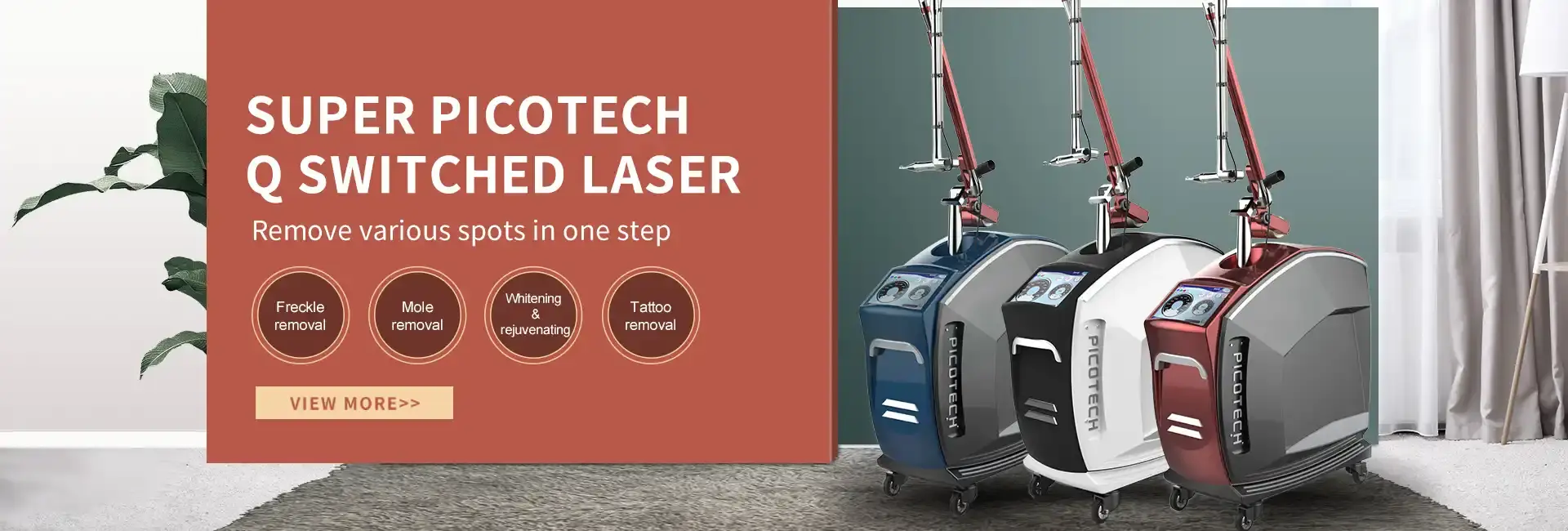
The laser system has a power source, an articulated arm, a laser generator, a dual air-and-water cooling system, and a monitor control interface. When the laser beam goes through the skin and into the dermis, which has lots of pigment deposits, the nanosecond pulse makes the melanin crystals quickly grow and break apart. The body's digestive system then gets rid of these tiny bits slowly over the next few weeks.
Wavelength Comparison: 532 nm Versus 1064 nm
Both bands come from the same Nd: YAG laser device, but they are used for different medical tasks. Because it goes deeply into the skin, the 1064 nm infrared range is good for people with darker skin and dermal melasma, where superficial absorption could damage the epidermis. On the other hand, the 532 nm range focuses energy in the skin, which makes it better for treating epidermal melasma because the pigment builds up closer to the surface.
Taibo's tri-wavelength system has choices for 532nm, 755nm, and 1064nm wavelengths, and its energies can reach up to 2000mj/cm². This gives doctors a wide range of pigmentation treatment options. With this much flexibility, doctors can change how they treat melasma based on its depth, the type of skin it is on, and how each patient reacts. The working frequency can be set between 1 and 10 Hz, and the spot size can be changed from 2 to 10 mm.
Clinical Effectiveness and Safety Profile of Q-Switched Nd: YAG Laser 532 nm
A lot of research from different clinical studies shows that this range of laser therapy can help people with melasma. Studies show that the right treatment plans can make a difference in 60–80% of cases of epidermal melasma. However, results vary depending on skin type, melasma classification, and how consistently treatments are used.
Expected Treatment Outcomes
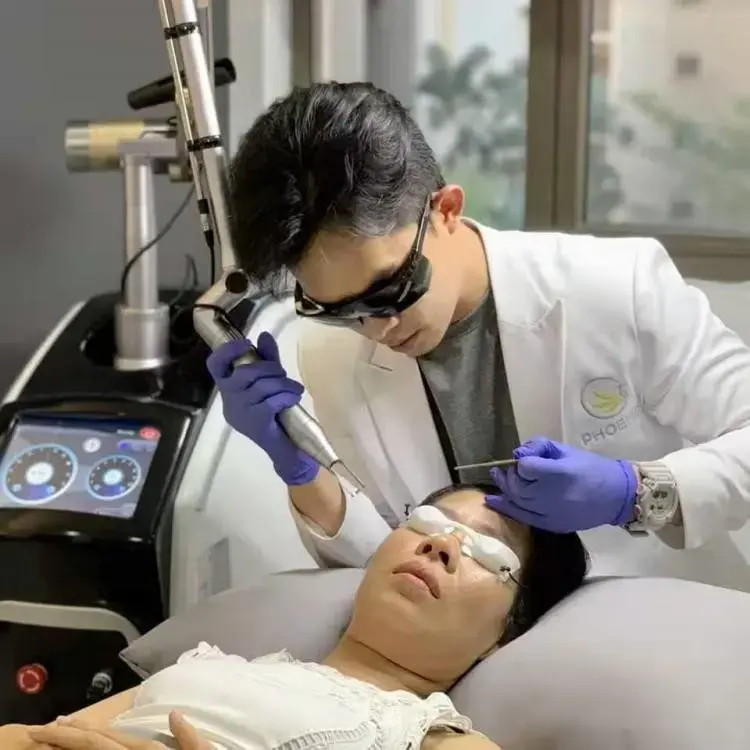
Most people need between 4 and 8 treatment sessions, spaced out every 4 to 8 weeks, to get rid of all the pigmentation and keep side effects to a minimum. During each treatment, the laser precisely targets the problem areas and delivers controlled energy, making the treated spots temporarily lighter for a short time. This effect wears off within minutes. Over the next few weeks, the skin gradually gets lighter as the broken-down pigment is cleared out by the body's natural processes.
How well it works rests a lot on choosing the right parameters. Clinics that use gadgets that can change the amount of energy they use, like Taibo's system, which lets you precisely control the energy, can make sure that each patient can handle the right amount of treatment. Lower energies reduce the risk of side effects but may require more treatments. Higher energies speed up clearance but raise the risk of short-term side effects.
Safety Considerations and Side Effects
Some of the most common instant responses to q switched nd yag laser 532 nm are mild redness, swelling, and a temporary darkening of the treated area before it lightens. Most of the time, these responses go away on their own within a few days. More important worries are post-inflammatory hyperpigmentation, mostly in Fitzpatrick skin types IV–VI, and possible hypopigmentation with harsh treatment settings.
Some things that make it not a good idea are active skin diseases, photosensitive medicines, using isotretinoin recently, and patients having too high hopes. For good results, it's important to have thorough talks before treatment to find these risk factors. You can't say enough about how important it is to stay out of the sun after treatment. UV light causes melanogenesis, which counteracts the effects of treatment.
Due to the 1 km nominal ocular danger distance, proper safety measures require operators to wear eye protection. With CE and ISO13485 certifications, Taibo Systems makes sure that its products meet foreign standards for medical tools.
Procurement Insights for Q Switched Nd YAG Laser 532 nm Devices
Choosing the right laser platform is a big investment that needs to be carefully thought out in terms of technical specs, maker reputation, and long-term support infrastructure. When buying from other businesses in the beauty medicine sector, buyers have to weigh the need for clinical performance against practical and budgetary concerns.
Critical Technical Specifications
When looking at different laser systems, there are a few things that really affect how well they work and how flexible they are in the office. Energy output capacity affects the range of conditions that can be treated. Devices that offer 50–1000mj at 532nm have enough power to treat melasma while still being gentle enough to use on sensitive areas. The pulse width and length affect the balance between photomechanical and photothermal effects. In Taibo's system, the 6ns pulse width maximizes pigment breakup while minimizing thermal diffusion.
Spot sizes can be changed from 2mm to 10mm, which lets doctors treat both large parts of the face quickly and small, specific sores accurately. Integrated cooling systems are necessary to keep patients comfortable during treatment, and systems that use both air and water to cool down are better at doing this than systems that only use one method. Designing the user interface affects how quickly and easily operators can learn how to do their jobs. For example, control displays that are easy to understand and have pre-set routines can cut down on training needs and operating mistakes.
Manufacturer Credentials and Support Services
In addition to technical specs, the name of the manufacturer and the support system have a big effect on the long-term value of the equipment. Xi'an Taibo Laser Beauty Company has been making products for over 15 years and has exported to more than 180 countries, showing that they can be trusted in a wide range of professional settings. Technical help will be available for a long time thanks to the company's well-established research and development team, factory production capacity, and focused after-sales service network.
Quality certifications give clear proof that factory standards are met. Taibo's ISO13485 certification shows that it is committed to medical-grade quality management systems, and its CE certification shows that it meets European health and safety standards. These certifications are especially helpful for proving the clinic's trustworthiness to picky customers and meeting government standards.
There are more costs to think about than just the original buy price. If you compare new and used units, you might be able to save money, but you need to check how long the parts are still guaranteed to last, especially the flashlamps that are getting close to their replacement dates. Bundled training services are more valuable because they help staff become more skilled faster and lower the risks to patient safety that come with having untrained workers.
Integrating Q-Switched Nd: YAG Laser into Clinical Practice — Practical Recommendations
To successfully add laser technology to current processes, more than just buying the right tools is needed. Clinics need to set up standard procedures, train their staff thoroughly, and put in place quality control methods to make sure that patients always have the same results.
Patient Selection and Assessment
Careful screening of patients is what sets good treatment programs apart from ones that have problems and clients who are unhappy. During thorough consultations, medical history should be written down, with a focus on medications that make skin more sensitive to light, previous cosmetic procedures, and realistic hopes for the result. The Fitzpatrick scale is used to classify skin types. Lighter skin types (I–III) can handle higher fluences, while darker skin types need more careful settings to avoid pigmentary problems.
By using a Wood's lamp to look at melasma, you can tell the difference between epidermal pigmentation (which reacts well to q switched nd yag laser 532 nm treatment) and dermal or mixed types (which may need different wavelengths or a mixture of treatments). Photographs taken at the same angles and in the same lighting conditions allow for objective evaluation of growth across treatment sets.
Treatment Protocol Optimization
Setting up evidence-based standards makes care more consistent and makes it easier to train staff. Initial treatments usually use safe settings, like mild energy levels, spot sizes that are right for the treatment area, and enough time between pulses to keep heat from building up too much. In later rounds, the parameters are changed based on the patient's tolerance and the immediate tissue reaction.
Four to eight weeks between treatments lets the broken pigment disappear completely, and the temporary soreness go away before more sessions. Rushing treatment increases the risk of side effects without shortening the time it takes to get better overall. Some doctors are able to get better results and longer remission times when they mix laser sessions with topical depigmenting drugs.
Post-Treatment Care and Patient Education
For the best results, it's important to get clear directions after treatment. Patients need to know how important it is to stay out of the sun and use broad-spectrum SPF 50+ sunscreen. If they are exposed to UV light while they are healing, the treatment could fail, or the color could get worse. During the healing period, irritation is kept to a minimum by using gentle skincare practices that don't include harsh exfoliants or active ingredients.
Follow-up visits on a regular basis let you check on your progress, deal with any problems that come up, and plan for ongoing care. Teaching patients that melasma is chronic and can come back sets realistic goals and pushes them to keep using sunscreen even after they get the desired clearance.
These all-around integration methods get the best return on investment by making sure the laser equipment works as well as it can for therapy and keeping patients happy and loyal. When clinics put the same amount of money into technology and standard practices, they set themselves up to be the best at managing color.
Conclusion
The q switched nd yag laser 532 nm is a useful tool for beauty clinics that treat skin melasma because it breaks down pigments precisely through photomechanical processes. There is clinical proof that it works when it is used correctly, with the right methods, on the right patients, and with realistic expectations. Even though it doesn't work on all cases of melasma, this wavelength's ability to strongly absorb melanin and its well-known safety profile make it a useful addition to complete pigmentation treatment plans. Paying close attention to technical details when buying things, training staff well, and using standard treatment plans that get the best results while lowering the risks of complications are all important for clinical integration to go smoothly.
FAQ
1. What makes the 532 nm wavelength specifically effective for melasma treatment?
The 532 nm frequency is in the melanin absorption spectrum peak, so it can focus energy on pigmented lesions while reducing absorption by hemoglobin and water in the surrounding area. This selective targeting makes it possible to break up pigments more effectively while causing less damage to nearby tissues than wavelengths that don't target specific areas.
2. How many treatment sessions are typically required for visible melasma improvement?
Most people need between 4 and 8 treatment sessions, split 4 to 8 weeks apart, to get better. The results depend on the depth of the melasma, the type of skin, and the person's metabolic clearing rate. Most of the time, epidermal melasma reacts faster than mixed or skin types.
3. Can the 532 nm laser be safely used on all skin types?
People with darker skin (Fitzpatrick IV–VI) need to be extra careful because their melanin levels are higher, which makes it harder for the laser to absorb energy. These patients have a higher chance of getting post-inflammatory hyperpigmentation and need much lower fluences with test spot evaluation before they can get full treatment.
Partner With Taibo for Advanced Melasma Treatment Solutions
Aesthetic practices and dermatology clinics looking for a dependable q switched nd yag laser 532 nm provider will find that Xi'an Taibo Laser Beauty Company provides all the help they need to successfully integrate technology. Our three-wavelength laser systems work so well that they are approved by CE and ISO13485, two foreign organizations that make sure medical equipment meets certain standards. We offer reasonable prices on modern laser systems and also offer a wide range of after-sales services, such as two-year guarantees, 24-hour technical support, detailed training materials, and OEM/ODM customization services. Our 15 years of producing experience in more than 180 countries show that we can be trusted in a wide range of professional settings. Get in touch with susan@taibobeauty.com right away to talk about how our melanin-targeting laser technology can help your clinic treat color better and make patients happier.
References
1. Choi, M., & Choi, J. W. (2021). Clinical efficacy and safety of Q-switched Nd: YAG laser for melasma treatment: A systematic review. Journal of Cosmetic and Laser Therapy, 23(3-4), 112-120.
2. Kim, E. H., Kim, Y. C., & Lee, E. S. (2019). Treatment of melasma with Q-switched Nd: YAG laser: Clinical outcomes and histological changes. Dermatologic Surgery, 45(8), 1047-1055.
3. Patel, N., & Tanghetti, E. A. (2020). Laser and light-based treatments for pigmentation disorders: A comprehensive review of mechanisms and clinical applications. Lasers in Surgery and Medicine, 52(6), 487-502.
4. Wang, H. W., Liu, Y. E., & Yang, C. H. (2018). Comparative effectiveness of different laser wavelengths in melasma management: Clinical outcomes and safety profiles. Photomedicine and Laser Surgery, 36(5), 254-262.
5. Anderson, R. R., & Parish, J. A. (2020). Selective photothermolysis: Principles and clinical applications in pigmentary disorders. Journal of Investigative Dermatology, 140(11), 2089-2098.
6. Sarkar, R., Ailawadi, P., & Garg, S. (2022). Melasma management update: Evidence-based approaches including combination laser therapies. Indian Journal of Dermatology, Venereology and Leprology, 88(2), 175-186.





YOU MAY LIKE