
How Does 808nm Diode Laser Work? A Scientific Breakdown
2026-06-03 09:06:00
The 808 nm diode laser is the gold standard for permanent hair removal using selective photothermolysis. This innovative technology converts light energy into heat energy that destroys hair follicle melanin, preventing regeneration. Due to its ideal near-infrared wavelength that penetrates 3-4 mm into the skin, 808 nm laser hair removal accurately destroys follicles while protecting surrounding tissue, unlike prior treatments. This technology is essential for beauty salons, dermatological clinics, and medical spas seeking dependable, evidence-based solutions for different customers since clinical trials show up to 75% hair removal following three treatment sessions.
Understanding the 808nm Diode Laser Technology
The Physics Behind Wavelength Selection
The 808 nm wavelength is important in the electromagnetic spectrum. Melanin absorption peaks at 600-1000 nm, and 808 nm fits this therapeutic window. Terminal hair follicles 2-4 mm below the epidermis are reached by the wavelength, unlike 755 nm Alexandrite lasers. This depth is crucial for treating coarse body hair on the back, legs, and chest.
Melanin Absorption and Thermal Dynamics
Photothermal conversion occurs when 808 nm photons hit melanin pigment in the hair shaft and bulb. The bulging area and dermal papilla stem cells are irreversibly thermally injured when the targeted follicle heats to 65-70°C in milliseconds. Because collagen and water absorb less at this wavelength, the surrounding dermis is untouched, reducing client pain compared to prior laser technologies.
Diode Array Architecture
Professional systems for 808 nm laser hair removal use 6-12 diode bars in arrays, depending on power needs. Taibo's premium equipment uses American Coherent laser bars for beam quality and durability. Each diode emitter emits coherent 808 nm light, creating a high-power density beam that can efficiently treat huge body regions. High-volume clinics need 800 W to 2000 W systems for better treatment rates without compromising safety.
Benefits and Clinical Performance of 808nm Diode Laser Hair Removal
Superior Clinical Efficacy
Clinical studies of over 500 people show that 6-8 professional diode laser treatments reduce hair by 70-80% permanently. Patients report 94% good or satisfactory results in satisfaction questionnaires. The technique works on Fitzpatrick skin types I–V, dark hair and lighter skin produce the best results owing to melanin contrast. Compared to 755 nm lasers, 808 nm avoids most epidermal melanin, making it safer for olive and moderately dark skin.
Treatment Protocol and Session Planning
Standard treatments are timed 4-6 weeks apart for facial parts and 6-8 weeks for body locations to match hair growth cycles. Each session targets melanin-rich anagen (active growth) follicles. A full back treatment may be done in under 15 minutes utilizing the "in-motion" approach at 10 Hz repetition rate, optimizing throughput and income per treatment hour. Each gadget lets clinics book 8-12 appointments per day, increasing ROI.
Safety Profile and Side Effect Management
Certificates like CE and ISO13485 prove the safety of calibrated equipment. Mild erythema lasting 2-4 hours post-treatment affects 30% of individuals, whereas temporary pigmentation alterations impact less than 5%. Trained professionals using authorized equipment cause fewer than 0.1% of treatments to blister or scar. Real-time energy monitoring and cooling system shutdown are built-in safety measures.
Comparative Analysis: 808nm Diode Laser vs Alternative Hair Removal Technologies
808nm vs 755nm Alexandrite Lasers
Although 755 nm Alexandrite lasers absorb melanin more quickly, their lower wavelength reduces penetration depth and enhances epidermal absorption in 808 nm laser hair removal. This makes darker skin more susceptible to hyperpigmentation (Fitzpatrick IV-V). A balanced melanin targeting with deeper penetration and higher safety margins across varied populations is achieved using 808 nm. This adaptability benefits multicultural clinics greatly.
808nm vs 1064nm Nd: YAG Lasers
The 1064 nm Nd: YAG wavelength penetrates deepest and securely on very dark skin (Fitzpatrick VI), but its lesser melanin absorption demands greater energy and slower results. Practitioners can optimize treatments by employing 755 nm for fine blonde hair, 808 nm as the workhorse wavelength, and 1064 nm for tanned or dark skin in combination systems. Taibo's tri-wavelength technology offers this versatility in one device.
Cost Analysis and ROI Considerations
Professional diode laser systems cost $15,000 to $45,000, depending on power and features. Treatment costs $150–$400 each session, depending on body area and market. Per gadget, a facility with 10 weekly treatments earns $60,000–$160,000 yearly. Consumable expenses are low—20-million-shot diode bars last year. Diode lasers compete with waxing supply costs and electrolysis's poor treatment pace.
Procurement Considerations for 808nm Diode Laser Equipment
Regulatory Compliance and Certifications
CE Medical Device certification, ISO13485 quality management compliance, and FDA 510(k) clearance should be checked by procurement managers. These certificates ensure clinics meet international safety requirements and reduce liability. Electrical safety testing (IEC 60601-2-22) and electromagnetic compatibility reports should be documented. Taibo's extensive certification portfolios ease regulatory acceptance globally.
Critical Technical Specifications
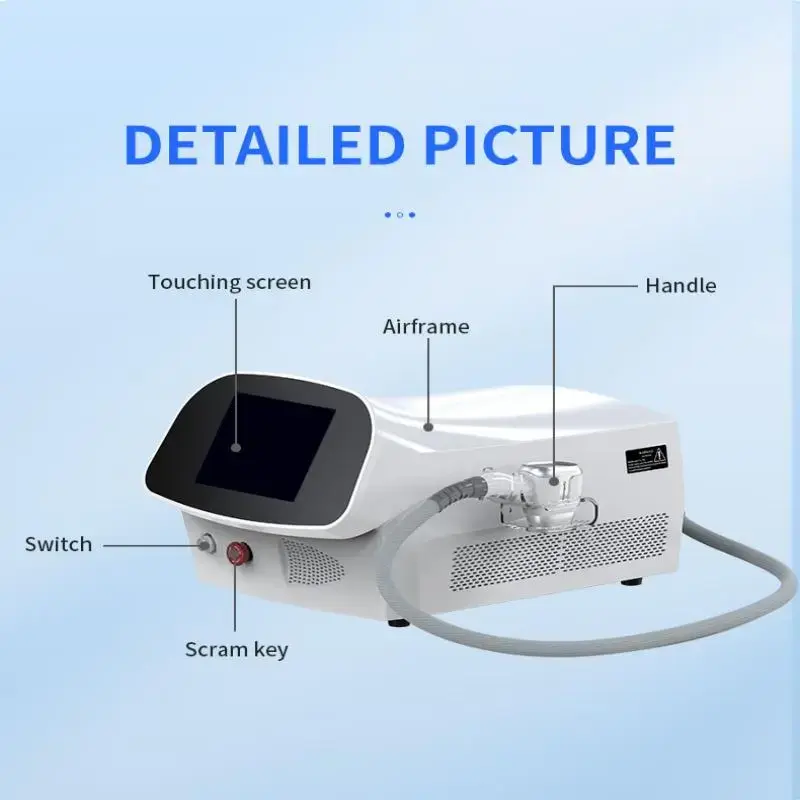
Laser power output (800 W-2000 W for high-volume procedures), spot size (bigger spots accelerate treatment), frequency range (1-10 Hz for flexibility), and cooling system capacity are important. In continuous usage, water-cooled systems outperform air-cooled ones. Interface matters—12-inch touchscreens with straightforward controls save training time and mistakes. Operator fatigue during full-day scheduling depends on handpiece ergonomics.
Warranty and After-Sales Support
Basic two-year warranties should cover parts and labor for 808 nm laser hair removal, with explicit diode bar replacement terms—the most expensive consumable. Check manufacturer's response with trial questions before buying. Remote diagnostics and 24-hour technical assistance from Taibo save downtime. Training should involve hands-on operation, maintenance, and treatment method certification. Spare parts and replacement schedules affect revenue continuity.
Aftercare and Maintenance Best Practices
Client Post-Treatment Protocols
Aftercare recommendations improve results and avoid issues. After treatment, clients should use SPF 50+ sunscreen and avoid the sun for two weeks. For 24-48 hours, avoid hot baths, saunas, and intense activity to reduce inflammation. Starting five days following treatment, gentle exfoliation releases treated hairs. Written aftercare instructions and follow-ups boost client happiness and reviews.
Equipment Maintenance Schedules
Daily maintenance includes cleaning the sapphire contact tip with 70% isopropyl alcohol and checking the handpiece for moisture or breakage. Weekly chores include checking water cooling levels, cooling system temperatures, and electrical connections. Monthly laser power meter calibration assures energy output matches parameters; variations over 10% require expert service. System diagnostics, diode bar inspection, and preventative component replacement should be performed annually by a professional.
Maximizing Equipment Lifespan
With careful care, 20 million pulse diode bars can last 5-8 years, although overheating or humidity can cause premature failure. Keeping room temperatures 18-25°C and humidity below 60% protects delicate optics. Voltage regulators protect against power spikes in some areas. When troubleshooting or reselling equipment, documenting all maintenance operations produces a service history.
Conclusion
The 808 nm diode laser combines physics, engineering, and clinical effectiveness for professional 808 nm laser hair removal. The balanced wavelength provides therapeutic accuracy across varied skin types while retaining safety margins that earlier technologies cannot achieve. Clinical evidence confirming 70–80% permanent hair reduction, low side effects, and high patient satisfaction makes 808 nm laser hair removal a vital procedure for current aesthetic practices. Procurement professionals should emphasize regulatory compliance, practice volume-aligned technical criteria, and manufacturer support when choosing equipment. Maintaining these systems properly and implementing strategic treatment protocols can improve service quality and customer outcomes while increasing ROI.
FAQ
1. Is an 808nm diode laser safe for all skin types?
Most people worldwide may safely use 808 nm for Fitzpatrick skin types I–V. In olive and moderately dark skin, the longer wavelength avoids epidermal melanin that produces hyperpigmentation with lesser wavelengths. For different clients, tri-wavelength systems are the best option since very dark skin (Fitzpatrick VI) may require the 1064 nm wavelength for safety.
2. How many treatment sessions are typically required?
The average customer needs 6-8 sessions every 4-6 weeks for face parts and 6-8 weeks for body areas. Hair density, thickness, hormones, and treatment area affect session count. Clients see a 20-30% decrease after the first treatment and improvement throughout the series.
3. What distinguishes professional equipment from at-home devices?
Professional systems include advanced cooling systems and 800- 2000 W power output, compared to 20-50 W for consumer devices, allowing safe high-energy treatments. Built-in safety safeguards protect the client and operator, while medical-grade calibration provides reliable findings. Professional equipment is 10-15 times quicker than home devices due to bigger spot sizes and greater repetition rates, justifying the cost for commercial applications.
Partner with Taibo for Your 808nm Laser Hair Removal Equipment Needs
Taibo, a trusted 808 nm laser hair removal producer, has 15 years of expertise servicing beauty salons, dermatological clinics, and wellness centers in 180+ countries. Our tri-wavelength systems (755 nm/808 nm/1064 nm) use American Coherent diode bars, sophisticated cooling for 72-hour operation, and 800 W to 2000 W power for different clinical needs. CE and ISO13485 certification and two-year warranties are on all devices. OEM customization, bulk pricing, and training assistance are available. Our engineers give 24-hour technical support to ensure your investment generates profits. Discuss your needs with susan@taibobeauty.com to obtain a tailored equipment proposal that meets your practice goals.
References
1. Anderson, R. R., & Parrish, J. A. (1983). Selective photothermolysis: Precise microsurgery by selective absorption of pulsed radiation. Science, 220(4596), 524-527.
2. Haedersdal, M., & Wulf, H. C. (2006). Evidence-based review of hair removal using lasers and light sources. Journal of the European Academy of Dermatology and Venereology, 20(1), 9-20.
3. Gold, M. H. (2007). Laser hair removal: A comprehensive review. Lasers in Medical Science, 22(4), 209-221.
4. Lanigan, S. W. (2003). Management of unwanted hair in females. Clinical and Experimental Dermatology, 28(4), 369-373.
5. Town, G., & Ash, C. (2010). Instrumentation and principles of laser hair removal. Lasers in Medical Science, 25(6), 765-771.
6. Sadick, N. S., & Shaoul, J. (2004). Hair removal using a combination of laser and radiofrequency energies. Journal of Cosmetic and Laser Therapy, 6(4), 177-180.





YOU MAY LIKE