
How does 808nm diode laser hair removal machine works?
2026-07-16 09:12:47
Using selective photothermolysis, the 808nm diode laser Hair Removal Machine sends out near-infrared light at 808 nanometres that targets melanin in hair follicles very precisely. This wavelength has the highest absorption rate for melanin and the least amount of interaction with skin tissue around it. The laser energy goes deep into the dermis and heats the hair shaft and root to about 65°C. This kills the germinative cells that cause hair to grow back without hurting the skin. This technology is known as the best way to permanently get rid of hair for professional aesthetic uses on a wide range of skin types.
In the United States, owners of beauty salons, dermatology clinics, and spas need to understand this technology in order to buy equipment that will make their customers happy and make them money. With the right machine, you can change the services you offer and be sure of safety, speed, and a long-term profit on your investment.
Understanding the Working Principle of 808nm Diode Laser Hair Removal Machines
The science behind diode lasers is based on selective photothermolysis, a method where certain wavelengths heat up chromophores without changing nearby structures. The 808nm frequency is just the right length for absorbing melanin without absorbing too much haemoglobin or water, which could lead to damage from the heat.
The Core Mechanism Behind Laser-Melanin Interaction
Photons pass through the epidermis and reach the hair follicle when the laser beam hits the skin. This light energy is taken in by melanin in the follicle, which then changes it into heat energy. This controlled heating process permanently hurts the follicle's ability to grow back. The nearby tissue stays safe because the energy is only taken in by the target chromophore and not spread out evenly.
The technology works best when melanin levels are highest, which is during the active growth phase (anagen) of hair development. Because each treatment session catches a different follicle during its growth phase, the best results come from doing several sessions spaced out a few weeks apart.
Essential Technical Components and System Architecture
Modern professional-grade gear has a lot of important parts that all work together. The diode laser module, which in high-end models usually has American Coherent bars, consistently produces optical power range from 600W to 2000W, based on how it is set up. Higher power outputs let you treat hair more quickly and more effectively, especially on coarse hair.
Another important part is the cooling system. Triple-layer cooling is used in more advanced units. It includes semiconductor refrigeration, TEC modules, and water circulation. This advanced thermal management keeps the top layer of skin at a safe temperature while the lower layers hit therapeutic heat levels. Compared to older technologies, sapphire contact cooling tips provide instant surface cooling, which makes patients much less uncomfortable.
The size of the spot has a direct effect on how well the treatment works. Professional-grade tools come with a 12x36mm treatment window that covers more surface area per pulse than smaller handpieces. This means that large body parts like the back or legs can be treated faster, which is a big benefit for clinics that see a lot of patients.
Safety Features and Certification Standards
Reputable makers include a number of safety features, such as tracking the temperature in real time, adjusting the power automatically based on how the skin reacts, and setting up emergency shutdown procedures. CE and ISO 13485-certified equipment has been through a lot of tests to make sure it meets international standards for medical device quality management. These certificates aren't just pieces of paper; they come with proven safety rules that keep both practitioners and clients safe and make sure that treatment results are always the same.
The frequency range of 1-10Hz can be changed, which lets doctors change how strong the medicine is. Lower frequencies work better on sensitive areas or hair that is thinner, while higher frequencies speed up treatment on bigger areas with thicker hair growth. Because of this, the technology can be used by a wide range of clients.
Key Benefits of Using 808nm Diode Laser for Hair Removal in Professional Settings
Before you buy professional laser tools, you need to know what the real benefits are that will help your business. The 808nm wavelength has unique properties that make it useful for a variety of aesthetic applications.
Superior Clinical Efficacy Across Diverse Skin Types
The 755nm Alexandrite laser can only treat lighter skin tones (Fitzpatrick I–III), but the 808nm diode laser hair removal machine energy can safely treat a wider range of skin tones, even type IV skin. When used with 1064nm wavelengths in triple-wavelength systems (755/808/1064nm), professionals can safely treat Fitzpatrick types I–VI clients, even those with dark skin. This flexibility makes your possible customers much bigger.
IPL (Intense Pulsed Light) devices, which spread energy across many bands and have limited depth, are not as good at reaching hair cells that are deep in the dermis. Clinical studies show that properly calibrated diode lasers can get rid of 54% of hair in two weeks and up to 94% of hair permanently after treatment protocols are completed. This makes clients loyal and encourages them to refer others.
Enhanced Patient Comfort and Compliance
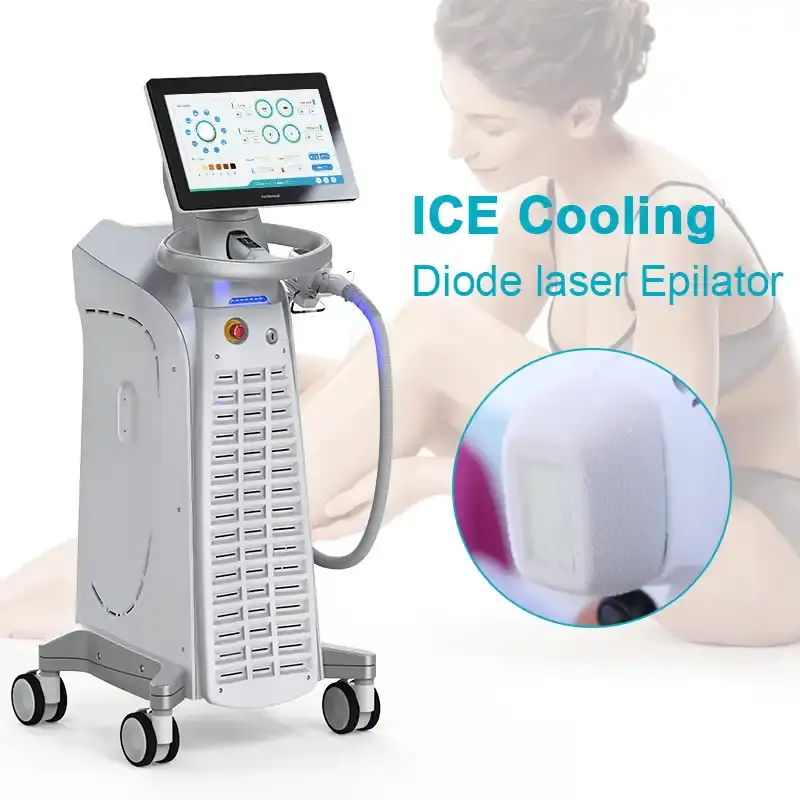
Traditional laser hair removal had a bad reputation for being painful, which turned away potential customers. This problem is solved in modern diode systems by incorporating improved cooling. In multi-layer cooling systems, the feeling of "ice depilation" turns what used to be painful into something reasonable, even enjoyable. Less pain makes people more likely to stick with their treatment, so doctors can finish the whole protocol instead of having to deal with clients dropping out.
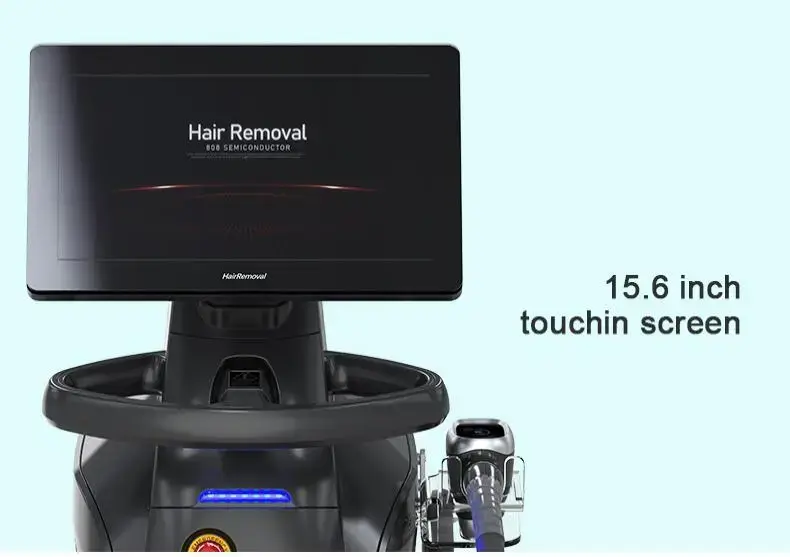
The 15.6-inch smart tablet makes it easier to use by showing things like energy levels, pulse numbers, and handpiece temperature in real time. This design makes it easier for people to use, which cuts down on training time and treatment mistakes.
Operational Efficiency and Economic Advantages
From a business point of view, the speed of care has a direct effect on how much money can be made. Practitioners can treat the whole leg in about eight minutes and the back in six minutes thanks to the large spot size and high repetition rate. With this throughput capacity, clinics can help more people every day without lowering the quality of care.
Another important economic factor is the handpiece's lifespan. High-end versions with American Coherent laser bars come with a promise of at least 50 million shots per handpiece. As a result, this longer life means lower costs per treatment and lower capital costs for replacement parts. Quality equipment usually comes with a two-year guarantee that covers everything. This gives you extra financial security.
Saving energy is important for keeping costs down. When compared to older CO2 or Nd:YAG platforms, modern diode systems use less power while still providing healing output. This means that they use less electricity. The combined cooling systems, which have Italian pumps and Japanese cooling plates, work well and don't need much upkeep.
Comparing 808nm Diode Laser Machines with Other Hair Removal Technologies
Procurement managers can make better choices that fit their business plans and target markets when they know what their competitors are doing.
Wavelength-Specific Performance Characteristics
The 755nm Alexandrite laser can treat quickly and works especially well on people with lighter skin and dark hair. But because it doesn't pick out melanin very well, darker skin tones aren't as safe, which limits the market you can serve. The 1064nm Nd:YAG wavelength goes deeper into the skin and can safely treat dark skin types. However, it needs more energy and may be more painful.
The 808nm frequency is in the middle, giving the most hair colour and skin type a good balance of depth, speed, and safety. Because it can be used in so many ways, it's the best choice for general practice cosmetic offices that serve a wide range of people rather than niche markets.
IPL Technology Limitations and Diode Advantages
ipl machines don't give off coherent laser energy; instead, they give off broad-spectrum light (590-1200nm). This method of using scattered wavelengths is not as accurate or as deep-penetrating as real laser systems. Even though IPL units usually cost less up front, they need more treatments to get the same effects, which can affect client happiness and long-term profits.
Diode lasers produce a collimated beam that sends a steady amount of energy to the target levels. This makes each treatment more effective. This means that each client will need fewer lessons and have better long-term results with weight loss, both of which are important for building a name in a competitive market.
Total Cost of Ownership Analysis
When looking at how much it costs to buy tools, the original purchase price is only one part of the total cost. Look at how often the handpiece needs to be replaced, how much energy it uses, any repair contracts that are in place, and how much money you plan to make per treatment. When compared to cheaper options that need to be fixed or replaced often, premium 808nm diode laser hair removal machines that cost more up front often end up being more cost-effective over their lifetime.
Warranty coverage changes a lot from one company to the next. A full two-year guarantee that covers both parts and labour is a much better way to protect your investment than the limited 90-day warranties that come with most entry-level imports.
Procurement Considerations: How to Choose and Buy an 808nm Diode Laser Hair Removal Machine
When buying tools strategically, you need to look at more than just the basic specs. Your choice should be in line with your business's goals, its target audience, and its operational strengths and weaknesses.
Defining Your Clinical Requirements and Volume Projections
First, look at how much treatment you expect. Units with 1200W to 2000W optical output and strong cooling systems that can run continuously are good for high-volume practices. Small offices that don't see a lot of patients may find 600W to 800W systems enough to save money for other expenses.
Think about the range of skin types in your target audience. Triple-wavelength devices (755/808/1064nm) that safely treat all Fitzpatrick types are very helpful for practices in a wide range of urban areas. Clinics that mostly treat people with lighter skin may be able to get good results with cheaper 808nm-only systems.
Evaluating Supplier Credibility and Manufacturing Quality
Choosing a partner is just as important as choosing the right tools. Manufacturers that have been around for more than 15 years, like Xi'an Taibo Laser Beauty Company, show that they are stable and have a lot of experience. Check to see if suppliers have their own research and development teams and production facilities, rather than just reselling equipment made by other companies. The difference between the two affects the quality of customisation and customer service after the sale.
Documentation for certification provides objective quality assurance. Ask for proof of CE approval, ISO 13485 compliance, and, if necessary, FDA clearance. These credentials show that the processes used to make the products meet international standards for medical devices and that the products have been tested for safety. Concerns should be raised right away if a supplier refuses to provide proof documents.
Look over the component source clarity. Branded parts are required for high-end systems. These include American Coherent laser bars, Italian pumps, Japanese cooling plates, and Taiwan power supplies. This level of clarity shows a commitment to quality, as opposed to unclear specs that hide lower-quality parts.
OEM Customization and Bulk Purchase Advantages
Distributors and owners with multiple locations can use OEM services to make their brands stand out by creating custom software interfaces, housings with brand names, and treatment methods that are just right for them. When you customise something, the minimum order quantity is usually between 5 and 10 units. In crowded markets, manufacturers with real OEM capabilities give themselves an edge.
When you buy three or more units, you get a big discount on the price, and the price gets better as you buy more. As part of complete procurement packages, talk about payment options, shipping plans, and extra warranty support. Well-known manufacturers often offer flexible lending options that help businesses grow without putting too much stress on their capital.
After-Sales Support Infrastructure
Downtime for 808nm diode laser hair removal machine equipment has a direct effect on revenue, so the level of after-sales assistance is an important factor in judging a business. Check to see if the supplier's technical support is easy to reach—24-hour response times across time zones keep outages from lasting too long. Video-based remote testing can fix a lot of problems without having to send a professional out.
Operators should be trained thoroughly with detailed manuals, video tutorials, and live remote sessions until all staff members are up to speed. Some sellers offer on-site training for big purchases, which is a smart move that speeds up ROI by making sure the right way to do things is used from the start.
Long periods of downtime can be avoided by having spare parts on hand. Make sure that replacement parts and common consumables ship within 3–5 business days. Compared to direct-from-factory transportation, manufacturers who keep stores in the US cut shipping times by a huge amount.
Future Trends and Innovations in 808nm Diode Laser Hair Removal Technology
The market for cosmetic devices is always changing, and new trends are forming that will affect how people buy things in the future and how they position themselves in the competition.
Technological Advancements Enhancing Treatment Outcomes
Ongoing technological advancements are improving treatment efficiency and accessibility. System miniaturisation maintains clinical power while reducing equipment size, enabling use in smaller treatment rooms and mobile service models. AI-assisted systems analyze skin type, hair characteristics, and treatment history to recommend optimal settings, reducing operator dependency while ensuring consistent outcomes. Meanwhile, advanced cooling technologies, including next-generation TEC modules and compressors, enhance patient comfort by maintaining lower surface temperatures with improved energy efficiency, allowing higher fluence levels for more effective treatment of resistant hair.
Market Expansion and Strategic Opportunities
More people are becoming aware of permanent hair removal, and people in emerging markets with more money to spend is driving up demand. When these markets get bigger, distributors who build ties with good manufacturers early on will be in a better situation.
Younger people are going to treatment earlier because of the trend toward preventive aesthetics and self-care that focuses on health. As a result, clients are starting to use your services when they are in their twenties instead of their thirties, which means they will go through more treatment cycles with your practice.
Harmonisation of regulations across foreign markets makes distribution in more than one place easier. CE marking is now accepted in more places, which means that distributors who serve more than one region don't have to pay as much for certification twice. Keeping up with changes in regulations helps you spot opportunities to get into new markets.
Conclusion
The 808nm diode laser hair removal machine is a tried-and-true piece of technology that strikes a good balance between clinical effectiveness, patient safety, and operational efficiency for aesthetic practices. Procurement leaders can choose equipment that fits the needs of the business if they understand the selective photothermolysis principle, the technical design, and the comparative benefits. Strategic relationships with suppliers, thorough certification checks, and a strong system for after-sales support will protect your investment and set up your practice for long-term growth. As technology keeps getting better, like with AI integration and better cooling systems, keeping in touch with new manufacturers will help your equipment portfolio stay competitive in markets that are always changing.
FAQ
1.What handpiece lifespan can I realistically expect from professional-grade equipment?
Premium 808nm diode laser hair removal machines with German Jenoptik or American Coherent laser bars can usually last between 20 and 50 million shots, but this depends on how well the cooling system is designed and maintained. It is usually the case that units with hard water channel designs and TEC cooling last longer. When a maker says a shot count is accurate, they will back it up with a warranty. Manufacturers who are sure of their technology will give guarantees instead of vague promises.
2.Can the 808nm wavelength safely treat Fitzpatrick Type VI skin?
When it comes to darker skin, the 808nm range is safer than the 755nm Alexandrite laser, but you still need to be careful when treating Type VI skin. For best results, pulse widths up to 400ms must be very long so that the epidermis can cool down while the follicles are heated. For the safest and most effective treatment of deeply pigmented skin, practices that mostly treat Type V-VI clients should think about using triple-wavelength systems with 1064nm Nd:YAG.
3.What explains treatment head overheating after 15 minutes of continuous operation?
Overheating usually means that the system isn't able to get rid of heat properly. This could be because the water filters are worn out and blocking the flow, the TEC modules aren't working right, or minerals from tap water instead of pure water are building up. Scaling in diode channels can be avoided by doing regular maintenance, like replacing the filter every three to six months, and only using distilled or deionised water. Quality manufacturers include maintenance guidelines for cooling systems. Following these guidelines keeps parts from breaking down too soon.
Partner with Taibo Laser for Your 808nm Diode Laser Hair Removal Machine Supplier Needs
Adding approved, high-performance laser technology to your beauty equipment line will help your business grow and keep your clients happy. Xi'an Taibo Laser Beauty Company has been making lasers for over 15 years and offers full after-sales support. This makes us the perfect partner for beauty salons, dermatology clinics, spas, and distributors all over the United States. Our 808nm diode laser hair removal machines have American Coherent bars, triple-layer cooling technology, and handpieces that are guaranteed to last 50 million shots. They also come with two-year warranties and CE/ISO 13485 certification.
We offer open OEM customisation for large sales, which will help your brand stand out in crowded markets. Our technical support team is available 24 hours a day, 7 days a week, and they offer full training programs and fast shipping of parts to make sure that there is little downtime. Our scalable options can be used by any type of business, from a small boutique with only one address to a large company with multiple locations.
Email Susan at susan@taibobeauty.com right away to talk about volume discounts, customisation options, and payment plans that work with your schedule for buying. Our team offers in-depth talks to help you choose configurations that work best for your target audience and treatment rates. You can see our whole line of products at taibolaserbeauty.com, and that's why aestheticians all over the world trust Taibo as their equipment maker partner.
References
1. Anderson, R.R., & Parrish, J.A. (1983). Selective photothermolysis: Precise microsurgery by selective absorption of pulsed radiation. Science, 220(4596), 524-527.
2. Goldberg, D.J. (2012). Laser Hair Removal: Clinical Evidence and Practical Applications. Dermatologic Clinics, 30(3), 469-477.
3. Haedersdal, M., Beerwerth, F., & Nash, J.F. (2011). Laser and Intense Pulsed Light Hair Removal Technologies: From Professional to Home Use. British Journal of Dermatology, 165(3), 31-36.
4. Lanigan, S.W. (2003). Management of Unwanted Hair in Women. Clinical and Experimental Dermatology, 28(6), 644-647.
5. Ross, E.V., Ladin, Z., Kreindel, M., & Dierickx, C. (1999). Theoretical Considerations in Laser Hair Removal. Dermatologic Clinics, 17(2), 333-355.
6. Town, G., & Ash, K. (2010). Comparison of Three Laser Systems for Hair Removal: Alexandrite, Diode, and Nd:YAG. Journal of Cosmetic and Laser Therapy, 12(4), 176-182.





YOU MAY LIKE