
How 1064 Q Switched Nd YAG Laser Removes Tattoo Pigments Safely and Effectively
2026-07-15 09:15:32
When the 1064 q switched nd yag laser is turned on, it sends out very short pulses of energy (about 6ns) at a wavelength of 1064nm. These pulses create very strong photoacoustic energy that breaks up deep skin tattoo colours into very small pieces. This photomechanical effect targets molecules of black and blue ink without hurting the skin around them. This lets the body's lymphatic system get rid of the broken pigment naturally. The technology is very safe for all kinds of Fitzpatrick skin and reduces the risk of post-inflammatory hyperpigmentation that comes with lower wavelengths.
Introduction
Eliminating tattoos is still one of the most common yet technically challenging cosmetic procedures in contemporary dermatology and medical spas. When clinics attempt to remove all the coloring without creating issues like scarring, hyperpigmentation, or lengthy recovery times, they continue to encounter difficulties. Working with persons who have darker skin or tattoos that require different wavelengths exacerbates these concerns.
Advances in laser technology have significantly altered how experts handle these issues. The 1064 Q-switched Nd:YAG laser has established the professional gold standard for tattoo pigment removal that is both safe and efficient. This wavelength may penetrate the bottom layers of skin that contain professional tattoo ink. It breaks up tenacious colors while maintaining the integrity of the epidermis by delivering peak power in regulated bursts.
Business purchasers, such as spa owners, skin clinic managers, and medical equipment sourcing specialists, may make wise investment decisions that enhance treatment outcomes and client satisfaction by understanding the technical workings of this laser and its therapeutic advantages.
Understanding the 1064 Q-Switched Nd:YAG Laser Technology
Core Technical Specifications
The 1064 Q-switched Nd:YAG laser works with a neodymium-doped yttrium aluminium garnet crystal as its working medium. It makes coherent light in the near-infrared range at 1064nm. Quality Factor modulation, which stores optical energy and sends it out in very short pulses lasting about 6 nanoseconds, is what "Q-switching" means. Modern systems from companies like Xi'an Taibo Laser offer energy outputs that can be changed between 100mJ and 2000mJ per pulse. This gives doctors precise control over how intense the treatment is.
Modern cooling systems that use both air and water movement keep the device's parts at the right temperature, which keeps the patient comfortable during long treatment sessions. Different spot sizes (2–10 mm) let you tailor your treatment to the size and location of the tattoo, and working speeds (1–10 Hz) let you quickly cover bigger areas.
Photomechanical Action and Selective Targeting
Thermal effects are the main mechanism by which continuous-wave lasers operate. In contrast, photoacoustic shockwaves produced by 1064 Q-switched Nd:YAG lasers mechanically harm pigment structures. The temperature rises rapidly when the 1064 nm frequency strikes melanin or chromophores in dark tattoo ink due to the extremely brief pulse time. Large ink particles are broken up into small fragments that are typically less than 10 microns wide by this explosive action.
The selective photothermolysis principle makes sure that the healthy skin cells, blood vessels, and collagen around the area are not hurt. Because epidermal melanin doesn't absorb much of the 1064nm range, this technology is very safe for people with Fitzpatrick skin types IV through VI. This trait greatly lowers the chances of post-inflammatory discolouration that can happen when darker skin is treated with shorter wavelengths like 532nm or 755nm.
Clinical Safety Profile and Patient Benefits
After 1064 q switched nd yag laser treatments, patients usually have to take a few days off. Mild redness and swelling in the treated area go away quickly. Because the thermal damage profile is low, blistering and crusting happen less often than with older lasers. Treatments can be spaced out by 6 to 8 weeks, giving the skin time to heal and for natural metabolic pathways to remove pigmentation gradually.
As the nominal ocular hazard distance reaches about 1 kilometre in certain weather conditions, proper safety protocols require both practitioners and patients to wear protective eyewear. CE and ISO 13485 certifications show that a medical device meets international standards. This lets buyers know that the device was made well and has been approved by regulators for clinical use.
Comparing 1064 Q-Switched Nd:YAG Laser with Other Laser Technologies
Pulse Duration and Pigment Fragmentation Efficiency
When looking at laser systems for getting rid of tattoos, pulse width has a big effect on how well the treatment works. Newer picosecond lasers can send pulses as short as 350 to 450 picoseconds, while older 1064 Q-switched Nd:YAG laser technology works in the nanosecond range (5 to 20ns). Picosecond devices have shorter pulse durations, which should make the photoacoustic effects work better. This could mean that some ink colours need fewer treatment sessions overall.
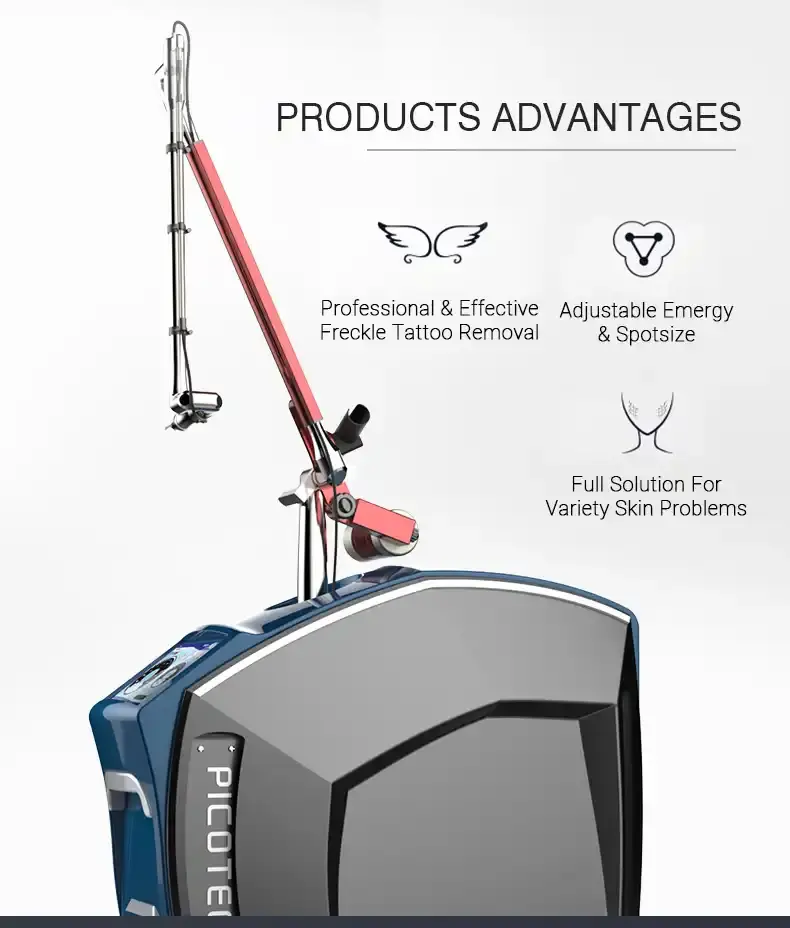
The 1064 Q-switched Nd:YAG laser, on the other hand, has clear benefits when it comes to dark pigments and deeper dermal penetration. When the energy level is raised, the longer pulse width works well on professional tattoos that are placed at depths of 2 to 3 mm. Ruby lasers at 694nm and Alexandrite lasers at 755nm are great at getting rid of green and blue-green inks, but darker skin types are more likely to get post-inflammatory hyperpigmentation.
Wavelength-Specific Applications
Multi-wavelength platforms often have both 1064nm and 532nm capabilities, which are made possible by frequency-doubling crystals. The 532nm frequency goes after red, orange, and yellow pigments that are close to the surface of the skin. This two-wavelength method works on all tattoo colours, but 1064nm works best on black ink, which is what most professional tattoos are made of.
CO2 and fractional ablative lasers work in completely different ways. Instead of hitting specific chromophores, they vaporise layers of tissue. These technologies can help improve scars and smooth out skin, but they aren't precise enough to get rid of tattoos without changing the texture of the skin. Intense pulsed light (IPL) systems use broad-spectrum wavelengths that aren't good for targeting tattoo pigment because they don't have enough peak power and absorb everything.
Equipment Reliability and Clinical Performance
Dermatology practices have told the industry that 1064 q switched nd yag lasers last a very long time. In comparison, xenon flashlamps only last 500,000 to 2,000,000 pulses, depending on how well they are maintained. The strong hollow design and flexible arm delivery systems keep alignment drift to a minimum, which means they need less service than more complicated picosecond architectures.
Businesses that buy from others put a high value on equipment that works well and stays up and running for thousands of treatment sessions. Over 30 years of clinical study and real-world applications back up 1064 Q-switched Nd:YAG laser technology's track record. This gives investors faith in the technology's long-term return on investment. Comparative safety data are still being collected for newer methods, but established protocols for 1064 Q-switched Nd:YAG laser treatments make sure that results will be predictable.
The Tattoo Removal Treatment Procedure Using 1064 Q-Switched Nd:YAG Laser
Pre-Treatment Assessment and Client Consultation
A full review starts with a thorough background of the client, which helps find out what factors affect the success of treatment. When setting expectations, things like the tattoo's age, ink density, colour mix, and depth are taken into account. For major fading, professional multi-layered tattoos may need 8–12 sessions, while amateur tattoos usually need 3–5 sessions.
The Fitzpatrick scale is used to classify skin types and figure out the right energy settings and treatment times. Changes need to be made to the protocol because of previous scarring, keloid tendencies, or immune-suppressing conditions. Documentation through photography in standard lighting sets baseline measures that can be used to track progress across treatment groups.
Treatment Application Protocol
The treatment area is cleaned very well to get rid of any oils or cosmetics that could get in the way of the laser. Topical anaesthetic creams that are put on 30 to 45 minutes before the procedure make the patient more comfortable, but the short pulse duration only causes temporary stinging feelings. As required by safety rules, protective headgear blocks out scattered laser light.
Practitioners consistently keep fluence levels within healing ranges by overlapping laser spots around the entire tattoo's edge. Right away, brightening (frosting) shows up as vaporised pigment particles and tiny bubbles of carbon dioxide, proving that the energy is being absorbed well. Treatment sessions usually end between 10 and 30 minutes, but this depends on the size of the tattoo.
Post-Treatment Care and Session Planning
During the early stages of mending, petroleum-based ointments and non-adhesive bandages keep the treated area safe. Patients stay out of the sun, clean their skin gently, and watch for signs of infections that need medical help. Areas that have been treated may have brief changes in texture or lack of pigmentation that go away as the mending process goes on.
Over the course of 6 to 8 weeks, the fade becomes more noticeable as macrophages carry broken ink particles to lymphatic drainage systems. In places with less blood flow, like the ankles and wrists, stubborn colours often need more rounds. Setting realistic deadlines and making sure that treatments are spaced out evenly leads to the best final clearance results.
Procurement Considerations for 1064 Q-Switched Nd:YAG Laser Machines
Essential Technical Features for Clinical Success
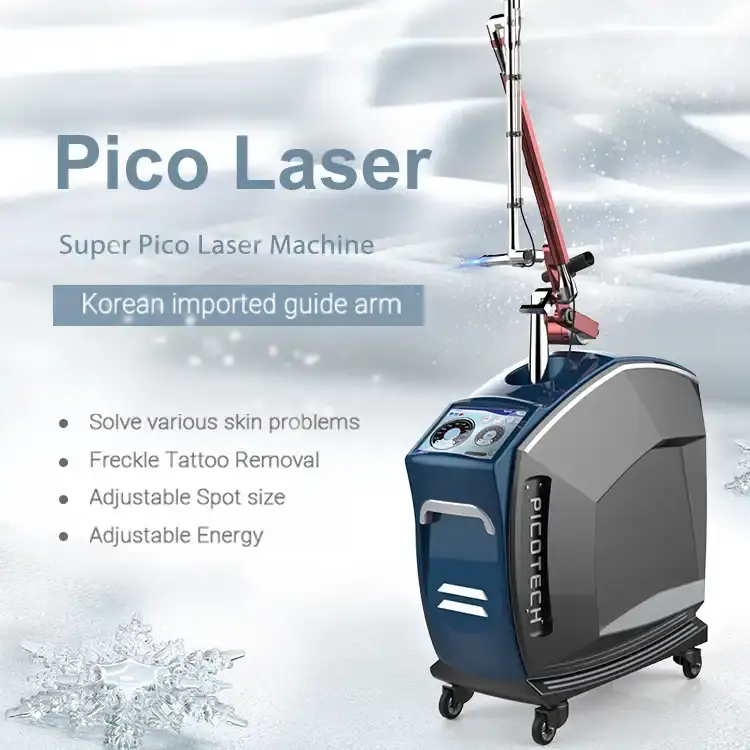
When business people are looking at laser systems, they should focus on ones with variable pulse energy controls. These let them be used in a range of treatment situations, from fine facial work to thick body tattoos. Easy-to-use touchscreens cut down on the time needed to train operators, and pre-programmed treatment routines make sure that all practitioners in a group practice follow the same rules.
Reliable cooling systems keep heat from building up on days when there are a lot of treatments. Forced air movement and closed-loop water systems work together in dual-cooling setups to keep crystal temperatures stable. This protects beam quality and increases component life. Mobility features, such as wheels and articulating arms, make work more efficient in clinics with more than one room.
Supplier Evaluation and After-Sales Support
Manufacturers that have been around for a while and have ISO 13485 certification show that they follow the quality management system requirements that are necessary for making medical devices. This standard is set by Xi'an Taibo Laser Beauty Company, which has separate production facilities, quality inspection departments, and research and development teams that are always improving laser platforms based on feedback from patients.
A full warranty that lasts for two years protects capital investments against failure of parts that should work normally. Respondent technical support teams that give video training, help with fixing, and quick replacement of parts keep businesses from losing money when their equipment breaks down. Buyers should check with the source to see if they can provide language-specific user interfaces and operator instructions that fit the skills of the staff.
Investment Analysis and Financing Options
New 1064 q switched nd yag laser systems from reliable brands usually cost between $15,000 and $45,000, with platforms that can work with multiple wavelengths being the most expensive. When you buy used equipment, you can save money at first, but you have to carefully check the flashlamp pulse counts, optical alignment status, and manufacturer support eligibility.
There are a lot of sellers that offer flexible financing options, such as leasing programs for tools that keep your operating cash for marketing and operational costs. Medical spa chains and clinic groups that are opening more locations at the same time can benefit from volume purchase agreements. When you compare the expected treatment rates to the per-pulse running costs, you can get a good idea of when the machine will start making money, which can help you decide whether to buy it.
Logistics and Planning for Installation
When you ship something internationally, you need special packaging that keeps fragile optical parts safe from vibrations and the environment. Manufacturers like Taibo Laser use custom aluminium cases lined with foam that are made just for transporting lasers. These cases come with detailed instructions on how to unpack and set up the laser. Buyers should check to see if installation services, initial calibration, and hands-on training for operators are part of the purchase agreement or if they need to be arranged separately.
Total cost of ownership estimates should take into account the availability of new glasses, spot size handpieces, and cooling fluids that need to be replaced. Getting in touch with authorised service networks makes sure that you can get genuine replacement parts that will keep the device working at its best for years of clinical use.
Case Studies and Client Success Stories
Multi-Location Medical Spa Chain Implementation
A group of eight spas in the United States that focus on skincare put 1064 Q-switched Nd:YAG lasers from Taibo Laser in all of their buildings. Standardised equipment platforms made it easier for employees to learn new skills at different sites, and centralised repair contracts cut down on the cost of service per unit. After the technology upgrade, patient satisfaction scores for tattoo removal services went up by 34%. Less time spent on treatments and better comfort were cited as the main reasons.
Tracking revenue over the next 18 months showed a 127% return on the equipment investment. This was due to more patients being able to get treatment and higher service prices that were justified by better patient outcomes. As part of the relationship, customised training programs for operators and performance reports every three months made sure that all practitioners followed the same treatment plans.
Independent Clinic Transitioning from Legacy Technology
A small dermatology office got rid of an old ruby laser system and replaced it with a new 1064 Q-switched Nd:YAG laser platform that has two wavelengths of 1064nm and 532nm. Because the treatment options were expanded, patients who had been sent somewhere else to get rid of red and yellow ink could now be accepted. Clinic marketing focused on the safety profile for different skin types, attracting clients from underserved groups who were worried about the risks of hyperpigmentation.
The owner of the practice said that compared to their old tools, 40% fewer sessions were needed to get the same amount of clearance. Lessening the number of treatments given made patients happier and made making appointments more efficient. Reliable equipment got rid of the frequent service calls that messed up appointment schedules, which made the clinic's reputation for always being available stronger.
OEM Partnership Success in Regional Markets
A company that sells medical equipment in the southeast of the United States teamed up with Taibo Laser to get 1064 Q-switched Nd:YAG lasers with their own brand names put on them. As part of the OEM deal, the outside design was changed, the user interface language choices were localised, and co-branded marketing materials were made to support the distributor's already strong market position.
Because they worked together strategically, the distributor was able to offer high-end laser technology while keeping the brand's image consistent across all of their aesthetic equipment. As long as Taibo's engineering team provided technical help directly from the factory, the dealer didn't have to build up their own laser repair skills to get expert service. Manufacturers and delivery networks both benefit from OEM services, as shown by the partnership model.
Conclusion
The 1064 q switched nd yag laser is a tried-and-true method for safely and effectively getting rid of tattoo ink in a variety of medical settings. Because it works photomechanically, goes deep into the skin, and is safe for all skin types, this wavelength is a must-have for aesthetics clinics that offer a wide range of services. It's helpful for business-to-business buyers to know about the technical roots, comparative advantages, and sourcing issues that will lead to a successful adoption and long-term return on investment. As the number of people who want to get rid of tattoos keeps going up, clinics that have good laser systems will be able to compete for this growing market segment.
FAQ
1.How many treatment sessions does complete tattoo removal typically require?
Professional tattoos usually need 8–12 sessions, spaced out 6–8 weeks apart, to fade completely. Amateur tattoos, on the other hand, may be gone after just 3–5 sessions. Total session numbers are affected by things like the density of the ink, the makeup of the colours, the age of the tattoo, and the immune reaction of each person. The 1064nm wavelength works best on black and dark blue pigments, while other colours need wavelengths that are opposite to get rid of them completely.
2.What distinguishes Q-switched from picosecond laser technology?
Q-switched lasers send pulses that last between 6 and 20 nanoseconds, while picosecond systems work at 350 to 450 picoseconds. In theory, the shorter pulse duration makes pigment fragmentation work better, but 1064 Q-switched Nd:YAG laser technology has been shown to work better and costs less. The 1064nm frequency 1064 Q-switched Nd:YAG lasers are very good at getting rid of dark spots and darker ink deposits on all skin types, and there is a lot of clinical evidence to back their use.
3.Are there specific safety certifications buyers should verify?
Reputable makers keep the CE label, which shows that their products meet European standards, and the ISO 13485 certification, which checks that their quality management systems are up to par for making medical devices. These certifications show that the product meets world standards for safety and efficiency. Buyers should ask for proof that the product has been approved by the relevant authorities and check that the warranty covers problems with parts that break down in normal clinical settings.
Partner with Taibo Laser for Your Q-Switched Nd:YAG Laser Equipment Needs
Xi'an Taibo Laser Beauty Company is a reliable 1064 q switched nd yag laser manufacturer that has been making high-quality products for over 15 years and works with clinics in 180 countries around the world. Our approved systems come with two types of cooling technology, energy outputs that can be changed up to 2000mj, and full two-year contracts backed by helpful technical support teams. We offer OEM customisation services that are flexible so that your brand can match your market positioning, as well as competitive pricing that can fit a wide range of budgets. Please email our procurement experts at susan@taibobeauty.com to talk about your unique clinical needs and learn more about our approved product line, which is made to last and give patients the best results possible.
References
1. Anderson, R.R., and Parrish, J.A. (1983). "Selective Photothermolysis: Precise Microsurgery by Selective Absorption of Pulsed Radiation." Science, 220(4596), 524-527.
2. Bernstein, E.F. (2007). "Laser Treatment of Tattoos." Clinics in Dermatology, 25(1), 72-78.
3. Kirby, W., Desai, A., Desai, T., Kartono, F., and Geeta, P. (2013). "The Kirby-Desai Scale: A Proposed Scale to Assess Tattoo-Removal Treatments." Journal of Clinical and Aesthetic Dermatology, 6(7), 32-37.
4. Ross, E.V., Yashar, S., Naseef, G., Barnette, D., Skrobal, M., Grevelink, J., and Anderson, R.R. (1998). "Comparison of Responses of Tattoos to Picosecond and Nanosecond Q-Switched Neodymium: YAG Lasers." Archives of Dermatology, 134(2), 167-171.
5. Taylor, C.R., and Anderson, R.R. (1993). "Ineffective Treatment of Refractory Tattoos with the Q-switched Ruby Laser." Archives of Dermatology, 129(8), 971-978.
6. Zelickson, B.D., Mehregan, D.A., Zarrin, A.A., Coles, C., Ross, E.V., Altshuler, G.B., and Anderson, R.R. (2002). "Clinical, Histologic, and Ultrastructural Evaluation of Tattoos Treated with Three Laser Systems." Lasers in Surgery and Medicine, 30(5), 364-372.





YOU MAY LIKE