
Fractional CO2 Laser Explained: How It Works
2026-09-07 09:03:43
When clinic directors and procurement professionals evaluate advanced skin treatment equipment, understanding the underlying technology becomes essential for making strategic investments. A fractional co2 laser operates at the 10,600 nm infrared wavelength, utilizing the principle of fractional photothermolysis to create thousands of microscopic treatment zones within the skin. Unlike traditional ablative methods that remove the entire epidermis, this technology splits the laser beam into tiny micro-columns called Microthermal Treatment Zones (MTZs), leaving surrounding tissue intact to accelerate healing. This breakthrough addresses critical clinical demands: reducing patient downtime from weeks to days while maintaining deep dermal penetration for collagen stimulation, making it the preferred solution for treating severe acne scars, deep wrinkles, and significant photodamage.
Introduction
With the arrival of fractional co2 laser technology, medical esthetics have changed a great deal. It's important for buying workers who run dermatology clinics and esthetic centers to know how this equipment works so they can make smart purchases that meet clinical goals and customer standards. This book takes a close look at fractional laser systems, talking about both the technical details and the real-world issues that affect treatment results and return on investment. This article talks about the basic ideas, clinical uses, safety rules, and buying methods that clinic leaders can use to choose equipment that meets strict legal requirements and gives measurable clinical results.
What is Fractional CO2 Laser Technology?
Core Operating Principles
Fractional co2 laser technology is an advanced way to resurface the skin that strikes a good balance between treatment effectiveness and patient safety. The method works at a wavelength of 10.6 μm, which is the wavelength at which human flesh absorbs the most water. This wavelength specificity is important because water makes up about 70% of skin. This lets the laser energy be absorbed efficiently while preventing damage to melanin or hemoglobin chromophores.

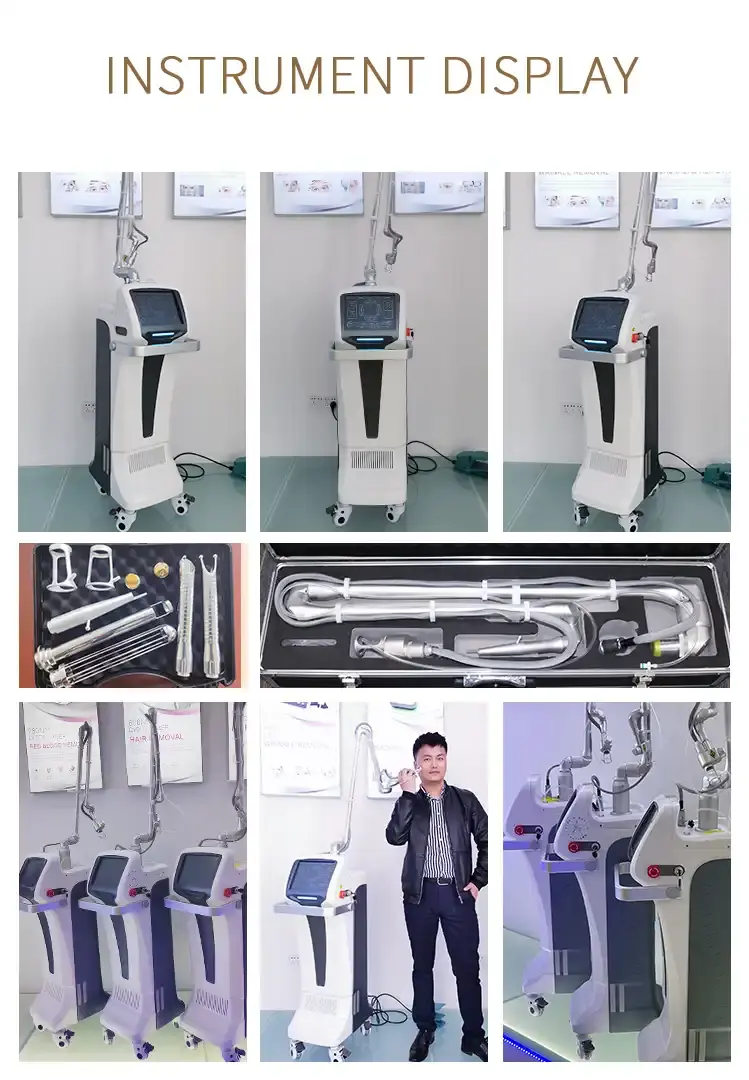
The device sends out energy in a fractional pattern, which makes controlled columns of thermal damage bordered by areas of healthy tissue. These tissue bridges that haven't been damaged act as "healing servers," sending healthy cells to treatment areas to speed up the healing process. The technology uses a precise 7-joint articulated arm to send the beam. This makes sure that very little light is lost during transfer and that the energy output stays the same across the treatment field.
Technical Architecture
Modern fractional CO2 devices have more than one output mode to handle a wide range of clinical needs. For skin resurfacing, the dot matrix mode makes regular treatment patterns. The long pulse and ultra pulse modes, on the other hand, let you change the depth of entry, from treatments on the epidermis to deep dermal remodeling. Specialized private and vulvar modes work on sensitive body parts that need precise energy control.
The water cooling system keeps the temperature stable during long treatment sessions. This keeps the equipment from getting too hot, which could hurt the laser's performance. A 10.4-inch touch color screen makes it easy to change settings for things like energy density, scanning patterns, and spot size (which can be adjusted to ≥0.1mm focus). Clinical professionals can tailor treatments to each patient's skin type and treatment goals with this level of control.
Benefits and Applications of Fractional CO2 Laser in Skin Treatment
Clinical Advantages for Diverse Indications
Fractional CO2 technology can be used for a wide range of treatment purposes in dermatology and cosmetics. The laser's ability to make precise ablation zones makes it very good at treating atrophic acne scars, such as the icepick, boxcar, and rolling types that are hard to treat with other methods. The controlled thermal injury increases the activity of fibroblasts, which leads to neocollagenesis. Over time, this changes the structure of the scar.
The technology can also be used to fix periorbital and perioral rhytides, which are wrinkles around the mouth and eyes. Because the skin is so thick, precise depth control is needed to avoid problems like ectropion. The laser works well to treat photodamage symptoms like lentigines, dyschromia, and uneven skin texture that are caused by long-term UV exposure. Stretch lines, or striae distensae, can be treated with fractional CO2 by reorganizing collagen. However, the best results usually come from multiple rounds.
Gynecological uses are a new area of fractional CO2 laser technology that is growing. Specialized 360-degree vaginal probes send controlled heat energy to the vaginal epithelium, which makes the lamina propria make more collagen. This treatment helps with vaginal atrophy caused by menopause or changes after giving birth, and new research suggests that it may also help with stress urinary incontinence by strengthening supportive tissues. Vulvar treatments are used to treat skin problems like sagging and dark spots, which means the technology can be used for more than just the face.
Evidence-Based Treatment Outcomes
The clinical literature shows that all types of treatments have led to big improvements. According to studies, scars get better after three to five treatment sessions, spaced out every month. Rhytide reduction can reduce the depth and surface area of wrinkles, and patient satisfaction scores regularly go above 80% in peer-reviewed studies. The technology can be used on a wider range of Fitzpatrick skin types (I–VI), but practitioners must carefully change the settings for darker skin tones to reduce the risk of post-inflammatory discoloration.
Fractional CO2 Laser Compared to Other Skin Rejuvenation Technologies
Comparative Performance Analysis
Comparing fractional co2 laser technology to other skin renewal methods, it clearly stands out due to its deeper entry and better ability to resurface. Microneedling causes mechanical damage by penetrating the skin with very fine needles. This speeds up the mending process without using heat. Microneedling is good for people who want to have minimal downtime, but it doesn't have the ablative power needed to treat severe scarring or significant photodamage, which is where fractional CO2 really shines.
Chemical peels use controlled chemical damage to get rid of damaged epidermis and encourage remodeling of the dermis. Medium-depth peels (TCA 35–50%) make a difference, but they're not as accurate at controlling the depth as laser systems, whose entry parameters are controlled digitally. The results of fractional CO2 treatment are more consistent across body parts with different skin thicknesses.
Intense Pulsed Light (IPL) devices use broad-spectrum light to target chromophores like melanin and hemoglobin. This successfully treats pigmentation and vascular lesions. IPL works well for people with mild photodamage, but it can't change the depth of the dermis as much as fractional CO2 can because of how it works. Radiofrequency devices heat up large areas to stimulate collagen, which tightens the skin without damaging the surface. This method has less downtime than fractional CO2 but gives less noticeable effects in people who need major skin architecture repair.
Decision Framework for Technology Selection
Professionals in procurement must make sure that the technology they choose fits with the clinic's patients' needs and goals for treatment. If a practice focuses on procedures with little downtime, non-ablative choices may be better for them. On the other hand, fractional CO2 systems are better for clinics that want to fix complicated scars and look much younger. Fractional CO2 equipment is flexible enough to treat a wide range of patients in the same practice because it can offer different levels of treatment intensity through parameters that can be changed.
Understanding the Fractional CO2 Laser Treatment Process and Safety Considerations
Structured Treatment Protocols
For fractional co2 laser treatment to work, there is a set process that starts with a thorough meeting with the patient. The initial assessment checks the type of skin, pinpoints treatment areas, takes standardized photos of the skin's state at the start, and sets reasonable goals for the result. Patients with ongoing infections, isotretinoin use within the last six months, or false hopes that could make them unhappy are not eligible for the study.
Thoroughly cleaning the skin and putting on a local anesthetic cream 30 to 45 minutes before the laser delivery are part of the pre-treatment preparation. The anesthetic makes the treatment a lot more comfortable for the patient. Treatments usually last between 20 and 45 minutes, based on the size of the treatment area. Based on the treatment goals of each patient, clinicians change factors such as energy fluence (measured in millijoules per microthermal zone), density percentage (coverage area), and pulse length.
During the healing phase after a fractional CO2 laser treatment, after-treatment care plans stress the importance of gentle cleansing, regular moisturizing, and strict sun protection. Patients usually have erythema and edema that last between 3 and 5 days. For most treatment intensities, full epithelialization happens within 5 to 7 days. The structured healing timeline lets patients schedule treatments around work and social obligations, which makes them happier and more likely to follow through.
Safety Standards and Risk Mitigation
Compliance with regulations is an important factor for business-to-business purchases that can't be skipped. The right certificates must be on the equipment. For example, CE marking is needed for European markets, and FDA clearance is needed for US sales. The ISO 13485:2016 certification shows that a manufacturer follows medical device quality management systems. This makes sure that production standards are always met.
Operator training is an important safety factor that is often overlooked when evaluating a procurement. Manufacturers that offer full training programs that include hands-on device operation, help with choosing parameters, and protocols for managing complications add a lot of value on top of the equipment itself. With technical help available 24 hours a day, 7 days a week, problems are quickly fixed, so patients don't have to wait for care, which could affect how the clinic runs.
Procurement Insights: Selecting the Right Fractional CO2 Laser Machine and Supplier
Technical Specifications for B2B Evaluation
People who work in procurement have to carefully look over technical specifications that have a direct effect on clinical performance and operational reliability. Laser power output is one of the most important things to think about. Systems that give real output higher than rated power (1-40W with actual >40W) make sure that treatments work consistently over long periods of time. The quality of the beam should show TEM00 mode features, creating a Gaussian distribution that makes sure the ablation depth is the same across the treatment field.
The accuracy of the given energy is greatly affected by how well the 7-jointed flexible arm transfers energy. Quality systems keep transfer efficiency above 85% and don't let the energy change while the arm is being moved. This stops energy changes that could lead to uneven treatment results. The signaling light wavelength (635nm) makes it possible to precisely target the treatment area. This improves the operator's accuracy, especially when treating the inside of the mouth and around the eyes, where physical accuracy is important.
Water cooling systems that are meant to run all the time keep equipment stable on days when there are a lot of patients. Systems that can run nonstop for four hours without shutting down due to heat show the durability needed for busy practice areas. It is expected that the 10.4-inch touchscreen interface will be easy for clinical staff to use, so they won't have to spend as much time learning how to use the new equipment.
Supplier Evaluation Criteria
In addition to the specifications of the tools, the supplier's skills have a big impact on long-term happiness and return on investment. Manufacturers that have been around for a while and have a lot of certifications (CE, ISO 13485, and working toward FDA approval) show that they are committed to quality control and following the rules. Companies that offer two-year warranties that cover replacement parts for failures that aren't caused by people can protect your finances from unexpected maintenance costs.
It's important that technical paperwork is full, especially for European markets where medical device registration rules require a lot of supporting materials. In target markets, regulatory approval processes go more smoothly when suppliers provide full technical files, safety data sheets, and documentation for biocompatibility testing. This help is very helpful for clinics that have to deal with complicated local compliance rules.
Infrastructure for after-sales help is what sets exceptional providers apart from average ones. Technical support teams that are responsive and available 24 hours a day, seven days a week keep technology from breaking down, which has a direct effect on clinic income. Access to training materials like full operation guides, instructional videos, and remote video advice for fixing problems speeds up staff training and makes treatment safer.
OEM Partnership Opportunities
Clinics and resellers that want to make their brands stand out may look into OEM partnerships that let them customize equipment. Manufacturers that let you change the color scheme, add your own logo, or change the language of the interface make it possible for branded equipment solutions. These partnerships are especially helpful for practices with multiple locations that want to make sure their visual brand is consistent or for distributors who want to create an exclusive market position.
TB offers a wide range of OEM services, such as working with design teams to create unique interfaces and having flexible minimum order amounts that can be used by businesses of all sizes. With 15 years of experience making things, the business has set up quality control systems that include production departments, purchasing departments, warehouse management, quality inspection teams, and packaging teams. These systems make sure that the quality of the products is the same across all unique production runs.
Conclusion
Through precise fractional photothermolysis principles, fractional CO2 laser technology has been shown to improve skin texture, scars, and tissue remodeling in clinical settings. It fixes the problem where treatment effectiveness and patient downtime have been weighed against each other in the past by creating controlled microthermal zones while keeping tissue repair reserves. Professionals in procurement have to look at both technical and supplier capabilities. Technical specifications include laser power stability, beam quality, cooling systems, and the efficiency of articulated arm transmission. Supplier capabilities include regulatory compliance documentation, warranty terms, and after-sales support infrastructure. When you know about these things, you can make smart investments in medical equipment that will help your clinic treat more patients, meet their needs, and give you long-term profits from both initial procedures and ongoing sales of supplies.
FAQ
1. How long does recovery take after fractional CO2 laser treatment?
Recovery usually happens on a set schedule, with heat and stiffness that last for 3–5 days after treatment. For modest treatment levels, the epithelium heals completely in 5 to 7 days, but redness may last for another 2 to 3 weeks. The length of downtime is directly related to how intense the treatment is. For example, after aggressive full-face resurfacing, it may take 7–10 days before patients can return to normal activities. However, after lighter treatments, they can go back to work in 3–4 days. Healing goes faster with the right care after treatment, like gentle cleansing and regular moisturizing.
2. How many treatment sessions are needed for optimal results?
The number of treatment sessions needed depends on the seriousness of the clinical indication and the results that are wanted. Mild to mild photodamage usually gets better with 1-2 treatments spread 4-6 weeks apart. Severe acne scarring, on the other hand, needs 3-5 sessions every month to get better. Maintenance treatments done once a year help keep the effects of collagen stimulation going. During the first consultation, clinicians make changes to treatment plans based on the baseline assessment and the patient's goals.
3. Is fractional CO2 laser safe for all skin types?
When the settings are set correctly, fractional CO2 technology can work with a range of skin types (Fitzpatrick I–VI). Darker skin tones (Fitzpatrick IV–VI) need lower energy settings and longer breaks between treatments to lower the risk of post-inflammatory hyperpigmentation. Topical agents like hydroquinone or tretinoin may lower the chance of complications in people who are more likely to have them before treatment. Careful parameter selection and a full pre-treatment review help experienced operators treat a wide range of populations effectively.
Partner with TB for Certified Fractional CO2 Laser Solutions
Clinic directors and procurement professionals looking for a dependable fractional CO2 laser manufacturer will find that TB has a wide range of solutions and has been making and exporting lasers for 15 years. TB was founded in 2009 and has all of its own resources, such as research and development teams, production sites, foreign sales support, and global distributor networks that reach more than 180 countries. Our fractional CO2 systems are certified by CE and ISO 13485, and FDA approval is still being processed. This means that they meet the strictest international safety standards.
Our laser equipment has real power over 40W, precise spot control (≥0.1mm focus), water cooling stability, and various output modes for a wide range of therapeutic uses, from scar revision to gynecological treatments. TB offers 24-hour technical help, two-year warranties that cover replacement parts for problems with the way they were made, and a lot of training materials, such as full guides and video consults. Email our team at susan@taibobeauty.com to talk about the unique needs of your clinic, get technical details, or set up equipment demos. We encourage factory visits so that you can test the products firsthand, and we provide competitive quotes for fractional co2 laser suppliers that work with mid-sized esthetic practices.
References
1. Alexiades-Armenakas M, Dover JS, Arndt KA. "The Spectrum of Laser Skin Resurfacing: Nonablative, Fractional, and Ablative Laser Resurfacing." Journal of the American Academy of Dermatology, 2008.
2. Hantash BM, Bedi VP, Kapadia B, Rahman Z, Jiang K, Tanner H, Chan KF, Zachary CB. "In Vivo Histological Evaluation of a Novel Ablative Fractional Resurfacing Device." Lasers in Surgery and Medicine, 2007.
3. Tierney EP, Hanke CW. "Ablative Fractionated CO2 Laser Resurfacing for the Neck: Prospective Study and Review of the Literature." Journal of Drugs in Dermatology, 2009.
4. Manstein D, Herron GS, Sink RK, Tanner H, Anderson RR. "Fractional Photothermolysis: A New Concept for Cutaneous Remodeling Using Microscopic Patterns of Thermal Injury." Lasers in Surgery and Medicine, 2004.
5. Carniol PJ, Hamilton MM, Carniol ET. "Current Status of Fractional Laser Resurfacing." JAMA Facial Plastic Surgery, 2015.
6. Orringer JS, Kang S, Hamilton T, Schumacher W, Cho S, Kaczvinsky J, Johnson TM, Voorhees JJ, Fisher GJ. "Treatment of Photodamaged Skin with Trichloroacetic Acid and Topical Tretinoin." Journal of the American Academy of Dermatology, 2004.





YOU MAY LIKE