
Fractional CO2 Laser Beauty Machine Features You Must Know
2026-01-19 09:18:26
Are you struggling with stubborn acne scars, deep wrinkles, or uneven skin texture that won't respond to traditional treatments? You're not alone. Thousands of beauty professionals and clinic owners face the challenge of finding reliable, effective equipment that delivers real results for their clients. Understanding the essential features of a fractional co2 laser beauty machine can transform your treatment offerings and set your business apart in an increasingly competitive market.
What Makes Fractional CO2 Laser Technology Revolutionary?
The fractional co2 laser beauty machine represents a significant advancement in aesthetic medicine, combining precision with powerful skin rejuvenation capabilities. Unlike traditional ablative lasers that treat the entire skin surface, fractional technology creates thousands of microscopic treatment zones while leaving surrounding tissue intact. This approach dramatically reduces downtime and accelerates healing, making it an ideal solution for busy professionals and their clients who cannot afford extended recovery periods. The science behind fractional CO2 laser technology lies in its ability to create controlled thermal damage to the skin. When the laser penetrates the dermis, it triggers the body's natural healing response, stimulating collagen production and cellular turnover. This process effectively addresses multiple skin concerns simultaneously, from fine lines and wrinkles to pigmentation irregularities and textural issues. Modern fractional co2 laser beauty machines utilize advanced scanning systems that deliver energy in precise patterns, ensuring uniform treatment coverage and consistent results across different skin types and treatment areas.
Core Technology Components of Advanced Fractional CO2 Lasers
Professional-grade fractional co2 laser beauty machines incorporate sophisticated components that directly impact treatment efficacy and safety. The laser source itself typically operates at a wavelength of 10,600 nanometers, which is specifically absorbed by water molecules in the skin tissue. This selective absorption allows for precise control over the depth and intensity of treatment, enabling practitioners to customize protocols for individual patient needs and various skin conditions. The scanning system represents another critical feature that distinguishes premium fractional co2 laser beauty machines from basic models. Advanced scanners offer multiple pattern options, adjustable spot sizes, and variable density settings that allow practitioners to fine-tune treatments based on the specific area being addressed. For instance, delicate areas around the eyes may require smaller spot sizes and lower densities, while treating acne scars on the cheeks might benefit from deeper penetration and higher energy levels. The ability to adjust these parameters ensures optimal outcomes while minimizing the risk of complications or uneven results. Cooling mechanisms integrated into modern fractional co2 laser beauty machines play an essential role in patient comfort and safety. These systems work continuously during treatment to protect the skin's surface while the laser energy penetrates deeper layers. Effective cooling not only reduces discomfort but also minimizes the risk of thermal damage to the epidermis, which can lead to hyperpigmentation or prolonged healing times. When evaluating different machines, look for systems with adjustable cooling settings that can be modified based on treatment intensity and individual patient tolerance.
Essential Features for Clinical Success with Fractional CO2 Laser Beauty Machines
Power Output and Energy Control
The power output capability of a fractional co2 laser beauty machine directly correlates with its versatility and treatment effectiveness. Professional devices typically offer adjustable power settings ranging from conservative levels suitable for superficial treatments to higher intensities capable of addressing deep wrinkles and significant scarring. This flexibility allows practitioners to gradually increase treatment intensity as patients build tolerance or to modify approaches based on real-time skin response during procedures. Energy density, measured in millijoules per pulse, represents another crucial consideration when selecting a fractional co2 laser beauty machine. Higher energy densities enable more aggressive treatments that produce dramatic results but require longer recovery periods, while lower densities offer gentler options with minimal downtime. The ideal machine provides a broad range of energy settings, allowing practitioners to develop customized treatment protocols that balance efficacy with patient comfort and lifestyle considerations. Understanding how to manipulate these settings based on skin type, treatment objectives, and patient expectations separates experienced practitioners from novices in the aesthetic field.
Treatment Versatility and Application Range
A comprehensive fractional co2 laser beauty machine should address multiple aesthetic concerns, making it a valuable investment for any practice or clinic. Beyond the obvious applications for wrinkle reduction and skin resurfacing, these devices effectively treat acne scars, surgical scars, stretch marks, enlarged pores, and various pigmentation disorders. The ability to adjust treatment parameters allows practitioners to tackle these diverse conditions with a single device, improving return on investment while expanding service offerings to attract a broader client base. Anatomical versatility represents another important feature dimension to consider. While facial treatments constitute the majority of fractional CO2 laser procedures, the best fractional co2 laser beauty machines can safely and effectively treat other body areas including the neck, décolletage, hands, and even certain areas of the body where skin laxity or scarring presents concerns. Machines with appropriate handpiece designs and adjustable spot sizes accommodate these different treatment zones, ensuring consistent results regardless of the area being addressed. This comprehensive capability enables clinics to develop complete aesthetic programs that address aging and skin damage from head to toe.
Safety Features and User-Friendly Operation
Built-in Safety Mechanisms
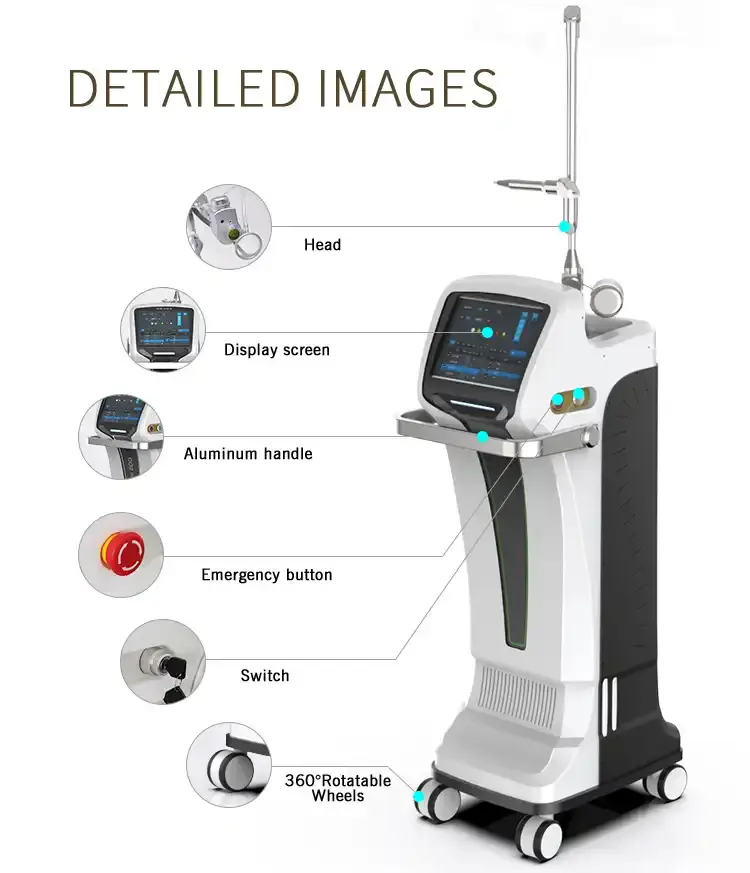
Patient safety must remain the top priority when operating any laser device, and premium fractional co2 laser beauty machines incorporate multiple protective features to minimize risks. Contact sensors ensure the handpiece maintains proper distance and angle relative to the skin surface, preventing inadvertent deep penetration or uneven energy distribution. These sensors automatically pause energy delivery if the handpiece loses proper contact, protecting both patient and operator from accidental exposure or equipment damage. Emergency stop functions provide immediate shutdown capability in case of unexpected patient reactions or equipment malfunctions. This feature proves particularly valuable during longer treatment sessions where patient tolerance may change or when training new staff members who may need to interrupt procedures quickly. Additionally, look for fractional co2 laser beauty machines with integrated smoke evacuation systems that remove ablated tissue particles and vapor generated during treatment. These systems protect both patients and practitioners from inhaling potentially harmful particulates while maintaining clear visibility of the treatment area throughout the procedure.
Intuitive Interface and Preset Programs
The control interface of a fractional co2 laser beauty machine significantly impacts workflow efficiency and treatment consistency. Modern devices feature touchscreen displays with intuitive menus that allow practitioners to quickly select and modify treatment parameters. Preset programs for common conditions like acne scarring, wrinkle reduction, or skin resurfacing enable less experienced operators to achieve excellent results while learning the nuances of laser treatments. These presets, developed by experienced clinicians and engineers, provide safe starting points that can be refined based on individual patient responses and practitioner experience. Documentation and tracking features integrated into advanced fractional co2 laser beauty machines support quality assurance and allow practices to monitor treatment outcomes over time. Some systems store patient profiles with treatment histories, enabling practitioners to review previous protocols and adjust subsequent sessions accordingly. This data-driven approach to aesthetic treatments improves consistency, helps identify optimal protocols for specific conditions, and demonstrates professional accountability that builds patient trust and satisfaction.
Technical Specifications That Matter
When evaluating different fractional co2 laser beauty machines, certain technical specifications deserve particular attention. Pulse duration, measured in milliseconds, affects how energy is delivered to tissue and influences both treatment efficacy and patient comfort. Shorter pulses create more precise ablation with less thermal diffusion to surrounding tissue, while longer pulses may provide better hemostasis but increase recovery time. Understanding these tradeoffs allows practitioners to select machines that align with their treatment philosophy and patient demographic. Scanning speed and coverage area determine how quickly treatments can be completed without compromising results. Faster scanning systems reduce procedure time, improving patient comfort and allowing clinics to schedule more appointments per day. However, speed must never compromise precision or uniformity of energy delivery. The best fractional co2 laser beauty machines balance these factors, offering adjustable scanning speeds that can be optimized for different treatment areas and objectives. Coverage area per pass affects treatment efficiency, with larger areas allowing faster completion of full-face treatments while smaller areas provide greater precision for targeted concerns. Maintenance requirements and long-term reliability represent practical considerations that impact the true cost of ownership for any fractional co2 laser beauty machine. Systems with easily replaceable consumables, straightforward calibration procedures, and robust construction minimize downtime and maintenance expenses. Before purchasing, investigate the availability of replacement parts, typical service intervals, and manufacturer support quality. Machines from established manufacturers with comprehensive service networks provide greater peace of mind and ensure your investment remains productive for years to come.
Conclusion
Selecting the right fractional co2 laser beauty machine requires careful consideration of technology, features, safety mechanisms, and long-term support. Understanding these essential elements empowers you to make informed decisions that benefit both your practice and your clients.
Cooperate With Xi'an Taibo Laser Beauty Company
As a leading China fractional co2 laser beauty machine manufacturer with over 15 years of production and export experience, Xi'an Taibo Laser Beauty Company delivers high-quality fractional co2 laser beauty machines for sale to more than 180 countries worldwide. Our China fractional co2 laser beauty machine factory offers competitive fractional co2 laser beauty machine prices backed by ISO13485, CE, and SGS certifications, ensuring you receive premium equipment with complete confidence. As a trusted China fractional co2 laser beauty machine supplier, we provide comprehensive two-year warranties, professional installation training, 24-hour technical support, and flexible OEM/ODM services tailored to your business needs. Whether you're seeking China fractional co2 laser beauty machine wholesale options or establishing an exclusive distribution partnership, our dedicated team supports your success with free training, detailed operational guides, and expedited delivery through multiple shipping routes. Contact us today at susan@taibobeauty.com to discover how our High Quality fractional co2 laser beauty machine solutions can transform your aesthetic practice and elevate your competitive advantage in the beauty equipment market.
References
1. Alexiades-Armenakas M, Dover JS, Arndt KA. "Fractional Laser Skin Resurfacing." Journal of Drugs in Dermatology, American Academy of Dermatology.
2. Hantash BM, Bedi VP, Chan KF, Zachary CB. "Ex Vivo Histological Characterization of a Novel Ablative Fractional Resurfacing Device." Lasers in Surgery and Medicine, American Society for Laser Medicine and Surgery.
3. Tierney EP, Kouba DJ, Hanke CW. "Review of Fractional Photothermolysis: Treatment Indications and Efficacy." Dermatologic Surgery, American Society for Dermatologic Surgery.
4. Chapas AM, Brightman L, Sukal S, Hale E, Daniel D, Bernstein LJ, Geronemus RG. "Successful Treatment of Acneiform Scarring with CO2 Ablative Fractional Resurfacing." Lasers in Surgery and Medicine, Wiley-Blackwell Publishing.
5. Manstein D, Herron GS, Sink RK, Tanner H, Anderson RR. "Fractional Photothermolysis: A New Concept for Cutaneous Remodeling Using Microscopic Patterns of Thermal Injury." Lasers in Surgery and Medicine, Massachusetts General Hospital Wellman Center for Photomedicine.





YOU MAY LIKE