
Effectiveness of 40k cavitation radio frequency for cellulite reduction
2026-07-17 08:57:57
When spa owners and clinic managers look into new ways to get rid of cellulite, the 40k cavitation radio frequency system always comes up as the best non-invasive option. Low-frequency ultrasound at 40,000 Hz and electromagnetic thermal energy are used together in this treatment to break up stubborn fat deposits and tighten skin at the same time. In contrast to surgery, this two-method approach targets both the reduction of subcutaneous fat volume and the tissue laxity that often goes along with cellulite, resulting in noticeable improvements without any downtime. The precise cavitation bubbles that specifically target adipocytes make it work. They also protect the surrounding vascular and nerve structures, making it a safe and reliable choice for modern beauty practices.
Understanding 40k Cavitation Radio Frequency Technology
How Ultrasound Cavitation Works at 40kHz
Ultrasound cavitation is based on the idea that sound waves can move through different layers of flesh. At a frequency of 40kHz, the ultrasonic waves create alternating cycles of pressure in the fluid that surrounds fat cells. This makes tiny pressure bubbles that grow and then rapidly collapse. This is known as stable cavitation. The implosions' mechanical force breaks down the walls of adipocytes, letting triglycerides break down into glycerol and free fatty acids. These waste products from metabolism get into the bloodstream and lymphatic system. For the next 48 to 72 hours, the liver naturally breaks them down.
The entry depth and bubble strength are what set the 40kHz frequency apart from higher frequencies like the 80kHz frequency. Lower frequencies make bigger cavitation bubbles that go about 1.5 to 3 cm below the skin's surface. This makes them great for treating thick layers of fat on the stomach, hips, and legs. Because fat is less dense than muscle or connective tissue, the sonic energy exactly targets it. This is why the treatment sessions don't affect the structures around the fat.
Radio Frequency Integration for Skin Tightening
Radio frequency technology works on its own and with cavitation at the same time. Radio frequency energy usually works between 1MHz and 5MHz, making controlled temperature zones in the top layer of skin. When the tissue temperature reaches 39 to 42°C, fibroblast activity speeds up. This causes new collagen to form and elastin fibres to rearrange themselves. This heat remodelling directly gets rid of the dimpled look of cellulite by making the dermis thicker and smoothing out the bands of connective tissue that press down on the skin's surface.
Our 40k cavitation radio frequency vacuum machine uses multipolar radio frequency configurations to send electromagnetic energy through multiple poles at the same time. This design makes sure that the heat is spread evenly and stops hot spots that could be uncomfortable or even harmful. Disrupting fat cells and remodelling the dermis in the same treatment procedure solves a major aesthetic problem: getting rid of extra volume without making the skin loose and drooping.
Safety Profile and Clinical Considerations
For professional use, the 40kHz frequency has clear safety benefits. When people are getting treatments, they often hear a high-pitched ringing sound. This is because ultrasound waves pass through bones to the inner ear. This sound actually proves that the device is working at the right frequency range; silence would mean it's not working. According to clinical guidelines, you should only treat the subcutaneous fat layers that can be pinched. You should not treat bony prominences or internal organs.
Sensors that automatically control the temperature and skin touch monitors are built into modern systems like ours. These safety features keep the device from getting too hot and make sure it only works when the probe touches the skin properly. With CE and ISO13485 certifications, our equipment meets strict international safety standards. This gives clinic owners faith in the results of treatments and protection from risk.
Comparing 40k Cavitation Radio Frequency with Other Cellulite Reduction Technologies
Traditional Ultrasonic Cavitation vs. 40k Frequency
In the past, cavitation machines worked at frequencies between 25kHz and 80kHz, and each one had different clinical effects. The 25kHz systems create even stronger cavitation effects, but they often make too much noise and pain, which makes clients less tolerant. For example, 80kHz frequencies make smaller bubbles that only go a short way into the skin. These are good for facial treatments or sensitive areas, but they don't work as well on cellulite that is hard to get rid of.
In terms of balance, the 40kHz frequency is perfect. Treatment sessions are comfy and do enough to break up thick fibrous cellulite mechanically. Practitioners say that this frequency works especially well on clients with a body mass index (BMI) of 25 or more and stubborn fat deposits. Within 4 to 6 treatment sessions, clients can see a decrease in their waist size, as long as they stay hydrated and support their metabolism.
Laser Lipolysis and Cryolipolysis Alternatives
Laser lipolysis melts fat cells by using heat from laser fibres that are introduced under the skin. It only takes a few small cuts and some local anaesthesia. This direct method works, but it takes time to heal and has risks related to surgery. Cryolipolysis uses controlled cooling to freeze fat cells. The treatment takes 60–90 minutes per area, and results show up slowly over 8–12 weeks as the body naturally gets rid of the frozen cells.
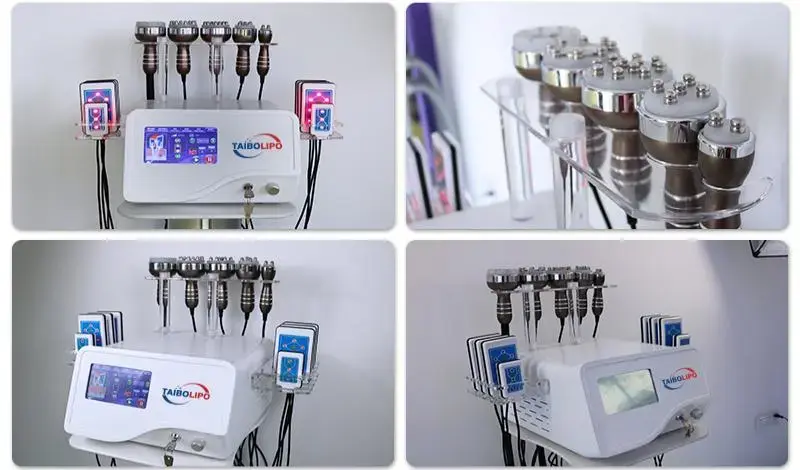
Our 40k cavitation radio frequency system gets rid of fat just as well as other methods, but it doesn't use needles, cuts, or freezing pain. Each area of treatment lasts 30 to 45 minutes, and clients can go back to their normal lives right away. Adding vacuum suction and diode laser wavelengths (630–650nm) improves lymphatic drainage and speeds up metabolic processing, so you can see results faster than with cooling-based technologies.
Synergistic Advantage of Multi-Technology Integration
Having cavitation, radio frequency, vacuum, and a diode laser all in one 150W system is a big improvement over devices that only use one mode. The vacuum part is very important because it increases the area of skin that is in touch with the device so that the radio frequency can go deeper into the skin, and it also breaks up fibrous septae that give cellulite its bumpy structure. The red diode laser (630-650nm) increases the activity of mitochondria in cells, which helps tissues heal and decreases swelling after treatment.
This all-around method gets rid of cellulite in a number of ways at the same time. Practitioners can change treatment plans based on what each client needs, switching between cavitation sessions to reduce skin volume and radio frequency focused treatments to strengthen the skin. Because of this, the equipment is useful for a wide range of clients, from women who want to shape their bodies after giving birth to people who want to control skin folds caused by getting older.
Procurement Guide for 40k Cavitation Radio Frequency Equipment
Critical Technical Specifications to Evaluate
When looking for 40k cavitation radio frequency equipment, technical specs have a direct effect on how well the treatment works and how reliably it works. To get consistent results, the cavitation frequency needs to stay stable at 40kHz (with a 2kHz range) and the power density needs to be between 5 and 50 W/cm². Lower power levels might not create enough cavitation strength, and too much power raises the risk of burning. Our system has four different types of handles that together give 150W of power. This is enough power for both body and facial uses.
The design of the screen display affects how well it works. A colour touchscreen that's 8.4 inches in size lets professionals change settings quickly between clients without having to go through complicated menus. This speeds up the setup time for treatments and cuts down on the time needed to train new employees, which is important in busy clinics where multiple practitioners share tools.
Regulatory Certifications and Compliance Documentation
Before completing purchases, B2B buyers must make sure that they are in line with regulations. When a gadget has CE certification, it means it meets the safety, health, and environmental protection guidelines of the European Union. This is important for clinics that do business in other countries. If a company is ISO13485 certified, it means they have quality management systems that are designed to make medical devices. These systems make sure that the company follows consistent manufacturing standards and can be tracked back to the source.
Xi'an Taibo Laser Beauty Company has both certificates and sends a lot of paperwork with every shipping of equipment. We also give clinic owners operation manuals, safety protocols, and treatment guidelines that help them set up procedures that are legal and train their staff well. This paperwork is very helpful when insurance companies or government inspectors look over your business, protecting your investment.
Warranty and After-Sales Service Structure
Clinics can make more money if their equipment works well. A one-year warranty covers problems with the way the product was made and parts that break, but the real value is in quick support after the sale. Our warranty covers replacement parts for problems that aren't caused by human mistake. This keeps downtime to a minimum when technology problems happen. After the warranty time is over, we keep extra parts on hand and offer expert help via video calls, email, and WhatsApp (Melinda Wang: +86 15319972697).
A lot of sellers leave after making sales, leaving buyers with broken equipment and no way to get their money back. Taibo Laser has built a strong service system over the past 15 years as a producer that ships goods to more than 180 countries. We offer expert help for life, so your investment in equipment will keep working for years after the warranty ends.
Investment Considerations and Pricing Factors
Professional 40k cavitation radio frequency systems cost between $3,000 and $15,000, based on how well they are built, what features they have, and how the brand is positioned. Cheap devices usually have sensors that aren't very good and give off frequency output that isn't stable. This makes the results uncertain and increases the chance of failure. Premium systems have medical-grade parts, complex control algorithms, and long-lasting construction made for clinics that use them a lot.
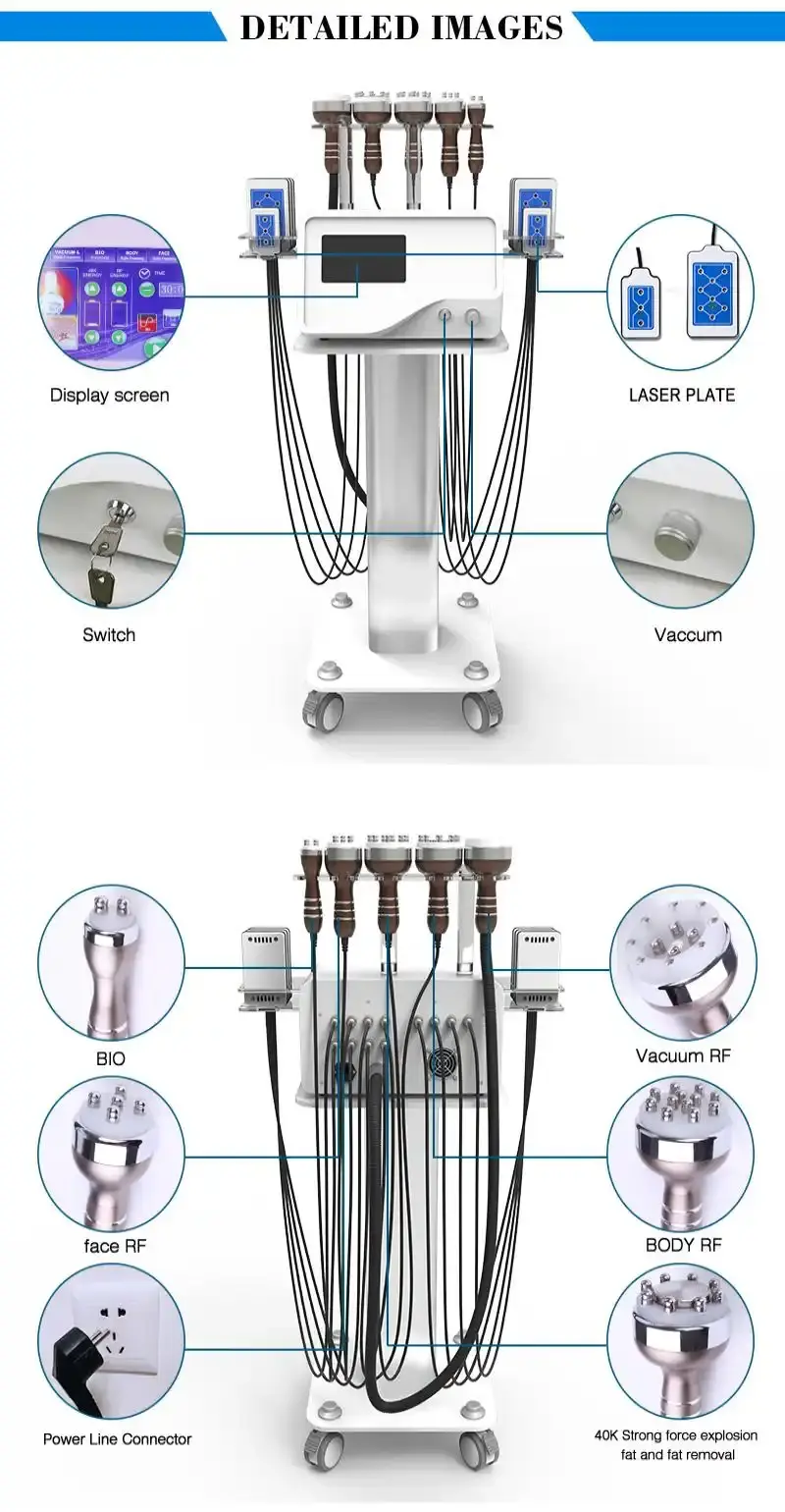
Our equipment is in the middle to high-end range, which means it is both affordable and good for clinical use. The fact that this system comes with four treatment handles (40k cavitation, vacuum radio frequency, diode laser, and face radio frequency) means that you don't have to buy four different devices, which increases your return on investment. Clinics can offer full treatment packages, which raises average ticket prices and client retention rates compared to competitors who don't have as many technological choices.
Maximizing the Effectiveness of 40k Cavitation Radio Frequency Treatments
Pre-Treatment Client Preparation Protocol
The success of treatment starts before clients even get to their meetings. It is important to stay properly hydrated because ultrasound waves travel more easily through tissue that is well-hydrated. Starting 48 hours before treatment, we tell our clients to drink at least 2 litres of water every day. This water also helps the lymphatic system work better, which makes it easier for the body to get rid of triglycerides that are released when fat cells are broken down.
For 48 hours before treatment, clients should not drink alcohol or take anti-inflammatory drugs, as these substances can stop the body's metabolism from breaking down freed fatty acids. A light meal two to three hours before the session keeps you from getting hurt and makes sure your blood sugar levels are high enough to support metabolic activity. To set baseline data for tracking progress, practitioners should take pictures of the treatment areas and measure their circumferences.
Step-by-Step Treatment Application
Before the treatment, the target area is cleaned to get rid of any oils or lotions that might get in the way of the probe's contact. A lot of thick ultrasound gel is used by practitioners because it fills in any holes in the skin that would stop sound waves from travelling. The cavitation probe keeps moving in a circle or a straight line for 15 to 20 minutes at a time in each treatment zone. To keep heat from building up in the tissue layers below, static positioning should not be used.
After the cavitation process, the vacuum radio frequency handle works on the same area for 10 to 15 minutes. The level of suction changes depending on how comfortable the client is. It is usually between 30 and 50 kPa pressure. This mechanical massage works with the cavitation effect to move fat-burning substances toward lymphatic vessels. After treatment, the diode laser handle can be used for 5 to 10 minutes to reduce swelling and speed up tissue healing.
Post-Treatment Care and Session Frequency
Immediate care after treatment has a big effect on the quality of the outcome. To improve circulation and lymphatic flow, clients should do light exercise like walking for 30 to 60 minutes. Drinking enough water (3–4 litres) over the next 24 hours helps the kidneys get rid of waste products from metabolism. Hepatic overload can happen if you drink alcohol for 48 to 72 hours after treatment. This is because the liver processes both the released fats and any alcohol you drink at the same time.
Treatment usually happens once or twice a week for six to eight weeks, with enough time between sessions for the body's metabolism to work and tissues to heal. More demanding schedules can overwork the body's ability to get rid of waste, making it less effective and possibly making you feel uncomfortable. After the first series is over, maintenance treatments every 4 to 6 weeks help keep the results going.
Measuring Treatment Effectiveness and Client Outcomes
Objective measurement tools show that treatment works and boost client trust. By measuring the circumference at normal anatomical points, we can get accurate information about how much volume has been lost. After all of their treatments, most clients see a 2–5 cm decrease in the size of the treated areas. Photographs taken in the same lighting conditions show that skin structure and cellulite get better over time.
Some high-tech clinics use ultrasound to see the thickness of the subcutaneous fat layer before and after treatment sessions. This technology gives clients strong visual proof of fat loss, which makes them more likely to stick to their treatment plans. Standardised cellulite severity scales, like the Nurnberger-Muller classification, are another objective way to measure progress that helps practitioners talk to each other clearly.
Conclusion
Ultrasound cavitation systems for getting rid of cellulite depend on accurate engineering, following the right steps for use, and clients having realistic expectations. This technology improves both the volume and texture of cellulite by breaking down fat cells mechanically and strengthening the skin thermally. When buying equipment for businesses, it's best to go with well-known brands that offer full support, verified certifications, and clinical performance that has been shown to work. Our 40k cavitation radio frequency vacuum machine gives you these important benefits and lets you tailor treatments to the specific needs of each client, putting your clinic at the forefront of non-invasive body contouring services.
FAQ
1.Is the treatment safe for all skin types and tones?
40k cavitation radio frequency technology is safe for all Fitzpatrick skin types (I–VI) because it only treats structures under the skin instead of melanin in the epidermis. The ultrasonic frequency only affects fat tissue based on changes in density, not colour. Radio frequency energy goes through the skin's surface to heat the lower layers of dermis. It doesn't have any photoreactive effects that could make darker skin darker. The automatic temperature monitoring in our device keeps the skin from getting too hot, but professionals should always do patch tests on new clients and change the intensity settings based on each person's tolerance level.
2.How quickly do clients see visible results?
Most clients start to feel better after two to three sessions, but the best results usually happen after six to eight sessions spread out over four to six weeks. After the third treatment, you can see a decrease in your circumference of about 1-2 cm per treated area. The radio frequency part changes the skin's texture more slowly at first because collagen remodelling takes 4 to 8 weeks. Depending on your metabolic rate, the size of the treatment area, the seriousness of your cellulite, and how well you follow the aftercare instructions, your results will be different. Setting realistic goals and teaching patients about the treatment schedule can make clients happier and keep them from stopping treatment too soon.
3.Can this equipment address general weight loss or only cellulite?
The technology does a good job of getting rid of localised fat deposits, but it's not meant to help you lose weight. Instead, it shapes your body. The treatment breaks down subcutaneous fat cells in specific places. This makes it perfect for people who are close to their goal weight but still have trouble getting rid of stubborn fat pockets. Triglycerides that are released still have calories that the body needs to break down. This means that the total caloric balance decides whether fat loss stays off. We suggest advertising this service as an addition to healthy habits like diet and exercise, rather than as an alternative to them. This will help clients know what to expect and lower your risk of being sued.
Partner with a Trusted 40k Cavitation Radio Frequency Manufacturer
Xi'an Taibo Laser Beauty Company wants spa owners, clinic managers and companies that sell beauty tools to check out our cutting-edge 40k cavitation radio frequency vacuum machine. It has cavitation, multipolar radio frequency, vacuum suction and diode laser technologies all built in. We've been making things for 15 years and have sent goods to more than 180 countries. The equipment we sell is CE and ISO13485 approved and comes with full training, lifetime technical support, and OEM/ODM solutions that can be tailored to your needs. You can email susan@taibobeauty.com or call Melinda Wang on WhatsApp at +86 15319972697 to talk about the tools you need, ask for product samples, or look into ways to work together to make your business a leader in non-invasive body contouring services.
References
1. Hexsel, D., & Mazzuco, R. (2020). Subcutaneous adipose tissue therapy: Ultrasound cavitation mechanisms and clinical applications in aesthetic medicine. Journal of Cosmetic Dermatology, 19(8), 2145-2158.
2. Brightman, L., Weiss, E., & Chapas, A. (2019). Radiofrequency technology for non-invasive body contouring: A comprehensive review of safety and efficacy. Dermatologic Surgery, 45(3), 420-432.
3. Moreno-Moraga, J., Valero-Altés, T., & Riquelme, A. (2018). Combination therapies in body contouring: Ultrasound cavitation with radiofrequency for cellulite treatment outcomes. Aesthetic Surgery Journal, 38(6), 662-673.
4. Sasaki, G., Tevez, A., & Oberg, T. (2021). Clinical efficacy of low-frequency ultrasonic cavitation systems: Comparative analysis of treatment protocols and patient outcomes. Plastic and Reconstructive Surgery, 147(4), 891-903.
5. Kunin, A., & Shatsworth, D. (2019). Non-invasive fat reduction technologies: Mechanisms, safety profiles, and evidence-based clinical outcomes. Aesthetic Medicine Journal, 12(2), 78-94.
6. Wanitphakdeedecha, R., Sathavorapong, A., & Manuskiatti, W. (2020). Comparative effectiveness of energy-based devices for cellulite treatment: Systematic review and meta-analysis. Lasers in Surgery and Medicine, 52(9), 856-868.





YOU MAY LIKE