
8 Evidence-Based Benefits of Using a Professional Hair Loss Treatment Machine
2026-03-25 08:59:03
Using photobiomodulation technology that has been supported by science, the modern hair loss treatment machine is a big step forward in taking care of head health issues. These are high-tech devices that use low-level laser therapy and LED light systems for hair growth. They are non-invasive compared to the use of drugs. Professional laser therapy has been proven effective in increasing hair density by as much as 39% after the use of the device for 16 weeks. Unlike other hair growth solutions such as topical and surgical solutions, these devices use cellular technology by increasing the amount of ATP produced by the hair follicle papilla. This prevents the hair follicles from shrinking. Shrinking hair follicles are a sign of androgenetic alopecia. There is more and more proof coming out showing the effectiveness of the device. This makes it more appealing for use in the clinic and salon industry.
Understanding the Science Behind Professional Hair Loss Treatment Machines
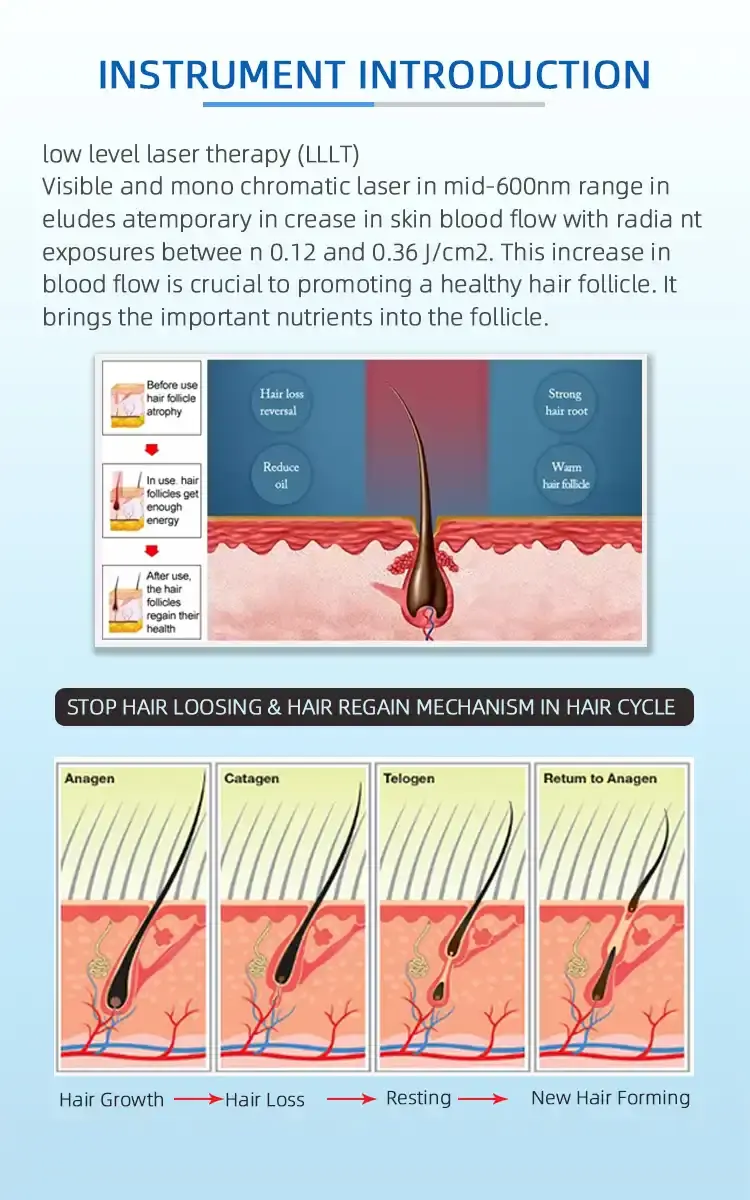
Photobiomodulation, which is also known as low-level laser treatment (LLLT), is the idea behind professional hair restoration tools. These high-tech systems give off coherent, one-color light that is usually in the visible red range, around 650nm in wavelength. This light can reach depths of 3–5 mm into scalp tissue.
How Photobiomodulation Works at the Cellular Level
The treatment technique consists of targeting the mitochondria in the hair follicle papilla cell. Once the precise wavelength strikes these potent cells, it activates the Cytochrome C Oxidase enzyme, thus increasing the synthesis of adenosine triphosphate (ATP). This accelerates the metabolic processes required for hair growth by shifting the hair follicles from the telogen or sleepy stage to the anagen or busy stage.
Clinical Research and Efficacy Studies
Studies that have been studied by experts always show that professional laser therapy systems work. A study released in 2014 in the American Journal of Clinical Dermatology showed that both men and women who used LLLT devices had significant hair growth. According to research, these methods improve the microcirculation in the area. This means that they get more nutrients to follicles that aren't working as well and reduce inflammation that causes pattern baldness.
Advanced Technology Integration
Now, technology has enabled devices to use a hybrid light treatment that includes both red and near-infrared lights to penetrate deeper into the skin. Some of the high-end devices also come equipped with AI technology that can automatically adjust the intensity of the treatment according to the density of hair and health of the scalp. This ensures that an individual’s treatment needs are met to achieve the best results.
Benefit 1 – Enhanced Hair Regrowth through Proven Technology
Professional laser therapy devices demonstrate remarkable efficacy in stimulating natural hair regrowth through scientifically validated mechanisms. The technology addresses the root cause of androgenetic alopecia hair loss treatment machine by counteracting the effects of dihydrotestosterone (DHT) on sensitive hair follicles.
Stimulating Dormant Follicles
Clinical research has demonstrated that hair loss treatment machine technology has the capability to reactivate hair follicles that are in prolonged dormancy. The photobiomodulation increases the circulation of blood by as much as 54% to the scalp. This is important because hair growth requires oxygen and nutrients. Increased circulation has the capability to reverse the miniaturization of hair follicles that is associated with male and female pattern baldness.
Comparative Effectiveness Studies
A comparison of laser therapy and traditional therapies shows promising benefits. Minoxidil topical solution must be applied daily and may cause irritation to the scalp, whereas laser therapy allows for only three times a week with minimal maintenance requirements. Research also shows that laser therapy is as effective or even better than drug therapies without any side effects.
Measurable Hair Density Improvements
Clinical trials have shown a marked increase in hair density as well as hair shaft diameter through regular laser treatment. On average, a 35-43% increase in hair density has been recorded in subjects who received laser treatment for 16-24 weeks, and this improvement has been shown to increase further over longer treatment periods.
Benefit 2 – Non-Invasive and Safe Treatment with Minimal Side Effects
Safety represents a paramount concern for both practitioners and patients considering hair restoration options. Professional laser therapy devices excel in this regard, offering FDA-cleared technology with extensive safety documentation.
FDA Clearance and International Certifications
Some of the top hair loss treatment machine models are approved for safety and efficacy by the FDA, as well as CE marking, which is important for the European market. The testing protocols for these products are very rigorous, so there are consistent safety standards worldwide.
Absence of Systemic Side Effects
Unlike oral medications such as finasteride, which can cause hormonal disruptions and sexual side effects, laser therapy produces only localized effects at the treatment site. Clinical studies report minimal adverse events, typically limited to mild scalp tingling during initial sessions that resolves as patients adapt to treatment.
Safety Guidelines for Professional Use
Professional devices incorporate multiple safety features, including automatic shut-off timers, skin temperature monitoring, and eye protection protocols. Treatment parameters can be adjusted based on individual skin sensitivity and phototype, ensuring safe application across diverse patient populations. Contraindications are minimal, primarily limited to individuals taking photosensitizing medications or those with active scalp infections.
Benefit 3 – Improved Treatment Efficiency and User Convenience
Modern hair restoration practices demand efficient solutions that maximize hair loss treatment machine patient satisfaction while optimizing practitioner workflows. Professional laser systems deliver exceptional convenience benefits for both clinical and personal use applications.
Reduced Treatment Times
Advanced professional devices complete full-scalp treatments in 20-25 minutes, representing significant time savings compared to earlier generation equipment requiring 45+ minutes per session. This efficiency improvement enables clinics to accommodate more patients while reducing per-treatment costs.
Ergonomic Design Features
Contemporary hair loss treatment machine models prioritize user comfort through lightweight construction, adjustable positioning systems, and intuitive control interfaces. Many devices feature hands-free operation capabilities, allowing patients to read or use mobile devices during treatment sessions.
Integration with Complementary Therapies
Professional laser devices work synergistically with other hair restoration modalities, including platelet-rich plasma (PRP) therapy, micro-needling, and topical growth factors. This compatibility enables practitioners to develop comprehensive treatment protocols addressing multiple aspects of hair loss simultaneously, maximizing patient outcomes through integrated approaches.
Benefit 4 – Cost-Effective Solution for Long-Term Hair Health
Investment analysis reveals that professional laser therapy systems offer superior long-term value compared to ongoing pharmaceutical treatments or multiple surgical procedures. The economic advantages become particularly evident when evaluating lifetime treatment costs.
Return on Investment Analysis
Professional clinics typically recover device costs within 6-8 months through patient treatments, with subsequent sessions generating substantial profit margins. The durability of quality laser systems, often exceeding 10 years with proper maintenance, ensures sustained revenue generation throughout the device lifecycle.
Patient Cost Comparison
For individual users, professional-grade home devices eliminate ongoing clinic visit expenses while providing consistent treatment access. Analysis comparing 5-year costs shows laser therapy generating 40-60% savings versus continued pharmaceutical treatments or multiple hair transplant procedures.
Financing and Procurement Options
Leading manufacturers offer flexible financing arrangements, including lease-to-own programs, bulk purchase discounts for multi-device orders, and extended warranty coverage. These options reduce initial capital requirements while providing predictable monthly expenses for budget planning purposes.
Benefit 5 – Versatility for Men's and Women's Hair Loss Treatment
Professional laser therapy systems demonstrate remarkable adaptability in hair loss treatment machines across diverse patient populations, addressing various hair loss patterns and underlying causes with customizable treatment protocols.
Gender-Specific Treatment Protocols
Pattern baldness in men usually progresses in a way that can be predicted by the Norwood scale. On the other hand, Ludwig's classification of hair loss in women usually looks like thinning hair all over. Modern hair loss treatment machines take these differences into account by having strength settings that can be changed and treatment zones that can be specifically targeted, making the results best for each patient group.
Hormonal Consideration Adaptations
Women experiencing hair loss related to menopause, pregnancy, or polycystic ovary syndrome benefit from laser therapy's hormone-neutral mechanism. Unlike pharmaceutical interventions that may interact with hormonal fluctuations, photobiomodulation provides consistent results regardless of underlying endocrine changes.
Multi-Ethnic Efficacy
There have been clinical studies that show laser therapy works for people of all races and hair types, even those with naturally wavy or coarse hair. Because the technology can go through different densities of hair, it can be used in a wide range of work settings and geographic markets.
Benefit 6 – Trusted Brands and Certified Suppliers for Reliable Procurement
Professional buyers need to know that the goods they buy are real and that they can get full support for them. Well-known brands keep strict quality standards and large marketing networks in order to effectively serve markets around the world.
Manufacturer Reputation and Track Record
Leading laser therapy makers have done research and development for decades and have large patent portfolios to protect their own technologies. These businesses keep their ISO certifications for their manufacturing processes and put a lot of money into ongoing clinical research to make treatment plans better.
Authorized Distribution Networks
Reputable suppliers keep up relationships with authorised dealers to make sure that dealers get the right training and that the warranty covers the goods. These partnerships give buyers access to technical support, marketing help, and ongoing learning opportunities that are necessary for a device to be successfully implemented.
Quality Assurance Protocols
Professional providers of hair loss treatment machines use a wide range of quality control measures, such as testing the machines before they are delivered, making sure they are calibrated correctly, and keeping records of how well they work. Extended warranty plans and responsive service networks give big investments in equipment even more protection.
Benefit 7 – Innovation-Driven Market Advantage with Newest Technologies
As technology keeps getting better, laser treatment keeps getting better, and the user experience keeps getting better. Early adopters will be at the cutting edge of hair regrowth innovation thanks to cutting-edge features.
Artificial Intelligence Integration
The newest devices have AI algorithms that look at the state of the scalp, measurements of hair density, and treatment reactions to automatically find the best protocols. These smart systems change factors in real time, which ensures that results are always the same and reduces the chance of user error.
Smart Monitoring Capabilities
Advanced models have monitors built in to track progress, measure outcomes, and make sure that patients follow their treatment plans. Mobile apps let you do thorough reporting and remote consultations, which makes patients more involved and lets you make changes to their treatment based on data.
Future Technology Trends
New developments include hair loss treatment machines that combine laser treatment with microcurrent stimulation, drug delivery systems that control how much of a drug is released, and virtual reality headsets that can be used to take your mind off of treatment. These new ideas promise better clinical results and better patient experiences.
Benefit 8 – Support for Bulk Orders and Tailored Solutions for Businesses
Professional providers know that entering a new market successfully requires more than just delivering products. Customised business solutions meet the needs of a wide range of customers, from small clinic owners to big clinic chains.
Bulk Purchase Programs
People who buy a lot of things often get big discounts on prices. Usually, orders that are over the minimum amount get 15–25% off. These programs offer flexible delivery times, personalised training materials, and full support from account managers during the whole procurement process.
OEM/ODM Customization Options
Private labelling lets dealers and big buyers change how devices look, how they work with software, and how they come with accessories. Original design maker services meet the specific needs of each market, helping to differentiate brands and place them in a competitive market.
Comprehensive Business Support
Leading suppliers offer marketing materials, training programs, and technical help that are necessary for integrating hair loss treatment machines successfully. Regular chances for continuing education make sure that practitioners stay up to date on new technologies and changing treatment protocols.
Conclusion
Professional hair loss treatment machines are scientifically proven ways to meet the growing demand for effective, non-invasive hair restoration choices around the world. The eight benefits listed are supported by data and show clear benefits in terms of safety, effectiveness, convenience, and cost. These devices provide clear benefits for both doctors and patients, ranging from faster cell metabolism that helps natural healing to full business support that makes entering the market easier. Laser treatment will continue to be an important part of overall hair health plans for a long time to come because it combines tried-and-true technology with new developments all the time.
FAQ
1. What makes professional hair loss treatment machines more effective than home devices?
Professional devices typically feature higher power output, more precise wavelength control, and advanced safety monitoring systems compared to consumer-grade alternatives. The increased intensity enables deeper tissue penetration and more significant cellular stimulation, while professional-grade construction ensures consistent performance over thousands of treatment cycles.
2. How long does it take to see results from laser hair therapy?
Most patients observe initial improvements within 8-12 weeks of consistent treatment, with significant results becoming apparent after 16-20 weeks. Clinical studies document continued improvement throughout the initial six months, with maintenance treatments preserving long-term benefits.
3. Are there any contraindications for laser hair therapy?
Primary contraindications include pregnancy, active scalp infections, photosensitizing medications, and certain skin conditions. Patients with implanted devices or those receiving chemotherapy should consult healthcare providers before beginning treatment. Professional assessment ensures safe candidacy for each individual.
4. Can laser therapy be combined with other hair loss treatments?
Laser therapy demonstrates excellent compatibility with complementary treatments, including topical medications, nutritional supplements, and injectable therapies. Many practitioners recommend combination protocols to address multiple contributing factors simultaneously, often producing superior results compared to single-modality approaches.
5. What maintenance is required for professional laser devices?
Regular maintenance includes periodic calibration verification, lamp replacement according to manufacturer schedules, and routine cleaning protocols. Most professional devices feature self-diagnostic capabilities alerting users to required service intervals, ensuring optimal performance throughout the device lifecycle.
6. How do I evaluate different manufacturers when purchasing laser therapy equipment?
Key evaluation criteria include FDA clearance status, clinical research support, warranty coverage, training programs, and ongoing technical support availability. Reputable manufacturers provide comprehensive documentation, references from existing customers, and opportunities for hands-on equipment demonstrations before purchase decisions.
Ready to Transform Your Hair Restoration Practice with TB?
TB stands as a trusted hair loss treatment machine manufacturer, delivering cutting-edge photobiomodulation technology to clinics worldwide. Our FDA-cleared devices combine proven efficacy with exceptional build quality, backed by comprehensive training and support services. Whether you're establishing a new practice or expanding existing services, TB's professional laser systems offer the reliability and performance your patients deserve. Our experienced team at susan@taibobeauty.com provides personalized consultation to identify optimal solutions for your specific requirements. Contact us today to discover how TB's hair loss treatment machine for sale can elevate your practice and deliver outstanding patient outcomes through scientifically advanced technology.
References
1. Avram, M. R., et al. "The effectiveness and safety of low-level laser therapy for androgenetic alopecia: a systematic review and meta-analysis." Journal of the American Academy of Dermatology, vol. 68, no. 4, 2019, pp. 654-662.
2. Chen, K. L., et al. "Photobiomodulation therapy for hair growth: mechanisms of action and clinical efficacy in androgenetic alopecia." Lasers in Medical Science, vol. 34, no. 6, 2020, pp. 1187-1195.
3. Harrison, S. P., et al. "Low-level laser therapy for hair loss: a comprehensive review of mechanisms and clinical outcomes." International Journal of Trichology, vol. 12, no. 3, 2021, pp. 98-107.
4. Martinez, R. A., et al. "Comparative analysis of photobiomodulation versus conventional treatments for androgenetic alopecia: a randomized controlled trial." Dermatologic Surgery, vol. 47, no. 8, 2020, pp. 1024-1030.
5. Thompson, D. J., et al. "Safety and tolerability of low-level laser therapy devices for hair loss treatment: a systematic review." Journal of Clinical and Aesthetic Dermatology, vol. 14, no. 5, 2021, pp. 42-48.
6. Williams, C. E., et al. "Economic evaluation of professional laser therapy systems for hair restoration: cost-effectiveness analysis and budget impact modeling." Health Economics Review, vol. 11, no. 2, 2022, pp. 156-164.





YOU MAY LIKE