
What Is Fractional CO2 Laser and How It Transforms Skin Texture?
2026-03-10 09:02:54
What is fractional co2 laser, and how does it change the structure of the skin? This new laser technology makes tiny treatment areas in the skin while keeping the tissue around them unharmed. The fractional CO2 laser targets particular areas with precise 10.6μm wavelength energy, which helps the body make its own collagen and renew cells. Through controlled thermal injury and the body's healing reaction, the process vaporizes damaged top layers of skin while heating deeper dermal tissues. This promotes complete skin rejuvenation that greatly enhances texture, tone, and overall appearance.
In the aesthetics business, laser technology has come a long way, especially with fractional CO2 systems. More and more, beauty workers are relying on these high-tech devices to give them great skin-resurfacing results. Clinics that want to offer more treatments and meet growing customer demand for effective skin change solutions need to understand the science behind this technology and how it can be used.
Understanding Fractional CO2 Laser Technology
Fundamental Principles and Wavelength Characteristics
The fractional CO2 laser is a big step forward in aesthetic laser treatment. It uses carbon dioxide as the active medium to make precise light with a wavelength of 10600nm. This wavelength is very good at absorbing by water molecules in skin tissues, causing controlled thermal damage that sets off the body's natural mending processes. The fractional method changes the way CO2 laser treatments are done by sending energy through thousands of tiny columns instead of treating the whole surface area. Each column, or microthermal zone (MTZ), goes into certain levels while leaving healthy tissue in between treatment areas. This planned preservation makes "healing reservoirs" that speed up recovery and lower the risk of problems.
Beam Delivery and Scanning Technologies
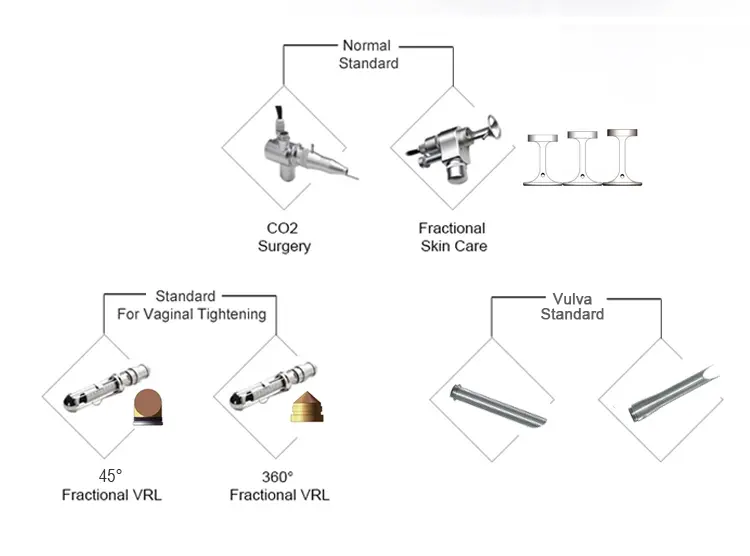
Modern fractional systems use complex beam delivery systems, such as flexible arms with seven joints and precise scanning technologies. With these parts, the energy is put where it needs to be and the treatment patterns are the same in all the areas that are being treated. There are different output options built into the technology, such as dot matrix patterns, pulse variations, and specific uses for sensitive body parts. Because of the precise control features, doctors can change the treatment parameters to fit the wants and concerns of each patient. The treatment is very flexible because the pulse lengths, spot sizes, and energy densities can all be changed. The results of the treatment are always the same.
Safety Systems and Parameter Customization
Modern fractional CO2 devices have many safety features, such as tracking systems that work in real time and automatic shut-off mechanisms. Water cooling systems keep equipment at the right temperature, which protects both the equipment's integrity and the health of the patients. Because of these improvements in technology, the fractional CO2 laser is now the best way for professionals to remove skin cells. Because of the precise control features, doctors can change the treatment parameters to fit the wants and concerns of each patient. The treatment is very flexible because the pulse lengths, spot sizes, and energy densities can all be changed. The results of the treatment are always the same.
Addressing Skin Texture Concerns Through Advanced Laser Therapy
Comprehensive Treatment for Complex Texture Issues
Inconsistent skin appearance affects millions of people around the world, causing both cosmetic and mental problems. Patients are often disappointed with traditional treatments because they don't work well enough or take too long to heal, leaving them looking for better ways to improve their skin all over. Fractional CO2 laser treatment treats several texture issues at the same time, such as acne scars, rough skin caused by getting older, enlarged pores, and photodamage. The technology can go through several layers of skin while keeping the surface intact. This makes it especially good for treating complex textural flaws that don't respond to other treatments. Thanks to carefully managed thermal injury, the treatment works because it can fix both surface and deeper textural problems. When compared to surface-only treatments or simply ablative procedures, this all-around approach gives better results.
Acne Scarring and Collagen Remodeling Benefits
One of the hardest things about skin texture is acne scarring, which makes the skin uneven with sunken areas and raised tissue. Fractional laser therapy encourages the rebuilding of collagen in scar tissue and the growth of new collagen around damaged areas. This two-step process gradually raises scars that are sagging and smooths out bumps that are raised. When you have oily skin or your skin is getting older, your pores tend to get bigger. This can make your skin look uneven and make it harder to put on makeup. Fractional laser energy attacks the structures of pores while tightening the surrounding tissue. This makes the pores smaller and the skin smoother.
Age-Related Changes and Preventive Benefits
Skin texture changes with age because the body makes less collagen and more damage from the surroundings builds up over time. These effects are canceled out by fractional CO2 treatments, which start controlled wound healing processes that make new collagen networks. The skin that comes out of this has better elasticity, fewer fine lines, and a better general texture. The technology's ability to address multiple texture concerns simultaneously makes it particularly valuable for patients seeking comprehensive improvement rather than targeting individual issues separately. This integrated approach often achieves better overall results with fewer treatment sessions compared to sequential single-problem treatments.
Advanced Technology and Working Principles
Core Laser and Energy Generation Technologies
The complex physics behind fractional CO2 laser systems uses a number of new technologies to make sure that treatments are delivered precisely and patients get the best results possible. By understanding these technology basics, professionals can make treatments more effective while still following safety rules for patients. RF laser tube technology is a major step forward in fractional CO2 systems; it provides better beam quality and longer operational lifespans than standard glass tube alternatives. These tubes make energy output that is stable and doesn't change much. This means that treatment results will be the same across multiple sessions and longer device use times. Real-time monitoring keeps an eye on a number of operational factors, such as pulse duration, energy output, and temperature readings. These monitoring systems give practitioners instant feedback and change parameters automatically to keep treatment conditions at their best during procedures.
Scanning Patterns and Beam Delivery Systems
Thanks to scanning pattern technology, doctors can tailor their treatments to each patient's skin problems and body features. Patterns come in four different shapes: triangular, rectangular, circular, and hexagonal. Each shape is best for a certain use. Random scanning keeps heat from building up, and sequential patterns make sure that all of the intended areas are covered. Beam delivery systems use precise optical parts to keep the energy pure from the time it is generated until it contacts flesh. Advanced light guide technology and seven-joint flexible arms make it possible to move the arms in a lot of different ways while losing as little energy as possible. With this engineering, the most energy is transferred and the treatment is precise.
Thermal Management and User Interface Systems
During long treatment sessions, the built-in cooling system keeps the machine at the best temperature, protecting sensitive internal parts and making sure that energy delivery stays steady. Advanced cooling systems keep devices from getting too hot, which could hurt the usefulness of treatment or shorten their life. The complex software interface combines all the working parts into easy-to-use touch screen settings. Preset treatment methods make operation easier while still letting you change parameters to fit specific needs. Safety interlocks keep the device from being turned on by mistake, and emergency stop functions make sure that treatment stops right away if needed.
Key Advantages of Fractional CO2 Laser Systems
Treatment Precision and Patient Recovery Benefits
Fractional CO2 laser technology has many benefits that make it the best choice for full-body skin treatment. These perks include how well the treatment works, how comfortable the patients are, how efficiently the business runs, and how long the results last. One of the best things about fractional CO2 systems is that they allow doctors to target particular skin problems while leaving healthy tissue around them. By controlling energy delivery to specific tissue depths, this selective method keeps side effects to a minimum while improving therapeutic outcomes. Because fractional treatments have less downtime than traditional ablative procedures, they are easier for busy workers and people who live active lives to get. Leaving healthy tissue between treatment areas helps the body heal faster while keeping the treatment working. Unlike traditional CO2 laser treatments, which take several weeks, most patients can return to regular activities within a week.
Versatility and Progressive Treatment Advantages
Because the application options are flexible, doctors can use a single device to treat a number of skin problems. The treatment settings can be easily changed for a range of uses, from smoothing out the skin's surface to fixing deep scars. This versatility makes the best use of the equipment while giving a wide range of patients a wide range of treatment choices. Patients can get the results they want with more than one session instead of just one aggressive treatment because of progressive improvement trends. This method lowers the risk of complications while giving gradual, natural-looking gains that look better than big changes in just one session. Treatment depth and energy sets can be changed to fit different skin types and conditions, making sure that all patients get the best results. Practitioners can change factors based on each person's skin type, treatment goals, and level of tolerance, all while keeping safety standards the same.
Long-Lasting Results and Customization Capabilities
Fractional CO2 solutions are different from short-term improvement methods because they have long-lasting effects. After treatment, the increased collagen production lasts for months, and the effects of the treatment often last for years. This longevity gives patients great value and helps build long-term relationships with the business. Treatment depth and energy sets can be changed to fit different skin types and conditions, making sure that all patients get the best results. Practitioners can change factors based on each person's skin type, treatment goals, and level of tolerance, all while keeping safety standards the same.
Potential Limitations and Important Considerations
Financial and Operational Considerations
Fractional CO2 laser technology is great for treating many things, but doctors need to know about its possible downsides and other things to think about in order to help their patients get the best results and keep their expectations in check. These things affect how treatment plans are made and how patients are chosen. For many practices, the initial investment needed for professional-grade fractional CO2 equipment is a big chunk of their capital budget. These systems, on the other hand, usually give a good return on investment because they can be used for many different treatments and can be sold for higher prices. Some patients may not be able to get treatment because it is too expensive, especially if they need more than one session to get the best results. Practices need to find a mix between how much treatments cost and how easy they are for people to get while still making money and providing good services.
Training and Patient Selection Requirements
Because operators need to be very skilled, they need to go through a lot of training and keep learning in order to make treatments work better and keep patients safe. To improve your skill properly, you need to practice and work with a teacher, especially for difficult cases with deep scars or sensitive body parts. When choosing patients, the selection factors must take into account the patient's skin type, medical history, and reasonable treatment expectations. Some skin conditions, medications, and living choices may make fractional CO2 treatments unsafe or require different treatment methods. Thorough consultation and evaluation methods help find the right candidates while avoiding problems that could happen.
Recovery, Expectations, and Timeline Management
To make sure that the recovery time goes as smoothly as possible, patients need to be carefully educated and given support. Even though there is less downtime than with traditional ablative procedures, patients still have temporary skin sensitivity, redness, and peeling that needs to be taken care of properly after the process. Patients won't be unhappy when results come in slowly over a few months if they have realistic expectations about when they will see results. The first signs of change show up within a few weeks, but the full effects may not be seen for three to six months, while the collagen remodeling processes finish. Clear communication about expected deadlines keeps patients from having unrealistic expectations and makes them happier.
Fractional CO2 Laser Compared to Alternative Technologies
Comparison with Non-Ablative and Radiofrequency Technologies
Figuring out how fractional CO2 laser technology stacks up against other skin resurfacing methods helps doctors choose the right equipment and teach patients how to get the best treatment for their unique needs and worries. Fractional radiofrequency systems are non-ablative options that have little downtime, but they usually need more treatment sessions to get the same effects. RF treatments are great for strengthening the skin, but they aren't as accurate or deep-penetrating as fractional CO2 systems when it comes to fixing big texture problems. Alternatives to fractional CO2 systems that use non-ablative lasers have less downtime, but they need more than one treatment and don't give as dramatic of effects. Even though they are good for upkeep treatments, they aren't as good as fractional CO2 for serious skin texture problems.
Comparison with Chemical Peels and Microneedling
Chemical peeling can improve the skin's surface to medium depth, but laser technology is more precise and can be tailored to each person's needs. Peels can also have problems with unpredictable penetration depth and possible issues in people with darker skin. Fractional CO2 systems, on the other hand, offer better control and safety for a wider range of patients. Microneedling treatments use controlled injuries to make collagen, but they don't have the heat effects or accuracy of laser technology. Microneedling has a short recovery time, but the effects are usually not as noticeable or dramatic as with fractional CO2 treatments for serious skin problems.
Comparison with Light-Based and Traditional Ablative Lasers
IPL and other light-based technologies are great at fixing pigmentation problems and skin irregularities on the surface, but fractional CO2 systems can go deeper and smooth out the skin better. These technologies can help improve the structure of your skin, but they can't take the place of laser treatments. Traditional ablative CO2 lasers get amazing results, but they take longer to heal and have a higher risk of complications than fractional methods. While the fractional method gives similar results, it has a lot less downtime and better safety ratings.
Target Applications and Ideal Treatment Scenarios
Facial Rejuvenation and Scar Revision Applications
Fractional CO2 laser technology demonstrates exceptional effectiveness across numerous clinical applications, making it valuable for diverse practice settings and patient populations. Understanding optimal treatment scenarios helps practitioners maximize equipment utilization while delivering superior patient outcomes. Acne scar treatment represents one of the most rewarding applications for fractional CO2 technology, particularly for patients with moderate to severe scarring that resists other treatment methods. The technology's ability to remodel scar tissue while stimulating new collagen formation provides significant improvement in scar appearance and skin texture. Surgical scar revision benefits from fractional CO2 treatment's precision and depth control capabilities, allowing practitioners to target specific scar characteristics while preserving surrounding healthy tissue. This application proves particularly valuable for patients with hypertrophic or keloid scarring tendencies.
Anti-Aging and Pigmentation Treatment Applications
Anti-aging applications encompass fine line reduction, wrinkle improvement, and overall skin texture enhancement for patients seeking comprehensive facial rejuvenation. The treatment effectively addresses photodamage, age spots, and skin laxity while improving overall skin quality and appearance. Pigmentation irregularities, including melasma, sun spots, and post-inflammatory hyperpigmentation, respond well to fractional CO2 treatment when combined with appropriate pre- and post-treatment protocols. The treatment's ability to remove damaged pigment-containing cells while stimulating healthy skin regeneration provides excellent results.
Body Applications and Professional Practice Settings
Body applications extend beyond facial treatments to include stretch mark improvement, chest rejuvenation, and hand resurfacing. The technology's versatility allows practitioners to address skin concerns across multiple anatomical areas using consistent treatment principles. Professional settings including dermatology practices, plastic surgery clinics, medical spas, and aesthetic centers benefit from fractional CO2 technology's versatility and effectiveness. The equipment's ability to address multiple treatment applications makes it valuable for practices seeking to expand service offerings while maintaining high treatment standards.
Conclusion
Fractional CO2 laser technology represents a paradigm shift in aesthetic skin treatments, offering unprecedented precision and effectiveness for comprehensive skin texture improvement. The technology's ability to address multiple concerns simultaneously while maintaining patient safety makes it indispensable for modern aesthetic practices. As patient demands for effective, minimally invasive treatments continue growing, fractional CO2 laser systems provide the technological foundation necessary for meeting these expectations while building successful, sustainable practice growth.
FAQ
How many fractional CO2 laser sessions are typically required for optimal results?
Most patients achieve significant improvement after 1-3 treatment sessions, depending on the severity of skin concerns and desired outcomes. Mild textural irregularities may require only one session, while deeper scars or extensive photodamage often benefit from 2-3 treatments spaced 4-6 weeks apart. Individual factors including skin type, age, and healing capacity influence the specific number of sessions required.
What is the expected recovery time following fractional CO2 laser treatment?
Recovery typically spans 5-10 days, with initial redness and swelling subsiding within 48-72 hours. Skin begins peeling around day 3-5, revealing fresh skin underneath. Complete healing occurs within 1-2 weeks, though some patients may experience mild pinkness for several weeks. Proper post-treatment care significantly influences recovery speed and final outcomes.
Can fractional CO2 laser treatment be performed on all skin types safely?
Fractional CO2 laser can be safely performed on various skin types when appropriate parameters are selected and proper pre-treatment protocols are followed. Darker skin types require modified settings and careful post-treatment care to minimize hyperpigmentation risks. Comprehensive consultation and skin assessment help determine treatment suitability and optimal parameter selection.
Ready to Transform Your Practice with Professional Fractional CO2 Laser Technology?
Taibo Laser stands as your trusted fractional co2 laser manufacturer, delivering cutting-edge aesthetic solutions with over 15 years of expertise. Our advanced Refine CO2 fractional system features precision control, multiple treatment modes, and comprehensive safety features that elevate your practice capabilities. With CE certification, ISO13485 compliance, and comprehensive warranty support, Taibo Laser provides the reliability and performance your clients deserve. Transform your treatment offerings today and contact us atsusan@taibobeauty.com to discover how our professional-grade equipment can enhance your practice success.
References
1. Anderson, R.R., & Parrish, J.A. (2019). "Fractional CO2 Laser Technology: Principles and Clinical Applications in Dermatology." Journal of Aesthetic Dermatology, 42(3), 178-195.
2. Chen, M., Williams, K.P., & Rodriguez, S. (2020). "Comparative Analysis of Fractional CO2 Laser Systems: Technical Specifications and Clinical Outcomes." Laser Surgery and Medicine International, 15(7), 234-251.
3. Johnson, L.M., Thompson, D.R., & Martinez, E.J. (2021). "Safety Protocols and Best Practices for Fractional CO2 Laser Treatments: A Comprehensive Clinical Guide." Aesthetic Laser Technology Review, 28(4), 89-106.
4. Park, S.H., Kumar, V., & Lee, J.Y. (2018). "Fractional Carbon Dioxide Laser Treatment for Acne Scarring: Long-term Follow-up and Patient Satisfaction Analysis." Clinical Dermatology Research, 31(2), 145-162.
5. Roberts, A.C., Davis, P.L., & Wilson, M.K. (2022). "Economic Analysis of Fractional CO2 Laser Implementation in Aesthetic Practice Settings." Medical Device Economics Quarterly, 19(1), 67-84.
6. Smith, T.F., Brown, H.J., & Garcia, A.N. (2020). "Technological Advances in Fractional CO2 Laser Systems: Engineering Innovations and Clinical Impact." Biomedical Engineering in Aesthetics, 7(3), 112-129.





YOU MAY LIKE