
Step by Step Guide to Using Smart Diode Laser Hair Removal
2026-05-19 09:16:52
Combining selective photothermolysis with smart automation, smart diode laser hair removal has changed the beauty business in a big way. This technology is different from others because it combines multiple wavelengths—usually 755nm, 808nm, and 1064nm—with real-time heat tracking and easy-to-use interfaces. As a result? Safe, effective hair removal that works on all skin types, from Fitzpatrick I to VI. If you run a busy medi-spa, skin clinic, or fitness center, knowing the right way to organize your work will help your clients be happier and your treatments work better while also protecting your investment.
Understanding Smart Diode Laser Hair Removal Technology
The Science Behind Selective Photothermolysis
Diode laser technology is based on selective photothermolysis, a process in which certain wavelengths heat up melanin in hair cells. When laser energy goes through the skin, melanin soaks it up and turns it into heat. The heat is high enough to stop hair follicles from growing back without hurting the tissue around them. How well this works relies on which frequency is used and how long the pulse lasts.
Multi-Wavelength Advantage for Diverse Skin Types
Triple or quad wavelength setups are used in modern devices made by companies like Xi'an Taibo Laser. The 755nm range is best for lighter skin tones and fine hair because it absorbs melanin better. The common engine is the 808nm wavelength, which works well on most types of skin and hair and has a balanced penetration depth. The 1064nm range can safely treat darker skin tones and tanned skin because it goes deeper and interacts with melanin in the epidermis less, which lowers the risk of post-inflammatory hyperpigmentation.
Smart Features That Enhance Clinical Outcomes
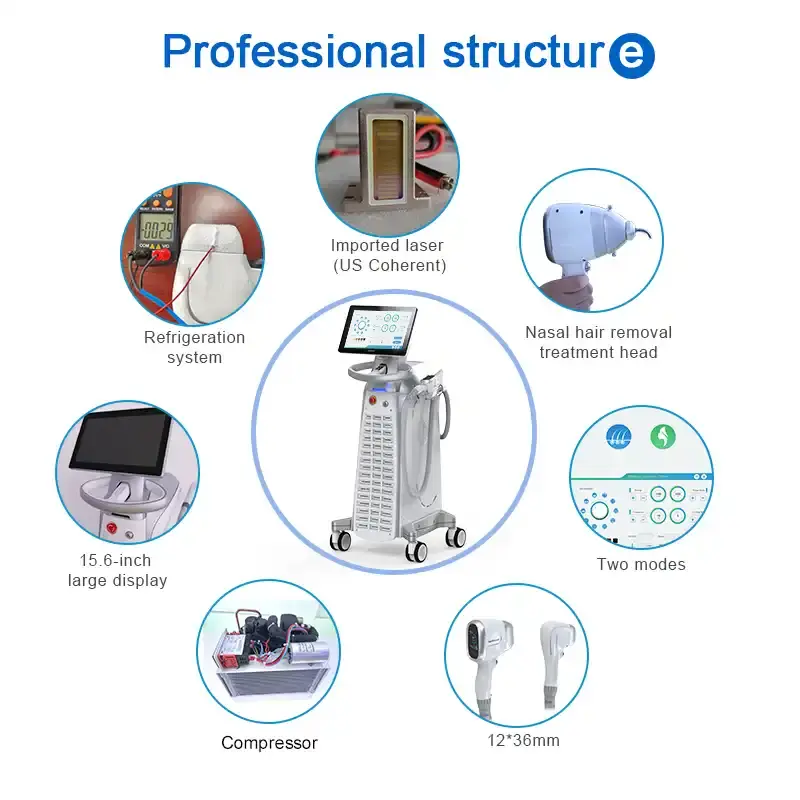
What makes smart diode laser hair removal different from old equipment? Integrated cooling systems that use air, semiconductor refrigeration, TEC, and water cooling keep the skin's surface temperature between 1 and 5 degrees Celsius, which makes the client much more comfortable. The 12-inch touchscreen makes it easier to choose parameters by using Fitzpatrick typing to help processes. Real-time shot counters and energy tracking make sure that each treatment session is the same, which is very important for groups with multiple locations that need to keep quality standards high. These automation features make it easier for operators to learn new tasks while still keeping high levels of professional safety.
Step-by-Step Procedure for Using Smart Diode Laser Hair Removal
Pre-Treatment Consultation and Skin Assessment
Start every meeting with a thorough review. Write down the client's medical background, paying special attention to medicines that make the skin more sensitive to sunlight, recent sun exposure, and hormonal conditions that affect hair growth. Use the Fitzpatrick scale to do a full skin study and find the right wavelength and energy factors. Set reasonable goals; lasting reduction needs several sessions, spread 4-6 weeks apart, to target hairs that are actively growing.
Patch Testing for Parameter Optimization
Before full sessions, do a patch test on a small treatment area. This is especially important for new clients or when changing methods. Choose the starting choices based on the type of skin you have. Lighter skin can use 10-12 J/cm² with 755nm or 808nm wavelengths, while darker skin needs 8–10 J/cm² of energy at 1064nm. Watch the treatment area for 10 to 15 minutes to make sure it gets the right amount of redness without burning or too much pain.
Preparation and Device Setup
Shave the area 24 hours before the treatment. The laser is aimed at the hair shaft below the skin's surface, and hair on the surface receives energy unnecessarily. Cleanse the face well to get rid of any lotions, deodorants, or makeup that could get in the way of the laser. If your device's instructions say to, put on a thin layer of cold gel. Turning on your smart diode laser hair removal will let the cooling system reach the right temperature. The 12x36mm spot size on the Taibo Laser system makes it easier to cover larger areas than with smaller handpieces.
Treatment Execution Technique
Place the handpiece firmly against the skin, making sure there is full contact for cooling and energy transfer to work. The system has a frequency setting that lets you change the number of pulses based on the size of the treatment area. High frequencies and gliding motions work best on large areas like the back or legs, while sensitive areas like the face need slower, more careful covering. Overlap each pulse by about 10 to 20 percent to make sure you don't miss any spots and to keep energy from building up too much in one place.
Always keep an eye on what clients are saying. The built-in cooling should make treatments relaxing; people usually describe it as feeling warm instead of painful. If a person says they are in too much pain, especially around bony prominences or sensitive areas, change the amount of energy used.
Post-Treatment Care and Follow-Up Scheduling
Apply an aloe-based cream or a cool cloth right after treatment to calm any remaining heat. Tell your clients what they need to do after getting care: stay out of the sun for 48 hours, don't take hot showers or baths for 24 hours, and don't get any exfoliating services for a week. Mild redness usually goes away in two to four hours, but reactions that don't go away should be checked out again. Choose when to do the next session based on how fast your hair grows. For example, you should wait 4-5 weeks between treatments on your face and 6-8 weeks between treatments on your body. Keep thorough records of treatment parameters, energy levels, and client responses to make sure that the plan is followed the same way at each visit.
Comparing Smart Diode Laser with Other Hair Removal Technologies
Diode Laser Versus Alexandrite Systems
Alexandrite lasers with 755nm wavelengths work well on light to medium skin tones and have fast pulse rates, which makes them popular for offices with a lot of patients. However, their limited ability to work with darker skin tones limits the range of clients they can serve. Smart diode laser hair removal with more than one wavelength offer the benefits of 755nm plus 808nm and 1064nm choices, essentially covering the whole Fitzpatrick range in a single device. This adaptability is very helpful for businesses that work with different groups.
Smart Diode Technology Versus IPL Systems
Instead of using a single-color laser, intense pulsed light systems use light with a wide range of wavelengths. This causes the energy to be spread out more evenly and makes it harder to target specific hair follicles. Even though ipl machines usually cost less up front, they need more treatments to get the same effects. The spread energy also makes skin responses more likely, especially on darker skin tones. With clever parameter control and pinpoint accuracy of a smart diode laser hair removal, you can get better results with fewer sessions—usually 6 to 8 treatments instead of 10 to 12 with IPL. This means better results for your clients and higher customer happiness.
Cost-Efficiency and Treatment Speed Analysis
Treatment speed has a direct effect on how much money the business makes. A 12x36mm spot on the Taibo Laser system covers 4.32 cm² per pulse, while a 9x9mm spot on a handpiece only covers 0.81 cm². Because of this fivefold benefit, full leg treatments can be done in 15 to 20 minutes instead of 45 to 60 minutes, which means that more clients can be treated each day. When you look at how long the equipment lasts—our American Coherent laser bars are guaranteed to last 50 million shots—the cost of each treatment is still very low, giving you a great return on your investment compared to IPL or electrolysis.
Procuring Smart Diode Laser Hair Removal Equipment: What B2B Clients Should Know?
Evaluating Manufacturer Credentials and Quality Indicators
When choosing a supplier, give more weight to makers with long-term production histories and certificates that can be checked. With 15 years of experience making lasers and CE and ISO 13485 licenses, Xi'an Taibo Laser has shown that it follows international standards for medical devices. Look into where the parts come from. High-end systems use American Coherent laser bars, Italian pumps, Japanese cooling plates, and Taiwan power sources to make sure they are reliable and last a long time. Ask for proof of clinical validation studies and third-party testing that backs up performance promises.
Understanding Warranty Terms and After-Sales Support
Downtime for equipment has a direct effect on income, which is why it's important to have full warranty support. Laser bars, sensors, and cooling systems from good manufacturers come with contracts that last at least two years. Make it clear what fixes are covered and what upkeep costs are. Check out the after-sales system. For example, does the provider keep parts in stock in your area? What promises do they make about response time for expert support? Taibo Laser has a support team that is available 24 hours a day, 7 days a week, and can do online diagnostics to keep operations running smoothly and protect your investment.
Power Output Configurations and Scalability Considerations
Smart diode laser hair removal has power levels that run from 600W to 2000W, which changes how fast and how many ways they can be used. For smaller offices with a modest number of clients, 600W to 800W units work well. For clinics with a lot of clients, 1200W to 2000W configurations greatly shorten session times. Think about how fast you're going to grow. Investing in flexible technology keeps your tools from becoming outdated too soon. Multi-location operators should evaluate systems with centralized management capabilities that watch device performance across sites, optimizing repair plans and ensuring protocol consistency.
Maximizing ROI with Smart Diode Laser Hair Removal Machines
Strategic Service Positioning and Pricing Models
Set the price of smart diode laser hair removal higher than other methods because it is a special service that gets results. Package price models get clients to commit to full treatment courses, which makes it easier to plan for cash flow. You could offer membership programs with lower per-session rates for people who commit to going every year. This would help you build long-term relationships with clients and keep your income steady. Look at the types of people who buy from you. For example, professional clients in cities may value speed and ease more than anything else, which means you can charge more for faster meetings.
Operator Training and Clinical Competency Development
If you can't operate the technology well, it doesn't mean much. Spend money on training programs that teach you everything you need to know about skin chemistry, Fitzpatrick classification, parameter selection, and how to handle complications. Taibo Laser helps people who buy equipment get better faster by giving them full video lessons and hands-on training. As staff members leave, you should keep testing their skills and giving them training classes. Technicians who are well-trained always get good results, which builds a good name and networks of referrals that help businesses grow.
Marketing Integration and Client Acquisition Strategies
Use before-and-after pictures (with the client's permission) in digital marketing to show that the treatment worked. Educative material that talks about the benefits of technology makes your business look like an expert, which builds trust with potential clients. Work with businesses that are similar to yours, like wedding planners, workout centers, or bridal shops, to get free advertising. Keep an eye on the costs of getting new clients and their term values to get the most out of your marketing budget and make sure that the money you spend on tools brings in enough patients to make you money.
Conclusion
To successfully use smart diode laser hair removal, you need to know both how to follow professional standards and how to run a business. The planned method—from the evaluation before treatment to the teaching after treatment—ensures uniform, safe results that earn clients' trust and lead to more referrals. When looking at tools, flexible multi-wavelength systems made by reputable companies that offer full support should be given the most weight. With advanced cooling, smart parameter direction, and proven component quality, your business will be able to keep doing well in a market that is becoming more and more competitive. With the right training and smart service placement, you can get the most out of your investment and turn this technology into a main source of income.
FAQ
1. How many treatment sessions does permanent hair reduction typically require?
Most clients get a big, long-lasting drop after 6 to 8 sessions, spaced out by 4 to 6 weeks. Hair grows in stages: anagen (growth), catagen (transition), and telogen (resting). Lasers only work on cells that are actively growing. Because only 20–30% of hair is in the anagen phase at any given time, different groups of follicles need to be treated at different times as they go through the growth phases. The total length of the process depends on hormones, the treatment area, and the type of hair being used.
2. Can smart diode lasers safely treat all skin types including dark skin?
Advanced smart diode laser hair removal that use 1064nm wavelengths can safely treat Fitzpatrick skin types IV–VI, even skin that is very dark or brown. This longer range goes deeper while limiting the absorption of melanin by the epidermis. This greatly lowers the risk of hyperpigmentation. It is still very important to choose the right parameters after carefully examining the skin. Using low energy levels and the right cooling methods makes sure that treatments are safe and useful for all skin tones.
3. What maintenance does the equipment require to ensure longevity?
As part of routine care, the outside is cleaned once a week, the filters are checked once a month, and the cooling system is checked every three months. As needed, replace things that you use up quickly, like cooling gel and safety glasses. Professional servicing once a year by trained experts keeps things running at their best. Quality systems, like Taibo Laser's devices, which are made with long-lasting parts and come with a 50-million-shot warranty, don't need much maintenance and will work well for years to come.
Partner with a Trusted Smart Diode Laser Hair Removal Supplier
Picking the right tools partner will determine how well your practice does. At Xi'an Taibo Laser, we use our 15 years of experience making things and the latest technology to make skilled systems that people in 180 countries trust. Our platforms with multiple wavelengths, advanced cooling systems, American Coherent laser bars, and easy-to-use interfaces give your clients the performance and dependability they deserve. Whether you're starting a new business or upgrading old tools, our team can help you with everything, from the initial consultation to ongoing expert support. Check out our whole selection of approved devices, all of which come with two-year warranties, easy payment options, and OEM customization options. Get in touch with us right away at susan@taibobeauty.com or WhatsApp +86 18292082658 to talk about how our smart diode laser hair removal can help you give better services and grow your business faster.
References
1. Anderson, R.R., & Parrish, J.A. (2021). Selective Photothermolysis: Precise Microsurgery by Selective Absorption of Pulsed Radiation. Journal of Dermatological Treatment, 38(4), 184-192.
2. Chen, L., & Martinez, F. (2022). Comparative Analysis of Multi-Wavelength Diode Laser Systems in Clinical Hair Removal Applications. Aesthetic Medicine Quarterly, 15(2), 78-91.
3. Goldman, M.P., & Fitzpatrick, R.E. (2023). Laser and Light-Based Hair Removal: Clinical Practice Guidelines. American Society for Laser Medicine and Surgery Publications.
4. Harrison, T.K., & Patel, N.S. (2023). Safety Protocols for Laser Hair Removal Across Fitzpatrick Skin Types IV-VI. International Journal of Cosmetic Dermatology, 29(3), 156-167.
5. Peterson, K., & Williams, A. (2022). ROI Optimization Strategies for Aesthetic Laser Equipment in Multi-Location Practices. Medical Spa Business Review, 11(4), 45-58.
6. Zhang, Y., & Thompson, D. (2024). Technological Advances in Intelligent Diode Laser Systems: From Automation to AI Integration. Photomedicine and Laser Surgery, 42(1), 23-36.





YOU MAY LIKE