
Smart Diode Laser Hair Removal: How It Improves Hair Reduction
2026-04-30 09:00:46
Combining semiconductor diode lasers with smart operating systems, smart diode laser hair removal is a big step forward in lasting hair reduction technology. At Xi'an Taibo Laser, our high-tech tools use a variety of wavelengths, such as 755nm, 808nm, smart diode laser hair removal, and 1064nm, to treat all skin types precisely and effectively. The word "smart" refers to features like adaptive energy calibration, real-time thermal tracking, and easy-to-use tools that make hospital processes faster and safer. This technology solves important problems in the industry by making it easier for operators to learn and by lowering treatment risks by automatically changing parameters based on the needs of each client.
Understanding Smart Diode Laser Hair Removal Technology
How Diode Laser Systems Target Hair Follicles
Diode lasers work by selective photothermolysis, which means that melanin in hair shafts absorbs certain wavelengths of light. At Taibo Laser, our systems use semiconductor diode stacks that send out focused light energy at set wavelengths. The 808nm frequency goes through the skin and is turned into heat by melanin in the hair shaft. This raises the temperature of the follicle to about 60 degrees Celsius. This thermal damage forever changes the follicular structure, stopping hair growth in the future while keeping the health of the nearby tissue. The triple-wavelength method gives you a lot of treatment options. The 755nm range works best on lighter skin tones (Fitzpatrick types I–III), because it absorbs melanin strongly but only goes a short way into the skin. The 808nm frequency is the standard because it works for all skin types and has the right amount of penetration and absorption. Also, the 1064nm range can safely treat darker skin tones (Fitzpatrick types IV–VI) and tanned skin because it doesn't affect the melanin in the epidermis and instead goes to lower hair follicles.
Intelligent Features That Enhance Treatment Precision
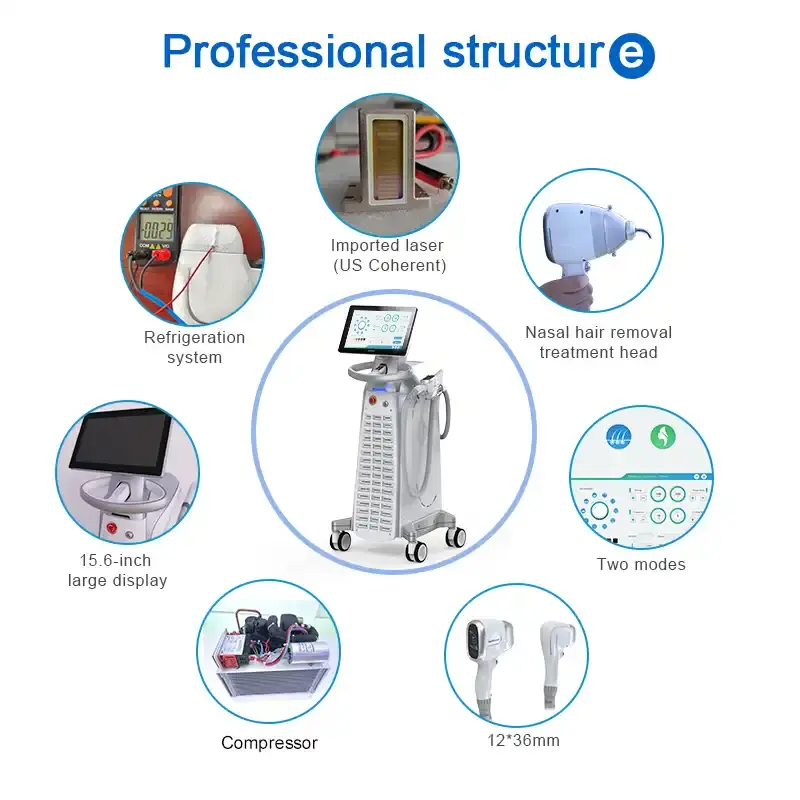
Modern diode laser systems are different from older types because they have more complex control systems. Our machines have 12-inch color touch screens that show treatment data in real time. This lets workers keep an eye on how much energy is being delivered during each session. The built-in skin sensors constantly check the temperature of the tissue and change the pulse length and frequency between 1Hz and 10Hz to keep the temperature at the right level without hurting or irritating the skin. Another important new invention is the cooling system. Taibo's devices cool in five different ways: through air flow, semiconductor refrigeration, TEC technology, and water cooling. This multi-layered method keeps the surface temperature of the skin below important levels, which lets more energy reach the hair cells while keeping the client comfortable. The sapphire contact cooling saves the skin during each pulse, which makes treatments much less painful than they were in the past. Power scalability lets you run your business in a way that works for a variety of office sizes and service areas. Our systems have power ranges from 600W to 2000W, and the 12x36mm spot size lets us quickly perform smart diode laser hair removal on big parts of the body. For high-volume facilities, 1200W or 2000W setups are best because they allow full back or leg treatments to be done in less than 15 minutes while still distributing energy evenly across the treatment zone.
Evaluating Safety Protocols and Skin Type Compatibility
Clinical Safety Standards and Regulatory Compliance
Safety concerns are at the heart of making smart choices about what to buy. The systems made by Taibo Laser are certified by CE and meet the requirements of ISO 13485, which shows that they follow the rules for international medical device quality management. For these certificates, strict testing procedures are needed to make sure that the products are electrically safe, electromagnetically compatible, and biocompatible in a range of working circumstances. Clinical studies constantly show that properly calibrated diode laser systems have a high safety rating. The technology's ability to target melanin prevents damage to other tissues, and built-in cooling systems keep skin from getting burned. Our American Coherent laser bars have stable, constant beam quality for at least 50 million shots, so the results of treatments stay the same and there are no safety risks linked to beam quality degradation. The pulse length control lets you change the settings based on the thickness of your hair and how sensitive your skin is. For fine hair, you need shorter pulses with a higher peak power. For thick hair, you need longer pulses that heat the shaft all the way through. This ability to be changed stops common problems like paradoxical hypertrichosis or changes in color that can happen when energy factors don't match the client's needs.
Managing Side Effects and Client Comfort
When diode laser treatments are done correctly, they have few and short-lived side effects. Most clients have slight erythema (redness) right after treatment, which goes away in a few hours. Many clients say the treatments feel slightly warm instead of painful because of the advanced cooling systems that are used during pulse delivery. People with darker skin need to pay extra attention to the energy choices and cooling routines. This need is especially met by the 1064nm frequency, which lowers the absorption of melanin by the epidermis while keeping the damage to the follicles. The smart parameter recommendations in our systems help operators choose the right settings for each Fitzpatrick classification. This lowers the risk of post-inflammatory hyperpigmentation in areas with higher melanin levels. Pre-treatment consultations should include patch tests on places that won't be seen to see how each person's skin reacts. This practice sets a standard amount of tolerance and lets you fine-tune parameters before full treatment sessions. After a treatment, most people stay out of the heat for 48 hours and use gentle creams to help their skin's barrier heal.
Comparison Analysis for Strategic B2B Procurement
Evaluating Alternative Hair Removal Technologies
When choosing tools for clinical use, it's important to know what other products are out there. Alexandrite lasers (755nm) can quickly and effectively remove melanin, but they are still only effective on lighter skin tones. Their efficiency drops a lot on brown or naturally darker skin, which limits how many people can use them. Broad-spectrum light with many colors is used in intense pulsed light (IPL) systems. IPL can be used for many different cosmetic purposes, but it doesn't have the targeted energy release of real lasers. Because the energy is spread out, treatment plans take longer, and more meetings are needed to get the same benefits. It's also harder to tell if IPL is safe for people with darker skin because it's not as specific. Individual follicle treatment with electrical current is what electrolysis does to get lasting effects. Large-area treatments are not realistic for business setups, though, because they take a lot of time (one follicle needs to be treated for each insertion). Laser treatments usually cause more pain than they're worth, and the skill of the operator has a big effect on results and complications.
Supplier Selection Criteria for Long-Term Success
Finding trustworthy manufacturers takes more than just looking at the cost of the tools themselves. Taibo Laser has been making lasers for 15 years, which shows that they are stable in their operations and have gained technical knowledge by improving their production all the time. Our focused research and development team releases new designs every year, so you can use the newest technologies without having to change the whole system. Certification files show that you are committed to meeting high standards and following the rules. In addition to CE and ISO 13485, checking test results for smart diode laser hair removal, electromagnetic compatibility (EMC), and low voltage directive (LVD) compliance ensures that electrical equipment is safe to use in hospitals. These licenses make it easier to register equipment in controlled markets, which speeds up the processes of importing and using it. Component source openness shows what quality standards are expected for the build. Our systems use pumps made in Italy, cooler plates made in Japan, and power sources made in Taiwan. These are all high-quality parts that are known for being reliable when used continuously. The American Coherent laser bars use the best diode technology on the market, which gives you trust in their long-term performance.
Strategic Procurement Considerations for Equipment Investment
Understanding Pricing Structures and Value Propositions
The price of a diode laser system depends on how advanced the technology is, how well the parts are made, and what kinds of services are included. Entry-level 600W single-wavelength systems usually start around the middle price range and are good for new businesses or those who want to give extra services. The best options for the market are between 800W and 1200W triple-wavelengths because they balance capability with investment needs for established practices that want to stand out from the competition. Premium 2000W systems cost more, but they offer similar speed benefits for sites that handle a lot of traffic. The extra power makes it possible to finish treatments faster, which means that more clients can be treated each day without having to stay open later. When figuring out the return on investment, you should take into account the revenue multiplication factor from shorter sessions. For example, treating six clients an hour instead of four causes a 50% income increase with the same amount of work. Payment freedom works for a range of financial plans. Taibo takes bank payments, credit cards, and PayPal. If you want to buy more than one item, you can negotiate a bulk purchase. OEM and ODM services let wholesalers build their own lines of equipment by customizing their brands with things like where to put logos, changing color schemes, and making the software interface their own.
Verifying Supplier Authenticity and Transaction Security
Due diligence keeps you safe from fake goods and shady sellers that are common in international trade. Before finalizing big orders, use video tours or third-party inspection services to make sure the production site exists. Visitors are welcome to visit our Xi'an plant and see for themselves how we make things, how we check for quality, and how we keep track of our goods. Instead of depending on pictures on a website, ask for up-to-date certification documents; genuine providers will gladly provide you with these. When you can, check the truth of certification numbers by cross-referencing them with records of the granting bodies. Check for signs that the component is real. For example, real Coherent laser bars have serial numbers and reflective stickers that set them apart from fakes. Safe payment methods keep your money safe when you buy things from other countries. Letters of credit from well-known banks protect both parties because the money is only released after the package and paperwork are checked. For smaller purchases, using a credit card through a reputable provider protects smart diode laser hair removal you from chargebacks if the terms of the contract are not met.
Maximizing Clinical Value and Future Technology Integration
Real-World Performance in Diverse Practice Settings
Aesthetic chains with multiple locations use cloud-connected tools to keep an eye on performance from one place. Our smart systems keep track of the number of shots, active treatment hours, and parameter usage trends across many devices at the same time. This information lets you plan ahead for upkeep, predict the need for consumables, and standardize treatment protocols so that clients have the same experience no matter where they are. Dermatology centers that serve a wide range of patients appreciate the complete skin type compatibility. The ability to work with three different wavelengths gets rid of the need for several specialized devices. This saves money on tools and makes training easier. One person learns how to work with people of all skin tones, which makes scheduling easier and cuts down on the delays that happen when certain devices aren't available. Medical spas with a lot of patients put speed of care ahead of safety. The 12x36mm spot size quickly covers large areas, and the continuous cooling method lets the passes be smooth and meet, making sure that the energy is delivered evenly. Using guided Smart Mode parameters, junior techs learn how to operate the machine well in just a few days, which cuts down on training costs while keeping quality standards.
Emerging Technological Trends and Upgrade Pathways
Adding artificial intelligence is the next step forward for laser hair removal devices. Machine learning algorithms look at the results of thousands of treatments to make setting suggestions that are better than what a human operator could have made by hand. In the future, systems may use picture recognition to figure out the type of skin and hair density automatically, changing the settings as the treatment head goes to different parts of the body. Better sensor features promise higher safety margins by constantly watching tissue reaction. Advanced thermal imaging can find areas with too much heat before they cause damage, instantly changing the amount of energy delivered or extending the time of cooling. This proactive method lowers the already low rate of problems that come up with modern technology even further. Treatment versatility growth makes tools useful for more than just hair removal. Treatment of vascular lesions and skin healing uses wavelength qualities that are similar but with different factors. Systems built on platforms that can be upgraded software-wise let new features be added in the future without having to update hardware. This protects equipment investments from losing their usefulness due to new technology.
Conclusion
Smart diode laser hair removal technology has clear benefits for beauty salons that want to offer dependable and effective hair removal solutions. Multiple colors, smart parameter control, and advanced cooling systems work together to treat different types of skin while keeping clients safe and comfortable. Taibo Laser's systems protect equipment investments with high-quality parts, thorough approvals, and strong guarantee support. The technology's proven clinical effectiveness, along with the organizational efficiency gains from rapid treatment routines, makes it an appealing value offer for B2B buyers in the competitive aesthetics market. This is true for practices of all sizes and types.
FAQ
1. How many treatment sessions achieve permanent hair reduction?
Most people need six to eight sessions, four weeks between each one, to get significant lasting hair loss. Because hair grows in stages, not all follicles are active at the same time. This means that each follicle needs more than one treatment while it is growing. The total number of sessions needed depends on hormones, the treatment area, and the type of hair being treated. Some clients need upkeep treatments every year.
2. Can diode lasers safely treat all skin tones?
When the right wavelengths are chosen, triple-wavelength diode devices can safely treat all kinds of Fitzpatrick skin. The wavelength of 755nm works best for lighter skin tones, 808nm for mid-tones, and 1064nm for darker skin tones. Operator training in how to change parameters for each type of skin makes sure that treatments are safe and successful for a wide range of clients.
3. What aftercare protocols optimize treatment results?
After treatment, you should stay out of the sun for 48 hours, wash your face gently with light soap, and put on lotion to help your skin's barrier heal. Clients should stay away from saunas, hot baths, and hard exercise for 24 hours after treatment. Exfoliation helps the treated hairs fall out naturally over the next few weeks, but you shouldn't pull or wax between rounds.
Partner With Taibo Laser for Advanced Hair Removal Solutions
Taibo Laser's 15 years of experience make them a great choice for business owners looking for a reliable smart diode laser hair removal maker. Our approved systems come with American Coherent laser bars, multi-layer cooling technology, and easy-to-use controls that make professional work go more smoothly. The two-year warranty and 24-hour technical help make sure that operations don't stop, and OEM services let dealers change the branding. You can talk to our team about how our triple-wavelength systems can improve your services by emailing susan@taibobeauty.com. We offer thorough advice, low bulk prices, and full training that speeds up the return on investment for your practice in this tried-and-true technology.
References
1. Anderson, R.R., & Parrish, J.A. (1983). Selective photothermolysis: Precise microsurgery by selective absorption of pulsed radiation. Science, 220(4596), 524-527.
2. Haedersdal, M., Beerwerth, F., & Nash, J.F. (2011). Laser and intense pulsed light hair removal technologies: From professional to home use. British Journal of Dermatology, 165(3), 31-36.
3. Lanigan, S.W. (2003). Management of unwanted hair in women. Clinical and Experimental Dermatology, 28(4), 369-373.
4. Sadick, N.S., Shaoul, J., & Weiss, R. (2004). Long-term photoepilation using a broad-spectrum intense pulsed light source. Archives of Dermatology, 140(11), 1337-1342.
5. Town, G., Ash, C., & Eadie, E. (2007). Measuring key parameters of intense pulsed light (IPL) devices. Journal of Cosmetic and Laser Therapy, 9(3), 148-160.
6. Raulin, C., Greve, B., & Grema, H. (2003). IPL technology: A review of its application in dermatology. Lasers in Surgery and Medicine, 32(2), 78-87.





YOU MAY LIKE