
RF Fractional Microneedling Machine: How It Rejuvenates Skin
2026-09-04 09:03:42
An rf fractional microneedling machine works by delivering controlled radiofrequency energy through ultra-fine gold-plated needles directly into the dermis. This dual-action mechanism creates micro-injuries that trigger the body's natural wound-healing cascade, stimulating neocollagenesis and elastin remodeling without damaging the epidermis. The result is tightened skin, reduced wrinkles, and improved texture with minimal downtime—a solution increasingly adopted by mid-to-large aesthetic clinics seeking alternatives to surgical interventions and ablative lasers.
Understanding RF Fractional Microneedling Technology
The Science Behind Volumetric Heating
Radiofrequency microneedling works by heating up the tissue from the inside out, unlike treatments that only work on the surface. When shielded needles go into the skin up to 3.5 mm deep, they send bipolar RF energy directly to the reticular dermis, making thermal coagulation zones. This controlled thermal injury breaks down old collagen fibers while protecting the surrounding tissue. This causes the septum to tighten right away and collagen to be made over time. The skin's elasticity starts to get better in four to six weeks, and it keeps getting better for another three months as new collagen matrices form.
The option to change the needle's depth is very important for healing different parts of the body. Deeper settings (2.5–3.5mm) work on structural flexibility and deep atrophic scars, while shallow settings (0.5–1.5mm) work on fine lines and pores. With a power output range of 10W to 200W, practitioners can adjust the level of heat based on the thickness of the tissue and the patient's tolerance, making sure that all Fitzpatrick skin types are safely treated and effectively treated.
Gold-Plated Needle Technology and Safety Mechanisms
Gold-plated microneedles are used in modern gadgets to make sure they are biocompatible and conduct electricity well. The insulation coating keeps the epidermis from burning by focusing energy delivery only at the needle tip. This lowers the risk of post-inflammatory hyperpigmentation, which is very helpful for treating darker skin tones. Real-time temperature monitoring systems change the output automatically to stop thermal runaway. This keeps the tissue temperature in the therapeutic range of 55–65°C, which is where collagen remodeling can happen without necrosis.
RF Fractional Microneedling vs Alternative Skin Rejuvenation Methods
Comparative Analysis with Traditional Approaches
When compared to microneedling alone, adding radiofrequency greatly improves the results of treatment. Mechanical needling is a form of collagen induction treatment that needs more than one session to show effects. Dermatological study shows that adding RF energy speeds up fibroblast activity and tightens up existing collagen structures right away during treatment. This cuts down on the total number of sessions needed by 30–40%.
Ablative laser systems, such as CO2 lasers, can do amazing cleaning work, but they require a lot of recovery time (7–14 days) and have a higher risk of damage and long-lasting redness. RF microneedling also changes the skin, but healing times are usually only 48 to 72 hours. This makes it a good choice for people who can't take a lot of time off from work or social activities. Because the treatment only affects 20–30% of the treatment area per pass, the surrounding tissue is kept safe, which helps the wound heal quickly.
Non-ablative laser treatments and intense pulsed light therapy mostly work on chromophores in the epidermis. This means that they aren't very good at fixing deep structural problems like sagging skin and loss of volume, unlike the rf fractional microneedling machine. By cutting through the epidermis mechanically, RF microneedling gets energy directly to the papillary and reticular dermis, which is where aging changes start. This depth-specific aiming is what makes it possible to treat conditions like striae distensae and deep rolling scars that don't respond to methods that work on the surface.
Operational Cost-Benefit Considerations
When procurement leaders look at investing in devices, they have to weigh the initial cost of the capital against the cost of consumables per treatment and the possibility for making money. RF microneedling systems need new needle cartridges every 10 to 15 treatments. The cost of a cartridge depends on the number of pins it has (10, 25, or 64 pins). But being able to charge higher treatment fees—often 40–60% more than standard microneedling—makes for good profit margins that cover the cost of consumables in just 15–20 treatments.
Multifunctional systems that offer both invasive RF needling and non-invasive nano-needle options can provide more services without having to buy more than one device. This set-up lets clinics offer inexpensive treatments for people who want to try new things while also keeping expensive options for full skin rejuvenation packages. This way, the equipment can be used by as many different types of patients as possible.
Selecting the Best RF Fractional Microneedling Machine for Your Procurement Needs
Critical Technical Specifications
When medical directors and procurement specialists look at equipment, they need to make sure of a few key things. To match impedance best with human flesh, RF frequencies should be between 2 and 5 MHz. Frequencies outside of this range either don't go deep enough or heat the top too much. The volume of thermal coagulation is determined by the pulse length, which can be changed from 100ms to 900ms. Longer pulses create bigger treatment zones that are good for body uses like getting rid of stretch marks.
Professional-grade systems are different from entry-level ones because they have built-in cleaning technology. Vacuum stabilization stops loose tissue from moving while the needle is inserted. This makes sure that the penetration depth stays the same in difficult body parts like the neck and periorbital area. This function is very helpful when treating older people with a lot of loose skin, since hand stabilization alone gives mixed results.
Power stability across different levels of tissue resistance is a sign of good engineering. When switching from thin facial skin to dense body tissue, lower-quality tools have output variations that make treatment less consistent. Look for devices that can keep their power variation within ±5% no matter how resistance the tissue is. These devices should also have strict electromagnetic compatibility (EMC) standards to make sure they don't interact with other medical equipment and be IEC 60601-1 certified for electrical safety.
Regulatory Compliance and Documentation
European quality control standards were followed during the whole production process, as shown by the CE marking under the Medical Device Regulation (MDR) and the ISO 13485 certification. For these certifications, a lot of technical information is needed, like clinical evaluation reports and data from after the product has been sold. Medical practices that work in regulated markets should ask for certified copies of these documents along with device master files to meet the requirements for registration set by the local health authority.
For products to be sold in the United States, FDA approval is still the best way to go, but many foreign companies also keep CE and ISO licenses, which make it easier to get into markets in the Middle East, Southeast Asia, and Europe. Procurement teams that are planning rollouts in multiple locations need to make sure that the certification scopes cover all the treatment applications that are wanted. This is because approvals usually list specific indications like "wrinkle reduction" or "acne scar treatment" instead of allowing cosmetic use in general.
Evaluating Supplier Capability and Support Infrastructure
Chain clinics that need 5 to 20 units need suppliers that can handle bulk orders with standard configurations to make sure that treatment plans are the same everyplace. When creating your own treatment brands, OEM customization becomes important. You should be able to choose from options like custom interface software, branded packing for products, and changing the colorway of equipment to match your company's brand guidelines.
Infrastructure for after-sales help has a direct effect on the continuation of operations. Check to see if the manufacturer has dedicated technical teams for remote troubleshooting, what the normal response time is for shipments of consumables, and if loaner equipment is available while repairs are being done. It's just as important that the training program covers everything. Look for suppliers that offer multilingual operation manuals, video training libraries, and on-site clinical training for initial equipment deployments of more than five units.
Maximizing Treatment Outcomes: Best Practices for Using RF Fractional Microneedling Machines
Protocol Customization for Common Indications
Because of the thick fibrotic tissue, atrophic acne scars need to be treated with harsh settings. Practitioners usually use 64-pin cartridges at a depth of 2.5 to 3.5 mm and RF power of 60 to 80W, making cross-hatching passes to break fibrotic bands physically. Treatments should be spaced out by 4 to 6 weeks so that the wound can fully heal before moving on to the next one. According to peer-reviewed results data, most patients need 3 to 4 treatments to see a 50 to 70% change in scar depth.
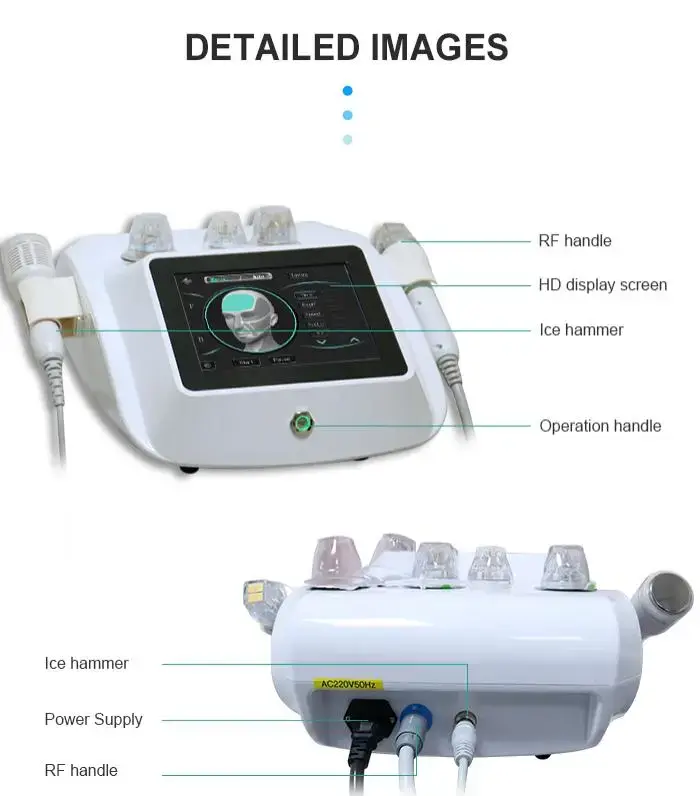
For anti-aging reasons, tightening the skin on the face needs different conditions. Using 25-pin capsules at a depth of 1.5 to 2.5 mm targets the upper reticular dermis, which is where collagen breakdown caused by getting older is most common. Lower energy settings (40–60W) cause less pain while still causing enough thermal injury for collagen to contract. Using the ice hammer handle with the treatment right after the procedure reduces redness and improves patient comfort without affecting the result of the process.
The 64-pin cartridge of the rf fractional microneedling machine effectively covers a larger surface area for body uses such as removing stretch marks and tightening skin after bariatric surgery. Setting the depth to 3.0 to 3.5 mm gets to the joint of the dermis and subcutaneous tissue, which is where skeletal support starts. Because human skin is stronger, these treatments can handle higher energy levels (80–100W). However, the treatment density should be lowered to keep heat from building up too much in places where blood flow is low.
Pre-Treatment Preparation and Post-Care Protocols
Getting the patient ready correctly affects both safety and effectiveness. Stopping retinoids, chemical exfoliants, and photosensitizing drugs 5 to 7 days before treatment keeps inflammation from getting too bad. Applying a topical anesthetic (lidocaine 4-5%) 30 to 45 minutes before treatment makes sure that the patient can handle deeper penetrations. However, non-invasive nano-needle modes can be done without anesthesia.
Care directions after treatment should stress fixing barriers and staying out of the sun. During the 48–72 hour repair window, recommending creams and serums high in ceramides and growth factors speeds up re-epithelialization and reduces transepidermal water loss. Skin discoloration can be avoided by staying out of the sun for 14 days after treatment. This is especially important for Fitzpatrick IV–VI patients, whose melanocyte stimulation risk is still high even though the treatment spares the epidermis.
By writing down the details of the treatment and taking pictures of the results, you can make clinical evidence albums that help with marketing and please patients who are becoming more picky and want proof that the treatment works. Standardized photography procedures with uniform lighting and patient placement allow for objective evaluation of progress measures. This supports the skill of practitioners and supports charging higher prices.
Future Trends and Innovations in RF Fractional Microneedling Technology
AI-Assisted Treatment Planning
In new systems, artificial intelligence programs look at image data of the skin to figure out the best needle depth, energy levels, and treatment patterns for each person's skin. These smart systems make operators less necessary, so doctors with less experience can get results that used to require years of clinical experience. Machine learning models that have been trained on thousands of treatment outcomes can predict the percentage of improvement that is expected and suggest personalized maintenance schedules. This makes patients happier by managing their expectations in a realistic way.
Portable and Cordless Device Development
Smaller RF generators and better battery technology have made it possible to make cordless handheld systems that weigh less than 500 grams. These compact units keep up with clinical-grade performance while making it easier for the therapist to work comfortably during long treatment sessions. The movement benefit is especially useful for mobile esthetic practices and clinics with more than one room, where sharing tools between treatment areas saves money.
Combination Treatment Protocols
More and more clinical research shows that RF microneedling works better when combined with other treatments that work in different ways. Platelet-rich plasma (PRP) treatment right after needling improves the penetration of growth factors into the dermis, speeding up healing and increasing collagen production. New methods that combine RF microneedling with exosome therapy show better results in difficult cases like severe photodamage and advanced skin laxity. This makes the technology an important part of comprehensive anti-aging treatment plans rather than a stand-alone treatment.
Conclusion
RF fractional microneedling machine technology works well in the clinic because it can deliver precise thermal energy at specific depths in the dermis while protecting the epidermis. This method gets around the main problems with both surface treatments and just mechanical needling. It makes changes that can be seen in the structure of the skin and is safe for all skin types. To make sure that clinical integration goes smoothly, medical directors and procurement specialists who are looking at these systems need to put checking technical parameters, making sure legal paperwork is complete, and making sure suppliers can help first. As technology improves with AI-assisted procedures and more portable options, early adopters will put esthetic practices at the head of minimally invasive skin rejuvenation, taking market share from both surgery alternatives and older technologies that aren't as good.

FAQ
1. What skin types can safely undergo RF microneedling treatments?
Because the needles are protected, RF microneedling is safe for all Fitzpatrick skin types (I–VI), even darker skin tones that are more likely to get post-inflammatory hyperpigmentation after laser treatments. The epidermal-sparing mechanism of the technology focuses heat energy only on the dermis, which keeps melanocyte disruption to a minimum. When the right post-care steps are taken, clinical trials show that less than 2% of people experience temporary hyperpigmentation.
2. How many treatment sessions produce visible results?
Most people see their skin tightening start within two to three weeks as existing collagen shrinks. The tightening keeps getting better for three to six months as neocollagenesis grows. For mild to moderate problems, 3–4 sessions spread 4–6 weeks apart are usually enough. For severe scars or advanced laxity, 5–6 sessions may be needed. Long-term results are kept up with maintenance sessions every 12 to 18 months.
3. What differentiates various needle cartridge configurations?
The 10-pin clip works best in the delicate area around the eyes, where accuracy is more important than speed of covering. The 25-pin configuration strikes a good balance between treatment effectiveness and user comfort for facial applications. The 64-pin cartridge gives the best covering for body treatments like getting rid of stretch marks and rejuvenating big areas of skin. This cuts down on process time by a lot while keeping energy distribution even.
Partner with TB for Professional RF Microneedling Equipment
For more than 15 years, TB has been making high-tech beauty equipment. They have sold CE and ISO13485-certified Rf fractional microneedling tools to hospitals in 180 countries. Our systems have depth controls that can be adjusted up to 3.5 mm, a choice of cartridges with 10, 25, or 64 pins and nano-needles, and two-handle designs with a cooling hammer built in to make the patient more comfortable. As an experienced rf fractional microneedling machine maker, we offer full OEM customization for multi-location beauty practices that need branded equipment solutions. Our services include professional training programs and technical support in multiple languages.
Chain operations benefit from our knowledge of buying in bulk, our ability to manage configurations in a standard way, and the speed with which we can handle international logistics for the rf fractional microneedling machine thanks to our established partnerships with air and sea freight companies. Each device goes through a strict quality check and is shipped in a handmade metal case with full foam insulation to make sure it arrives undamaged, no matter where it's going. Our two-year warranty program and helpful after-sales team keep operations running smoothly, and our flexible payment options, such as bank transfers and credit facilities, meet the needs of a wide range of buyers.
You can email our team at susan@taibobeauty.com to talk about technical details, ask for clinical documentation packages, or set up factory tours. You can see all of our beauty tools at taibolaserbeauty.com, where you can also read full product literature to help you make your decision.
References
1. Gold, M.H. (2022). "Advances in Radiofrequency Microneedling for Aesthetic Dermatology." Journal of Clinical and Aesthetic Dermatology, 15(3), 42-51.
2. Kim, S.T. & Lee, J.H. (2021). "Comparative Analysis of Fractional RF Systems in Skin Rejuvenation: A Multi-Center Study." Dermatologic Surgery, 47(8), 1105-1112.
3. Patel, R. & Thompson, K. (2023). "Volumetric Heating Mechanisms in Dermal Remodeling: Technical and Clinical Perspectives." Aesthetic Medicine Review, 12(2), 78-89.
4. Zhang, W. et al. (2022). "Safety and Efficacy of Insulated Needle RF Microneedling in Fitzpatrick IV-VI Skin Types." International Journal of Dermatology, 61(9), 1134-1142.
5. Anderson, C.D. (2021). "Equipment Selection Criteria for Aesthetic Practices: A Procurement Guide for RF-Based Technologies." Medical Device Technology, 32(5), 24-31.
6. Martinez, L. & Cohen, S.R. (2023). "Emerging Protocols in Combined Aesthetic Therapies: RF Microneedling Integration Strategies." Plastic and Reconstructive Surgery Global Open, 11(4), e4892.





YOU MAY LIKE