
Portable 808nm Diode Laser: How It Works in Modern Therapy
2026-09-03 09:02:24
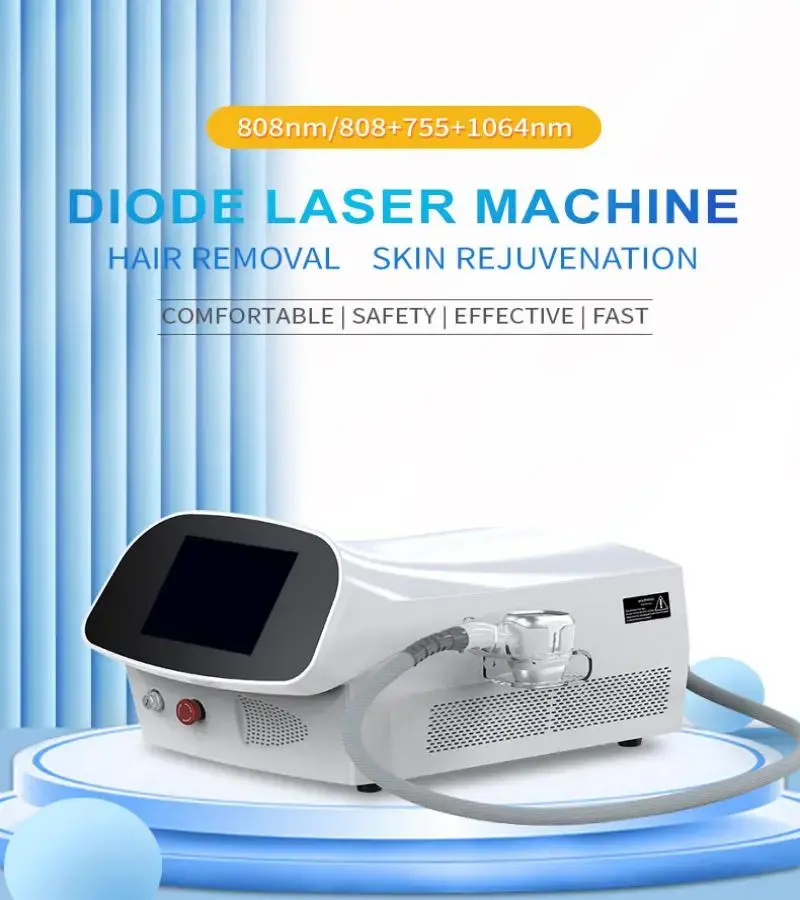
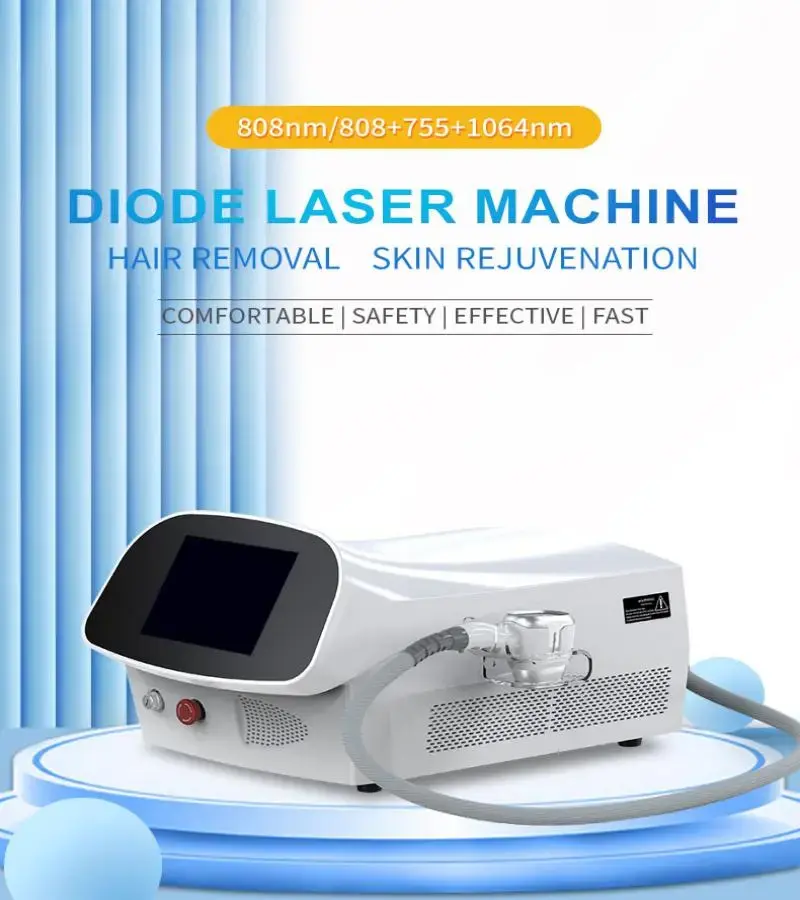
The portable 808nm diode laser is a breakthrough of current beauty treatment. This small gadget employs semiconductor technology to produce laser light at a precise 808-nanometer wavelength for permanent hair removal. Unlike the conventional cumbersome systems that need specialized treatment rooms, these transportable machines weigh just 20–30 kg and can easily be placed on any countertop. It works on the principle of selective photothermolysis, targeting the melanin-containing hair follicle while preserving surrounding skin tissue, making it safe and effective in a variety of skin types and clinical situations.
Understanding the Portable 808nm Diode Laser Technology
Core Components and How They Work Together
Laser diode bars, which are usually bought from reputable companies like Coherent in the US, are what these devices are made of. Each bar makes 60 watts of optical power. Putting ten bars on top of each other makes a 600-watt system, and more advanced types can hit 1200W or even 2000W. This energy moves through a handpiece that has a 12x36mm sapphire contact window. This window sends light straight to the treatment area.
Long-term stability is ensured by a comprehensive cooling system. Most good units move water, cool using air, and use semiconductors (TEC). The latest versions retain sapphire tips at -16°C, keeping clients comfortable during the session. Active TEC technology maintains water tank temperatures for treatment without burning. These reservoirs are smaller than vertical ones.
Why the 808nm Wavelength Stands Out
The 808nm wavelength is optimal for melanin absorption and deep tissue penetration. Shorter wavelengths like 755nm are useful at targeting blonde or fine hairs on the surface but they don’t reach as deep. Longer wavelengths, such 1064nm, may penetrate deeper into the skin and can thus be utilized on darker or tanned skin. The 808nm wavelength is perfect for hair removal on Fitzpatrick skin types I-VI, destroying deep hair follicles with little harm to the epidermis.
Portability Without Compromise
These little systems are a favourite of the mobile service providers, who can provide clinical-grade results without the hassle of the 60-80kg vertical units. They are less expensive to move and buy, making them easier for lone operators and small teams to use in beach resorts, shopping malls and community pop-up events. It is compatible with 110V and 220V so you may use it easily overseas. This may be a great advantage to businesses wishing to grow to South East Asia, the Middle East, Latin America or Africa.
Comparing 808nm Diode Laser with Other Laser Technologies
Wavelength Penetration and Effectiveness
The effectiveness of laser hair removal procedures depends on colour. Alexandrite lasers operate best on fair skin with fine, light hair at 755nm. They struggle with deeper hair follicles. Although it requires more energy and might be uncomfortable, the 1064nm Nd:YAG safely treats darker skin deep down. IPL technologies emit broad-spectrum light instead of coherent laser energy. Aiming is less precise and therapy takes longer.
The 808nm diode laser is both flexible and effective. Its modest penetration depth successfully treats terminal hair while being compatible with a range of skin tones. Multi-wavelength systems that combine 755nm, 808nm, and 1064nm offer complete solutions. Practitioners can tailor treatments to each client's specific hair and skin needs by choosing the best wavelength.
Portable versus Stationary Systems
Stationary vertical units are most common in offices with a lot of patients because they can handle back-to-back sessions without stopping. Portable 808nm diode laser systems, on the other hand, can now compete with their performance thanks to new cooling technologies. The main change is not the laser power but the duty cycle length. A 600W portable unit and a 600W fixed model both have the same energy density. The only time they differ is during long treatment days, when bigger tanks make it easier to keep the temperature stable.
A cost study shows that mobile practitioners have strong benefits. Portable systems that cost between $1,500 and $4,000 can give you a faster return on your investment than stationary systems that cost between $8,000 and $15,000. Startups and entrepreneurs can save money by using portable lasers because they don't take up as much space, don't cost as much to ship, and can be used in a variety of places, such as salons, home visits, and trade shows.
Real-World Use Case Scenarios
Consider a beach resort mobile beauty therapist. She sets up her portable 808nm laser at beach booths every morning to treat tourists quickly in the bikini line or under the arms. Clients who desire privacy may meet at home in the afternoon. Weekend local markets have pop-up stalls. If the system was addressed, this multi-venue plan would fail. Portable devices may be utilized to produce money in several ways, improving profits across all client touchpoints.
Satellite dermatology clinics benefit too. Practitioners transfer one portable device across sites instead than purchasing new ones. This maintains care while saving money. OEM distributors in developing regions enjoy how these compact devices reduce container shipping costs and simplify customs clearance, speeding time-to-market.
Key Considerations When Procuring Portable 808nm Diode Laser Devices
Essential Technical Specifications
Power affects treatment speed and efficacy. Entry-level 600W systems cover small areas well, while big regions like backs or legs need many passes. Professional spas that treat many people daily may choose 1200W or 2000W models, which can do full-body treatments in 45 to 60 minutes instead of 90 to 120 minutes with lower-powered units.
Spot size matters. A 12x36mm handpiece covers 4.32 square centimetres every pulse, far more than a 10x10mm spot. Practitioners may adjust treatment speed by altering frequency settings from 1Hz to 10Hz. High frequencies are better for experienced operators covering wide regions, whereas low frequencies are best for novices focusing on detail.
Cooling systems require close inspection. Check with vendors whether their devices employ active TEC or passive fan cooling. Active mechanisms keep temperatures consistent over eight-hour shifts, protecting laser bars from heat. Can it maintain -16°C sapphire tip temperature while working? Request films with long-term temperature measurements.
Evaluating Warranties and After-Sales Support
It should be normal to have a two-year warranty that covers endless shots. Premium manufacturers promise that each handpiece will last 20 to 40 million pulses, but how long it actually lasts depends on how well it is taken care of. Make sure you know what the guarantee doesn't cover. Usually, damage caused by incorrect voltage, ignored water changes, or unauthorized fixes won't be covered.
In-service equipment breakdowns need after-sales service. With 15 years of expertise, Xian manufacturer TB has strong support infrastructure. Their experts can fix problems via multilingual video conversations 24/7. Within 48 hours, spares are sent. Mobile workers require fast replies since even one day of downtime during peak season is costly.
Ask for full user guides that are written in the language you use. Operator mistakes happen when instructions aren't translated correctly, which can lead to less-than-ideal results or safety incidents. Video training libraries that show the right way to use laser treatment, do regular maintenance, and fix common problems are very helpful, especially for techs who are new to the field.
Supplier Certification and Quality Assurance
International certificates prove that a product is safe and meets manufacturing standards. CE marking shows that a product meets European standards for health, safety, and the environment. This is important for professionals who work with EU clients or sell goods in Europe. Having ISO 13485 certification shows that the company uses strict quality management systems that are designed to make medical devices.
Look at the supplier's manufacturing facilities and credentials. Long-standing companies like TB have distinct offices for purchasing, quality inspection, packaging, R&D, and after-sales support. A mature company is less likely to have variable quality or unsatisfactory customer service. Visit the factories to observe how products are made, test the equipment, and meet the engineering staff.
Ensuring Safe and Effective Use of Portable 808nm Diode Lasers
Operator Training and Certification Requirements
Different places have different regulatory standards. Before techs can use Class IV medical lasers in some countries, they have to get official laser safety training or cosmetology licenses. Even in places where rules aren't very strict, thorough training protects both practitioners and clients. Using the right technique will get the best results with the least amount of side effects, such as burns, hyperpigmentation, or hair growth that doesn't make sense.
Good makers offer free online training that covers things like skin typing, choosing the right fluence, overlap patterns, and what to do in an emergency. For bulk buyers, TB provides free on-site training by sending expert techs to run hands-on workshops. These sessions usually last for two to three days and cover theoretical basics, supervised practice on models, and the best ways to run a business.
Protective Measures for Operators and Clients
You have to wear eye protection with the portable 808nm diode laser. The 808nm wavelength is in the near-infrared spectrum, which is invisible. It can damage retinal tissue. During treatments, both the therapist and the client must wear safety masks that are made for that range. Good units have delay systems that stop the laser from firing when the handpiece isn't touching the skin properly. This lowers the risk of unintentional exposure.
Skin preparation procedures make things safer and work better. Cleanse the treatment area well to get rid of any oils, lotions, or dirt that could cause the laser energy to absorb in a strange way. Shave hair down to about 1 to 2 mm long. Hair that is longer than that causes the skin to burn, and skin that is completely smooth makes the treatment less effective. Use ultrasound gel to make it easier for the handpiece to glide and for better heat transfer.
Managing Common Side Effects
Most clients experience temporary heat and slight swelling that goes away in 2 to 6 hours. Using cold packs or aloe gel to cool the skin right after treatment speeds up the healing process. To stop inflammation, tell your clients to stay out of the sun, take hot showers, and do a lot of intense exercise for 24 to 48 hours.
People with darker skin can sometimes get hyperpigmentation when the fluence settings are too strong. This risk is lower when energy levels are low and pulse durations are long. Test areas that won't be seen during the first sessions and wait 48 hours to see how the skin responds before moving on to full treatments.
Future Trends and Innovations in 808nm Diode Laser Therapy
Technological Advancements on the Horizon
New laser bar technologies claim to be more efficient by turning more electrical input into visual output with less heat being wasted. This means that portable units of the future might be able to handle 1200W systems in the same sizes as 600W systems now. Better control of heat with new materials like graphene heat sinks could make it possible to run machines continuously for longer than the current 72-hour limit.
Using smart technology together is a new frontier. Think about portable lasers that have AI-powered cameras that can analyze the skin and suggest the best color combos, fluence settings, and pulse lengths based on real-time measurements of melanin density, hair thickness, and skin hydration levels. These kinds of systems would cut down on human mistake, make results more consistent, and shorten the time it takes to train new workers.
Cordless types that are driven by batteries are being worked on, but lithium batteries can't keep up with the high current needs of 600W+ laser systems right now. As a temporary fix, hybrid designs with removable battery packs for short mobile sessions and AC power for longer treatments may come up.
Market Growth Projections
The market for laser hair removal was worth about $1.2 billion in 2022 and is expected to grow at a rate of about 11% per year until it reaches $2.8 billion in 2030. A lot of this growth is driven by portable systems, especially in developing economies with people who live in different places and have lower average incomes. Because the devices are so cheap, more people can get professional cosmetic treatments that were only available in big cities before.
Harmonizing regulations across regions will speed up adoption even more. As more countries set up clear ways for laser users to get certified, practitioners feel better about buying tools because they know their businesses are legal.
Future-Proof Purchasing Strategies
When choosing providers, give more weight to those who show they are committed to continued innovation and backward compatibility. TB uses this method by providing modular handpiece designs. This way, customers can upgrade handpieces without having to buy whole new systems when next-generation laser bars become available. This ability to be upgraded saves initial investments and keeps practices up to date with new technology.
Check out how good the suppliers are at research and development. Companies that have dedicated research and development teams and hold multiple design patents are better able to quickly adopt new technologies. Find out about product roadmaps. What changes are planned for the next 12 to 24 months? Clear communication about what will happen in the future shows that a supplier values partnerships and wants the long-term success of their clients.
Work with makers that offer services for customization. As your business grows, you may want branded devices with custom color schemes, logo placement, or software interfaces that are made to work with the systems of the people you want to sell to. If you want to differentiate your brand as you grow from a one-person business to a regional distributor, you can find suppliers that offer OEM/ODM services at reasonable minimum order quantities.
Conclusion
Because it can remove hair at a professional level and is small and portable, the portable 808nm diode laser has changed the way esthetic treatment is done. Its adjusted frequency makes sure that all skin types are safe while still getting great results. Mobile practitioners have more freedom than ever before because they can see clients in a variety of places without lowering the level of care. When buying these devices, make sure that the technical specs match the amount of service you provide, that the warranties cover everything, that the after-sales support is quick, and that you only work with certified manufacturers who show a commitment to innovation. The best results are achieved with the right training and safety rules, which protect both clients and operators. As technology improves and systems become better and more efficient, your investment will still be competitive for years to come thanks to strategic relationships with suppliers and designs that can be upgraded.
FAQ
1. Is the Portable 808nm Diode Laser Painful During Treatment?
Modern portable systems use cutting edge cooling technology to keep the temperatures of the sapphire tips between -5°C and -16°C. Most of the people who have tried this say they felt mild warmth or tingle instead of pain after using this active cooling. Different parts of the body may feel different amounts of pain. Bikini lines and other sensitive areas may hurt more than arms or legs. For clients with lower pain thresholds, changing the pulse duration and energy levels makes them feel even better.
2. Are These Devices Safe for All Skin Types?
If the settings are set correctly, the 808nm frequency is safe for Fitzpatrick skin types I through VI. To keep epidermal damage from happening while still killing hair cells, pulse lengths must be longer and fluence must be slightly lower for darker skin. Multi-wavelength systems that combine 808nm, 755nm, and 1064nm offer more options. Practitioners can choose the best wavelength for each client's specific needs, which increases both safety and effectiveness.
3. Why Choose 808nm Over Other Wavelengths?
The 808nm wavelength is just right for absorbing melanin and going deep into the skin. It works on more hair and skin tones than shorter wavelengths like 755nm and needs less energy than 1064nm systems, which makes it more comfortable. Because it can be used in so many ways, it is the most cost-effective choice for professionals who work with a wide range of clients.
Partner with a Trusted Portable 808nm Diode Laser Manufacturer
TB has been making things and exporting them internationally for 15 years. They are now working in the beauty laser business. Our portable diode laser systems come with Coherent laser bars made in the USA, modern TEC cooling that keeps the sapphire at -16°C, and full two-year warranties that cover unlimited shots. Our products are certified to meet strict international safety standards by CE and ISO 13485.
Our technical team is available 24 hours a day, 7 days a week, and can help with problems in multiple languages. Spare parts are also shipped around the world within 48 hours. Our OEM/ODM services let you make your own branding and specs that are specific to your market, whether you work alone or are in charge of a growing service network.
Find out how our approved portable 808nm diode laser systems can make your business better. You can email us at susan@taibobeauty.com to get more information, including volume pricing for portable 808nm diode laser suppliers and free video consultations. You can see all of our products and get free training materials at taibolaserbeauty.com. Getting the right equipment is the first step to being successful in esthetic therapy.
References
1. Anderson, R. R., & Parrish, J. A. (1983). Selective photothermolysis: precise microsurgery by selective absorption of pulsed radiation. Science, 220(4596), 524-527.
2. Haedersdal, M., Beerwerth, F., & Nash, J. F. (2011). Laser and intense pulsed light hair removal technologies: from professional to home use. British Journal of Dermatology, 165, 31-36.
3. Gold, M. H., & Bell, M. W. (2013). Laser hair removal: a review and comparison of technologies. Journal of Cosmetic and Laser Therapy, 15(5), 283-291.
4. Gan, S. D., & Graber, E. M. (2013). Laser hair removal: a review. Dermatologic Surgery, 39(6), 823-838.
5. Tierney, E. P., Kouba, D. J., & Hanke, C. W. (2009). Review of fractional photothermolysis: treatment indications and efficacy. Dermatologic Surgery, 35(10), 1445-1461.
6. Ross, E. V., & Ladin, Z. (2014). Beyond the pulse: advances in understanding laser-tissue interactions. Lasers in Surgery and Medicine, 46(2), 57-67.





YOU MAY LIKE