
Picosecond q switch laser wavelengths: which works best?
2026-01-09 11:16:21
Are you struggling to find the most effective wavelength for your picosecond q switch laser treatments? Whether you're dealing with stubborn tattoos, persistent pigmentation, or challenging skin rejuvenation cases, choosing the wrong wavelength can mean the difference between successful outcomes and disappointing results. The picosecond q switch laser offers three primary wavelengths—532nm, 755nm, and 1064nm—each specifically designed to target different pigment colors and skin depths, making wavelength selection critical for achieving optimal treatment results in tattoo removal, pigmentation treatment, and skin rejuvenation procedures. Understanding which wavelength works best for your specific treatment needs not only maximizes effectiveness but also minimizes potential side effects, reduces treatment sessions, and enhances patient satisfaction. This comprehensive guide explores the science behind each picosecond q switch laser wavelength, helping aesthetic professionals make informed decisions that deliver superior clinical outcomes.
Understanding Picosecond Q Switch Laser Technology
The picosecond q switch laser represents a revolutionary advancement in aesthetic laser technology, combining the proven effectiveness of Q-switched systems with ultra-short pulse durations measured in picoseconds—trillionths of a second. This sophisticated technology delivers high-energy pulses that create powerful photoacoustic effects, shattering target chromophores into microscopic particles without generating excessive heat. Unlike traditional nanosecond lasers that rely primarily on photothermal mechanisms, picosecond q switch laser systems utilize photomechanical impact to fragment pigment particles more efficiently. The fundamental principle behind picosecond q switch laser technology involves generating ultra-short pulses with peak powers reaching gigawatt levels. When these intense pulses encounter melanin or tattoo ink particles, they create rapid thermal expansion followed by immediate contraction, producing shockwaves that mechanically disrupt the target chromophores. This photoacoustic effect proves significantly more effective than thermal mechanisms alone, enabling picosecond q switch laser treatments to achieve superior results with fewer sessions and reduced risk of thermal damage to surrounding tissues. Modern picosecond q switch laser systems typically feature multiple wavelengths within a single platform, allowing practitioners to select the optimal wavelength based on treatment requirements. The Q-switching mechanism controls energy release by rapidly switching the laser cavity's quality factor, accumulating substantial energy before releasing it in an extremely brief, powerful pulse. This technology enables picosecond q switch laser devices to deliver pulse durations as short as 350 picoseconds while maintaining energy outputs ranging from 100 to 2000 millijoules per pulse, providing versatility across diverse aesthetic applications.
The Science Behind Wavelength Selection
Wavelength selection in picosecond q switch laser treatments follows the fundamental principle of selective photothermolysis, where specific wavelengths target particular chromophores based on their absorption characteristics. Different pigments absorb light energy at different wavelengths, making wavelength choice crucial for treatment efficacy and safety. The picosecond q switch laser's ability to deliver multiple wavelengths allows practitioners to customize treatments for individual patient needs and specific pigment colors. Melanin, the primary chromophore in pigmentation disorders, exhibits varying absorption patterns across the electromagnetic spectrum. Shorter wavelengths like 532nm demonstrate higher melanin absorption but also carry increased risk of epidermal damage, particularly in darker skin types. Conversely, longer wavelengths such as 1064nm penetrate deeper into the dermis with reduced melanin absorption, making them safer for darker skin tones. The 755nm alexandrite wavelength occupies a middle ground, offering balanced penetration and melanin selectivity that proves especially effective for specific pigment colors. When evaluating picosecond q switch laser wavelengths for tattoo removal, chromophore specificity becomes paramount. Black and dark blue inks absorb most wavelengths effectively, but colored tattoos require wavelength-specific targeting. Red and orange pigments respond optimally to 532nm wavelengths, while green and blue inks require either 755nm or 1064nm wavelengths for effective fragmentation. Understanding these absorption characteristics enables practitioners to develop comprehensive treatment protocols that address multicolored tattoos efficiently using picosecond q switch laser technology.
Comparing the Three Primary Wavelengths
532nm Wavelength: The Superficial Pigment Specialist
The 532nm wavelength in picosecond q switch laser systems represents the shortest wavelength option, characterized by high melanin absorption and shallow penetration depth. This green light wavelength excels at treating superficial pigmented lesions, including epidermal freckles, solar lentigines, and café-au-lait macules. The picosecond q switch laser operating at 532nm delivers energy outputs typically ranging from 50 to 1000 millijoules, allowing practitioners to adjust treatment parameters based on lesion characteristics and skin type. In tattoo removal applications, the 532nm picosecond q switch laser wavelength demonstrates exceptional efficacy for warm-colored inks, particularly red, orange, yellow, and brown pigments. These colors strongly absorb green light energy, enabling efficient fragmentation with minimal surrounding tissue damage. Clinical experience shows that red ink, often resistant to other wavelengths, responds remarkably well to 532nm picosecond q switch laser treatments, frequently achieving complete clearance within fewer sessions compared to traditional Q-switched nanosecond lasers. However, practitioners must exercise caution when using 532nm picosecond q switch laser treatments on darker skin types. The high melanin absorption at this wavelength increases the risk of post-inflammatory hyperpigmentation and transient hypopigmentation, particularly in Fitzpatrick skin types IV through VI. Appropriate parameter adjustment, including lower fluences and longer intervals between treatments, helps minimize these risks while maintaining treatment efficacy. The 532nm wavelength on picosecond q switch laser platforms proves most appropriate for fair to medium skin tones and superficial pigmentation concerns.
755nm Wavelength: The Versatile Problem Solver
The 755nm alexandrite wavelength in picosecond q switch laser systems offers exceptional versatility, combining moderate melanin absorption with deeper tissue penetration than 532nm wavelengths. This picosecond q switch laser wavelength demonstrates particular effectiveness for green and blue tattoo inks, colors historically challenging to remove with traditional laser systems. The photoacoustic effects generated by 755nm picosecond q switch laser pulses efficiently shatter these resistant pigments into particles small enough for lymphatic clearance. Beyond tattoo removal, the 755nm picosecond q switch laser wavelength proves highly effective for treating a broad spectrum of pigmented lesions, including nevus of Ota, Hori's macules, and post-inflammatory hyperpigmentation. The balanced absorption characteristics allow this wavelength to target dermal pigmentation effectively while maintaining acceptable safety profiles across various skin types. Clinical studies demonstrate that 755nm picosecond q switch laser treatments achieve significant improvement in melasma cases, though multiple sessions and careful parameter selection remain essential for optimal outcomes. The 755nm picosecond q switch laser wavelength also contributes to skin rejuvenation through collagen stimulation and dermal remodeling. The photoacoustic energy delivered to dermal tissues triggers controlled micro-injury responses, stimulating fibroblast activity and collagen production without creating significant thermal damage. Patients undergoing 755nm picosecond q switch laser treatments for pigmentation often report secondary benefits including improved skin texture, reduced pore size, and enhanced overall skin quality. This dual-benefit profile makes the 755nm wavelength particularly valuable in comprehensive aesthetic treatment protocols.
1064nm Wavelength: The Deep Penetrator
The 1064nm wavelength represents the longest wavelength option in picosecond q switch laser systems, characterized by minimal melanin absorption and maximum penetration depth. This infrared wavelength proves ideal for treating darker skin types, as the reduced melanin absorption significantly decreases the risk of pigmentary complications. The 1064nm picosecond q switch laser delivers energy outputs ranging from 100 to 2000 millijoules, providing sufficient power to fragment deep dermal pigments and dark tattoo inks effectively. Black and dark blue tattoo inks demonstrate excellent absorption at 1064nm, making this picosecond q switch laser wavelength the gold standard for removing these common pigment colors. The deep penetration capabilities enable the 1064nm wavelength to target ink particles located in the deep dermis, areas often unreachable by shorter wavelengths. Additionally, the 1064nm picosecond q switch laser proves effective for treating certain green tattoo inks, though results may require more treatment sessions compared to 755nm wavelengths. Clinical applications of 1064nm picosecond q switch laser technology extend beyond tattoo removal to include treatment of deep dermal pigmented lesions such as nevus of Ota and dermal melasma. The wavelength's ability to penetrate deeply while generating minimal epidermal impact makes it suitable for treating pigmentation in all skin types, including Fitzpatrick types V and VI. Practitioners frequently combine 1064nm picosecond q switch laser treatments with other wavelengths in comprehensive protocols, addressing multiple pigment colors and depths within a single treatment session for enhanced efficiency.
Clinical Applications and Treatment Protocols
Optimizing Tattoo Removal Outcomes
Successful tattoo removal with picosecond q switch laser technology requires comprehensive understanding of ink color, depth, density, and patient skin type. Professional tattoos typically contain multiple ink colors at varying depths, necessitating multi-wavelength treatment approaches. The picosecond q switch laser's ability to deliver 532nm, 755nm, and 1064nm wavelengths enables practitioners to develop customized protocols addressing all ink colors effectively within a single treatment session or across multiple appointments. Black ink, the most common tattoo color, responds excellently to 1064nm picosecond q switch laser treatments, often achieving significant fading within three to five sessions. Amateur tattoos, typically containing less dense ink deposits at shallower depths, frequently require fewer treatments than professional tattoos. Red ink removal demands 532nm picosecond q switch laser wavelength application, while green and blue inks benefit from either 755nm or 1064nm wavelengths depending on specific ink composition and depth. Treatment intervals typically span six to eight weeks, allowing sufficient time for fragmented ink particles to clear through the lymphatic system and for tissue healing before subsequent sessions. The picosecond q switch laser's reduced thermal impact enables some practitioners to consider shorter intervals in select cases, though conservative spacing remains advisable to minimize complication risks. Energy fluence selection depends on multiple factors including skin type, ink density, and treatment history, with typical settings ranging from 2 to 10 joules per square centimeter across various wavelengths.
Addressing Pigmentation Disorders
Pigmentation treatment with picosecond q switch laser technology encompasses a diverse range of conditions, from superficial lentigines to deep dermal melasma. Epidermal pigmentation including solar lentigines, freckles, and café-au-lait macules responds optimally to 532nm or 755nm picosecond q switch laser wavelengths, typically requiring two to four treatment sessions spaced four to six weeks apart. The photoacoustic fragmentation provided by picosecond q switch laser pulses enables more complete pigment clearance with reduced post-inflammatory hyperpigmentation risk compared to traditional Q-switched nanosecond lasers. Dermal pigmentation presents greater treatment challenges, requiring careful wavelength selection and parameter optimization. Nevus of Ota, a deep dermal pigmented condition, benefits from 1064nm picosecond q switch laser treatments due to the wavelength's superior penetration capabilities and minimal melanin absorption. Clinical protocols typically involve multiple treatment sessions with conservative energy settings to achieve gradual improvement while minimizing adverse effects. The 755nm picosecond q switch laser wavelength also demonstrates effectiveness for certain dermal pigmentation cases, particularly when targeting blue-grey pigments characteristic of Hori's macules. Melasma treatment represents one of the most challenging applications for picosecond q switch laser technology due to the condition's tendency toward recurrence and post-treatment exacerbation. Conservative approaches utilizing low-fluence 1064nm picosecond q switch laser treatments combined with comprehensive pre-treatment preparation including hydroquinone application yield the most favorable outcomes. Practitioners must educate patients about realistic expectations, emphasizing the chronic nature of melasma and the necessity for ongoing maintenance treatments and diligent sun protection to preserve results achieved through picosecond q switch laser therapy.
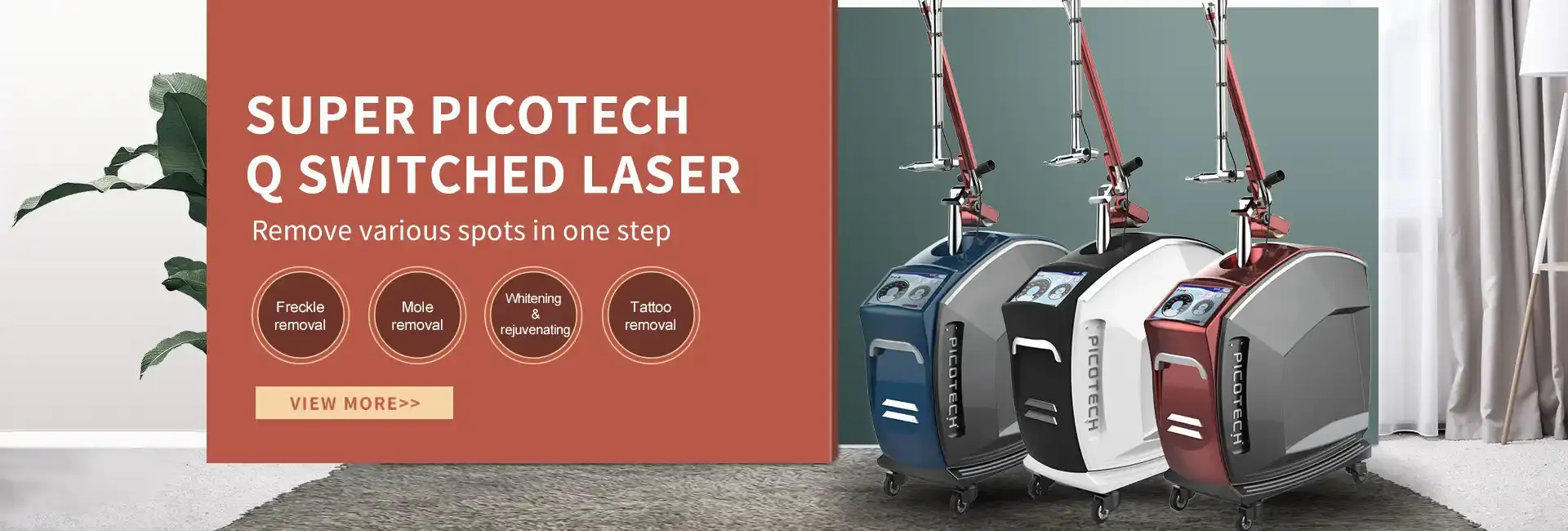
Advanced Features of Xi'an Taibo's Picosecond Q Switch Laser System
Xi'an Taibo Laser Beauty Company's picosecond q switch laser platform incorporates cutting-edge technology designed to maximize treatment efficacy while ensuring operator convenience and patient safety. The system features three wavelengths—532nm, 755nm, and 1064nm—integrated within a single versatile platform, eliminating the need for multiple devices and streamlining clinical workflows. Energy output capabilities reach up to 2000 millijoules per square centimeter at both 1064nm and 755nm wavelengths, providing sufficient power for treating even the most resistant pigments and dense tattoos. The ultra-short pulse duration of 6 nanoseconds combined with picosecond-domain capabilities enables this picosecond q switch laser system to deliver both traditional Q-switched and advanced picosecond treatments. This dual functionality provides practitioners with flexibility to select optimal parameters based on specific clinical scenarios, adjusting pulse duration and energy settings to match treatment requirements. The adjustable spot size ranging from 2 to 10 millimeters allows precise targeting of small lesions while maintaining efficiency when treating larger areas. Xi'an Taibo's picosecond q switch laser system employs advanced cooling technology incorporating both air and water cooling mechanisms, ensuring stable operation during extended treatment sessions and prolonging component lifespan. The integrated safety features include appropriate eye protection protocols with a nominal ocular hazard distance of one kilometer, emphasizing the critical importance of proper laser safety eyewear during operation. Working frequencies adjustable from 1 to 10 Hertz enable practitioners to customize treatment speed based on area size and patient comfort levels, optimizing clinical efficiency without compromising safety standards.
Quality Assurance and International Certifications
Xi'an Taibo Laser Beauty Company demonstrates unwavering commitment to quality and safety through comprehensive certification achievements, including CE certification confirming compliance with European Union safety and health standards and ISO 13485 certification verifying adherence to the highest quality management systems for medical devices. These internationally recognized certifications provide practitioners and patients with confidence in the picosecond q switch laser system's safety, reliability, and performance consistency. The company's ongoing pursuit of additional certifications, including FDA approval and medical CE marking, reflects dedication to meeting evolving global regulatory standards. The manufacturing process for Xi'an Taibo's picosecond q switch laser systems incorporates rigorous quality control measures at every production stage, from component procurement through final assembly and testing. Dedicated quality inspection departments verify that each picosecond q switch laser unit meets precise specifications before packaging and shipment. This comprehensive quality assurance approach ensures practitioners receive consistently reliable equipment capable of delivering predictable clinical results across diverse treatment applications and patient populations.
Conclusion
Selecting the optimal wavelength for your picosecond q switch laser treatments depends on multiple factors including pigment color, depth, density, and patient skin type, with 532nm excelling at superficial pigmentation and warm-colored tattoos, 755nm offering versatile treatment for various pigments and difficult ink colors, and 1064nm providing safe, effective deep penetration ideal for darker skin types and black ink removal.
Cooperate With Xi'an Taibo Laser Beauty Company
As a leading China picosecond q switch laser manufacturer with over 15 years of production and export experience, Xi'an Taibo Laser Beauty Company delivers high quality picosecond q switch laser equipment to more than 180 countries worldwide. Our China picosecond q switch laser factory provides comprehensive OEM/ODM services with competitive picosecond q switch laser price options, making us your trusted China picosecond q switch laser supplier and wholesale partner. We offer picosecond q switch laser for sale with two-year warranty coverage, professional technical support, comprehensive training programs, and 24-hour customer service to ensure your complete satisfaction.
Contact us today at susan@taibobeauty.com to discuss your specific requirements and discover why practitioners worldwide choose Xi'an Taibo's high quality picosecond q switch laser systems for superior clinical outcomes. Save this article for quick reference whenever you need expert guidance on wavelength selection and treatment protocols!
References
1. Byun SJ, Kim WS, Choi YJ. "Comparison of the picosecond and Q-switched Nd:YAG lasers in the treatment of pigmentary disorders: a retrospective case series in the Republic of Korea." Medical Lasers.
2. Kilmer SL, Anderson RR. "Clinical use of the Q-switched ruby and the Q-switched Nd:YAG (1064 nm and 532 nm) lasers for treatment of tattoos." Journal of Dermatologic Surgery and Oncology.
3. Bäumler W, Weiß KT. "Laser assisted tattoo removal - state of the art and new developments." Photochemical & Photobiological Sciences.
4. Kasai K. "Picosecond Laser Treatment for Tattoos and Benign Cutaneous Pigmented Lesions." Laser Therapy.
5. Soleiman S. "Tattoo Removal Lasers: Q-Switch Vs. Picosecond - Clinical Data & Safety." Cosmetic Injectables Center Research Publications.





YOU MAY LIKE