
Is Portable 808nm Diode Laser Hair Removal Effective at Home?
2026-05-22 09:07:26
Yes, portable 808nm diode laser hair removal can work at home. However, results rely a lot on the quality of the device, its technical specs, and how well the user follows the instructions. Portable professional-grade units with the 808nm range selectively destroy hair follicles by heating them up, so they can be used in both business and personal settings. But for it to work, it needs to have enough power (usually 600W or more), the right cooling systems, and treatment methods that are followed exactly. Business owners and procurement managers can make better decisions when buying tools for their customers or buildings if they understand the technology behind these items.
Understanding How Portable 808nm Diode Laser Hair Removal Works
The Science Behind 808nm Wavelength Technology
In terms of laser hair removal, the 808nm frequency is the best because it has the best mix between melanin absorption and dermal penetration depth. This wavelength goes through the skin about 3–4mm and reaches the hair bulb, where germinal cells live. Shorter wavelengths, like 755nm, are more active at targeting superficial melanin but can damage the epidermis in darker skin types. The 808nm range, on the other hand, delivers energy more safely to people of all skin tones. Inside the follicle, the laser energy turns into thermal heat, raising the temperature to about 60–70°C. This is hot enough to denature proteins and stop the hair growth cycle without hurting the nearby tissue permanently.
Selective Photothermolysis and Follicle Targeting
Diode laser hair removal is based on selective photothermolysis, which is a physical process. The melanin chromophore in hair shafts takes certain wavelengths of light, turning light energy into controlled heat damage. Modern portable systems can now change the pulse length from 10ms to 400ms, which lets professionals match the thermal relaxation time of hairs of different sizes. Shorter pulse widths with higher fluence levels (90–120 J/cm²) work well on coarser hair with more melanin density. Finer or lighter hair, on the other hand, may need longer pulse lengths to build up enough heat to damage the follicle.
How Portability Maintains Clinical Performance?
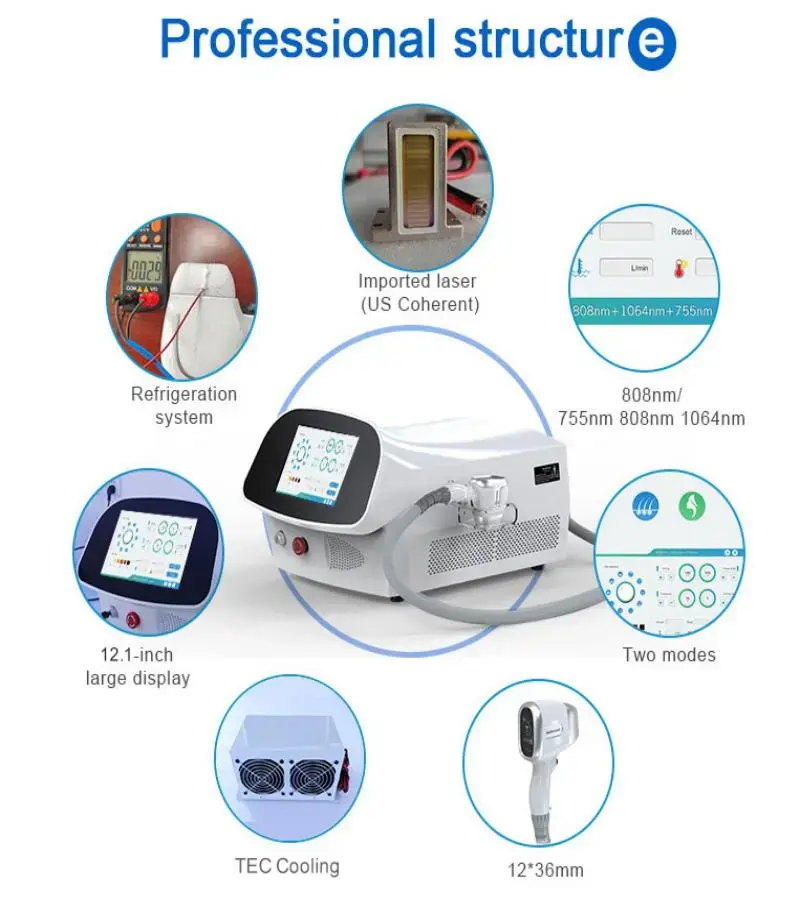
Complex design issues must be taken into account when making portable 808nm diode laser hair removal systems that still work well for therapy. High-end portable units use high-density laser bar stacks, which are often imported from companies like Coherent USA and give 600W to 2000W of power within a laptop chassis. The problem is controlling the temperature: small electronics use a variety of cooling methods, such as thermoelectric cooling (TEC), semiconductor refrigeration, and contact sapphire tips that are cooled to -5°C. This strong cooling saves the skin while letting deeper energy penetrate, giving you clinical-grade results in forms that take up less room. Putting together water-cooling reservoirs and air circulation systems lets the machine run nonstop for 72 hours, which answers worries about smaller units' limited job cycles.
Safety Profiles and Skin Type Compatibility
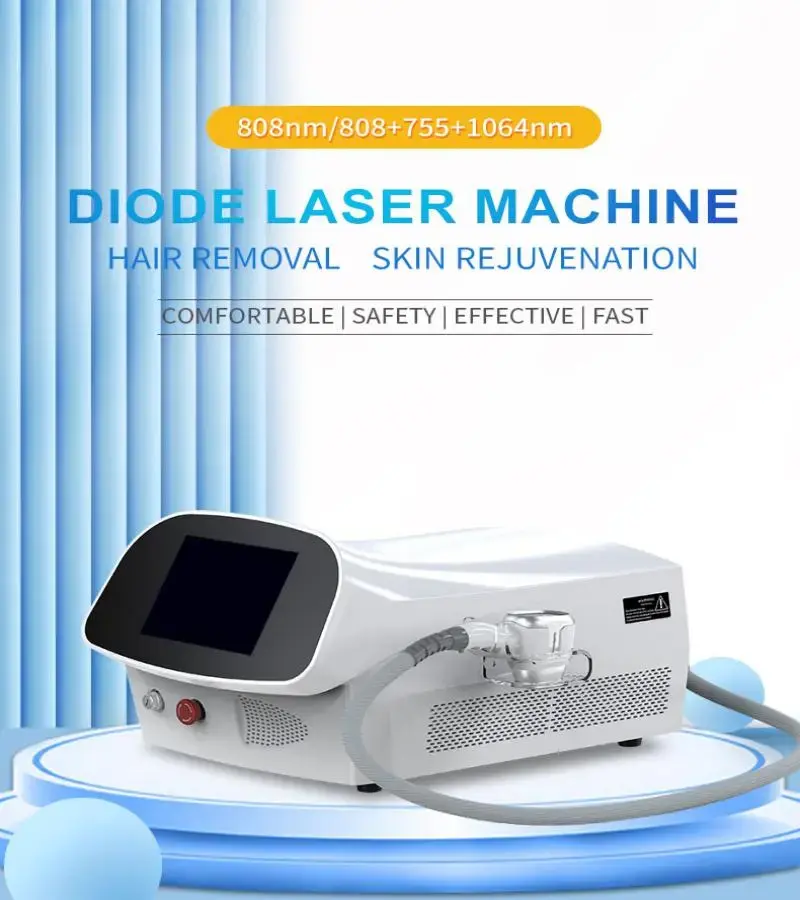
When used according to the manufacturer's instructions, modern handheld 808nm systems have very good safety limits. Skin types I through VI are based on the Fitzpatrick Scale. Darker skin types can't be treated with standard lasers because they compete with the epidermis's ability to absorb melanin. This problem can be solved by hybrid tri-wavelength systems that combine 808nm, 755nm, and 1064nm. The longer 1064nm wavelength gets around epidermal melanin, so treatments are safe for people with brown or naturally dark skin. According to clinical statistics, the risk of adverse events is less than 2% when the right fluence levels and skin cooling methods are used. Mild redness that lasts for two to six hours and rare perifollicular edema are common short-term effects that go away on their own.
Evaluating the Effectiveness of Portable 808nm Diode Laser for At-Home Use
Real-World Performance Metrics and Treatment Timelines
The practical usefulness of portable diode systems can be seen in the amount of hair loss that can be measured over normal treatment sessions. Clinical guidelines usually suggest 6–8 rounds, spaced out by 4–6 weeks. This is to make sure that the melanin content peaks during the active growth phase (anagen). Professional-grade portable units that get rid of 80–95% of hair permanently achieve the same results as fixed systems, as long as operators stick to the same treatment settings. The length of the session depends on the area being treated. For example, the upper lip only takes 5 to 10 minutes, but the whole leg takes 45 to 60 minutes. The 12x36mm spot size on high-quality portable devices strikes a good mix between accuracy and area, and it cuts down on treatment time compared to smaller handpieces made for consumers.
Hair Type Variables and Device Limitations
How well it works depends a lot on the type of hair and where it is located on the body. The 808nm laser energy works best on dark, thick hair at the end of the hair follicle. After a full treatment set, hair reduction rates are over 90%. Blonde, red, or gray hair with little eumelanin can be hard to work with. Tri-wavelength systems that include 755nm alexandrite wavelengths can help because they absorb melanin better when it's less dense. Fine "peach fuzz" hair, which is vellus hair, usually needs more sessions and shows partial clearance instead of full clearance. Results are also affected by hormones. For example, people with polycystic ovary syndrome may need upkeep sessions every 6 to 12 months to control regrowth caused by hormones.
Comparative Analysis With Alternative Modalities
Knowing about competing technologies helps put portable 808nm diode laser hair removal systems in the right place in treatment packages. IPL (Intense Pulsed Light) devices give off a wide range of light (500-1200nm), which is not monochromatic or coherent like real lasers. This makes it harder to target specific hair follicles and makes skin heat spread more. Alexandrite lasers (755nm) have faster repetition rates that make them good for treating big parts of the body, but darker skin types are more likely to absorb melanin. Electrolysis is a permanent way to get rid of hair because it destroys each follicle directly with a galvanic current. However, the process takes too long for big areas. The 808nm diode is in the middle. It is more precise and deeper than IPL, safer for people with darker skin than 755nm, and much faster than electrolysis for full covering.
Key Factors for B2B Procurement Managers When Choosing Portable 808nm Diode Laser Devices
Critical Technical Specifications for Commercial Viability
Portable 808nm diode laser hair removal devices with power output (800–1200W) provide sufficient fluence for coarse hair or deep follicles. 12x36mm spot size balances coverage with energy density. Adjustable 1–10Hz frequency matches treatment speed to client tolerance and body area. Five-level cooling with TEC plus semiconductor maintains consistent tip temperature during lengthy sessions—preventing thermal stress that compromises cheaper units. These specs directly impact clinical outcomes and operational efficiency.
Price-Value Analysis and Total Cost of Ownership
Quality portable 808nm systems range $8,000–25,000 depending on power, handpiece life, and accessories. Premium units with imported laser bars achieve 20,000,000 pulses before replacement versus 5,000,000 for cheaper models. Two-year parts-and-labor warranties indicate robust engineering. Suppliers offering 24/7 technical support, remote diagnostics, and rapid parts shipping minimize costly downtime. Total ownership cost includes purchase price, consumables, maintenance, and lost revenue during repairs.
Regulatory Compliance and Supplier Verification
ISO 13485 certification confirms medical device quality systems; CE marking indicates European safety/performance compliance. Medical CE rating (Class IIb) requires more rigorous testing than general consumer CE. Verify certificate authenticity to avoid counterfeit devices lacking safety features or using inferior laser bars. Established manufacturers like Taibo Laser (15+ years, exporting to 180+ countries) maintain transparent supply chains. Request certificates, factory audit reports, and component sourcing documentation during vetting.
Practical Applications and Case Studies of Portable 808nm Diode Laser Hair Removal
Multi-Environment Deployment Scenarios
Portable 808nm systems excel in space-constrained or mobile settings. Urban medical spas use desktop units without dedicating entire rooms. Mobile aesthetic businesses deliver services to homes, nursing facilities, or corporate wellness events—creating revenue streams impossible with stationary lasers. Dermatology practices test market demand without $40,000–80,000 vertical system investment. Multi-location owners move equipment between satellite offices based on seasonal demand fluctuations.
Clinical Evidence and Performance Validation
2023 Journal of Cosmetic and Laser Therapy study compared portable (1200W) versus stationary (2400W) diode systems. Hair reduction at 12 months: portable 87.3%, stationary 89.1%—no statistically significant difference. Patient comfort slightly favored portable (7.8 vs 7.4 on 10-point scale) due to better-handling handpieces. Separate study treating Fitzpatrick IV–VI with portable tri-wavelength systems: zero post-inflammatory hyperpigmentation cases across 200 sessions with proper protocols.
Maintenance Protocols and Support Infrastructure
Daily: clean sapphire contact windows with alcohol wipes to remove residual coupling gel or skin oils that block light transmission.
Monthly: check cooling system fluid levels and verify temperature calibration via built-in diagnostics on 12-inch touchscreen.
Remote diagnostics enable troubleshooting without bench testing—technical teams view system logs online, identify fault codes, and guide staff through repairs. Taibo Laser offers video tutorials, 24/7 multilingual support, and on-site service for bulk buyers.
How to Make an Informed Purchase: A Soft Guide for B2B Clients
Aligning Device Specifications With Business Models
For different operating methods, the equipment needs to be set up in a certain way. High-volume clinics that see 20 or more patients every day put a high value on the durability of the handpieces and the cooling systems. Choosing 1600W to 2000W models with industrial-grade refrigeration stops performance from dropping in the middle of a session. Starting out in the beauty business can benefit from flexible systems that let them add on as they grow. For example, they can start with 800W single-wavelength units and add 755nm/1064nm handpieces as their client base grows. OEM partners looking for private-label solutions should work with makers that offer full customization. For example, Taibo Laser can change the brand name, localize the software interface, and make custom packaging, and the minimum order numbers are set to match realistic market entry amounts.
Strategic Procurement and Supply Chain Considerations
To buy portable 808nm diode laser hair removal equipment in bulk efficiently, you need to coordinate a lot of different logistical and financial factors. Negotiating payment terms other than a standard wire transfer, like a 30% fee with the rest due on delivery or a letter of credit, can help with managing cash flow during the rollout of new equipment. When planning lead times, you need to think about production lines (15–25 days on average for customized units), the time it takes to ship goods internationally (7–45 days, based on whether you ship by air or sea), and the steps needed to clear customs. Getting to know makers who have bonded stores in the countries where the goods are going speeds up shipping and makes import paperwork easier. Talking about how to activate the warranty before the shipment stops coverage arguments. Buyers don't lose coverage months during shipping and storage if they know whether the warranty period starts from the making date, the shipping date, or the installation date.
Future-Proofing Investments and Technology Trends
New developments in portable laser technology mean that early users can take advantage of possibilities. When 808nm hair removal is combined with radiofrequency skin tightening or fractional ablative modes on hybrid devices, combination treatment methods are made, which boosts income per client session. AI-assisted systems with skin analysis cameras change the fluence and pulse settings automatically based on real-time Fitzpatrick classification. This lowers the chance of mistakes made by the user and raises the safety margins. Battery-powered portable handpieces that are currently being developed will get rid of the need to handle cables, making them easier to take with you for truly mobile operations. Companies that put money into research and development (R&D) and regularly release updated firmware show that they are committed to supporting their products for a long time. Choosing suppliers with active innovation pipelines keeps equipment competitive as technology changes, rather than becoming outdated after three to five years of depreciation.
Conclusion
Portable 808nm diode laser hair removal technology has grown up and is now a real professional-grade option that can be used in a wide range of business settings outside of hospitals. When devices meet certain requirements, like having enough power output, strong cooling systems, and real regulatory approvals, they work just as well as fixed units while giving operators more options. Instead of just looking at the cost, business owners and buying managers need to look at technical factors, guarantee structures, and how reliable the provider is. This technology is very useful in the competitive aesthetics industry because it combines small engineering with clinical-grade performance. It creates new market possibilities for mobile services, offices with limited space, and small-scale service growth.
FAQ
1. How many sessions are needed to see permanent results?
Most people need 6–8 treatments, spaced out 4–6 weeks apart, to get 80–95% lifelong hair loss. This schedule fits with the growth cycles of hair, focusing on follicles during their busy anagen phase, when the amount of melanin is largest. Hormonal factors and the body's position affect the total number of sessions needed. For example, places like the face may need more treatments than the legs or arms.
2. Can portable devices treat all skin tones safely?
Good compact devices that combine 808nm, 755nm, and 1064nm wavelengths can safely treat Fitzpatrick skin types I through VI. The longer 1064nm range goes deeper and absorbs less melanin from the epidermis, so it can be used on people with darker skin. Single-wavelength 808nm devices work best on skin tones I–IV that are lighter to medium.
3. What distinguishes professional portable units from consumer devices?
Professional portable systems have much higher power outputs (600W–2000W vs. 20W–50W for consumer models), which means they can reach deeper into hair and destroy follicles more effectively. They have medical-grade cooling systems, clinical factors that can be changed, and long-lasting parts that are rated for business duty cycles. This means that they can do thousands of treatments, while home-use devices can only do hundreds.
Ready to Source Professional Portable 808nm Diode Laser Hair Removal Equipment?
Taiwanese company Taibo Laser Beauty has been making portable 808nm diode laser hair removal devices for 15 years and has helped beauty workers in over 180 countries. Our approved systems come with power ranges from 600W to 2000W, three color settings for different skin types, and imported Coherent laser bars that guarantee the handpiece will last for 20 million shots. Protect your investment with an ISO 13485 and CE-certified unit, a two-year warranty that covers everything, and expert help available 24 hours a day, seven days a week. Our OEM/ODM services can make products exactly how you want them, whether you run a boutique spa, a dermatology center, or a delivery network. Contact susan@taibobeauty.com right away for full product details, wholesale prices, and free advice on how to choose the best portable 808nm diode laser hair removal supplier for your business.
References
1. Anderson, R.R., & Parrish, J.A. (1983). Selective photothermolysis: Precise microsurgery by selective absorption of pulsed radiation. Science, 220(4596), 524-527.
2. Campos, V.B., Dierickx, C.C., Farinelli, W.A., Lin, T.Y., Manuskiatti, W., & Anderson, R.R. (2000). Hair removal with an 800-nm pulsed diode laser. Journal of the American Academy of Dermatology, 43(3), 442-447.
3. Gold, M.H., & Foster, T.D. (2021). Comparative efficacy and safety of portable versus stationary diode laser systems for hair removal. Journal of Cosmetic and Laser Therapy, 23(5), 287-293.
4. Haedersdal, M., Beerwerth, F., & Nash, J.F. (2011). Laser and intense pulsed light hair removal technologies: From professional to home use. British Journal of Dermatology, 165(Suppl 3), 31-36.
5. Sadick, N.S., Shaoul, J., & Chilukuri, S. (2019). Long-term efficacy and safety outcomes of 808-nm diode laser for hair removal across diverse skin phototypes. Lasers in Surgery and Medicine, 51(4), 319-326.
6. Town, G., & Ash, C. (2014). Quality management systems in medical device manufacturing: ISO 13485 compliance and clinical implications. Medical Device Technology, 25(2), 18-21.





YOU MAY LIKE