
How to Find a Reliable CO2 Fractional Laser Machine Supplier
2026-09-16 00:00:00
Finding a dependable supplier for co2 fractional laser equipment demands careful evaluation beyond price comparisons. When investing in advanced aesthetic technology, procurement professionals must scrutinize supplier credentials, product certifications, and after-sales commitments. A reliable co2 fractional laser machine supplier demonstrates transparency through validated regulatory approvals like CE and ISO13485, maintains consistent communication throughout the procurement cycle, and provides comprehensive technical support, including installation training and maintenance protocols. Partnering with manufacturers offering proven track records—backed by client testimonials and clinical case studies—ensures your investment delivers consistent treatment outcomes while minimizing operational disruptions.
Understanding the CO2 Fractional Laser Machine Market
Dermatology and cosmetic medicine have been changed by CO2 fractional laser technology, which can rejuvenate skin without the long recovery time that comes with traditional ablative procedures. Full-field CO2 lasers remove whole layers of skin. Fractional systems, on the other hand, send laser energy in micro-columns, making Microscopic Thermal Zones (MTZs) that protect the tissue around them. This method speeds up the body's natural healing processes, which makes it perfect for getting rid of acne scars, wrinkles, stretch marks, and uneven skin tone.
Key Clinical Applications Driving Market Demand
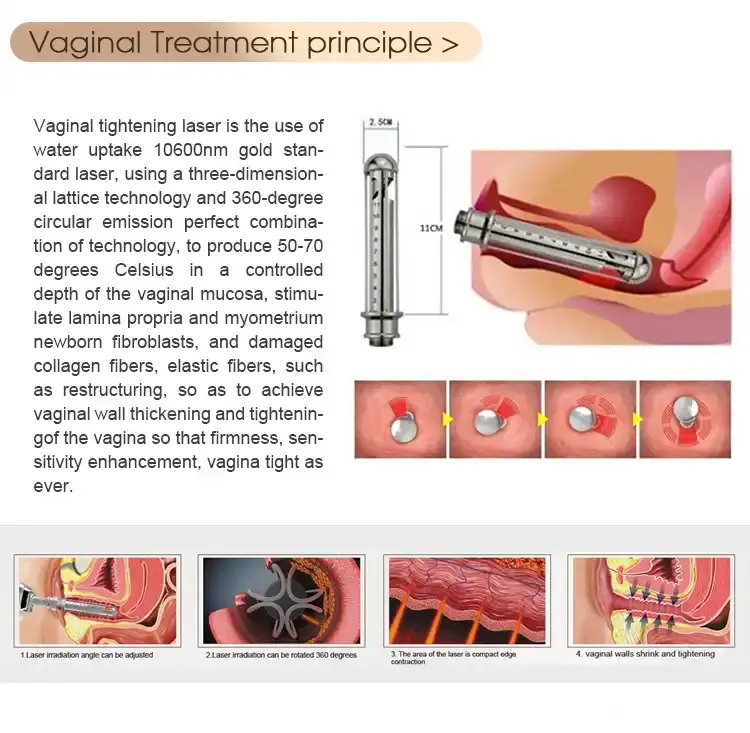
Modern CO2 fractional laser machines can treat a wide range of skin problems, from uneven skin structure on the surface to deep scars that has lost its shape. More and more, dermatology clinics and esthetic practices are using these devices because patients want effective anti-aging solutions that don't get in the way of their daily lives. The technology's ability to cause collagen remodeling through controlled thermal injury gives results that get better over time, meeting the goals of both the practitioner and the client. New treatments like vaginal rejuvenation and vulvar treatments are opening up new ways to make money for clinics that have flexible platforms with specialized handpieces.
Navigating Quality Variations and Counterfeit Risks
As the market has grown, sadly, it has attracted cheap manufacturers who sell equipment that hasn't been tried properly and for prices that seem too good to be true. These devices often don't have the right safety features, give off inconsistent beams, and break down too soon. Procurement managers need to be aware of warning signs like not having the necessary certifications, technical specs that aren't clear, and a refusal to provide factory proof. Suppliers who are real are happy for facility checks and are happy to share safety certificates, but operators who aren't real try to hide their activities. By choosing certified manufacturers, clinics can avoid breaking the rules, putting patients at risk, and having to pay a lot of money to replace broken equipment that hurts their reputations as professionals.
Core Criteria to Evaluate When Choosing a CO2 Fractional Laser Machine Supplier
Supplier choice has a big effect on how well technology works, how well it follows the rules, and how much it costs to run in the long run. Setting clear criteria for review helps procurement teams tell the difference between marketing claims and skills that have been proven.
Verifying Supplier Authenticity and Manufacturing Credentials
Manufacturers that are legitimate keep business licenses, factory sites, and research and development teams that can be checked. Xi'an Taibo Laser Beauty is a great example of this standard. They have been making laser beauty products since 2009 and have dedicated production departments as well as quality inspection and after-sales teams. Genuine suppliers let buyers visit the factory, which lets them check the quality of the goods directly. Asking for business licenses, tax records, and audit reports from a third party proves that the business is real. OEM manufacturers show advanced technical skills, but buyers should make sure that the customization choices don't get in the way of basic safety features or following the rules.
Assessing Product Portfolio and Technical Specifications
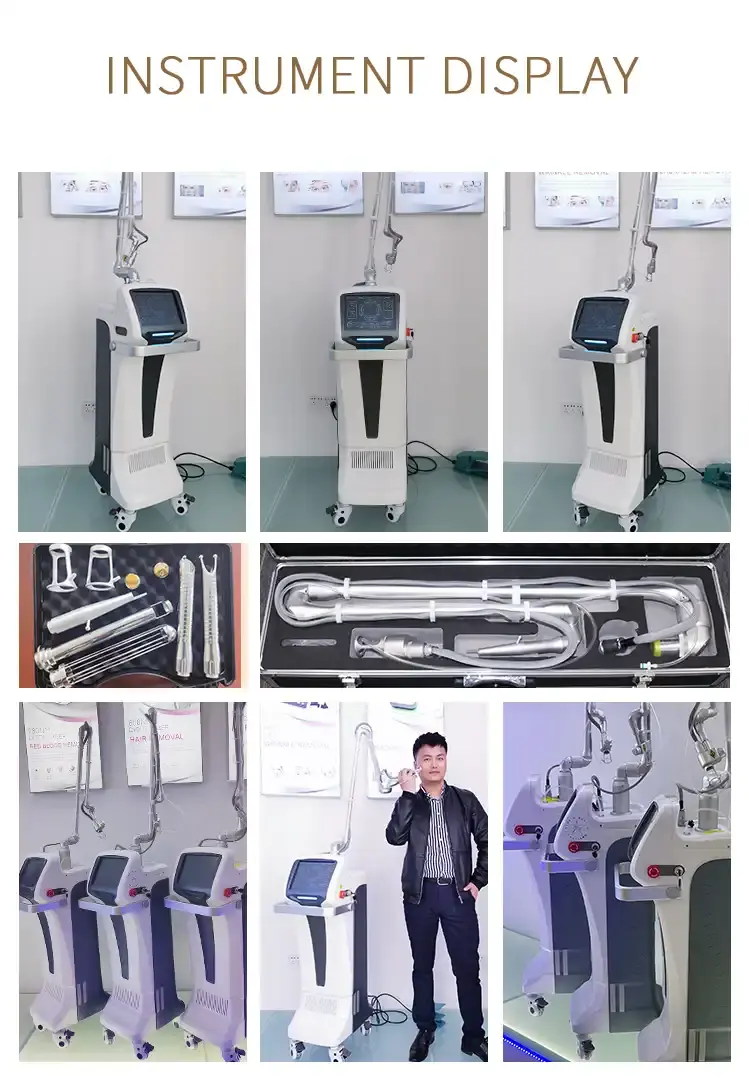
Cheaper co2 fractional laser machines lack accurate control mechanisms like professional ones. Instead of fragile glass tubes, high-quality equipment holds solid-state lasers in metal tubes. This improves beam consistency and extends machine life to over five years. The specifications matter: pulse widths help physicians adjust treatment intensity, and spot sizes as tiny as 0.1mm enable them to operate cautiously around sensitive regions like the periorbital. Many output modes, including dot matrix patterns, lengthy pulse sets, and private treatment settings, demonstrate a high level of engineering. A full seven-joint articulated arm stabilises the beam throughout treatment regions. Cheaper systems with inflexible handpieces limit practitioner mobility. Water cooling systems prevent temperature shifts that might harm outcomes over protracted treatment sessions.
Understanding Pricing Models and Financial Terms
Clear pricing systems show that suppliers are confident and expert. Reputable manufacturers give detailed quotes that include the cost of the equipment, the cost of shipping, and any extras that can be added. Be wary of bundled pricing that hides the individual values of parts; this method is often used to hide parts that aren't up to par. Some companies offer lease options or financing options through partnerships with banks, which helps clinics that are limited in their ability to spend on capital projects. Misunderstandings can be avoided by talking about payment terms up front, such as required deposits, milestone payments, and due dates for the final amount. Well-known brands like Taibo accept a number of payment options, such as bank transfers, credit cards, and PayPal. This makes it easier for people from all over the world to buy things while still following safe financial rules.
Prioritizing After-Sales Support and Service Commitments
Manufacturers who offer guarantees on equipment for two years or more are confident in the product's durability. Technical training through detailed video tutorials and live video talks should be part of all-around help packages until staff are up to speed on how to use the system. After-sales teams that are responsive and can be reached by phone, email, and chat apps can quickly fix technology problems, which keeps treatment schedules from getting messed up. Suppliers who keep extra parts on hand speed up fixes, while those who need to ship common parts over long distances create unacceptable risks of downtime. Make sure you know if the guarantee covers parts, work, and shipping costs. Some sellers don't cover expensive laser tube replacements or charge extra service fees that cancel out the savings you got at first.
How to Assess Supplier Reliability and Reputation
By weeding out unreliable vendors before commitments are made, reputation verification protects procurement investments. Multiple review stages give you trust in the provider you choose.
Analyzing Verified Client Reviews and Case Studies
Real customer testimonials show more about the real user experience than polished marketing materials. Ask for the contact information of current clients who run similar types of practices and then talk to them directly about how well the equipment works, how responsive the supplier is, and how satisfied they are with their purchase. Detailed case studies with photographic evidence and clinical parameters that show specific treatment outcomes prove that the equipment works. Don't trust general comments that don't give details or reviews that are only positive, which could mean that they were edited. Independent review sites and industry groups let people give their honest opinions, but they can tell the difference between real complaints and attempts to hurt competitors.
Confirming Regulatory Compliance and Certification Standards
If a product has CE certification, it means it meets European safety and performance standards. If it has ISO13485 certification, it means it has quality control systems that are meant to make medical devices. To get these certifications, production methods, documentation routines, and risk management steps must be carefully checked by a third party. Suppliers should give buyers copies of certificates with registration numbers that can be checked against databases of the issuing body. If needed, FDA approval or registration adds another level of verification, especially for entering the U.S. market. Manufacturers who are actively seeking more certifications show that they are committed to keeping up with changing government rules. Taibo has obtained CE, ISO13485, SGS, EMC, and LVD certifications, and is currently working on FDA and medical CE uses that show proactive compliance methods.
Evaluating Logistics Capabilities and Delivery Reliability
Global procurement requires vendors that understand international freight, customs documentation, and destination country import restrictions for complex shipping operations. Experienced manufacturers have ties with numerous carriers, so they may supply air freight for urgent deliveries or sea freight for huge purchases that must be kept low. Professional packaging with reinforced metal boxes and special foam protects delicate optical components during shipping. Suppliers should provide tracking, handle export documentation, and assist with customs clearance. Delivery timings affect practice launch times; thus, being on time shows trust. Taibo and other companies with distribution networks in over 180 countries can solve regulatory and shipping problems.
Negotiating and Finalizing Your Purchase
Strategic negotiation strikes a balance between controlling costs and ensuring quality, creating supplier relationships that are good for both parties.
Defining Procurement Objectives and Budget Parameters
Make it clear what kind of treatments you want, like general dermatology, cosmetic enhancement, or specialized uses like vaginal rejuvenation. This will help you figure out what technical features you need. A budget includes more than just the purchase price. It also includes installation costs, staff training costs, the cost of stocking up on consumables, and expected maintenance costs. Setting a reasonable total cost of ownership over five years gives you a realistic way to plan your finances. Talking about the possibility of buying in bulk may lead to better prices, especially when buying multiple units for groups with multiple locations or to build up strategic supplies.
Requesting and Comparing Comprehensive Quotations
Get detailed bids from at least three qualified suppliers, and make sure that when you compare them, you look at equipment with the same specifications, not just equipment that looks the same on the outside. Quotes should include information about the laser's power output, wavelength accuracy, type of cooling system, guarantee length, extras that come with the machine, and training options. Look at more than just the lowest price. A slightly more expensive system with better after-sales support and longer guarantees is often a better long-term investment than cheaper options that need to be fixed a lot. By asking for demonstration films or setting up trial tests, you can find out working details that specs alone can't show.
Scrutinizing Contract Terms and Service Agreements
When written clearly, legal agreements protect both sides. Warranty terms must spell out what the warranty covers, what it doesn't cover, how to file a claim, and how to get a new part. Service level agreements that set maximum reaction times for technical questions and due dates for repairs make people responsible. Payment terms should be in line with delivery goals and verification checks, with the final payment not being made until the installation is complete and the performance has been confirmed. If you use OEM customization services, make sure you understand the intellectual property rights so that your business investments are safe. Including ways to settle disagreements and the legal areas that apply keeps things simple in case of a disagreement.
Avoiding Common Pitfalls in CO2 Fractional Laser Machine Procurement
Realizing that mistakes happen a lot saves procurement investments from failures that are likely to happen and hurt practice operations and financial performance. Professional CO2 fractional laser machine procurement requires balancing price with substantiated quality.
Misconceptions About Price-Quality Relationships
When prices are unusually low, it could mean that quality has been lowered, safety has been compromised, or there are hidden costs that show up after the purchase. Heavy-duty machines have expensive parts like RF-excited metal laser tubes that last decades, while glass tubes only last two years before they stop working. Costs that low-cost makers don't have to pay for include medical-grade materials, precise sights, and full safety interlocks. Overpaying for features that aren't needed wastes money and time, and extreme deal hunting often ends up with broken equipment that needs to be fixed all the time or fails regulatory checks. Setting reasonable price ranges for the market by getting multiple quotes helps find unrealistic outliers that should be viewed with skepticism.
Overlooking After-Sales Service Importance
Buying equipment is more of the start of a connection than the end of a deal. Suppliers who don't give much after the sale leave businesses with operating questions, upkeep doubts, and troubleshooting problems. Focus on manufacturers that offer technical support in multiple languages, thorough training programs, and proactive communication to check the performance of equipment after installation. Whether minor technical problems turn into short-term problems or long-term shutdowns depends on how many local service representatives are available or how quickly remote support can be accessed. Taibo's commitment to 24-hour online service and willingness to provide on-site training for bulk purchases are great examples of customer-centered strategies that make the most of equipment use and treatment confidence.
Neglecting Certification and Documentation Verification
If you accept certification claims without checking them independently, you could be breaking the law and putting patients at risk. Ask for copies of the original certificates that have the registration numbers, granting authority seals, and expiration dates clearly visible. Check the information about the certification against official databases kept by groups such as ISO registration authorities or CE notified bodies. Equipment that doesn't have the right certifications may still work, but it leaves practices open to legal problems, insurance problems, and even orders from regulatory authorities to close down. Full documentation, such as user guides, maintenance instructions, and safety data sheets, shows that the manufacturing meets professional standards and makes training staff easier.
Conclusion
To find a reliable co2 fractional laser machine provider, you need to carefully look at their manufacturing qualifications, product specs, ability to meet certification requirements, and service infrastructure. Finding technically sound tools is only the first step in the procurement process. The next step is to form partnerships with makers who are dedicated to long-term client success through responsive support and honest business practices. Thoroughly checking out potential suppliers protects big investments in equipment and makes sure that treatments are always of high quality, which improves patient satisfaction and the practice's reputation. Taking the time to check credentials, compare full value propositions, and negotiate clear contractual terms will pay off over years of reliable equipment performance backed by easy access to technical support.
FAQ
1. What distinguishes fractional CO2 lasers from traditional CO2 laser systems?
With traditional CO2 lasers, whole treatment areas are abraded constantly, removing whole layers of skin. This means that healing times are long, often longer than two weeks. Fractional systems use controlled micro-columns to send laser energy, with untreated tissue bridges in between. This cuts down on downtime by a huge amount, to just a few days, while still getting the same long-term benefits. This fractional photothermolysis method causes tailored healing reactions with lower risks of complications, which makes treatments more acceptable for people who live busy lives.
2. How can buyers verify supplier legitimacy when sourcing internationally?
Ask for a lot of business paperwork, like tax registrations, manufacturing licenses, and export certifications. Then, check these documents against government database records. Set up video views of the plant that show how things are made, how quality control works, and the finished goods that are for sale. Check to see if the seller is listed on trusted B2B sites that show reviews and transaction history. Instead of relying only on testimonials, contact gave direct references. Manufacturers who are doing business legally welcome questions and give clear answers. Operators who aren't doing business legally avoid verification requests or give vague answers.
3. Which after-sales services should buyers expect as standard?
Comprehensive support includes detailed operational training through video calls or in-person lessons, technical help that is available in multiple languages during practice hours and across time zones, and a warranty that protects against defects in the manufacturing process for at least two years. Suppliers should keep spare parts on hand so that they can be sent out quickly when replacements are needed. Having access to up-to-date treatment methods, upkeep plans, and troubleshooting guides helps practices get the most out of their tools. Responding quickly to emails, calls, and messaging apps ensures that problems are solved quickly, limiting the number of times that operations have to be stopped.
Partner with Taibo Laser for Your CO2 Fractional Laser Machine Supplier Needs
Xi'an Taibo Laser Beauty has been making specialized beauty equipment for 15 years and has sent approved equipment to practices in more than 180 countries around the world. Our CO2 fractional laser machine has a metal tube solid-state laser with pulse modes that can be adjusted, a wide range of treatment options, and a reliable water cooling system. It is CE and ISO13485 certified. We offer warranties that last for two years, OEM solutions that can be customized, and committed after-sales help from experienced technical teams that are available 24 hours a day, seven days a week. Email us at susan@taibobeauty.com to talk about your specific needs, get detailed quotes, or set up equipment demonstrations that show how committed we are to quality and service excellence.
References
1. Anderson, R.R., et al. (2018). "Fractional Photothermolysis: Principles and Applications in Dermatologic Surgery." Journal of Cosmetic and Laser Therapy, 20(4), 215-228.
2. Goldman, M.P. and Fitzpatrick, R.E. (2019). "Cutaneous Laser Surgery: The Art and Science of Selective Photothermolysis." Philadelphia: Mosby Medical Publishing.
3. International Organization for Standardization (2020). "ISO 13485:2016 Medical Devices - Quality Management Systems Requirements for Regulatory Purposes." Geneva: ISO Publications.
4. Mahmoud, B.H., et al. (2017). "Safety and Efficacy of CO2 Fractional Laser Technology in Aesthetic Dermatology: A Comprehensive Review." Lasers in Surgery and Medicine, 49(8), 720-735.
5. Roberts, T.L. and Carniol, P.J. (2021). "Aesthetic Equipment Procurement: Best Practices for Medical Practice Management." Aesthetic Surgery Journal, 41(6), 712-724.
6. U.S. Food and Drug Administration (2019). "Medical Device Regulations and Compliance Guidelines for Laser Systems." Rockville: FDA Center for Devices and Radiological Health.





YOU MAY LIKE