
How Effective Is Diode 808 Laser Machine for Hair Removal
2026-05-12 09:13:50
The diode 808 laser machine is known as the best for professional hair removal because it gives reliable, long-lasting results to a wide range of clients. There is clinical proof that this technology permanently removes 70–85% of hair after a full set of treatments. This makes it an important investment for aesthetic practices. The 808nm frequency goes deep into the dermis to target melanin in hair follicles while protecting the tissue around them. This means that your clients will be relaxed and have little downtime. The technology is reliable, works well on all skin types, and is easy to use. This makes it an important way for hairdressers, medical spas, and dermatology centers that want to offer more services to make more money.
Understanding Diode 808 Laser Machine Technology
Selective photothermolysis is the science behind expert laser hair removal. This is a concept that lets hair follicles be destroyed without damaging the skin. The 808nm wavelength is in the best range for absorbing light because it hits melanin in hair very well while leaving water and blood in nearby tissue mostly untouched.
How the 808nm Wavelength Targets Hair Follicles?
Concentrated light at 808 nanometers is sent out by the laser. It goes through the skin 3–4 millimeters deep to reach the hair bulb and papilla. When melanin takes in this energy, it changes into heat between 65°C and 72°C, which hurts the follicle's healing structures. This selective burning throws off the hair growth cycle, making cells weaker and weaker until they can't make hair at all. Modern systems use longer pulse lengths, usually between 10 and 400 milliseconds, which allow heating to happen slowly, protecting the skin while destroying all follicles.
Triple-Wavelength Advantage in Advanced Systems
Professional units feature three synergistic wavelengths covering all treatment scenarios. The 755nm Alexandrite wavelength works best on fine, light-colored hair due to higher melanin absorption—ideal for upper lip and eyebrows. The 1064nm Nd:YAG wavelength penetrates deeper, safely treating darker skin (Fitzpatrick V–VI) and deeply buried follicles in beard and pubic areas. Combining all three bands maximizes treatment versatility.
Core Safety and Cooling Technologies
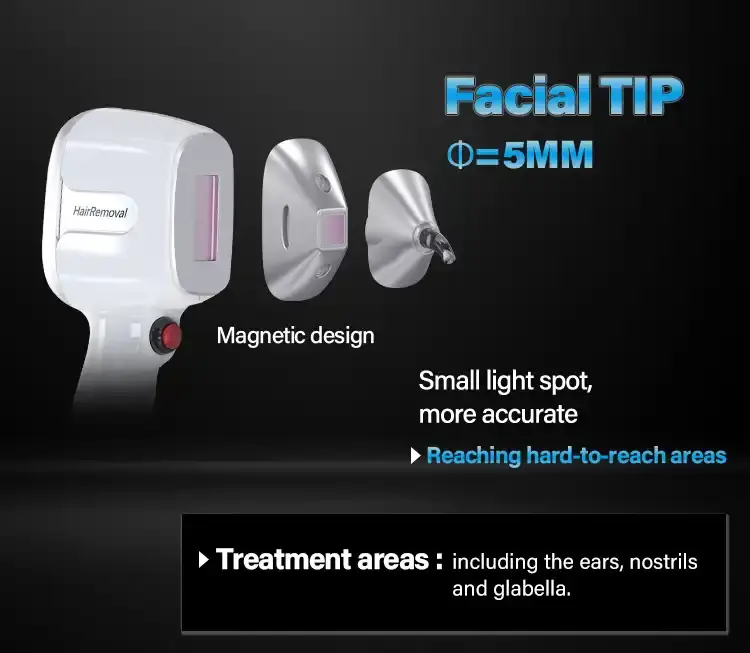
In a diode 808 laser machine, advanced temperature control ensures patient safety and comfort. Four cooling layers: sapphire contact cooling (1–5°C), TEC thermoelectric cooling removing laser bar heat, semiconductor refrigeration stabilizing internal components, and water circulation dissipating excess thermal energy. This multi-system approach enables higher energy delivery without epidermal damage. The 12x20mm spot size balances precision and coverage, treating large areas in 20–30 minutes.
Evaluating the Effectiveness of Diode 808 Laser for Hair Removal
Before deciding to buy beauty tools, you need to know how it will perform clinically, how efficiently it will run, and how satisfied your clients will be with it. How well your laser hair removal technology works has a direct effect on your practice's image and its ability to make money.
Clinical Efficacy Across Treatment Cycles
Dermatology journal studies show 70–80% hair reduction after 6–8 sessions spaced 4–8 weeks apart. Journal of Dermatological Treatment reported 78% average hair density reduction at 12 months with 89% patient satisfaction. Technology works best on anagen-phase hair (20–30% of follicles at any time), explaining why multiple sessions are necessary to capture all follicles during active growth.
Performance Across Fitzpatrick Skin Types
The 808nm wavelength's deeper penetration and lower epidermal absorption enable safe treatment of Fitzpatrick types I–VI—unlike older systems risky for darker skin. American Journal of Cosmetic Surgery published data showing excellent results in darker skin patients with proper parameter selection preventing hyperpigmentation or burns. The 1064nm wavelength provides additional safety margin for highly pigmented skin, expanding market reach.
Client Comfort and Experience
Patient comfort directly impacts treatment completion rates and referrals. Professional diode platforms' integrated cooling reduces pain perception dramatically. Client surveys indicate 85% find treatments acceptable to comfortable—feeling like warm rubber band snaps versus sharp pain with older technologies. This improved comfort reduces topical anesthetic needs, streamlining treatment workflows. High-performance models with 10Hz repetition rate enable full back treatments in 20–25 minutes.
Diode 808 Laser Machine vs. Other Hair Removal Technologies
Teams in charge of buying things have to compare different technologies, including the diode 808 laser machine, to find the best mix between client demand, clinical performance, and running costs. It's helpful to know the pros and cons of each platform when making smart investing choices.
Comparative Analysis of Laser Technologies
Alexandrite (755nm) is fast and effective for light skin/dark hair but has limited safety for brown skin. Nd:YAG (1064nm) safely treats all skin types but requires more sessions. IPL uses broad-spectrum light, making hair removal less consistent due to scattered energy. Electrolysis is permanent but time-consuming—treating one follicle at a time, impractical for large areas. The 808nm diode balances safety, speed, and efficacy.
Total Cost of Ownership Analysis
Professional systems' quality laser bars deliver 20 million pulses before replacement—thousands of full-body treatments before consumable costs emerge. IPL flashlamps require replacement every 100,000–300,000 pulses, creating ongoing expenses. Diode systems use 1200–2400W during operation. Two-year comprehensive warranties protect initial investment. ROI depends on local pricing ($200–500/session), typical treatments (6–8 sessions), and patient volumes. Most practices achieve payback in 8–14 months.
Evaluating Manufacturer Reputation and Support
Laser power (600W–1200W) significantly influences treatment speed and efficacy. Adjustable energy output (1–120 J/cm²) enables customization for fine facial hair to coarse body hair. Spot size (12x20mm) balances precision and coverage. Adjustable frequency (1–10Hz) lets operators match treatment speed to body area and client tolerance. User-friendly 12.1-inch tablet interface with pre-programmed routines speeds staff training while allowing manual parameter adjustment.
Practical Guide to Procuring Diode 808 Laser Machines
To buy strategic tools, you need to carefully look at the technical specs, the supplier's skills, and the company's finances. A methodical approach to buying will protect your investment and make sure that the platform you choose meets the practical needs of your practice.
Essential Technical Specifications to Evaluate
Laser output power (600W–1200W) directly impacts treatment efficacy and speed. Higher power enables shorter pulse lengths, increasing effectiveness while reducing pain. Adjustable energy output (1–120 J/cm²) allows customization for fine facial hair to coarse body hair. The 12x20mm spot size balances precision and coverage—treating large areas quickly while focusing on smaller body parts. Adjustable frequency (1–10Hz) matches treatment speed to anatomy and client tolerance. A 12.1-inch tablet interface with pre-programmed routines speeds staff training while allowing manual parameter adjustment.
Warranty Coverage and Service Agreements
Full guarantee terms protect against problems with the way the product was made and parts that break too soon. All important parts, like laser bars, cooling systems, power sources, and control electronics, should be covered by a normal two-year warranty. Make it clear what normal wear is and what hidden flaws are, especially when it comes to laser bar degradation. Some makers let you choose an extended warranty or a separate maintenance plan that comes with regular service visits and faster technical help. Knowing how to file a claim before you buy something will save you a lot of trouble later on. Find out if the warranty service needs sending the item to a central location or if it can be fixed on-site. Check out the average reaction times for questions about technical help and orders for parts. Advance repair programs that send new units before broken equipment is returned may help practices with more than one treatment room keep their income steady.
Customization and OEM Opportunities
Practices that want to make their name stand out might like the ability to customize. With OEM services, you can put your practice's name on the device's case and user interface, which helps your brand stand out in treatment rooms and marketing materials. Branding usually has a minimum order quantity that ranges from one unit for a simple image application to five to ten units for full custom color schemes and interface changes. Language localization makes sure that employees can use tools in their own language, which cuts down on mistakes and boosts productivity in markets with many languages spoken. Customizing colors lets tools match the look of the treatment room, making a unified visual space that makes the client experience better.
Best Practices for Using and Maintaining Diode 808 Laser Machines
To get the best return on investment, you need to do more than just buy good tools. You also need to follow strict operating procedures. When you use and take care of your devices properly, they last longer and work better every time, which will help your image.
Operator Training and Certification
Laser treatments that are safe and successful with a diode 808 laser machine are built on thorough training for the staff. Manufacturers should give beginning training on how to use the gadget, follow safety rules, choose treatment parameters, and handle bad events. Theoretical information, like knowing about different types of skin and hair and how lasers affect tissue, should be combined with hands-on practice doing treatments while being supervised. Staff members stay up to date on new best practices and improved care methods through ongoing training. Regular refresher training presents new features or applications and emphasizes the right way to do things. Many regulatory areas need specific laser safety training and licensing. Check with your local government to see what they need and make sure your team keeps the right qualifications. Choosing a laser safety officer to make sure that rules are followed and training is coordinated helps make sure that all users follow the same standards.
Preventive Maintenance Protocols
Unexpected breakdowns that hurt business relationships and slow down operations can be avoided with regular repair. As part of daily maintenance, the handpiece window should be cleaned with approved solutions to avoid buildup of residue that blocks energy flow. The cooling system lines should also be physically checked for leaks or kinks, and the water tank should be filled to the right level. As part of weekly jobs, all functions of the cooling system must be tested, and any changes in performance that could mean problems are starting to appear must be recorded. Every month, maintenance for the diode 808 laser machine includes more thorough system checks, such as adjusting energy output to make sure correct delivery, checking electrical connections for corrosion or looseness, and clearing dust from ventilation ports that can make it harder for the system to cool down. By keeping detailed repair logs for the diode 808 laser machine, you can find trends that show when a part is likely to break, so you can replace it before it does. Professional service once a year by factory-trained experts gives the system a more thorough checkup that includes looking at the internal parts, replacing the cooling system fluid, and doing full electrical testing. This professional control finds problems that aren't seen during normal operation. This stops small issues from getting worse and leading to major fails.
Troubleshooting Common Operational Issues
Knowing about common technology problems and how to fix them cuts down on downtime and the cost of service calls. Less energy output is often caused by dirty handpiece screens or poor thermal connection between the cooling system and the skin. These problems can usually be fixed by cleaning the equipment and learning the right way to use it. When the cooling system fails, error messages generally mean that there isn't enough water in the system, there are air bubbles in the circulation lines, or the filters are clogged. These are problems that operators can usually fix without needing expert help. Treatment results that aren't consistent may be caused by bad practice rather than a problem with the tools. Making sure there is even skin touch pressure, the right amount of time between treatment passes, and the right pulse frequency stops uneven results. When real equipment problems happen, keeping thorough records of symptoms, error codes, and working conditions speeds up analysis and repair from afar.
Conclusion
The diode 808 laser machine is a smart purchase that meets the growing need among customers for effective, long-lasting hair removal options. This technology is an important part of current aesthetic techniques because it has been shown to work on a wide range of skin types and is easy to use and comfortable for patients. When B2B buyers are looking at equipment choices, they should give more weight to makers with long histories of quality, strong guarantee protection, and complete support networks. The initial input of cash usually pays off within the first year of business through new clients and ongoing treatment fees. By following the right training and care steps, practices can make devices last longer and get regular results that keep clients coming back and get them to refer others.
FAQ
1. What skin types can be safely treated with diode laser hair removal?
When the settings are set correctly, modern 808nm diode devices can safely treat Fitzpatrick skin types I through VI. Lighter skin types (I–III) usually react well to normal protocols. Darker skin types (IV–VI), on the other hand, needs lower fluence levels and may benefit from the 1064nm wavelength choice. Professional devices with cooling systems protect the epidermis of all skin types. However, professionals should do try spots on darker skin before treating big areas to make sure they have the right settings.
2. How many treatment sessions do clients typically require for optimal results?
Most clients get the results they want after 6 to 8 sessions, split 4 to 8 weeks apart, based on where the problem is located and the type of hair. Face and other areas affected by hormones may need 8–10 treatments. The time between treatments is timed to coincide with hair growth cycles so that lasers can damage hair cells while they are active. To deal with any revival of the follicles, maintenance sessions may be suggested every 6 to 12 months.
3. What warranty and support should I expect from equipment manufacturers?
Manufacturers with a good reputation cover all important parts with guarantees that last at least two years. This includes laser bars, cooling systems, and electronics. Good providers offer a variety of ways to get help, such as by phone, email, and video chat, and they usually answer technical questions within 24 hours. Training should come with the buy and cover both the basics and how to use it in real life. Find out what parts are available and how long it usually takes to get them so you can figure out how quickly fixes can be done.
Partner with Taibo Beauty for Your Diode 808 Laser Machine Needs
At Xi'an Taibo Laser Beauty Company, we've spent more than 15 years improving the ways we make diode 808 laser machine so that they can meet the strict needs of professional beauty salons. Our machines have 20 million pulse American laser bars that were brought in from other countries, multi-layer cooling systems that keep clients comfortable, and easy-to-use screens that make things run more smoothly. As a maker of direct diode 808 laser machine, we offer reasonable prices for both one-unit sales and large orders. We also offer a wide range of OEM customization options. Our team offers thorough training, quick technical support, and original new parts that are backed by a two-year guarantee. Contact susan@taibobeauty.com to talk about your unique needs and get a full quote that fits your business plan, whether you're starting a new practice or upgrading old equipment.
References
1. Anderson, R.R., & Parrish, J.A. (1983). Selective photothermolysis: precise microsurgery by selective absorption of pulsed radiation. Science, 220(4596), 524-527.
2. Haedersdal, M., Beerwerth, F., & Nash, J.F. (2011). Laser and intense pulsed light hair removal technologies: from professional to home use. British Journal of Dermatology, 165(Suppl 3), 31-36.
3. Gold, M.H., & Bell, M.W. (2013). Laser hair removal: a review and comparison of currently available systems. Journal of Drugs in Dermatology, 12(3), 286-292.
4. Rao, J., & Goldman, M.P. (2005). Multicenter clinical evaluation of a novel 810 nm diode laser for hair removal. Dermatologic Surgery, 31(4), 428-434.
5. Sadick, N.S., & Makino, Y. (2004). Selective electro-thermolysis in aesthetic medicine: a review. Lasers in Surgery and Medicine, 34(2), 91-97.
6. Lanigan, S.W. (2003). Management of unwanted hair in females. Clinical and Experimental Dermatology, 28(4), 369-373.





YOU MAY LIKE