
How does a q switch 1064 laser work for tattoo removal?
2026-07-30 09:59:00
The q switch 1064 laser operates through a photoacoustic mechanism that shatters tattoo ink particles into microscopic fragments. When ultra-short pulses lasting only 6 nanoseconds strike pigmented areas, they generate intense pressure waves that mechanically fracture ink deposits without burning surrounding tissue. The 1064 nm wavelength penetrates deeply into the dermis where most tattoo pigments reside, targeting black and dark blue inks with exceptional precision. This selective photothermolysis allows the body's lymphatic system to naturally eliminate fragmented particles over subsequent weeks, gradually fading tattoos with minimal scarring risk across all skin types.
Understanding Q-Switch 1064 Laser Technology
A lot has changed in the last twenty years in the technology used to remove tattoos effectively. Knowing the science behind it helps aestheticians buy the right equipment. Since Taibo opened in 2009, we've seen how laser technology has changed the way colour is treated.
The Science Behind Q-Switching
Q-Switched is a quality-switching device inside the laser cavity that saves energy and then sends it out in very short, strong waves. Q-Switched systems store energy in a Nd:YAG (Neodymium-doped Yttrium Aluminium Garnet) crystal, while continuous wave lasers send out steady light beams. When the switch is turned on, this saved energy is released in bursts of nanoseconds. Our systems give pulses of 6 nanoseconds, which creates megawatt-level power at their peak. This focused energy delivery is very important for breaking up stubborn ink particles that have settled deep in the skin.
Why 1064 nm Wavelength Matters?
The wavelength of 1064 nm is in a good spot in the infrared spectrum. It has a number of clinical benefits that make it especially useful for tattoo removal services. Less melanin is absorbed at this wavelength compared to shorter wavelengths. This lowers the risk of hypopigmentation in people with darker skin. This trait is especially helpful for dermatology clinics that treat a wide range of people, since it makes treatment safe for Fitzpatrick skin types I through VI. The deeper entry feature can reach ink layers 2 to 4 mm below the skin's surface, which is where most professional tattoos are. This wavelength is very good at absorbing dark pigments like black, dark blue, and deep green. This makes it the best wavelength for getting rid of common tattoo colours.
Photoacoustic Effect Explained
The photoacoustic mechanism is what makes current laser tattoo removal with the q switch 1064 laser different from past methods that used heat. When nanosecond pulses from the Q-Switch 1064 laser hit tattoo particles, they cause the particles to quickly expand thermally and then immediately shrink. Acoustic shock waves are made by this mechanical stress, and they break up pigment clumps into pieces that are small enough for macrophage cells to digest. The photoacoustic method of the Q-Switch 1064 laser doesn't damage the collagen and elastin fibres around it as much as photothermal ablation, which uses long-term heat. This preservation of tissue architecture with the Q-Switch 1064 laser means better cosmetic results with less chance of scarring, which is an important thing for spas and beauty salons that want to market themselves as high-end service providers. The Q-Switch 1064 laser's deeper penetration also makes it particularly effective for darker skin types and for treating black and blue pigments, expanding the range of clients that can be safely served.
How Q-Switch 1064 Laser Works Specifically for Tattoo Removal?
Understanding how things work helps buying managers match the specs of tools with what's needed in the office. To get the best pigment clearance, the treatment procedure includes precise energy release with planned pulse timing.
The Pigment Fragmentation Process
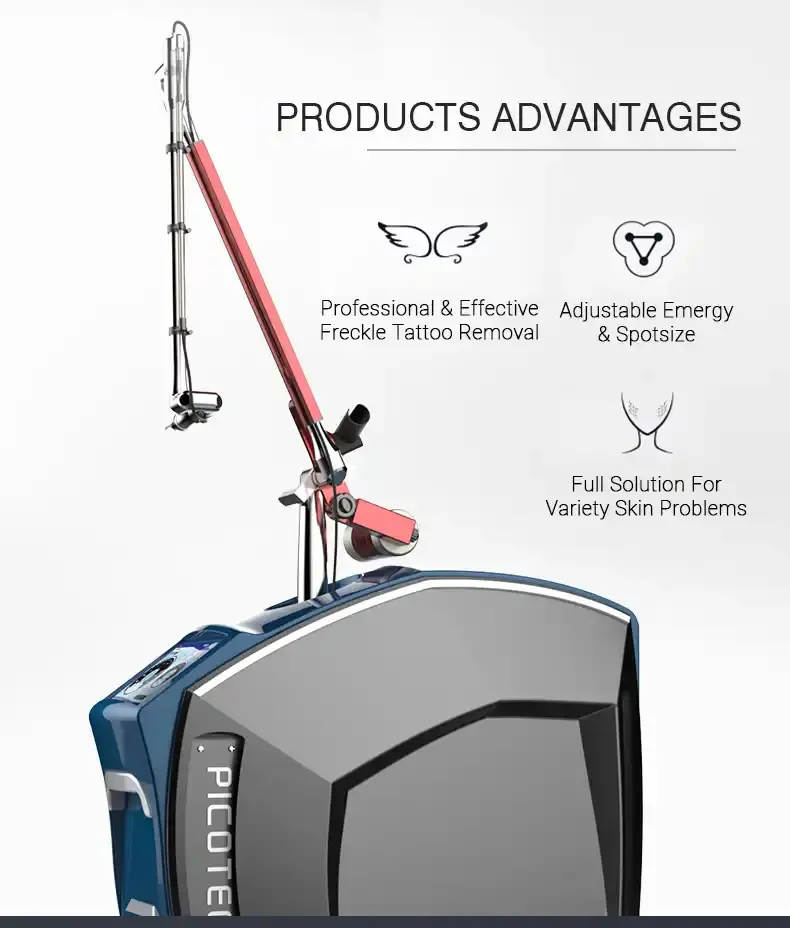
During each treatment, the laser handpiece sends bursts of controlled energy to the target area through an arm system that can move. Our systems have spot sizes that can be changed from 2 mm to 10 mm, so operators can tailor treatment coverage to the size and location of the tattoo. The laser's energy moves through the epidermis with little absorption, focusing on pigment deposits in the dermis. When pulses hit ink droplets, they quickly absorb energy, which heats up a small area and causes it to explode. Larger pigment particles are broken up into pieces 10–100 nanometres in diameter by this mechanical disruption. Over the next 8 to 12 weeks, the body's immune system slowly gets rid of these smaller bits through lymphatic drainage. This makes the treatment area lighter over time.
Critical Treatment Parameters
Energy density, which is measured in millijoules per square centimetre (mJ/cm²), has a direct effect on how well a treatment works. Our high-tech systems can deliver up to 2000 mJ/cm² at the 1064 nm wavelength, which is strong enough for professional tattoo removal while still being safe. The repetition rate of 1 to 10 Hz lets operators treat larger areas quickly without losing accuracy. The length of the pulse is also very important. The 6-nanosecond pulse width stays within the thermal relaxation time of the tattoo particles, which makes sure that the photoacoustic effect wins out over thermal damage. Wellness centers that use these machines like how the dual air and water cooling system keeps the machines running at a constant level even during long treatment sessions. This keeps the machines from burning, which could affect their output stability.
Comparing Laser Technologies
The tattoo removal market offers diverse laser systems with distinct advantages. The 532 nm wavelength targets red, orange, and yellow pigments, while 755 nm Alexandrite lasers address green and blue inks. Our picosecond systems use 350ps pulses for finer particle fragmentation, potentially reducing session counts. Q-Switched nanosecond devices remain cost-effective for clinics, delivering proven results at accessible price points for establishing or expanding colour treatment services.
Safety Guidelines and Potential Side Effects
To keep both patients and operators safe, professionals who remove tattoos must strictly follow safety rules. Aesthetic businesses depend on consistent, problem-free results to keep their good clinical reputation.
Operator Safety Requirements
The 1-kilometer nominal ocular hazard distance (NOHD) of our q switch 1064 laser systems makes it very clear that you must wear eye protection at all times. Everyone who works in the treatment room has to wear safety glasses that block 1064 nm, 755 nm, and 532 nm laser light when operating the Q-Switch 1064 laser. Our CE and ISO13485 certifications show that our Q-Switch 1064 laser equipment meets safety standards for medical devices in Europe and around the world. This is very important for distributors who work with regulated markets. Training guidelines for the Q-Switch 1064 laser should stress the right way to handle handpieces, what to do in an emergency, and how to plan regular repair. To keep the built-in cooling system of the Q-Switch 1064 laser from overheating, it needs to be checked on a regular basis. The self-inspection function on the Q-Switch 1064 laser, which has more than 30 built-in monitoring points, sends real-time alerts for any problems with how things are working. Regular calibration of the Q-Switch 1064 laser's energy output is also recommended every 6–12 months to maintain treatment consistency and ensure patient safety.
Patient-Related Considerations
Some instant side effects that are common are redness, swelling, and small amounts of bleeding at the treatment sites. These effects usually go away in 7 to 10 days. Before treatment, patients should be given detailed instructions that include staying out of the sun, stopping medicines that make the skin more sensitive to light, and setting realistic goals for how long treatment will take. Some things that shouldn't be done are pregnancy, active skin diseases, a history of keloid, and recent use of accutane. Care instructions after treatment that stress gentle cleansing, broad-spectrum sun protection, and moisturising help lower the risk of complications. Hyperpigmentation can happen to people with darker skin, but it usually goes away on its own within 3 to 6 months. Hypopigmentation is rare if the right parameters are used, but it is a longer-term problem that needs lower energy levels during the first sessions.
Quality Control and Compliance
When biomedical engineers look at tools, they should focus on systems whose output steadiness has been proven. To get reliable clinical results, the energy consistency, which is measured by the coefficient of variation, should stay below 3–5% for 1,000 pulses in a row. By using beam profile analysis to make sure that the energy is spread evenly across the spot, hot spots that could cause texture differences are avoided. Our two-year guarantee covers all non-consumable parts. This shows how confident we are in the quality of our making, which has grown over 15 years of experience. The modular design makes maintenance easy, so equipment downtime that could mess up appointments is kept to a minimum. Distributors that work with foreign markets really like our complete set of documents that help with legal applications in many places.
Procurement Insights: How to Choose and Buy Q-Switch 1064 Laser Machines?
To choose the best laser platform, you need to weigh the clinical performance, operational reliability, and total cost of ownership. Strategic choices about buying can have a big effect on how profitable a service is and how happy its patients are.
Evaluating Technical Specifications
The main performance indicators are peak energy output, wavelength choices, and pulse duration. Multi-wavelength systems that can work with 1064 nm, 755 nm, and 532 nm light provide more treatment options, which makes the higher original investment worth it because they can provide more services. With spot sizes that can be changed, both small tattoos for decoration and big body art can be treated effectively. The design of the cooling system has a direct effect on the duty cycle and the comfort of the operator. Our system uses both air and water cooling to keep performance stable during multiple treatments without needing long breaks to cool down. The design of the user interface affects how much training is needed and how efficiently operations run. Controls that are easy to use make it easier for new employees to learn.
Supplier Evaluation Criteria
Experience and track record of the manufacturer should be carefully looked at. Taibo has been making things for 15 years and has exported to more than 180 countries, which shows that they are well-liked by customers and can keep running. When you buy directly from the factory, you skip the markups that come from middlemen and get direct expert help. After-sales service is especially important for equipment that needs special maintenance. Our technical support is available 24 hours a day, 7 days a week, and our training programs are thorough. This helps clinics get the best results from the moment the equipment is installed. OEM and ODM capabilities are important for distributors who want branded solutions or custom configurations. Exclusive territory agreements and bulk purchase pricing also help distributors make more money.
Financial Considerations
A full cost study should include the price of buying something, the cost of shipping and customs, the cost of training, the cost of goods that will be used up quickly, and the cost of repairs. International purchases are made easier by our clear pricing structure and desire to accept a variety of payment methods, such as bank transfers and credit cards. The two-year warranty covers costs and gives you peace of mind during the important early working time. To figure out the return on investment, you should look at how much tattoo removal treatments cost in your area, how many patients you expect, and where you stand in the market compared to your competitors. Many clinics get their money back on their equipment within 12 to 18 months thanks to steady customer flow. This makes laser tattoo removal a good way for established beauty practices to make extra money.
Maximizing Tattoo Removal Outcomes with Q-Switch 1064 Laser
The success of a clinical trial depends on choosing the right patients, parameters, and full post-treatment plans. These things make the difference between great results and just good ones.
Treatment Planning Strategies
A thorough consultation with the patient sets realistic goals for q switch 1064 laser treatment and gathers important information about the tattoo's features. Professional tattoos with a lot of ink usually need 6–10 sessions with the Q-Switch 1064 laser, spaced 8–12 weeks apart. On the other hand, amateur tattoos with less ink usually only need 4–6 sessions of Q-Switch 1064 laser treatment. Tattoo age affects how well it responds to the Q-Switch 1064 laser—older tattoos with partially worn-out ink often come off easier than new tattoos. Location is very important; places with good circulation, like the chest and the proximal limbs, clear faster with the Q-Switch 1064 laser than places farther away, like the ankles and fingers. Standardised photography taken in consistent lighting conditions allows for objective tracking of progress, which patients appreciate as they go through multiple sessions of Q-Switch 1064 laser treatment. The 1064nm wavelength of the Q-Switch 1064 laser is particularly effective for darker inks such as black and blue, while other wavelengths may be required for lighter pigments.
Synergistic Treatment Approaches
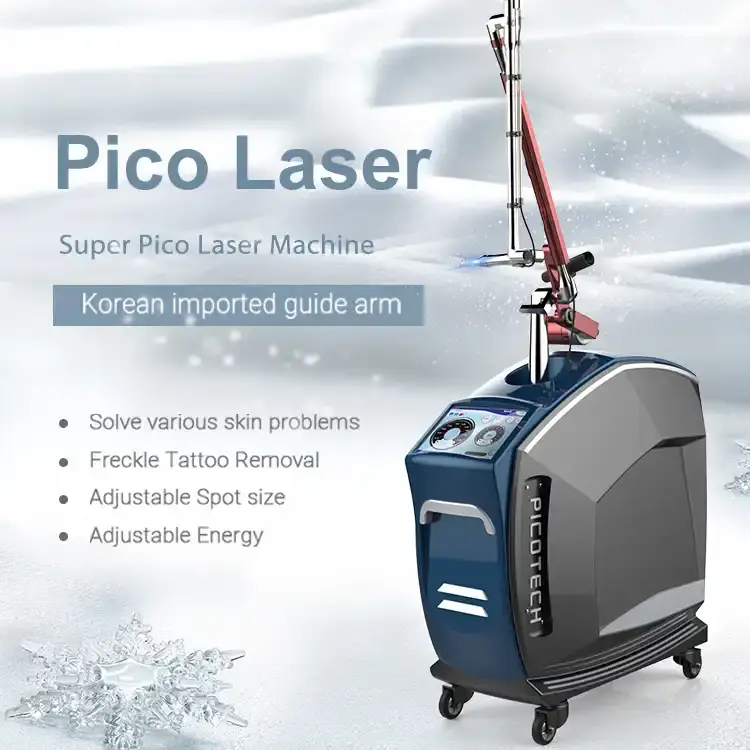
Using laser therapy along with other therapies that work well together can help difficult cases get better results. When done 4 to 6 weeks after Q-Switched sessions, fractional co2 laser treatment may speed up the removal of ink through controlled dermal remodelling. This is especially helpful for tattoos that have reached a plateau in response. In between sessions, treatments like vitamin C serums and growth factors that are put on the skin help the tissue heal. Some clinics use the same laser platform to do our carbon peeling protocol, which helps with post-inflammatory pigmentation and gives patients other benefits they like, like skin rejuvenation. This range of treatments, made possible by the fact that our system can also be used for tattoo removal and carbon burning, makes the best use of tools and increases the chance of making money.
Business Performance Metrics
Service optimisation is based on keeping track of clinical outcomes and financial performance. Some of the most important success measures are the number of tattoos removed, the number of satisfied patients, the number of complications, and the amount of money made per treatment hour. In the United States, the average cost of a treatment session is between $200 and $500. The price depends on the size of the tattoo and where the customer lives, with higher prices in bigger cities. Reliable equipment that consistently delivers good results cuts down on the need for extra treatments and care of complications that eat away at profits. People who care about quality and are willing to pay more for professional movers over questionable alternatives respond well to ads that highlight advanced technology and safety certifications.
Conclusion
Professional tattoo removal services use the q switch 1064 laser, which is a tried-and-true device that works reliably and effectively. Aesthetic practices can give reliable results that build strong reputations if they understand the photoacoustic process, safety rules, and treatment optimisation methods for the Q-Switch 1064 Laser. When making a procurement decision for the Q-Switch 1064 Laser, the total ownership costs, supplier support capabilities, and technical specifications should all be taken into account. The Q-Switch 1064 Laser technology can be used for more than just getting rid of tattoos; it can also be used to treat pigmentation and make skin look younger. This makes the Q-Switch 1064 Laser equipment more useful for a wide range of patients. As the number of tattoos and the number of people wanting to get rid of them both keep going up, clinics that invest in quality Q-Switch 1064 Laser systems will be able to keep growing in this expanding market segment. The Q-Switch 1064 Laser's versatility across multiple skin types and indications ensures a strong return on investment for forward-thinking practices.
FAQ
1. What tattoo colors respond best to 1064 nm wavelength treatment?
Because black, dark blue, and deep green paints absorb light very well at 1064 nm, this wavelength is the best choice for the most popular tattoo colours. For best removal, red, orange, and yellow inks need shorter wavelengths, like 532 nm. Multi-wavelength devices that can work with both 1064 nm and 532 nm wavelengths can cover a wide range of tattoo colours.
2. How many treatment sessions does complete tattoo removal typically require?
For professional tattoos, you should have 6–10 sessions, 8–12 weeks apart. For DIY tattoos, you should only need 4–6 sessions. Treatment duration is greatly affected by factors such as the amount of ink used, the age of the tattoo, its location, the patient's immune system, and the makeup of the ink. Setting realistic goals during the first consultation keeps patients from being unhappy and helps them stick to their treatment plan.
3. Are there contraindications that prevent laser tattoo removal treatment?
The main reasons why you shouldn't use isotretinoin are pregnancy, active skin infections, a history of keloid formation, recent use of isotretinoin, and photosensitive medical conditions. To lower the risk of hypopigmentation, patients with darker skin need to be given conservative parameters. Before starting treatment, it is important to carefully look over the patient's medical history and assess their skin. This will ensure their safety and help them get the best results.
Partner with a Trusted Q Switch 1064 Laser Manufacturer
Taibo Laser Beauty is ready to help your clinic add more tattoo removal services by giving you direct access to approved laser systems that are backed by 15 years of manufacturing excellence. When it comes to clinical-grade performance, our q switch 1064 laser platforms are made with carefully designed parts that allow for 6-nanosecond pulse generation, tri-wavelength capability (1064/755/532 nm), and energy output up to 2000 mJ/cm². The dual cooling architecture keeps the machine running smoothly even when treatment schedules are very tight, and the CE and ISO13485 certifications show that it meets international safety standards.
As a specialised Q-Switch 1064 Laser provider that works with businesses in over 180 countries, we know the specific needs of beauty businesses ranging from small spas to dermatology groups with multiple locations. As part of our full support, we offer a two-year warranty, technical support 24 hours a day, detailed operation training, and OEM customisation for distributors who want branded solutions. Our experienced team can help you find the right technology for your clinical and business goals, whether you're starting a tattoo removal service or upgrading the equipment you already have. Get in touch with susan@taibobeauty.com to talk about how our factory-direct pricing and full implementation support can help your practice grow faster with laser technology that professionals all over the world trust.
References
1. Anderson, R.R., & Parrish, J.A. (1983). Selective photothermolysis: precise microsurgery by selective absorption of pulsed radiation. Science, 220(4596), 524-527.
2. Ross, V., Naseef, G., Lin, G., Kelly, M., Michaud, N., Flotte, T.J., ... & Anderson, R.R. (1998). Comparison of responses of tattoos to picosecond and nanosecond Q-switched neodymium: YAG lasers. Archives of Dermatology, 134(2), 167-171.
3. Bernstein, E.F., Schomacker, K.T., Basilavecchio, L.D., Plugis, J.M., & Bhawalkar, J.D. (2012). Treatment of tattoo removal with the picosecond Alexandrite laser: a prospective trial. Lasers in Surgery and Medicine, 44(S24), 13-13.
4. Kilmer, S.L., & Anderson, R.R. (1993). Clinical use of the Q-switched ruby and the Q-switched Nd:YAG lasers for treatment of tattoos. Journal of Dermatologic Surgery and Oncology, 19(4), 330-338.
5. Sardana, K., Ranjan, R., & Ghunawat, S. (2015). Optimising laser tattoo removal. Journal of Cutaneous and Aesthetic Surgery, 8(1), 16-24.
6. Karsai, S., Krieger, C., Raulin, C., & Bäumler, W. (2012). Tattoo removal using different laser systems: a comparative study. Lasers in Surgery and Medicine, 44(8), 679-688.





YOU MAY LIKE