
HIFU Lifting Machine vs RF: Which Is Better for Skin Tightening?
2026-01-23 14:46:41
Picture this scenario: you stand in front of the mirror noticing sagging jowls, loose neck skin, and deepening wrinkles that make you look older than you feel. You want a solution without surgery, downtime, or significant risks. Two revolutionary technologies have emerged as frontrunners in non-invasive skin tightening: hifu lifting machine and radiofrequency treatments. Understanding which technology truly addresses your specific skin concerns can transform your aesthetic journey and deliver the youthful, lifted appearance you desire.
Understanding HIFU Lifting Machine Technology
When exploring advanced skin tightening solutions, the hifu lifting machine stands out as a groundbreaking technology that has revolutionized non-surgical facial rejuvenation. This innovative equipment uses high-intensity focused ultrasound energy to penetrate deep beneath the skin's surface, reaching layers that were previously only accessible through surgical facelifts. The hifu lifting machine delivers precisely targeted ultrasound waves that create thermal energy at specific depths ranging from 1.5mm to 13mm beneath the skin, with particular focus on the SMAS layer, which is the superficial musculoaponeurotic system that surgeons target during traditional facelift procedures. The mechanism behind the hifu lifting machine involves generating controlled thermal coagulation points deep within the tissue, triggering immediate contraction and initiating a natural wound-healing response. This process stimulates robust neocollagenesis, the production of fresh collagen and elastin fibers that gradually tighten and lift sagging skin over the following weeks and months. What makes the hifu lifting machine particularly effective is its ability to bypass the skin's surface entirely, leaving the epidermis intact while delivering precise energy to foundational layers where age-related structural deterioration occurs. Xi'an Taibo Laser Beauty Company's HIFU series provides reliable solutions for wrinkle removal, skin tightening, and face lifting, utilizing this proven technology that has demonstrated consistent results across diverse patient populations worldwide.
The Science Behind Ultrasound Skin Lifting
The scientific foundation of the hifu lifting machine rests on principles of focused ultrasound energy conversion and thermal tissue interaction. When ultrasound waves converge at predetermined focal points beneath the skin, they generate temperatures between 60 to 80 degrees Celsius in microscopically small volumes of tissue, creating what researchers term "thermal coagulation zones." These precisely controlled micro-injuries do not damage surrounding tissues but instead trigger the body's natural healing cascade, which includes inflammation, proliferation, and remodeling phases that continue for up to six months following treatment. During this extended healing period, fibroblast cells become activated and produce significant quantities of type I and type III collagen, the structural proteins responsible for skin firmness and elasticity. Clinical studies have demonstrated that hifu lifting machine treatments induce measurable changes in dermal thickness and SMAS layer tightening, with histological analyses confirming collagen fiber reorganization and straightening of elastic components in the mid-to-deep dermis. The beauty of this technology lies in its dual-action mechanism: immediate tissue contraction from thermal effects provides some instant improvement, while the ongoing collagen remodeling process continues to enhance results over subsequent months. The hifu lifting machine can also produce cavitation effects, where ultrasound energy creates microbubbles that collapse to generate mechanical disruption, further amplifying tissue remodeling without causing visible surface damage.
Treatment Depth and Penetration Capabilities
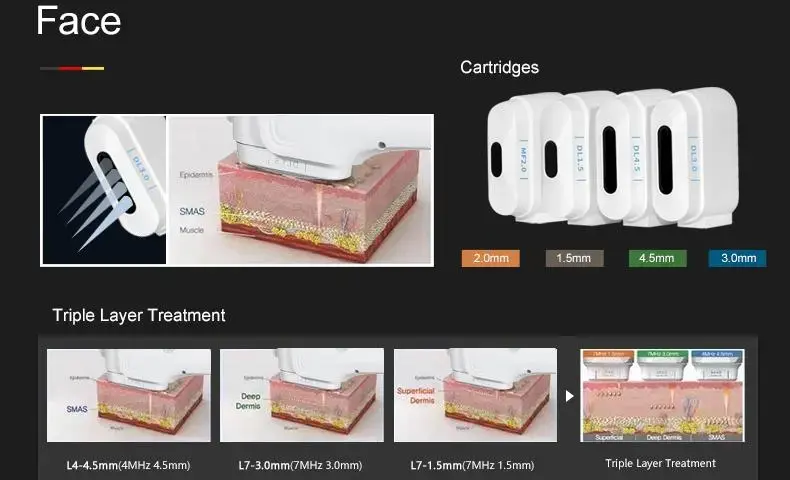
One of the most significant advantages of the hifu lifting machine is its remarkable depth penetration capabilities that distinguish it from virtually all other non-invasive skin tightening technologies. Standard hifu lifting machine devices can deliver focused energy to depths of 4.5mm, which effectively targets the SMAS layer where facial sagging originates, and some advanced systems extend their reach to 13mm for treating areas with thicker tissue composition such as the body or submental region. This depth specificity means that the hifu lifting machine can address structural laxity at its source rather than merely treating superficial skin layers, making it ideal for patients with moderate to advanced skin sagging who seek significant lifting effects without surgical intervention. The ability to customize treatment depth makes the hifu lifting machine versatile for different facial zones and patient needs. Shallow cartridges at 1.5mm target fine lines and superficial texture concerns, 3.0mm cartridges address mid-dermal wrinkles and moderate laxity, while the 4.5mm cartridges deliver the powerful lifting action by treating the foundational SMAS layer. This multi-depth capability in a single hifu lifting machine allows practitioners to create comprehensive treatment protocols that address aging at all tissue levels during one session. Xi'an Taibo Laser Beauty Company has developed hifu lifting machine systems with multiple cartridge options that enable practitioners to tailor treatments precisely to individual patient anatomy and aesthetic goals.
Radiofrequency Technology for Skin Tightening
Radiofrequency therapy represents another powerful approach to non-invasive skin rejuvenation, working through distinctly different mechanisms compared to the hifu lifting machine. RF treatments deliver electromagnetic energy that converts to thermal energy when it encounters the natural electrical resistance of tissue molecules, creating controlled heating in the dermal and subdermal layers. This heating effect typically raises tissue temperature to a therapeutic range of 40 to 48 degrees Celsius, which is sufficient to denature existing collagen fibers and stimulate new collagen production without damaging the epidermis. The immediate collagen contraction from RF heating provides instant skin tightening visible immediately after treatment, while ongoing neocollagenesis continues to improve results over the following weeks. Unlike the deep, focused penetration of the hifu lifting machine, radiofrequency energy spreads through tissue in a more diffuse pattern, primarily affecting the papillary and reticular dermis at depths of approximately 0.5mm to 4mm depending on the specific RF technology employed. Bipolar RF devices deliver energy between two electrodes on the skin surface, creating a relatively superficial heating pattern ideal for fine lines and surface texture. Monopolar RF systems generate deeper penetration by using a single surface electrode with a grounding pad elsewhere on the body, allowing energy to travel through more extensive tissue volumes. Multipolar and tripolar configurations offer intermediate depth penetration with enhanced safety profiles, as the multiple electrodes create overlapping energy fields that heat tissue more uniformly while sophisticated temperature monitoring systems prevent overheating.
Collagen Stimulation Through Heat Energy
The collagen stimulation mechanism of RF technology centers on thermal modulation of dermal fibroblast activity and direct collagen fiber modification. When RF energy heats the dermis to therapeutic temperatures, existing collagen fibers undergo immediate thermal contraction through a process called collagen denaturation, where the triple-helix molecular structure partially unfolds and then reforms in a tightened configuration. This immediate effect provides the instant skin firmness that many patients appreciate immediately following RF treatments, creating visible improvement that continues to develop. Simultaneously, the thermal stimulus activates heat shock proteins within fibroblast cells, triggering enhanced production of growth factors and extracellular matrix components including new collagen, elastin, and hyaluronic acid. The beauty of RF-induced collagen remodeling is its sustained nature, with fibroblast activation persisting for weeks following the initial treatment as the tissue continues its wound-healing response. Research demonstrates that RF treatments induce neoelastogenesis alongside neocollagenesis, meaning the skin regains not only firmness from new collagen but also resilience and bounce-back quality from new elastin fiber formation. While a hifu lifting machine creates discrete focal points of deep thermal injury, RF generates more volumetric heating across broader tissue areas, making it particularly effective for addressing diffuse skin quality concerns such as fine wrinkling, pore refinement, and overall texture smoothing rather than dramatic structural lifting.
RF Treatment Areas and Applications
Radiofrequency technology demonstrates remarkable versatility in treating various aesthetic concerns across face and body, though its applications differ somewhat from those ideal for a hifu lifting machine. RF excels in addressing early to moderate signs of aging where maintaining skin quality and preventing further deterioration are primary goals. Facial RF treatments effectively target periorbital wrinkles around the eyes, nasolabial folds, horizontal forehead lines, and general skin texture irregularities that benefit from improved collagen density and dermal thickness. The comfortable, gentle nature of RF heating makes it particularly suitable for treating delicate areas such as upper and lower eyelids where the hifu lifting machine might be too intense or where tissue thickness is insufficient for safe ultrasound penetration. Beyond facial applications, RF technology has proven highly effective for body skin tightening following weight loss or pregnancy, addressing concerns such as abdominal laxity, thigh looseness, and arm skin sagging where the hifu lifting machine might require more sessions or deliver less comprehensive improvement. The diffuse heating pattern of RF allows treatment of large surface areas efficiently, making it practical for body applications where treating with the point-by-point precision of a hifu lifting machine would be time-prohibitive. RF treatments also address skin quality concerns that extend beyond simple tightening, including improvement in skin tone, reduction of pore size, diminishment of acne scarring through remodeling, and enhancement of overall radiance through increased dermal hydration and circulation.
HIFU Lifting Machine vs RF: Key Differences
Understanding the fundamental distinctions between hifu lifting machine technology and radiofrequency treatments enables informed decision-making about which approach best addresses specific aesthetic concerns. The most critical difference lies in treatment depth and tissue targeting precision. The hifu lifting machine penetrates to the SMAS layer at 4.5mm or deeper, delivering focused thermal energy to discrete points that create structural lifting from the foundational layer upward, similar to the tissue manipulation performed during surgical facelifts. In contrast, RF technology primarily affects the dermal layers at shallower depths of 0.5mm to 4mm, creating volumetric heating that improves skin quality and provides moderate tightening through collagen remodeling but without the same degree of architectural lift. The energy delivery mechanism represents another fundamental difference that influences treatment outcomes and patient experience. A hifu lifting machine uses acoustic ultrasound waves that propagate through tissue and converge at precise focal points, creating highly localized thermal effects while completely sparing the epidermis and intervening tissues. This focused approach allows the hifu lifting machine to treat deeper structures without surface damage but can create more intense sensations during treatment as the ultrasound energy concentrates at the target depth. Radiofrequency devices deliver electromagnetic energy that disperses through tissue based on electrical conductivity, creating broader zones of moderate heating that feel warm and comfortable during treatment, often described as similar to a hot stone massage.
Treatment Intensity and Comfort Levels
Patient comfort during and after treatment varies considerably between hifu lifting machine procedures and RF therapy, with direct implications for treatment tolerance and recovery expectations. HIFU treatments delivered by a properly operated hifu lifting machine can produce varying degrees of discomfort as the focused ultrasound energy creates thermal coagulation points in deeper tissue layers. Patients commonly describe sensations ranging from mild tingling to sharp, prickly feelings that occur in brief pulses as the device delivers each ultrasound shot. The intensity of sensation correlates with treatment depth and energy level, with treatments targeting the SMAS layer at 4.5mm typically producing more pronounced sensations than superficial passes. However, modern hifu lifting machine systems from manufacturers like Xi'an Taibo Laser Beauty Company incorporate comfort optimization features and allow practitioners to adjust energy parameters to balance efficacy with tolerability. Radiofrequency treatments generally provide a much more comfortable experience that many patients find relaxing and enjoyable, with the warm sensation feeling therapeutic rather than uncomfortable. The gradual, volumetric heating produced by RF technology rarely causes significant discomfort when performed with appropriate technique and temperature monitoring systems. Most patients can undergo RF treatments without topical anesthetic, though some practitioners apply numbing cream for particularly sensitive patients or when using higher energy settings. Post-treatment comfort also differs, with hifu lifting machine procedures occasionally producing mild tenderness or tingling sensations that persist for a few days as the thermal coagulation zones undergo healing, while RF treatments typically leave no residual discomfort once the warming sensation dissipates immediately after the session concludes.
Results Timeline and Longevity
The timeline for visible results and duration of improvement represent important practical differences when comparing hifu lifting machine treatments to RF therapy. HIFU treatments produce a unique results trajectory characterized by some immediate tightening from acute thermal tissue contraction, followed by gradual progressive improvement as neocollagenesis proceeds over the subsequent two to six months. Many patients notice initial lifting effects within days of their hifu lifting machine treatment, but the full dramatic results emerge around the three-month mark when collagen remodeling reaches its peak. This delayed gratification requires patient understanding and realistic expectations, though the eventual outcomes from a properly performed hifu lifting machine treatment can be quite remarkable. The longevity of hifu lifting machine results typically extends from 12 to 18 months or longer, with some patients maintaining visible improvement for up to two years following a single comprehensive treatment. The durability of HIFU outcomes relates to the substantial structural changes induced in the SMAS layer and deep dermis, which continue providing architectural support even as the natural aging process continues. Maintenance treatments with a hifu lifting machine are generally recommended annually or semi-annually to sustain optimal results. Radiofrequency treatments, by comparison, often provide more immediate visible improvement from the instant collagen contraction, with results continuing to develop over the following four to 12 weeks as ongoing collagen synthesis occurs. However, RF results typically demonstrate shorter duration compared to hifu lifting machine outcomes, with most patients requiring regular maintenance sessions every three to six months to preserve their improvements.
Treatment Sessions and Maintenance
The number of treatment sessions required and maintenance protocols differ significantly between hifu lifting machine and RF approaches, influencing both the total investment and ongoing commitment needed. Most patients achieve their desired outcomes with a single comprehensive hifu lifting machine treatment session that typically lasts 60 to 90 minutes depending on the treatment areas covered. The intensive nature of HIFU therapy and its ability to produce substantial collagen remodeling from one treatment makes it efficient for patients seeking significant improvement without multiple appointments. Some practitioners recommend a series of two sessions spaced four to six weeks apart for patients with more advanced laxity or those seeking maximum results, but many achieve satisfactory outcomes from a single session. Radiofrequency protocols, conversely, typically involve a series of treatments to build cumulative results, with most effective protocols consisting of four to eight sessions performed weekly or biweekly. The gentler, more gradual collagen stimulation from RF makes serial treatments necessary to achieve optimal improvement, though patients often appreciate seeing progressive enhancement throughout the treatment course. This serial approach allows practitioners to build results incrementally while monitoring patient response and adjusting parameters accordingly. While the hifu lifting machine demands fewer appointments initially, both technologies require ongoing maintenance to combat continued aging, though maintenance intervals differ substantially as previously described.
Choosing Between HIFU Lifting Machine and RF
Selecting the optimal technology between a hifu lifting machine and radiofrequency treatment depends on multiple patient-specific factors including the severity of skin laxity, treatment area characteristics, aesthetic goals, tolerance for discomfort, budget considerations, and timeline expectations. Patients presenting with moderate to advanced facial sagging, particularly in areas such as jowls, submental fullness, brow ptosis, and neck laxity, represent ideal candidates for hifu lifting machine treatments that can deliver the structural lifting needed to address these concerns effectively. The ability of a hifu lifting machine to target the SMAS layer makes it uniquely capable of producing results that approach surgical outcomes without incisions or significant downtime. Conversely, patients with mild laxity, primary concerns about skin texture and quality rather than sagging, or those seeking preventive treatments before significant aging occurs may find radiofrequency therapy more appropriate for their needs. RF technology excels at addressing fine lines, pore refinement, overall skin radiance, and maintaining firmness in younger patients who want to delay the onset of more significant aging. The comfortable nature of RF treatments and immediate visible improvement make this approach appealing to patients who prefer a gentler introduction to aesthetic procedures or who have anxiety about more intensive treatments like those delivered by a hifu lifting machine.
Skin Type and Condition Considerations
Different skin types, conditions, and ethnic backgrounds respond variably to hifu lifting machine and RF technologies, making individualized assessment essential for optimal outcomes. Both technologies are generally safe across all Fitzpatrick skin types from very fair to very dark, as neither relies on selective photothermolysis like laser treatments that can pose higher pigmentation risks in darker skin. However, the hifu lifting machine requires adequate subcutaneous tissue thickness to safely accommodate the focused ultrasound energy without creating excessive discomfort or surface irregularities. Very thin skin or areas with minimal subcutaneous fat may not provide sufficient cushioning for deep HIFU penetration, making RF a safer alternative for such patients. Patients with active inflammatory skin conditions, recent facial filler injections, or metal implants in the treatment area require special consideration and may have contraindications to one or both technologies. The hifu lifting machine should not be used over permanent facial implants or within areas containing injectable fillers due to the risk of implant displacement or uneven filler distribution from the focused ultrasound energy. Radiofrequency treatments near metal dental work or implants may be contraindicated with certain RF devices that generate electromagnetic fields potentially affecting metal structures. Xi'an Taibo Laser Beauty Company provides comprehensive training and technical support to help practitioners navigate these considerations and select appropriate candidates for their hifu lifting machine systems.
Combining HIFU and RF Technologies
Many advanced aesthetic practices have discovered that combining hifu lifting machine treatments with radiofrequency therapy creates synergistic benefits that exceed results achievable with either technology alone. This combination approach addresses skin aging at multiple tissue depths simultaneously, with the hifu lifting machine providing deep structural lifting from the SMAS layer while RF optimizes superficial skin quality through dermal collagen enhancement. Patients receiving combined treatments often achieve more comprehensive facial rejuvenation with improved skin texture, refined pores, and reduced fine lines complementing the lifting and contouring delivered by the hifu lifting machine. Treatment protocols for combined therapy vary, with some practitioners performing RF and HIFU during the same session to maximize efficiency, while others prefer sequential treatments separated by several weeks to allow initial healing before introducing the secondary modality. When combining treatments, practitioners typically perform the hifu lifting machine treatment first to establish the foundational lift, then follow with RF sessions to refine surface characteristics. This layered approach addresses the full spectrum of aging changes from deep structural laxity to superficial textural concerns, providing patients with more complete rejuvenation than either technology could deliver independently. Xi'an Taibo Laser Beauty Company offers both HIFU series and fractional RF technologies that practitioners can integrate into comprehensive treatment protocols.
Safety, Side Effects, and Downtime
Both hifu lifting machine treatments and radiofrequency therapy are considered highly safe non-invasive procedures when performed by properly trained practitioners using quality equipment, though each technology presents distinct safety profiles and potential side effects. HIFU treatments with a properly calibrated hifu lifting machine rarely produce serious complications, with the most common side effects being temporary and self-limiting. Patients typically experience mild redness and swelling immediately following treatment that resolves within hours to a few days. Some individuals notice temporary tingling, numbness, or tenderness in treated areas as the thermal coagulation zones undergo healing, though these sensations generally resolve within one to two weeks. More significant but uncommon side effects from hifu lifting machine treatments can include temporary facial nerve weakness resulting in subtle asymmetry, particularly when treating near the mandible where the marginal mandibular nerve courses superficially. This typically resolves spontaneously within weeks as inflammation subsides. Bruising, though uncommon with proper technique, may occur in areas with prominent vascularity. Skin burns or blistering represent rare complications that result from excessive energy delivery or operator error, emphasizing the importance of proper training and use of certified equipment like the hifu lifting machine systems from Xi'an Taibo Laser Beauty Company that incorporate multiple safety features and energy modulation capabilities.
RF Treatment Safety Profile
Radiofrequency treatments present an excellent safety profile with side effects generally limited to transient redness and mild warmth that resolve within minutes to hours after treatment. The real-time temperature monitoring systems integrated into quality RF devices prevent overheating and minimize risks of thermal injury. The comfortable treatment experience and minimal recovery needs make RF particularly appealing to patients with lower risk tolerance or those requiring discretion about their aesthetic treatments. Serious complications from RF therapy are rare when treatments are performed correctly, though improper technique or excessive energy can produce thermal burns, blistering, or irregular texture changes. Some patients experience temporary changes in skin sensitivity following RF treatments, with treated areas feeling slightly numb or hypersensitive for a few days as thermal effects resolve. These sensory changes invariably resolve spontaneously. The diffuse heating pattern of RF creates lower risk of focal complications compared to the precise energy concentration of a hifu lifting machine, though both technologies demonstrate excellent safety records when performed by trained practitioners. Neither HIFU nor RF treatments should be performed during pregnancy or in patients with active infections, uncontrolled bleeding disorders, or certain autoimmune conditions without appropriate medical oversight.
Expected Downtime and Recovery
The recovery experience and social downtime following hifu lifting machine versus RF treatments differ substantially, influencing treatment scheduling around social and professional obligations. HIFU treatments are often marketed as "lunchtime procedures" with no significant downtime, though this description may be somewhat optimistic for certain patients. While many individuals can immediately resume normal activities following a hifu lifting machine treatment, some experience visible redness and swelling for 24 to 48 hours that may require concealment with makeup. Mild tenderness or unusual sensations in treated areas may persist for several days but rarely interfere with normal activities. Radiofrequency treatments truly deserve the "no downtime" designation, as most patients exhibit no visible treatment effects once the immediate post-treatment warmth and slight pinkness fade within minutes to an hour. Patients can immediately apply makeup and return to all normal activities without restriction. This complete lack of recovery time makes RF ideal for patients with demanding schedules or those unable to accommodate any social downtime. Both technologies avoid the significant recovery associated with surgical procedures, delivering their rejuvenating benefits without the risks, expenses, and extended healing periods of invasive approaches.
Professional Equipment Considerations
Healthcare providers, medical spa operators, and aesthetic clinic owners considering investment in skin tightening technology face important decisions regarding equipment selection, vendor partnerships, and integration into practice workflows. The hifu lifting machine represents a significant capital investment that can range from moderate to substantial depending on technology sophistication, handpiece versatility, and included accessories. Quality matters significantly in HIFU equipment, as inferior devices may lack adequate energy control, depth precision, or safety features that protect both patients and practitioners. Partnering with established manufacturers like Xi'an Taibo Laser Beauty Company ensures access to thoroughly tested hifu lifting machine systems backed by comprehensive training, responsive technical support, and reliable after-sales service. When evaluating hifu lifting machine options, practitioners should assess several critical factors including the range of treatment depths available through different cartridges, the number of shots per cartridge, the ergonomics and speed of treatment delivery, the sophistication of the user interface and treatment planning software, and the availability of clinical evidence supporting the specific device's efficacy. Xi'an Taibo Laser Beauty Company's HIFU series incorporates advanced features that facilitate efficient treatments while maintaining safety and consistency, with multiple cartridge options enabling customization for diverse patient needs and anatomical areas.
Training and Clinical Support
Successful integration of a hifu lifting machine into clinical practice requires comprehensive training that extends beyond basic device operation to encompass patient selection, treatment planning, technique refinement, and complication management. Quality equipment vendors provide thorough initial training that covers theoretical foundations of HIFU technology, practical hands-on experience with supervised treatments, guidance on patient communication and expectation management, and protocols for addressing adverse events. Xi'an Taibo Laser Beauty Company delivers professional training programs that prepare practitioners to confidently and safely utilize their hifu lifting machine systems while maximizing patient satisfaction and clinical outcomes. Ongoing technical support represents another crucial consideration when selecting equipment vendors, as even the most reliable devices occasionally require troubleshooting, calibration, or component replacement. Responsive customer service that provides rapid solutions to technical issues minimizes treatment delays and maintains smooth practice operations. Xi'an Taibo Laser Beauty Company maintains a professional after-sales team available to help resolve any equipment concerns, ensuring practitioners can continue delivering treatments without prolonged interruptions. The company's 24-hour online service provides peace of mind for practices worldwide, regardless of time zones or geographic location.
Certification and Regulatory Compliance
Equipment certification and regulatory compliance represent critical factors that protect practitioners from legal liability while ensuring patient safety through adherence to established medical device standards. Professional-grade hifu lifting machine systems should carry appropriate certifications such as CE marking indicating compliance with European medical device regulations, ISO13485 certification demonstrating quality management system compliance, and ideally FDA clearance for practitioners serving the United States market. Xi'an Taibo Laser Beauty Company maintains multiple certifications including CE certificate, ISO13485, SGS certification, EMC, and LVD compliance, with FDA certificate and medical CE applications currently in progress. These certifications provide assurance that the hifu lifting machine has undergone rigorous safety testing, meets stringent manufacturing quality standards, and performs as claimed by the manufacturer. Practitioners operating certified equipment can treat with confidence knowing their devices meet international safety benchmarks, while patients benefit from the additional layer of protection these certifications provide. The comprehensive certification portfolio maintained by Xi'an Taibo Laser Beauty Company reflects their commitment to quality, safety, and professional excellence in the beauty equipment manufacturing industry.
Conclusion
Both the hifu lifting machine and radiofrequency technologies offer powerful non-invasive solutions for skin tightening, each with distinct advantages suited to different patient needs and aesthetic goals. The hifu lifting machine excels at delivering dramatic lifting effects through deep SMAS layer targeting, making it ideal for moderate to advanced sagging. RF therapy provides excellent skin quality improvement with comfortable treatments and no downtime, perfect for early aging signs and ongoing maintenance. Many patients achieve optimal results by combining both technologies, addressing aging comprehensively from deep structural laxity to superficial texture concerns.
Cooperate With Xi'an Taibo Laser Beauty Company
As your trusted China hifu lifting machine supplier, Taibo Beauty provides exceptional value through our OEM/ODM services, competitive hifu lifting machine price points, and extensive after-sales support. We maintain three dedicated production departments alongside specialized R&D, quality inspection, and packaging teams ensuring every China hifu lifting machine wholesale order meets the highest professional standards. Our hifu lifting machine for sale inventory includes the latest technological innovations, featuring customizable treatment depths and user-friendly interfaces designed for both clinical and salon environments.
Partner with Taibo Laser and benefit from our two-year warranty coverage, 24-hour online technical support, comprehensive training programs, and professional installation services for bulk purchases. We offer language and color customization services, free logo printing, and multiple transportation options including air, sea, and express delivery to ensure safe, efficient equipment delivery. Our professional packing team uses reinforced aluminum alloy cases with custom foam interiors, guaranteeing your equipment arrives in perfect condition. Contact us today at susan@taibobeauty.com to discuss your requirements, schedule a factory tour, or request detailed product specifications. Choose Taibo Beauty—where quality, innovation, and customer satisfaction drive everything we do.
References
1. Fabi S, Goldman MP. The Safety and Efficacy of High-Intensity Focused Ultrasound for Improving Skin Laxity. Journal of Cosmetic and Laser Therapy, 2015.
2. Ko EJ, Hong JY, Kwon TR, et al. Efficacy and Safety of Non-invasive Body Tightening with High-Intensity Focused Ultrasound. Aesthetic Surgery Journal, 2020.
3. White WM, Makin IR, Barthe PG, Slayton MH, Gliklich RE. Selective Creation of Thermal Injury Zones in the Superficial Musculoaponeurotic System Using Intense Ultrasound Therapy. Dermatologic Surgery, 2016.
4. Alam M, White LE, Martin N, Witherspoon J, Yoo S, West DP. Ultrasound Tightening of Facial and Neck Skin: A Rater-Blinded Prospective Cohort Study. Journal of the American Academy of Dermatology, 2010.
5. Park JY, Byun EJ, Kim HS. Rejuvenation of Facial and Neck Skin with a High-Intensity Focused Ultrasound System in Asian Skin. Dermatologic Surgery, 2014.





YOU MAY LIKE