
Fractional CO2 Laser Beauty Machine Safety and Clinical Benefits
2026-01-19 09:18:54
Are you struggling with stubborn acne scars, deep wrinkles, or uneven skin texture that won't respond to traditional treatments? You're not alone. Thousands of aesthetic practitioners and clinic owners face the challenge of delivering transformative results while ensuring patient safety. The fractional co2 laser beauty machine has emerged as a gold standard solution, combining powerful resurfacing capabilities with proven clinical safety protocols to address these concerns effectively and reliably.
Understanding Fractional CO2 Laser Technology and Its Safety Mechanisms
The fractional co2 laser beauty machine represents a significant advancement in aesthetic medicine, utilizing carbon dioxide laser technology that emits light at a 10,600 nm wavelength. This specific wavelength is highly absorbed by water in skin tissues, allowing for precise ablation and controlled thermal damage. Unlike traditional CO2 lasers that treated the entire skin surface, fractional technology creates microscopic treatment zones surrounded by healthy tissue, which dramatically improves safety profiles and accelerates healing processes. The safety mechanisms built into modern fractional co2 laser beauty machine systems include real-time energy monitoring, temperature sensing capabilities, and computerized scanning patterns that ensure uniform treatment delivery. These features minimize the risk of over-treatment, thermal injuries, and unwanted side effects. The fractional approach preserves islands of intact skin between treatment columns, which serve as reservoirs for rapid re-epithelialization, typically completing within five to seven days compared to weeks required by traditional ablative methods.
Clinical Safety Protocols for Fractional CO2 Laser Treatments
Implementing proper safety protocols is essential when operating any fractional co2 laser beauty machine. Pre-treatment assessment must include thorough patient history, skin type evaluation using the Fitzpatrick scale, and identification of contraindications such as active infections, isotretinoin use within the past six months, or unrealistic expectations. Proper eye protection is mandatory for both practitioners and patients, as CO2 laser wavelengths can cause permanent corneal damage. During treatment, maintaining appropriate fluence levels, density settings, and pulse durations based on the specific indication and skin type ensures optimal safety margins. Most fractional co2 laser beauty machine systems allow customization of these parameters, enabling practitioners to balance efficacy with safety. Post-treatment protocols including proper wound care, sun protection, and infection prevention strategies are equally critical to achieving safe outcomes and minimizing complications such as prolonged erythema, hyperpigmentation, or scarring.
Proven Clinical Benefits of Fractional CO2 Laser Beauty Machines
The clinical efficacy of fractional co2 laser beauty machine technology has been extensively documented across multiple dermatologic and aesthetic applications. For photoaging and wrinkle reduction, studies consistently demonstrate 50-70% improvement in fine lines and moderate wrinkles after a series of treatments. The laser stimulates neocollagenesis and remodeling of dermal architecture, with histological studies showing increased collagen density and improved elastic fiber organization persisting for up to twelve months post-treatment. Acne scar improvement represents another major clinical benefit, with fractional co2 laser beauty machine treatments achieving 25-50% scar depth reduction in most patients after three to five sessions. The technology works by ablating scar tissue, promoting collagen remodeling, and releasing tethered scar bands that create depressed contours. For atrophic scars, boxcar scars, and rolling scars, fractional CO2 laser remains one of the most effective non-surgical interventions available.
Skin Resurfacing and Textural Improvement Outcomes
Beyond wrinkle reduction and scar treatment, the fractional co2 laser beauty machine excels at comprehensive skin resurfacing and textural refinement. Patients typically experience significant improvements in skin smoothness, pore size reduction, and overall skin quality. The treatment effectively addresses multiple concerns simultaneously, including sun damage, irregular pigmentation, rough texture, and loss of skin firmness, making it an efficient solution for aesthetic practices seeking to deliver comprehensive rejuvenation outcomes. The depth of ablation and thermal effect can be precisely controlled with modern fractional co2 laser beauty machine systems, allowing practitioners to customize treatments from superficial refreshing procedures with minimal downtime to aggressive resurfacing for severely photodaged skin. This versatility enables treatment of delicate areas like periorbital regions with conservative settings while using more aggressive parameters for thicker skin on the cheeks or forehead, optimizing results across the entire face.
Patient Safety Considerations and Risk Mitigation Strategies
While the fractional co2 laser beauty machine offers excellent safety profiles compared to traditional ablative lasers, understanding potential risks and implementing appropriate mitigation strategies remains essential for clinical practice. Common short-term side effects include erythema, edema, and crusting, which are expected responses that typically resolve within seven to ten days. However, practitioners must educate patients about these normal healing responses to prevent anxiety and ensure proper post-treatment care compliance. More significant complications, though rare when proper protocols are followed, include prolonged erythema lasting beyond three months, post-inflammatory hyperpigmentation particularly in darker skin types, infections, and in very rare cases, scarring. Risk mitigation involves careful patient selection, appropriate parameter selection based on skin type and treatment indication, adherence to sterile techniques, and comprehensive pre-treatment and post-treatment instructions. Patients with Fitzpatrick skin types IV-VI require particular caution, with lower energy settings and more conservative density patterns to minimize pigmentation risks.
Long-Term Safety Profile and Patient Satisfaction
Long-term safety data for fractional co2 laser beauty machine treatments demonstrate excellent outcomes with high patient satisfaction rates. Follow-up studies extending beyond two years show sustained improvements in treated conditions without emergence of delayed complications when treatments are performed correctly. The technology's ability to stimulate natural collagen remodeling rather than creating artificial structural changes contributes to natural-looking, long-lasting results that age gracefully with patients. Patient satisfaction surveys consistently report approval ratings above 85% for fractional co2 laser beauty machine treatments, with patients particularly appreciating the balance between significant visible improvements and manageable recovery periods. The predictability of outcomes, when proper patient selection and treatment protocols are applied, allows practitioners to set realistic expectations and deliver consistent results that build practice reputation and patient loyalty.
Selecting Quality Fractional CO2 Laser Beauty Machine Equipment
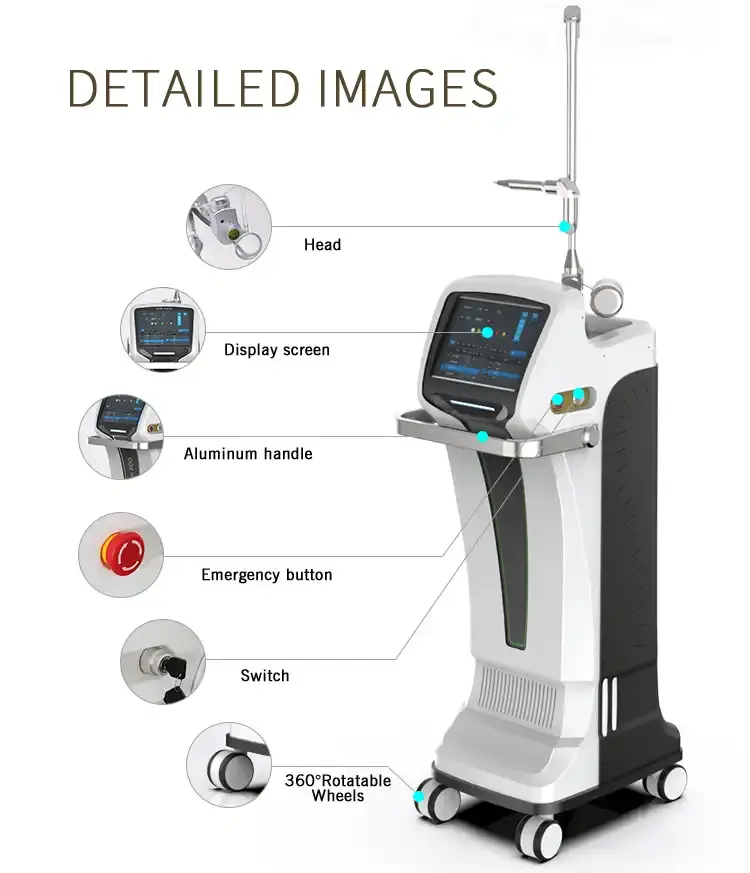
The clinical safety and efficacy of fractional CO2 laser treatments depend significantly on equipment quality and technological sophistication. When evaluating fractional co2 laser beauty machine options, practitioners should prioritize systems offering precise energy control, multiple scanning patterns, real-time feedback mechanisms, and comprehensive safety features. High-quality systems incorporate advanced cooling technologies that protect the epidermis while allowing deeper dermal penetration, optimizing the safety-to-efficacy ratio. Reliable manufacturers provide comprehensive training programs, detailed treatment protocols, and ongoing technical support, which are crucial for safe implementation and optimal outcomes. Equipment certifications including CE marking, ISO13485 quality management certification, and relevant safety compliance documentation indicate manufacturer commitment to quality standards and regulatory requirements. Additionally, considering manufacturer experience, market presence, and customer support infrastructure ensures long-term equipment reliability and practice success.
Conclusion
The fractional co2 laser beauty machine represents a transformative technology that successfully balances remarkable clinical efficacy with excellent safety profiles when operated by properly trained practitioners following established protocols.
Cooperate With Xi'an Taibo Laser Beauty Company
As a leading China fractional co2 laser beauty machine manufacturer with over 15 years of production and export experience, Xi'an Taibo Laser Beauty Company delivers High Quality fractional co2 laser beauty machine systems to more than 180 countries worldwide. Our China fractional co2 laser beauty machine factory provides comprehensive solutions including two-year warranties, 24-hour technical support, professional training, and competitive fractional co2 laser beauty machine price options. Whether you're seeking fractional co2 laser beauty machine for sale, OEM/ODM services, or wholesale partnerships, our China fractional co2 laser beauty machine supplier team is ready to support your practice growth. Contact us today at susan@taibobeauty.com to discuss your equipment needs, receive detailed specifications, request a quote, and discover how our certified systems can elevate your aesthetic offerings. Save this information for future reference and reach out whenever you're ready to invest in proven technology backed by expertise and reliability.
References
1. "Fractional Photothermolysis: A New Concept for Cutaneous Remodeling Using Microscopic Patterns of Thermal Injury" - Manstein D, Herron GS, Sink RK, Tanner H, Anderson RR - Lasers in Surgery and Medicine, 2004
2. "Fractional Resurfacing for the Treatment of Atrophic Acne Scars: A Review of the Literature" - Majid I, Imran S - Journal of Cutaneous and Aesthetic Surgery, 2014
3. "Safety and Efficacy of Fractional CO2 Laser in the Treatment of Melasma" - Hofmann M, Lehmann P - Journal of the European Academy of Dermatology and Venereology, 2006
4. "Ablative Fractional Laser Resurfacing: Complications and Safety Considerations" - Cervelli V, Garcovich S, Bielli A, Cervelli G, Curcio BC, Scioli MG, Orlandi A - Aesthetic Plastic Surgery, 2011
5. "Clinical, Histologic, and Ultrastructural Evaluation of Fractional CO2 Laser Treatment" - Hantash BM, Bedi VP, Chan KF, Zachary CB - Dermatologic Surgery, 2007





YOU MAY LIKE