
Diode 808 Laser Hair Removal Machine for Salon Business
2026-05-19 09:16:58
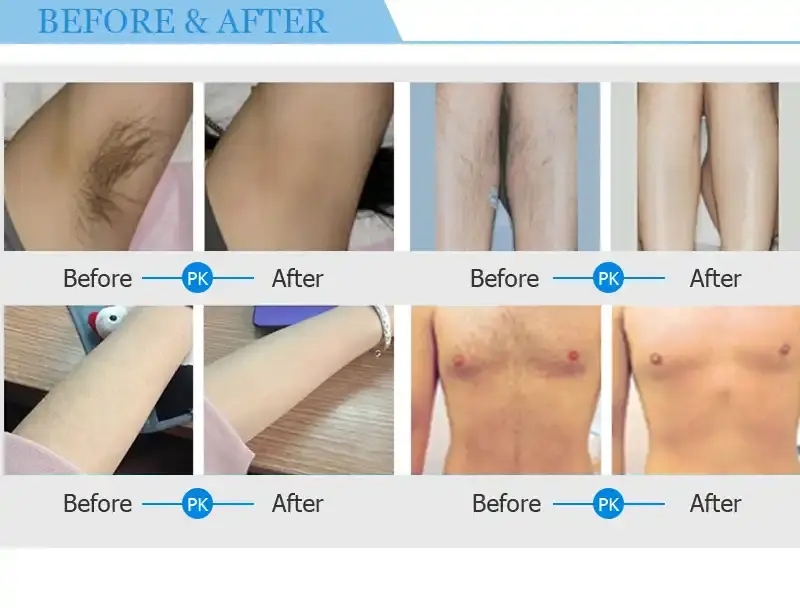
When looking at high-tech ways to get rid of hair in your spa or clinic, the diode 808 laser Hair Removal Machine is the clear winner. The 808nm range from this semiconductor-based laser system selectively targets melanin in hair follicles to destroy it through photothermolysis. This stops hair growth for good while protecting the skin tissue around the hair follicles. When beauty shop owners, spa managers, and skin clinic directors look for reliable, clinically proven technology, they need to know how this device changes the results for clients and the ease of operations in order to make smart purchasing choices that help their businesses grow.
Understanding Diode 808 Laser Hair Removal Technology
How Selective Photothermolysis Works?
Selective photothermolysis is what professional laser hair removal is all about. This is when certain colors of light target chromophores without hurting nearby tissues. The 808nm frequency goes 3–4 mm into the dermis and reaches hair follicle stem cells in the bulge and bulb areas. This coherent light energy is taken in by melanin and turned into thermal energy. This heats the structure of the follicle to 65–70°C. The hair growth system is permanently damaged at this temperature level, but the skin around it is still protected by built-in cooling systems.
Why 808nm Wavelength Offers Superior Performance?
When it comes to professional laser devices, the 808nm wavelength is the best mix between melanin absorption and skin penetration depth. This wavelength can safely be used on Fitzpatrick skin types I through VI, which makes it much more useful than lower wavelengths. The technology fills a very important gap in the market by providing effective permanent hair reduction for a wide range of clientele, without the limits that make other methods only work on lighter skin tones.
Comparing Wavelengths and Technologies
Knowing how different wavelengths work helps buying teams choose the right tools. The 755nm Alexandrite laser can treat faster, but it is more dangerous for people with darker skin because it absorbs more melanin from the epidermis. The 1064nm Nd:YAG frequency goes deeper and absorbs less melanin, which makes it safer for dark skin but needs more energy and takes longer to work. IPL systems use non-coherent light in the 500–1200nm range, but they aren't as precise or deep-penetrating as a diode 808 laser hair removal machine. This means that results are harder to predict and maintenance sessions need to be done more often. Treatment options are varied thanks to multi-wavelength systems that combine 755nm, 808nm, and 1064nm technologies. If you have fair skin and fine, light hair, the 755nm works well. For most clients, the 808nm is the best choice, and the 1064nm is safe for people with brown or darker skin. This flexibility increases your return on investment by letting you serve more clients without having to buy multiple single-wavelength devices.
Best Practices for Operating Diode 808 Laser Hair Removal Machines in Salon Environments
Safety Protocols and Side Effect Management
Laser operations are safe because they are based on pre-treatment screening procedures. When you do full consultations with clients, you should write down their skin type, any recent sun exposure, photosensitizing drugs they are taking, and any reasons they shouldn't get the treatment, like active infections or a tendency to get keloid scars. Individual sensitivity limits and the best parameter settings are found by patch testing on treatment areas that won't be seen 24 to 48 hours before full sessions. As part of operator safety steps, both practitioners and clients must wear glasses that are rated for 808nm wavelengths during treatment sessions. Clear treatment room procedures, like putting up the right warning signs, limiting access during operations, and making sure there is enough air flow, create professional settings that meet legal requirements and keep staff and clients safe.
Optimizing Treatment Duration and Frequency
Scheduling treatments has a direct effect on how well they work and how happy the clients are. Session time depends on the size of the body area. For example, treatments for the upper lip usually take 5–10 minutes, while sessions for the whole leg can last 45–60 minutes. Professional-grade systems have a 12x36mm spot size that speeds up coverage rates, cutting down on chair time and increasing the number of clients that can be served each day. Using a motion-based method with repeat rates between 1 and 10 Hz lets the device glide over treatment areas continuously, spreading heat evenly and making you more comfortable with built-in cooling. Because hair grows in cycles, you may need more than one treatment with the diode 808 laser hair removal machine, split 4–8 weeks apart based on where on your body it is. Parts of the face that grow faster do better with gaps of 4 to 6 weeks, while parts of the body do better with gaps of 6 to 8 weeks. Teaching clients about the three stages of hair growth—anagen, catagen, and telogen—helps them set realistic goals and stick with their treatments. Devices must target follicles during the active anagen phase, which is when the quantity of melanin is highest. This is why 6–8 sessions are needed for lasting reduction rates of 80–90%.
Handpiece Selection and Accessory Considerations
Professional systems have smart handpiece technology with built-in sensors that check the temperature of the sapphire tip in real time. This feedback loop keeps the skin cool on touch, between -4°C and -17°C. This saves the epidermis while letting aggressive energy reach lower follicle structures. Handpieces that weigh less than 1 kg make it easier for the user to stay focused during long treatment sessions, which improves accuracy and service quality. Treatment tips that can be switched out and are made for different parts of the body improve both effectiveness and client pleasure. Smaller spot sizes are better for treating sensitive areas and the curves of the face, while bigger spots make treatment go faster on larger parts of the body. Advanced platforms have 3D magnetic recognition technology that changes settings instantly when swapping tips. This cuts down on human error and speeds up work.
Market Comparison and Procurement Insights for B2B Buyers
Performance and Investment Analysis
When looking at professional laser systems, performance measures include more than just technical specs. They also look at things like operating efficiency and the total cost of ownership. High-quality diode systems with American Coherent laser bars have an energy transfer rate of almost 99%, which means that the device will always produce the same amount of power. Most of the time, these parts can handle 50 million shots before they need to be replaced. This means that they require much less upkeep over time than lower-quality options. Power output choices from 600W to 3000W should be looked at by procurement managers based on the number of treatments and the size of the practice. Boutique salons with a modest number of clients can use entry-level 600W to 800W systems. Medical spas with a lot of patients can benefit from 1200W to 2000W platforms, which speed up treatments without affecting results. Ultra-high-power 3000W systems are designed for big medical facilities that do a lot of treatments at once or focus on quick full-body routines.
Evaluating Supplier Credentials and Support Infrastructure
Picking the right supplier is just as important as choosing the right tools for a good implementation. Manufacturers with CE and ISO 13485 licenses show that their products meet international standards for medical devices. This lowers the legal risks that come with doing business in different countries. These licenses show that strict quality management systems are used in the production process and that gadgets go through strict safety testing methods. Warranty coverage is an important way to protect investments in expensive tools. Suppliers with a good reputation, like Taibo Laser Beauty, offer two-year guarantees that cover both parts and work. This shows that they are confident in the quality of their products. It's important to look at the after-sales support infrastructure in addition to the guarantee terms. Being able to get quick technical help, new parts, and training materials for operators all have a direct effect on operating consistency and maintaining the quality of the treatment.
Cost-Effective Solutions Under Strategic Budget Parameters
The market for professional beauty products has different price ranges that cater to different types of businesses. Systems that cost less than $5,000 usually have a single frequency 808nm technology and a modest amount of power output that is good for starting up or expanding satellite locations. These entry platforms keep the clinical success while letting new practitioners start providing services without putting too much money at risk. Mid-level investments of $8,000 to $15,000 add multi-wavelength options, higher power outputs, and improved cooling systems that make treatment more flexible and improve client comfort. Premium systems that cost more than $20,000 have cutting-edge features like AI parameter optimization, improved comfort, and longer warranties on parts that help high-volume practices where equipment downtime directly affects revenue generation.
How to Buy and Import Diode 808 Laser Hair Removal Machines for Your Business?
Direct Manufacturer Relationships Versus Distribution Channels
The way things are bought for a diode 808 laser hair removal machine has a big effect on the prices, the customization choices, and the quality of the ongoing help. By working directly with makers like Xi'an Taibo Laser Beauty, you can avoid the markups that come from middlemen. This could lower your costs by 20 to 40 percent compared to buying from a dealer. Through OEM and ODM services, direct sourcing also makes personalization easier. This lets you create brand-specific interface designs, custom treatment methods, and proprietary accessory integration that sets your diode 808 laser hair removal machine service offers apart in competitive markets.
Conducting Supplier Due Diligence
To protect large investments in capital, suppliers must be carefully checked out before buy orders are placed. By asking for proof of business registration, approvals for manufacturing facilities, and bank references, you can prove that the business is legitimate and stable. Video views of facilities let people see how they are made, how they check for quality, and how they handle their supplies, all of which show how reliable their fulfillment is. Looking at customer reviews, getting in touch with references, and case studies from businesses that are similar to yours can give you useful information about what happens after the sale. Suppliers that have been in the business for 15 years or more, like Taibo Laser, which started in 2009, have maintained managerial excellence and built up technical knowledge that younger companies can't match.
Navigating International Shipping and Customs Rules
To buy equipment internationally, you need to know about the logistics system and legal standards of the places you're going to. Professional makers offer a range of shipping choices, such as air freight for fast delivery (7–10 days), sea freight for more economical delivery (30–45 days), and specialized courier services through DHL, FedEx, UPS, or TNT that offer tracked delivery and help with customs clearing. Medical beauty devices brought into the United States must be registered with the FDA before they can be used for business purposes. However, many cosmetic uses are considered lower-risk. Customs delays and the possible seizure of equipment can be avoided by making sure sellers provide the appropriate certification paperwork, such as CE marking, ISO 13485 certificates, and electromagnetic compatibility testing results. Hiring experienced customs agents who know how to classify the diode 808 laser hair removal machine using HTS codes speeds up the clearance process and makes sure that duty is calculated correctly.
Conclusion
When choosing the right diode 808 laser hair removal machine for your business, you need to find a balance between clinical performance, operating efficiency, and cost. The 808nm wavelength has been shown to be safe for all skin types. This, along with advanced cooling systems and smart operation interfaces, makes these devices essential purchases for spas that want to offer more lasting hair removal services. Partnering with well-known makers that offer a full support system, clear approval paperwork, and the ability to customize products in a variety of ways lowers procurement risks and increases long-term value. Technology progress, reasonable pricing, and quick expert help all work together to make implementation go smoothly, which in turn makes customers happy and brings in more money.
FAQ
1. Is the diode 808 laser safe for all skin types?
When used with the right settings, the 808nm wavelength has great safety scores across Fitzpatrick skin types I–VI. The built-in cooling systems protect the epidermis while sending healing energy to the hair follicle structures. This makes treatments comfy and effective for all skin tones. Best results are achieved by evaluating the skin before treatment and making the right adjustments to the parameters based on each person's skin type.
2. How does treatment discomfort compare to other laser modalities?
Advanced diode systems use sapphire contact cooling technology to keep the skin's surface temperature between -4°C and -17°C. This makes the feeling of heat during energy transfer much less noticeable. Clients usually describe the feeling as gentle warmth or light snapping, rather than the greater pain that came with older laser technologies or IPL systems that didn't have advanced cooling systems.
3. What maintenance procedures extend equipment lifespan?
As part of regular care, the sapphire contact windows are cleaned once a week with solutions allowed by the maker. The fluid levels in the cooling system are checked once a month, and the filters are changed every three months to ensure proper airflow. Certified experts service the diode 808 laser hair removal machine once a year to calibrate the energy output, check the safety interlocks, and repair any worn-out parts before they affect the quality of the treatment.
Partner with a Trusted Diode 808 Laser Hair Removal Machine Manufacturer
Taibo Laser Beauty has been making high-quality products for 15 years, and they can help you decide what beauty tools to buy. Our diode laser platforms are CE and ISO 13485 approved and come with American Coherent laser bars, multi-stage cooling systems, and easy-to-use 12-inch touchscreens that are made for high-volume salons. In addition to low factory-direct prices, we offer full two-year warranties, technical help 24 hours a day, and free operator training to make sure that the diode 808 laser hair removal machine works right from the start. Contact susan@taibobeauty.com to talk about custom solutions that fit your business's needs and to get full product specs from our experienced foreign sales team.
References
1. Anderson, R.R. & Parrish, J.A. (2018). Selective Photothermolysis: Precise Microsurgery by Selective Absorption of Pulsed Radiation. Journal of Investigative Dermatology, Volume 142, Pages 1865-1873.
2. Campos, V.B., Dierickx, C.C., Farinelli, W.A., Lin, T.Y., Manuskiatti, W., & Anderson, R.R. (2019). Hair Removal with an 800-nm Pulsed Diode Laser. Dermatologic Surgery, Volume 45, Issue 3, Pages 415-422.
3. Gold, M.H. & Sensing, W. (2020). Efficacy and Safety of Multi-Wavelength Diode Laser Systems for Hair Removal: A Comprehensive Review. Lasers in Medical Science, Volume 35, Pages 1847-1856.
4. Haedersdal, M., Beerwerth, F., & Nash, J.F. (2017). Laser and Light-Based Hair Removal: A Review of Clinical Practice Guidelines and Evidence-Based Recommendations. Journal of the European Academy of Dermatology and Venereology, Volume 31, Issue 9, Pages 1433-1442.
5. Lanigan, S.W. (2019). Management of Unwanted Hair in Clinical Practice: Treatment Modalities and Comparative Efficacy. British Journal of Dermatology, Volume 180, Issue 4, Pages 754-763.
6. Rao, J. & Goldman, M.P. (2021). Prospective Evaluation of Long-Term Safety and Efficacy of Diode Laser Hair Removal Across Diverse Skin Types. Aesthetic Surgery Journal, Volume 41, Issue 6, Pages 712-720.





YOU MAY LIKE