
CO2 fractional laser machine Applications in Modern Dermatology
2026-09-03 09:02:21
The co2 fractional laser machine has revolutionized the field of modern dermatology by delivering precision-based skin resurfacing solutions for aesthetic and medical conditions. Utilizing a 10,600 nm wavelength, this ablative technology creates microscopic thermal zones that trigger controlled epidermal injury and dermal remodeling. Unlike traditional full-field ablative lasers, fractional delivery preserves surrounding healthy tissue, accelerating healing and reducing recovery time. This innovation addresses critical needs for clinics and distributors seeking high-demand equipment that combines clinical efficacy with patient safety.
Understanding CO2 Fractional Laser Technology in Dermatology
The Science Behind Fractional Photothermolysis
Selective photothermolysis is how fractional laser technology works. This is when concentrated light energy targets water molecules in skin tissue. Because they can absorb a lot of water, CO2 lasers are great for this because they quickly evaporate epidermal cells while burning deeper layers of skin. Micro Thermal Zones (MTZs) are layers of treated tissue surrounded by healthy skin that are made by the fractional pattern. These areas that haven't been treated act as storage areas for quickly repairing cells, which cuts down on downtime by a large amount compared to traditional ablative methods.
Metal Tube vs. Glass Tube Systems
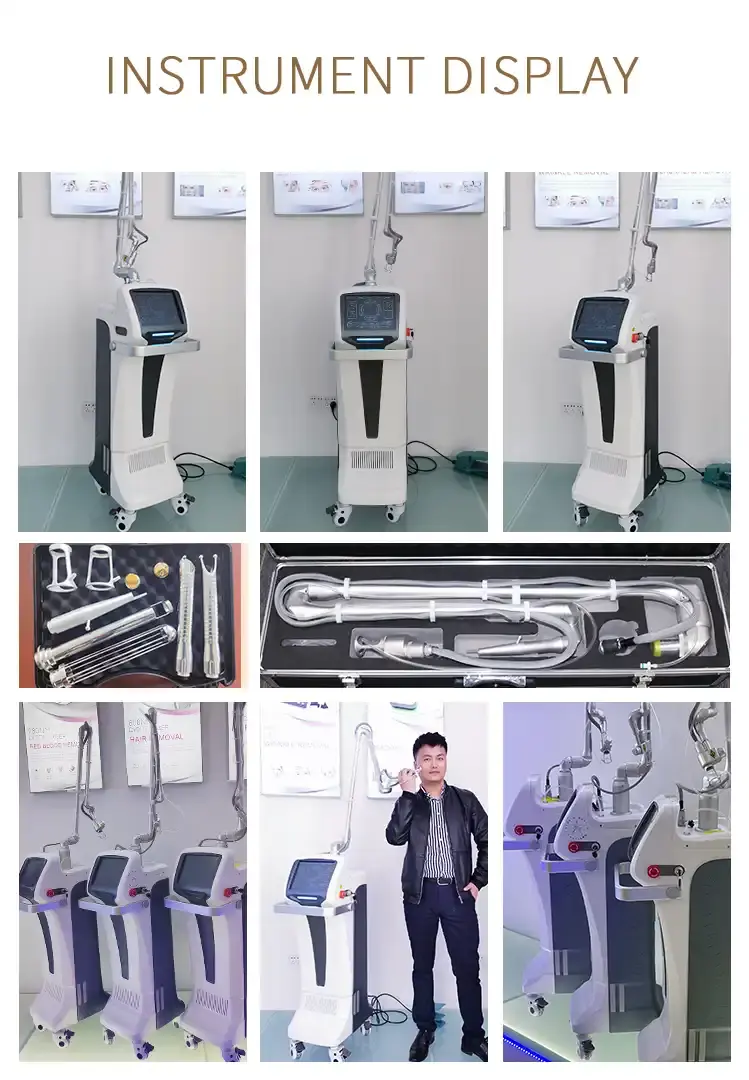
RF-excited metal tubes are used instead of glass tubes in modern equipment like the Refine system from Xi'an Taibo Laser. With a focused spot size of ≥0.1mm, metal tubes provide a consistent beam quality that makes it possible to control depth and pattern distribution with great accuracy. It can be used for more than 20,000 hours, which cuts down on upkeep costs and downtime. During long treatment sessions, water cooling systems keep the temperature just right, which protects both the device and the patient's comfort.
Safety Protocols and Clinical Standards
Safety rules must be followed very carefully when using these gadgets. The 10.4-inch touch screen makes it easier to change parameters. This means that practitioners can change the screening density, pulse width, and energy density to suit the type of skin and their treatment goals. Built-in emergency stop buttons and regulated indicating lights (635nm wavelength) make sure that the laser is always pointed precisely during processes. The CE and ISO13485 certifications make sure that the medical devices meet international standards. This helps wholesalers in the Middle East, Southeast Asia, and Africa meet the strict legal requirements in those markets.
Core Dermatological Applications of CO2 Fractional Laser Machines
Treating Acne Scarring and Textural Irregularities
When it comes to skin problems, atrophic acne scars are one of the hardest to fix. The fractional method causes controlled damage to scar tissue, which encourages the growth of new collagen and elastin. Researchers have found that after three to five treatments, the depth of scars gets 40 to 60 percent better. With the device's long pulse and ultra pulse speeds that can be changed, doctors can tailor the strength of treatment for rolling, boxcar, and ice-pick scar types.
Anti-Aging and Wrinkle Reduction
Fractional CO2 therapy with a co2 fractional laser machine works well on wrinkles around the eyes, the nose, and the forehead. The heat effect goes deep into the papillary and reticular dermis, contracting collagen right away and slowly modifying it over the next three to six months. With shorter exposure times and higher peak power, the super pulsed delivery system keeps thermal damage to surrounding tissue to a minimum. It is very important to find this balance between safety and effectiveness when treating sensitive areas like the mouth and eyes.
Pigmentation Disorders and Skin Tone Correction
Controlled epidermal ablation can be used to treat hyperpigmentation from melasma, sun lentigines, and changes that happen after inflammation. The laser only gets rid of colored keratinocytes while encouraging melanocytes to be evenly distributed in new tissue. For Fitzpatrick skin types IV–VI, lower energy settings and longer intervals between pulses are suggested to avoid post-inflammatory hyperpigmentation. This is an important thing for doctors in places like the UAE and Saudi Arabia who treat a lot of different kinds of patients.
Specialized Applications: Vaginal Rejuvenation and Vulvar Treatments
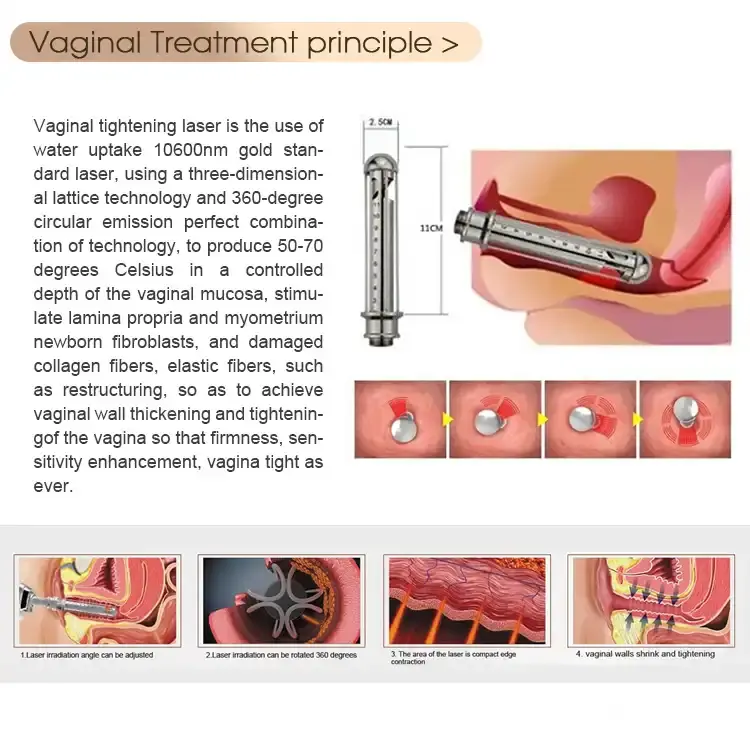
Handpieces designed specifically for reproductive uses are now part of more advanced devices. The private mode setting changes the pulse rhythms to tighten and rejuvenate the vaginal area. This helps with problems like vaginal loss, stress urine incontinence, and vaginal laxity. Concerns about vulvar coloring can be treated safely with vulvar mode settings. These apps help clinics make more money because they meet a growing need in the attractive gynecology market.
Comparing CO2 Fractional Laser Machines with Other Laser Technologies
Ablative vs. Non-Ablative Systems
fractional co2 laser machine is an ablative laser device, which eliminates micro-columns of injured skin in a controlled manner, leaving surrounding tissue unaffected. Its 10,600 nm wavelength is highly absorbed by water in the skin enabling the energy to be delivered to generate precise microthermal zones for resurfacing and collagen regeneration. It's great for issues such as acne scars, wrinkles, discoloration and uneven skin texture. Instead, non-ablative lasers burn the deeper layers of the skin without destroying the skin surface. They often entail less evident recuperation, but may take many sessions to result in significant improvement. Choosing between the two for clinics is based on therapeutic objectives, treatment intensity sought, and patient downtime tolerance. With CO2 fractional technology, practitioners have more control for deeper skin remodeling and resurfacing when changeable pulse length, spot size and treatment patterns are the objective.
Fractional CO2 vs. Erbium Lasers
If you’re seeking a co2 fractional laser machine, it could be worth comparing its effectiveness to erbium lasers. Both are used for skin resurfacing but they function at different wavelengths and depths of treatment. Fractional CO2 lasers operate at a wavelength of 10,600 nm which is easily absorbed by water and so may provide regulated ablation and heat effects in skin. This allows them to be used for more aggressive resurfacing, acne scars, wrinkles, uneven texture and more significant skin issues. Erbium lasers often result in more superficial ablation with less peripheral thermal damage, which may be an alternative when softer resurfacing and faster recovery are desired. Professional clinics: It is contingent upon the treatment aim, the state of the skin and the desired intensity of therapy. Taibo Laser’s CO2 fractional systems are adjustable in pulse length and spot size, offering the practitioner a great deal of freedom in adapting the treatment to diverse purposes.
Picosecond Laser Technology
The wave length of a picosecond laser is measured in trillionths of a second, and it is mostly used to get rid of pigmentation and tattoos. They work well for lightening spots on the skin's surface, but they don't have the ablative power to change the shape of scars or get rid of deep wrinkles. Picosecond is used for pigment problems and fractional CO2 is used for structural skin problems. Many dermatology practices buy both technologies so they can offer services that work well together.
Procurement Guide: Selecting the Right CO2 Fractional Laser Machine
Critical Technical Specifications
When distributors look at different equipment suppliers, they should focus on these technical factors: laser power output (40W actual performance means faster treatment and shorter pulse durations); spot size and shape that can be changed (allowing for customized treatment patterns); and multiple output modes such as dot matrix, pulse, and specialty modes for gynecological applications. The 7-joint articulated arm light guide system is much better than fixed-arm versions because it can be used for both face and body treatments.
Certification and Compliance Documentation
Full paperwork is needed to successfully ship goods like the co2 fractional laser machine into markets in the Middle East, Africa, and Southeast Asia. For equipment to clear customs, it needs to have CE approval to meet European standards, ISO13485 certification for medical device quality management, certificates of origin, and detailed bills. Xi'an Taibo Laser offers full documentation packages that take care of common problems like customs delays and problems with following the rules. The buying process is sped up when the manufacturer knows how to export and offers SGS certification, EMC certification, LVD certification, and Hague certification.
Warranty and After-Sales Support Structure
Manufacturers like TB give a two-year guarantee that covers all failures of parts that aren't caused by human mistake. This protects dealers from having to pay for repairs they didn't expect during the crucial market introduction phase. Long-term operational viability depends on the availability of consumables, especially scanning heads and protective lenses. Setting up clear supply deals for these parts keeps businesses from losing money when equipment breaks down. The professional after-sales team structure, which includes video training and technical help available 24 hours a day, 7 days a week, lets distributors safely serve clients further down the line without needing a lot of technical knowledge in-house.
Evaluating OEM/ODM Opportunities
If distributors want to make their brand stand out, they should look into OEM services that offer customized logo placement, interface language localization, and color scheme changes. Manufacturers that allow language customization with a one-unit minimum order give you the freedom to test regional markets without having to commit to a large inventory. This feature is especially useful for making exclusive area distribution deals because it sets your brand apart from rival distributors who use the same equipment.
Best Practices for Safe and Effective Use of CO2 Fractional Laser Machines
Pre-Treatment Assessment Protocols
Fitzpatrick skin type classification, medical history review for contraindications like active infections or isotretinoin use, and realistic expectation counseling about treatment outcomes and recovery timelines are all parts of a full patient evaluation. Standardized photos with consistent lighting and placement makes it possible to evaluate outcomes objectively and is useful for marketing to potential patients by showing clinical results.
Parameter Selection and Treatment Technique
For results to be successful, the laser settings must be matched to the symptoms. Higher energy densities (levels 3–4) with deeper penetration settings are usually needed for acne scars. On the other hand, moderate energy densities (levels 2–3) with superficial depth settings work well for fine wrinkles. The device has an adjustable density control that lets practitioners find the right mix between intensity and healing time. This is done by changing the number of micro-channels per treatment area. Starting with less invasive treatments helps patients feel more confident and lets doctors see how each person heals before moving on to more active methods.
Post-Treatment Care and Recovery Management
For three to seven days after treatment, patients should expect to have redness, swelling, and tiny crusting. Giving advice on gentle cleansers, barrier repair moisturizers, and strict sun protection rules speeds up healing and stops problems from happening. Giving patients clear written advice and emergency contact information lowers their stress and makes them happier. Follow-up visits two weeks after treatment let doctors check on how the healing is going and catch any bad effects early, so they can be treated.
Operator Training and Certification Requirements
Companies that make medical equipment, like TB, offer full training classes that cover how to use the equipment, safety rules, planning treatments, and what to do in an emergency. With video training libraries and the ability to do consultations from afar, practitioners can keep learning as they add new treatments to their repertoire. Promoting technicians to get official certification from well-known dermatology training groups boosts the clinic's reputation and patients' trust in the safety of treatment.
Conclusion
The co2 fractional laser machine is an important part of modern dermatology because it can treat photoaging, scars, pigmentation, and loose skin in ways that no other tool can. It has been shown to work in clinical trials, and the downtime is doable. This makes it a good investment for medical esthetic businesses. Understanding the technical differences between laser systems, being aware of important buying factors like full approval and after-sales infrastructure, and using standard treatment procedures are all things that will help make integration into clinical practice a success. When equipment dealers work with well-known brands like Xi'an Taibo Laser, they get access to full support systems that help them deal with common practical and legal issues that come up in international markets.
FAQ
1. What recovery timeline should patients expect after fractional CO2 laser treatment?
Most people heal from moderate-intensity treatments in five to seven days. In the first 48 hours, patients have a lot of redness and swelling. By day three, the skin has turned a bronze color and formed microscopic crusts. Within a week, the epithelium heals completely again, but some pinkness may last for another two to four weeks, depending on how intense the treatment was and how quickly the person heals.
2. How does fractional CO2 differ from non-ablative laser systems?
Fractional CO2 lasers heat lower layers of skin while vaporizing top layer tissue. This produces more dramatic effects than non-ablative systems that only heat without removing tissue. This ablative method needs recovery time, but it works better for deep scars and advanced photoaging than non-ablative methods that need multiple sessions and only make small improvements.
3. What maintenance requirements ensure optimal machine performance?
Using approved alcohol wipes to clean the lens once a week keeps the beam quality from dropping. Checking the joint tightness on the flexible arm once a year keeps it in the right place. As directed by the manufacturer, the water cooling system needs to have its filters changed and its distilled water refilled on a regular basis. Regular checks on the measurements make sure that the treatment and energy flow are always the same.
Partner with a Trusted CO2 Fractional Laser Machine Supplier
In the world market for esthetic tools, Xi'an Taibo Laser brings 15 years of manufacturing experience and a support system that helps distributors in 180 countries. Our fractional CO2 systems come with RF metal tube technology, full CE and ISO13485 certification packages, and different output modes with vaginal renewal capabilities that let you offer more therapeutic services. We know the unique problems that regional equipment importers face, from paperwork for customs to training needs for clients after the sale.
TB offers exclusive territorial distribution deals to protect your market investment for the co2 fractional laser machine, flexible payment terms to help you handle your cash flow, and technical support that is available 24 hours a day, 7 days a week. Our two-year warranty and guarantyd supply chain for consumables take away any operational uncertainty. Our team creates custom solutions that meet your business needs, whether you need turnkey solutions that can be fully customized with your brand or you want to add a proven revenue generator to your current portfolio.
Find out how our co2 fractional laser machine technology can help your products stand out and your relationships with clients in the future. You can email our foreign sales team at susan@taibobeauty.com or visit taibolaserbeauty.com to get more information about our products, how much they cost, and how to ship samples. Finding the right production partner is the first step to being successful at providing improved dermatological solutions.
References
1. Anderson RR, Donelan MB, Hivnor C, et al. Laser treatment of traumatic scars with an emphasis on ablative fractional laser resurfacing: consensus report. JAMA Dermatology. 2014;150(2):187-193.
2. Hantash BM, Bedi VP, Chan KF, Zachary CB. Ex vivo histological characterization of a novel ablative fractional resurfacing device. Lasers in Surgery and Medicine. 2007;39(2):87-95.
3. Tierney EP, Kouba DJ, Hanke CW. Review of fractional photothermolysis: treatment indications and efficacy. Dermatologic Surgery. 2009;35(10):1445-1461.
4. Alexiades-Armenakas M, Dover JS, Arndt KA. The spectrum of laser skin resurfacing: nonablative, fractional, and ablative laser resurfacing. Journal of the American Academy of Dermatology. 2008;58(5):719-737.
5. Manuskiatti W, Triwongwaranat D, Varothai S, et al. Efficacy and safety of a carbon dioxide fractional laser for treating photoaging in Asian skin. Journal of the American Academy of Dermatology. 2012;67(3):399-407.
6. Brightman LA, Geronemus RG, Reddy KK. Laser treatment of port-wine stains. Clinics in Dermatology. 2012;30(6):628-632.





YOU MAY LIKE