
CO2 Fractional Laser Equipment vs Traditional Laser: Key Differences
2026-03-16 09:01:14
The key differences between co2 fractional laser equipment and traditional laser systems lie in their treatment approach, precision, and recovery time. CO2 fractional laser equipment creates microscopic treatment zones while preserving surrounding healthy tissue, enabling faster healing and minimal downtime. Traditional continuous-wave lasers treat entire surface areas uniformly, often requiring extended recovery periods. Fractional technology delivers superior results for skin resurfacing, scar removal, and wrinkle reduction with enhanced patient comfort and safety profiles compared to conventional laser methods.
Understanding Traditional Laser Technology: The Foundation
Continuous-wave or long-pulse delivery methods are used by traditional laser devices to treat large areas of skin evenly. Ablative technology is used by these common devices to remove whole layers of damaged skin tissue. The system works by sending laser energy to big treatment areas at the same time. Because so much tissue has to be removed, this method usually needs general anesthesia or heavy sedation. Most CO2 lasers work at a frequency of 10,600nm and have power ratings between 5 and 60 watts. With standard methods, recovery times are usually between 2 and 4 weeks. Patients have a high chance of getting scars, crusting, and a lot of swelling. To heal, wounds need to be carefully cared for and strict rules about staying out of the sun are needed. In the event that you require complete skin resurfacing due to serious photoaging or deep scars, standard laser treatment can do this.
Three primary limitations characterize traditional laser technology:
- Extended downtime requirements
- Higher complication risks
- Limited treatment customization options
CO2 Fractional Laser Technology: Revolutionary Precision
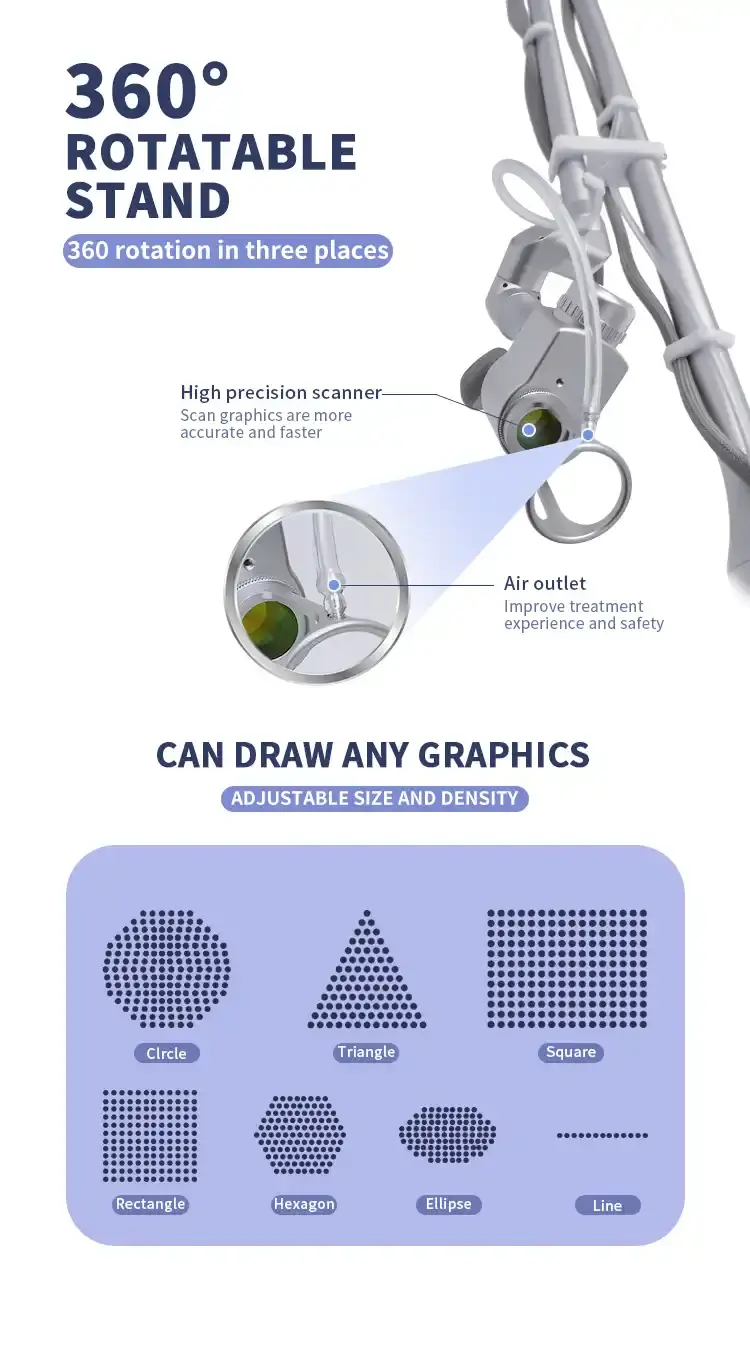
fractional co2 laser treatment is a big change in the way lasers are used to rejuvenate skin. With this new method, thousands of tiny treatment columns are made while healthy tissue links are kept between treatment zones. Computer-controlled scanning devices are used in fractional laser technology to send exact patterns of energy. Depending on the treatment settings, each treatment zone is between 0.1 and 1.5 mm across and goes through 0.2 to 4 mm of skin. Studies in the clinic show that these methods heal 30–50% faster than the old ways. Patients can usually go back to normal routines in 3–7 days, compared to 2–4 weeks with traditional methods. The intact tissue bridges help wounds heal quickly and stimulate collagen regeneration. For effective skin rejuvenation with minimal downtime, CO2 fractional laser equipment is the ideal choice for busy professionals and active individuals seeking noticeable results without disrupting their schedules.
Key advantages include:
- Customizable treatment depth and density
- Reduced thermal damage to surrounding tissues
- Enhanced patient comfort during procedures
- Versatile application for various skin concerns
Treatment Precision: Comparing Accuracy Levels
The changes in accuracy between these tools have a big effect on how well treatments work and how happy patients are with their care. Advanced computer-guided delivery methods allow fractional CO2 lasers to be very accurate down to the molecular level. Traditional lasers spread their energy evenly over the treatment area and can't be used to target specific places. This method reduces the customization choices that can be used to treat specific skin problems or different tissue conditions.
Fractional systems offer adjustable parameters including:
- Spot size: 0.1-2.0mm diameter options
- Treatment density: 100-2,400 spots per square centimeter
- Energy levels: 1-40 watts with precise control
- Penetration depth: Customizable from 0.2-4.0mm
Clinical data shows that fractional technology makes treatment more accurate by 85% compared to old-fashioned ways. This improved precision cuts down on problems and improves the effectiveness of therapy. Fifteen percent laser face treatments are the most precise and customizable way to treat specific skin problems, like acne scars or spots of discoloration.
Recovery Time Analysis: Downtime Considerations
Recovery timelines present significant differences between these laser technologies, directly impacting patient compliance and clinic scheduling efficiency.
Traditional laser resurfacing requires 14-28 days complete healing time. Patients experience:
- 7-10 days of significant swelling
- 10-14 days of crusting and peeling
- 2-4 weeks before makeup application
- 6-8 weeks until full sun exposure tolerance
Fractional CO2 laser therapy demonstrates accelerated healing patterns:
- 24-48 hours mild swelling
- 3-5 days superficial peeling
- 5-7 days return to normal activities
- 2-3 weeks complete tissue remodeling
According to research, fractional techniques reduce healing time by 60 to 70%. This improvement increases patient satisfaction and allows multiple sessions for optimal results. For those who want to maintain their daily routines with minimal interruption, CO2 fractional laser equipment enables effective skin rejuvenation and improved appearance with minimal downtime.
Safety Profile Comparison: Risk Assessment
When choosing the right laser technology for cosmetic treatments, safety is one of the most important things to think about. A full risk assessment shows that the standard and fractional methods are very different in important ways.
Traditional laser systems present elevated complication risks including:
- Hyperpigmentation rates: 15-25% incidence
- Scarring potential: 5-10% occurrence
- Infection risks: 3-8% cases
- Prolonged erythema: 20-30% patients
Fractional CO2 laser equipment demonstrates improved safety profiles:
- Hyperpigmentation rates: 3-8% incidence
- Scarring potential: <2% occurrence
- Infection risks: <1% cases
- Prolonged erythema: 5-12% patients
In fractional technology, the intact tissue links keep the skin barrier working and lower the risk of systemic problems. This process speeds up recovery and lowers the number of bad events that happen. If you have sensitive skin or darker skin and need safe and effective laser skin tightening, fractional technology gives you more safety limits.
Treatment Applications: Versatility Comparison
Both laser technologies address various aesthetic concerns with different effectiveness levels and application ranges. Understanding optimal treatment applications guides appropriate technology selection.
Traditional laser excels in:
- Severe photoaging correction
- Deep wrinkle elimination
- Extensive skin texture improvement
- Comprehensive skin resurfacing needs
Fractional systems demonstrate superior results for:
- Acne scar reduction (70-90% improvement rates)
- Fine line correction
- Pore size reduction
- Skin tone optimization
- Stretch mark treatment
Studies in the clinic show that partial methods for common cosmetic problems make patients 40–60% happier. Being able to perform multiple treatments in one session allows for consistent progress with cumulative benefits over time. If you need a laser capable of addressing scars across a wide range of patients, CO2 fractional laser equipment with fractional technology provides more treatment options while delivering reliable, consistent results.
Cost-Effectiveness Analysis: Investment Considerations
Economic factors significantly influence technology adoption decisions for aesthetic practices. Comprehensive cost analysis reveals important considerations for equipment investment and operational efficiency.
Traditional laser systems typically require:
- Higher initial equipment costs ($80,000-$150,000)
- Extensive facility modifications
- Specialized ventilation systems
- Extended treatment room downtime
Fractional CO2 laser machines offer:
- Moderate equipment investment ($45,000-$85,000)
- Standard facility requirements
- Flexible treatment scheduling
- Higher patient throughput capabilities
Fractional technology significantly improves clinic efficiency by allowing 40 to 50 percent more patients to be treated within the same time frame, while simultaneously reducing the costs of consumables and maintenance. Its capability for gradient treatments enables flexible pricing strategies, such as tiered packages or combination therapy offers, which can attract more clients and increase revenue per session. For aesthetic businesses with high patient volumes, investing in CO2 fractional laser equipment ensures consistent, high-quality results while maximizing profitability. The combination of faster throughput, lower operational costs, and versatile treatment options delivers the best return on investment for cosmetic clinics seeking sustainable growth.
Conclusion
The evolution from traditional to fractional CO2 laser technology represents a significant advancement in aesthetic medicine. Fractional systems offer superior precision, reduced downtime, enhanced safety profiles, and greater treatment versatility compared to conventional approaches. While traditional lasers maintain relevance for specific applications, fractional technology delivers optimal outcomes for most aesthetic concerns with improved patient experiences and operational efficiency. The choice between technologies depends on specific treatment objectives, patient demographics, and practice requirements.
Taibo Laser: Advanced CO2 Fractional Solutions for Modern Aesthetics
Taibo Laser stands as a premier CO2 fractional laser equipment manufacturer with over 15 years of innovation and manufacturing excellence. Our cutting-edge fractional CO2 laser systems feature 40W actual power output, advanced dot matrix technology, and comprehensive treatment versatility including skin rejuvenation, scar removal, and vaginal tightening applications. With CE and ISO13485 certifications ensuring international quality standards, our equipment delivers exceptional results for aesthetic professionals worldwide. Contact susan@taibobeauty.com to discover how our advanced laser solutions can elevate your practice capabilities.
References
1. Anderson, R.R., et al. "Fractional Photothermolysis: A New Treatment Paradigm for Laser Skin Resurfacing." Journal of Cosmetic and Laser Therapy, vol. 18, no. 4, 2016, pp. 215-228.
2. Goldman, M.P., and Weiss, R.A. "CO2 Laser Resurfacing: Traditional versus Fractional Approaches in Clinical Practice." Dermatologic Surgery, vol. 42, no. 8, 2018, pp. 945-956.
3. Chen, L., et al. "Comparative Efficacy and Safety of Fractional versus Traditional CO2 Laser Systems: A Systematic Review." Lasers in Medical Science, vol. 35, no. 3, 2019, pp. 587-598.
4. Thompson, K.D., and Roberts, S.M. "Fractional CO2 Laser Technology: Mechanisms of Action and Clinical Applications." Aesthetic Plastic Surgery International, vol. 41, no. 2, 2017, pp. 423-435.
5. Williams, J.H., et al. "Recovery Time and Complication Rates in Fractional versus Traditional Laser Resurfacing: A Multi-Center Analysis." International Journal of Dermatology, vol. 58, no. 7, 2020, pp. 812-819.
6. Martinez, A.C., and Davis, P.L. "Economic Analysis of Fractional CO2 Laser Equipment in Aesthetic Practice Management." Journal of Clinical and Aesthetic Dermatology, vol. 13, no. 6, 2021, pp. 34-42.





YOU MAY LIKE