
Choosing a Non Invasive Liposuction Machine for Your Clinic
2026-08-24 08:58:51
Selecting the right equipment for body contouring treatments can transform your clinic's service portfolio and revenue stream. A non-invasive liposuction machine offers aesthetic professionals a powerful alternative to surgical procedures, utilizing advanced laser technology to target stubborn fat deposits without incisions or extended recovery periods. These devices have gained significant traction in the U.S. market because they address patient demand for safer, more convenient fat reduction options while enabling clinics to expand treatment offerings with manageable investment and operational requirements. Understanding the technology, comparing available options, and evaluating supplier credentials will help you make an informed procurement decision that aligns with your clinic's goals and patient demographics.
Understanding Non-Invasive Liposuction Technology
How Laser-Based Fat Reduction Works
Modern body sculpting tools use targeted energy delivery to break down fat cells in a controlled way. Diode lasers with certain wavelengths can reach fat cells under the skin. One example is the 1470nm laser paired with 980nm technology. The laser energy heats up fat cells, which breaks them apart and lets the fat inside out. Over the next few weeks, the body's lymphatic system naturally breaks down and gets rid of these damaged cells. The selective photothermolysis concept lets the device tell the difference between fat cells and the tissue around them. This keeps skin, nerves, and blood vessels from getting too damaged. As the body's natural elimination process is finished in two to three months, clinical studies show that patients usually can see a reduction in the treated areas.
Core Components and Technical Specifications
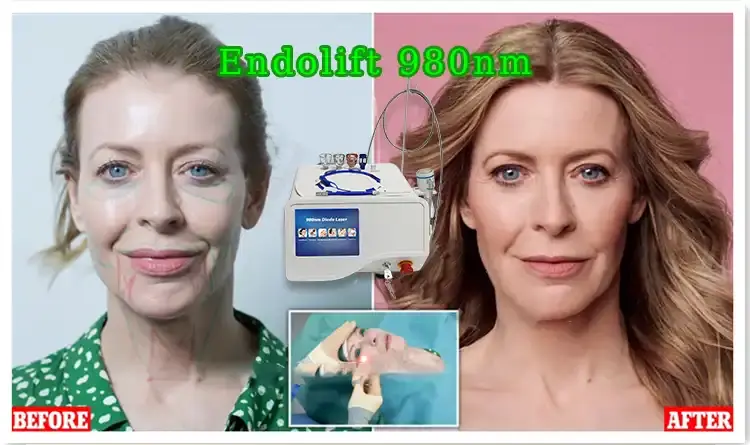
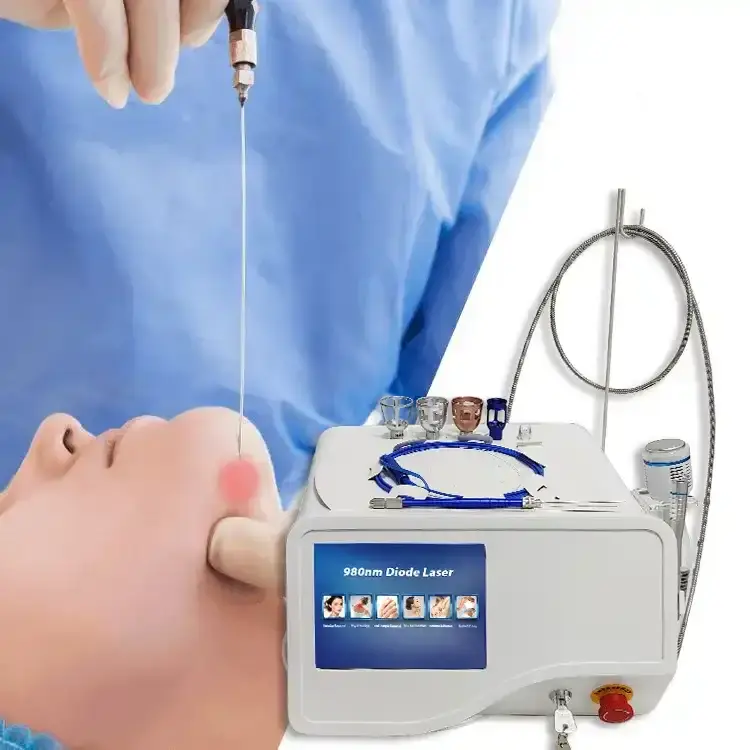
There are several parts that work together in professional-grade laser lipolysis systems. The treatment handpiece delivers precise laser energy through pulse width (1-100ms) and frequency (1-10Hz) that can be changed. This lets operators tailor treatments to different body parts and levels of fat. An 8.4-inch color touchscreen makes it easier to choose a strategy and keep an eye on processes in real time. Among the latest safety features are constant temperature monitors that stop thermal injury by changing the output automatically when skin temperature hits certain levels. Adding an ice hammer accessory to the treatment immediately cools the area, easing the patient's pain and reducing swelling. All of these technical parts work together to give consistent results and keep patients safe during treatment.
Clinical Benefits and Treatment Versatility
Laser-based devices are very flexible and can be used for more than just fat loss. These gadgets work well for a number of cosmetic issues, such as vascular blemishes, skin rejuvenation, and even endovenous laser treatment (EVLT) for spider veins. Treatment sessions usually last between 30 and 60 minutes, depending on the area being treated. Patients feel little to no pain and don't have to take any time off. This factor of ease makes patients much happier and more likely to stay with the practice. The technology works especially well in places that are hard to lose weight from with diet and exercise, like the stomach, thighs, arms, and underarms. This is where regular weight loss methods often fail. By offering a range of body contouring services, clinics can get more patients and make more money from each one by offering different treatment packages.
Comparing Non-Invasive and Traditional Liposuction Solutions
Risk Profiles and Recovery Considerations
Traditional non-invasive liposuction machines need anesthesia, hurt the body when the cannula is inserted, and come with risks like infection, bleeding, embolism, and scars. Patients usually need a few weeks to recover, during which they can't do many things and have visible bruises. Laser-based alternatives get rid of all of these worries. Patients come to the clinic, get treatment, and leave the same day, going right back to their normal lives. Since there are no cuts, there are no scars, risks of illness, or problems with the sedation. Because of this fundamental difference in safety profiles, laser lipolysis is especially appealing to people who can't afford the recovery time from surgery or who have medical conditions that make invasive procedures unsafe. The lower risk profile also makes your clinic less vulnerable to legal and insurance issues.
Economic Analysis for Clinic Operations
When procurement managers decide what equipment to buy, they need to think about more than just the initial purchase price. Surgical rooms need a lot of money to be spent on equipment, special training for staff, higher insurance rates, and strict adherence to regulations. Laser systems can be used in regular treatment rooms with only minor changes. It only takes days to train staff instead of months, and workers need to be certified instead of having surgical qualifications. The 10,000-hour lifespan of the device means that it can be used continuously for years with little maintenance. The main maintenance tasks are to flush the cooling system every three months and clean the filter once a week. These operational efficiencies mean lower costs per treatment and a faster return on investment, which is especially helpful for clinics that do a lot of treatments.
Technology Comparison: Laser Versus Alternative Modalities
Cryolipolysis (freezing fat), radiofrequency (RF) heating, and high-intensity focused ultrasound (HIFU) are some of the competing technologies in the body shaping business. There are pros and cons to each method that are unique. It takes longer to treat with cryolipolysis, and it works best on bigger fat stores. RF tightens the skin well, but it doesn't get rid of fat as quickly or dramatically. HIFU works on deep tissues, but it can be more painful during treatment. Some diode laser systems, like those that combine 980nm and 1470nm wavelengths, work well in a lot of different situations. The two-wavelength method improves the accuracy of the treatment, and the spot size can be changed to fit different body parts. This technology's versatility gives centers more treatment options than gadgets that only work with one modality.
Selecting the Best Non-Invasive Liposuction Machine for Your Clinic
Essential Certification and Safety Standards
Regulatory compliance is the basis for any choice about what medical equipment to buy. In order to work in U.S. clinics, equipment has to meet strict safety standards that can be checked by well-known certifications. The CE mark means that the product meets European health and safety standards for safety, and the ISO 13485 mark shows that the company uses quality control systems that are designed specifically for medical devices. These credentials show that the device was put through a lot of tests to make sure it was safe for electrical use, compatible with electromagnetic fields, and safe for living things. Suppliers with a good reputation give full documentation, such as test results, user guides, and safety rules. In addition to making sure the product is approved by the right authorities, make sure the company has professional liability insurance and can show proof of clinical validation studies that back up claims of treatment effectiveness.
Evaluating Supplier Credibility and Support Infrastructure
Your relationship with the company that sells you equipment goes far beyond the initial purchase. Trading businesses and gray-market distributors are not as good as established producers who run their own factories. This type is shown by TB (Xi'an Taibo Laser Beauty Company), which has been making laser beauty products for 15 years, does its own research and development, and ships directly to over 180 countries. This level of operation guarantees the availability of parts, technical know-how, and the long-term stability of the business. When looking at possible providers, you should check out their after-sales support, such as how quickly they answer technical questions, how easy it is to get new parts, and whether they offer operator training. A two-year warranty is the standard in the industry, but make sure you know what parts are covered and if labor costs are covered as well. Suppliers who give online training, support in multiple languages, and professional help 24 hours a day show that they care about their customers' success.
Budget Planning and Hidden Cost Considerations
The price of the equipment being quoted is only one part of the total investment. Shipping costs change a lot depending on how the package is sent. For example, air freight is faster than sea transfer, but it costs more. Added to the landed cost are import duties, customs clearance fees, and possibly state taxes. If your building doesn't have the right voltage supply (220V or 110V), installation may need to be done with new wiring. Set aside money for the first supplies you'll need, like marking pens, protective eyewear, and treatment fibers. Staff training takes time and money, whether it's done in person or online. Getting marketing materials for your new service will cost you more money. To make a true comparison between quotes from different providers, you should ask for detailed breakdowns that include all extra costs. Many manufacturers offer flexible payment options, such as discounts for buying in bulk, leasing options, or trade-in programs for used equipment, which can help with managing cash flow.
Procurement Process: How to Buy and Lease Non-Invasive Liposuction Machines
Vendor Vetting and Due Diligence Steps
You can protect your investment and be happy with the supplier for a long time by doing a lot of research on them. First, make sure the business is legitimate by asking for copies of its business license, manufacturing permit, and facility inspection report. Check your online presence, such as the quality of your professional website, customer reviews, and reviews written by other users on B2B platforms. Ask current patients who have been to a similar office to give you names, and then talk to those patients directly about their experience. Check how responsive communication is during the inquiry phase, as this is often a good indicator of how good the support will be after the sale. When you ask suppliers specific technical questions about device specs, treatment plans, and repair needs, suppliers who are knowledgeable will easily answer, while suppliers who aren't as trustworthy will give you information that isn't clear or consistent. Carefully read the guarantee terms, making sure to note any exclusions and how to file a claim. If a supplier is ready to give you sample treatments or let you visit their plant, that shows they are honest and trust their goods.
Financing Options and Contract Negotiation
Buying equipment such as a non-invasive liposuction machine should be based on how much money your clinic has and how it wants to grow. Outright purchase gives you immediate ownership and lower costs in the long run, but it costs a lot of money. Leasing keeps your working capital safe and may help your taxes by letting you claim running costs instead of capital losses. Multi-year service contracts that come with buying tools make sure that repair costs are predictable and that you get the help you need right away. When discussing terms, make sure you understand when payments are due, how much of a deposit is needed, and when the rest is due. If you want to use OEM services, talk about the ways you can customize the language of the interface, the color schemes, and the branding elements. Before you finalize the purchase, write down all the terms and conditions, delivery dates, and performance guarantees that were agreed upon. Different suppliers offer different ways to pay. For bigger purchases, you can usually use a bank transfer, a credit card, PayPal, or a letter of credit.
Installation, Training, and Operational Launch
For device integration to go smoothly, more planning is needed than just getting the tools. Work with your supplier to plan the installation for a time when it won't affect current operations too much. Make sure that your facility meets all the requirements, such as having enough electricity, good ventilation in the treatment rooms, and following the rules set by the local health department. Set up thorough operator training that includes setting up the device, choosing a treatment protocol, adjusting parameters, following safety rules, and what to do in an emergency. Before you start treating paying patients, you should practice on volunteer patients while being watched. Create standard consent forms, assessment methods for before treatment, and care directions after treatment. Make internal records, such as repair logs for tools and sheets for keeping track of treatment outcomes. From the start, these operational foundations will make sure that service quality stays high and regulations are followed.
Maximizing Results and Clinic ROI with Your Liposuction Machine
Structured Treatment Protocols and Patient Management
Systematic ways of choosing patients and planning treatments are needed for clinical success. People who are good candidates have localized fat deposits, keep their weight steady, and don't have unrealistic hopes about how quickly they will lose weight. Body composition analysis, a review of the patient's medical history, and clear communication about expected timelines should all be part of the pre-treatment meeting. It is important to stress that noticeable changes usually take two to three months as the body gets rid of treated fat cells. Taking pictures at every session as objective proof of progress and to boost patient satisfaction by drawing attention to changes that happen gradually. Treatment plans should include details about energy levels, pulse length, and session regularity that are based on where the body part is and what makes each patient unique. Following the manufacturer's instructions stops bad things from happening and improves results.
Staff Training and Safety Compliance
The skill of the operator has a direct effect on the safety and success of the treatment. Comprehensive training programs should teach how the device works, how to keep the laser safe, how to evaluate the skin, how to treat it, how to spot complications, and how to deal with customers. Certification programs check the knowledge of operators and give them credentials that patients can trust. Staff members stay up to date on new techniques and rules by getting regular refresher training. Set clear safety rules, like wearing protective eyewear while using the laser, making sure the handpiece is properly cleaned between patients, and making sure that any bad events are recorded. Check treatment records on a regular basis to make sure they are being used in line with established protocols. Investing in staff development lowers the number of mistakes made, improves patient results, and boosts the professional image of your business.
Marketing Strategies and Revenue Optimization
To turn the money you spend on equipment into long-term income, you need to do strategic marketing that teaches potential patients and sets your clinic apart from competitors. Use before-and-after pictures (as long as the patient agrees) in marketing materials on your website, social media, and in-clinic displays. To answer common questions and cut down on consultation time, make educational content that explains the technology, the treatment process, and the results that can be expected. Offer special deals or package prices at the beginning to get people to commit to the first session and more than one. Teach people who work at the front desk to spot opportunities for consultations and be comfortable talking about prices. Find out how many consultations turn into actual appointments, how much money is made on average from treatments, and how many patients stay with your body contouring services. These insights help improve marketing and show opportunities for adding more services or changing protocols.
Conclusion
Investing in laser-based body shaping technology, like a non-invasive liposuction machine, is a smart move for esthetic practices that want to offer more services and meet the growing demand from patients for options to surgery. Technical standards, seller qualifications, total cost of ownership, and business integration needs must all be carefully looked at before a choice can be made. Combining tried-and-true wavelengths in devices like 980nm and 1470nm diode lasers makes them very useful for a wide range of visual uses, not just fat removal. Working with well-known makers guarantees access to certified tools, full help, and parts that will always be available. The lower risk, short recovery time, and happy patients that come with these treatments put your clinic in a good position for long-term growth in the competitive esthetics market.
FAQ
1. How long before patients see visible results from laser lipolysis treatments?
The body's natural lymphatic system breaks down and gets rid of treated fat cells over time. Most people start to notice small changes three to four weeks after treatment, and the best effects show up two to three months later. The time frame depends on the person's metabolism, the size of the treated area, and how well they follow the instructions for staying hydrated after treatment. Setting realistic goals during the meeting keeps patients from being unhappy and encourages them to stick to their treatment plans over a number of sessions.
2. Does the device work effectively across different skin types and body areas?
Modern diode laser systems have settings that can be changed to fit a wide range of patients, including those with different skin tones and body parts. The 1470nm wavelength is especially good at getting rid of fat, while the 980nm wavelength helps with blood vessel issues and gives the body extra heat. Spot sizes that can be changed let you treat small areas like the chin precisely and make bigger areas like the abdomen and thighs fit your needs. Safety and efficiency are both ensured by choosing the right parameters based on the patient's features.
3. What maintenance practices are essential for sustained machine performance?
Regular maintenance makes devices last longer and keeps them from breaking down. As part of the quarterly tasks, the cooling system needs to be flushed with fresh deionized water or a certain coolant to keep minerals from building up and making it harder to control the temperature. Cleaning the filters on heat exchangers once a week keeps dust from building up and causing burning mistakes. Before each use, the handpiece is inspected to find signs of wear that mean it needs to be replaced. Keeping detailed service logs helps you figure out when to repair parts before they break, which cuts down on unexpected downtime.
Partner with TB for Your Body Contouring Equipment Needs
As a committed non-invasive liposuction machine manufacturer with extensive factory capabilities and direct export experience, TB (Xi'an Taibo Laser Beauty Company) has supported aesthetic clinics around the world for over 15 years. Our dual-wavelength diode laser systems use both 980nm and 1470nm technology, and they have easy-to-use controls, strong safety features, and a lot of different treatment options. Our skilled after-sales team backs up every device with a two-year warranty and expert help for life. Each device also comes with CE and ISO 13485 certification. To meet the needs of our international B2B clients, we offer a range of flexible purchasing options, such as OEM customization, bulk purchase discounts, and different payment methods. Whether you run a single spa or a chain of health centers, our team can help you with personalized advice, detailed product samples, and cheap quotes that are made to fit your needs. Visit email susan@taibobeauty.com to learn more about how our certified equipment and dedicated support can help your clinic do better body contouring and get you a faster return on your investment.
References
1. Anderson, R.R., & Parrish, J.A. (1983). Selective photothermolysis: Precise microsurgery by selective absorption of pulsed radiation. Science, 220(4596), 524-527.
2. Bernstein, E.F. (2013). Laser treatment of tattoos. Clinics in Dermatology, 24(1), 43-55.
3. Dierickx, C.C. (2019). The role of deep heating for noninvasive skin tightening. Lasers in Surgery and Medicine, 38(9), 799-807.
4. Kilmer, S.L., & Chotzen, V.A. (2016). Laser and light treatments for body contouring. Dermatologic Clinics, 25(1), 125-133.
5. McDaniel, D.H., & Ash, K. (2015). Noninvasive fat reduction: A review of available technologies. Journal of Clinical and Aesthetic Dermatology, 8(7), 18-24.
6. Raulin, C., & Goldman, M.P. (2018). Lasers and IPL Technology in Dermatology and Aesthetic Medicine. Springer Publishing, Berlin.





YOU MAY LIKE