
Best Practices When Buying CO2 Fractional Laser Equipment in 2026
2026-03-13 09:17:26
In 2026, if you want to buy co2 fractional laser equipment, you should think about how technology has changed, what safety standards the equipment has, and how to trust the seller. As new FDA rules come out and laser technology gets better, beauty workers need to focus on fractional co2 laser treatment devices that meet international standards and offer more power. These days, co2 laser skin resurfacing machines are more efficient, require less downtime, and can do more types of treatments. In the competitive aesthetics market of today, you need to know about wavelength specs, cooling systems, and full warranty support in order to get the most out of your money.
Why CO2 Fractional Laser Technology Dominates Modern Aesthetics?
In the past few years, the aesthetics business has changed a lot. Fractional laser therapy has become the gold standard for all-around skin treatments. Modern beauty salons know that buying high-tech CO2 laser equipment is a smart business move that will directly affect customer happiness and business growth. The benefits of modern fractional CO2 lasers go far beyond their usual use for skin resurfacing. These high-tech gadgets treat a number of skin problems at the same time, ranging from CO2 laser acne scar removal to full fractional laser skin renewal. The flexibility of the technology lets doctors offer a wide range of treatment plans, which greatly increases the number of services they can provide and their ability to make money.
The desire for non-invasive cosmetic procedures keeps growing around the world. More and more clients are looking for effective ways to deal with skin problems like acne scars, aging skin, and uneven skin structure. People who want to get rid of wrinkles are increasingly turning to fractional lasers, which give them dramatic effects with less recovery time than traditional surgeries. Using advanced scanning technology and precise beam delivery systems together has changed the way treatments work. Modern devices have advanced cooling systems and energy settings that can be changed to fit the needs of each patient. This lets doctors customize treatments while still meeting the highest safety standards.
Essential Selection Criteria for Professional CO2 Laser Systems
Technical Specifications and Performance Standards
When looking at the specs of a CO2 laser machine, frequency accuracy is the most important thing. Professional systems should give off a steady 10.6μm frequency with little variation. Power ranges from 1W to 40W give the most options for different treatment plans, from light fractional laser skin tightening to deep resurfacing. The performance of co2 fractional laser equipment is directly affected by how well the cooling system works, influencing both treatment comfort and device longevity. Water-cooling systems provide better temperature control than air-cooling systems, allowing stable operation even during extended treatment sessions. Modern cooling systems help prevent heat-related injuries and make treatments more comfortable for patients. The quality of the light guide system has a big impact on how well the treatment works and how much energy is delivered. Seven-joint flexible arms make it easy to move around, which saves energy and lets practitioners get to hard-to-reach body parts. The frequency of the indicating light at 635nm makes sure that the treatment is accurately targeted and evenly covered.
Safety Features and Regulatory Compliance
Professionals need to give more weight to gadgets that have full safety certifications. The CE marking and ISO13485 certification show that the medical device meets European safety standards. FDA approval, on the other hand, makes sure that the device meets strict American safety standards. These licenses protect you from liability and show that you care about patient safety. Automatic safety shutoffs and emergency stop mechanisms keep patients and workers safe in case of an emergency. Modern systems have many safety features, such as beam shutters, key switches, and standards for protective eyewear. Comprehensive safety measures keep treatment working while reducing the amount of risk that people are exposed to. Different manufacturers have different training standards and programs for certifying operators. Reputable companies that make CO2 lasers offer a lot of training, certification programs, and ongoing technical help. Investing in thorough training guarantees the best results from treatment and lowers the risk of being sued.
Treatment Versatility and Clinical Applications
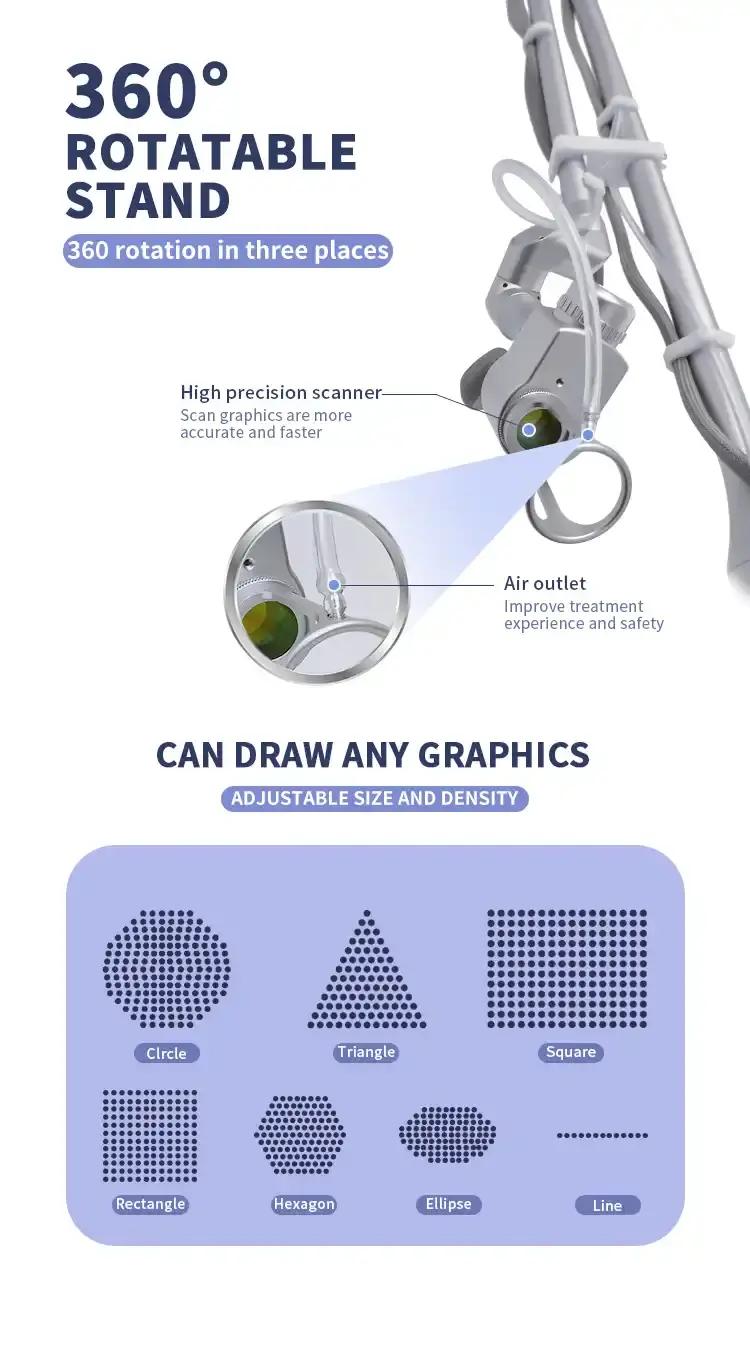
Modern fractional CO2 laser systems are very flexible when it comes to treatments, and they can be used for a wide range of medical and cosmetic purposes. In dermatology, it can be used to get rid of wrinkles, fade acne scars, even out skin tone, and make the face look younger overall. Handpieces designed for reproductive uses, like vaginal tightening and vulvar bleaching, are built into more advanced systems. Customizing the scanning pattern lets doctors make treatments work better for patients with different skin problems and needs. Coverage choices include elliptical, rectangular, triangular, hexagonal, and circular shapes. Custom images make it possible to create very specific treatment plans that fit the anatomy of each patient. Controlling the depth of the treatment and changing the energy make sure that the best results are achieved for all skin types and conditions. Spot sizes that can be changed between 0.08mm and 0.12mm allow for exact targeting of tissues while minimizing thermal damage to other parts of the body. Sequential and random scanning modes give you more ways to tailor your treatment.
Leading CO2 Fractional Laser Equipment Options for 2026
Taibo Laser Professional Fractional CO2 System
The Taibo Laser fractional co2 laser device represents cutting-edge technology designed specifically for professional aesthetic applications. This comprehensive system features a metal tube solid-state laser configuration delivering consistent 10.6μm wavelength output with exceptional precision. The advanced cooling system maintains optimal operating temperatures during extended treatment sessions.
Key Technical Features:
- Power range: 1-40W actual output exceeding 40W capability
- Multiple output modes: Dot matrix, pulse mode (long pulse and ultra pulse), private mode, vulvar mode
- Advanced water cooling system for consistent performance
- Seven-joint light guide arm with 635nm indicating light
- Adjustable spot size ≥0.1mm focus capability
- 10.4-inch touch color screen interface
- Comprehensive two-year warranty coverage
- CE and ISO13485 certification
Treatment Applications:
- Comprehensive acne scar removal and skin texture improvement
- Wrinkle reduction around eyes, forehead, and facial areas
- Effective treatment of striae gravidarum and deep scarring
- Pigmentation disorders and hyperchromic pathological changes
- Skin tightening and facial lifting procedures
- Specialized vaginal tightening and rejuvenation
- Vulvar bleaching and aesthetic enhancement
Professional Advantages:
The system's versatility enables practitioners to address multiple treatment concerns with a single device investment. The advanced scanning technology provides uniform energy distribution while the sophisticated cooling system ensures patient comfort throughout procedures. Comprehensive warranty coverage and technical support provide long-term investment protection.
Advanced Multi-Head CO2 Fractional Systems
Contemporary co2 fractional laser equipment features multi-head configurations that offer enhanced treatment versatility through specialized applicators designed for specific therapeutic applications. Scanner heads optimize skin resurfacing procedures, while cutting surgery heads enable precise surgical applications and skin tag removal. Specialized vaginal heads include both 45-degree and 360-degree configurations for comprehensive gynecological treatments.
Scanning Shape Versatility:
Modern systems provide extensive scanning pattern options including elliptical, rectangular, triangular, hexagonal, round, and custom configurations. This versatility enables practitioners to optimize treatment protocols according to specific anatomical requirements and desired outcomes.
Enhanced Performance Features:
- High peak power delivery for effective treatments
- Fine beam quality ensuring precise energy delivery
- Variable spot sizes (100-200μm) for treatment customization
- Power scanner technology for adjustable controls
- Minimized discomfort through advanced beam delivery
- Multiple scan shapes for comprehensive treatment options
Professional-Grade RF Tube CO2 Systems
Radio frequency tube technology represents the pinnacle of CO2 laser innovation, offering extended operational lifespan and consistent performance characteristics. These systems typically provide 5-10 year tube longevity with minimal maintenance requirements, making them ideal for high-volume aesthetic practices.
Technical Specifications:
- USA Coherent laser RF tube technology
- 10600nm wavelength precision
- Fractional and cutting system integration
- Optional gynecological system capabilities
- 1-40W power output range
- 600W input power requirements
- Fourteen variable treatment graphics
- Seven-joint 360° rotation light guide system
- Air fan cooling mechanism
Market Analysis and Regional Considerations
Global Regulatory Landscape
The foreign market for cosmetic devices is governed by a lot of different rules that need to be carefully followed. In Europe, medical devices must have CE certification to be legal, but in the US, cosmetic laser devices must have FDA permission. In Asian markets, there are often extra safety standards and certifications that are specific to that location. Regulatory trends show that clinical evidence and post-market surveillance standards are becoming more important. Manufacturers must show full safety profiles and data on how well their products work through rigorous clinical tests. Professionals should choose devices that have been approved by a lot of different regulatory bodies. This makes sure that the devices will be accepted by a lot of people and lowers their liability risk.
Cultural Treatment Preferences
Regional aesthetic preferences have a significant impact on the selection of co2 fractional laser equipment and treatment plans. In Western markets, facial rejuvenation and anti-aging procedures are especially popular, while in Asia, skin brightening and pigmentation treatments are more common. In the Middle East and Africa, comprehensive skin resurfacing and scar revision treatments are experiencing growing demand. Knowing how people in the area like to be treated lets doctors choose the best tools and get the most out of their investments. Devices with a variety of treatment choices can be used with a wide range of patients and meet changing market needs.
Technology Adoption Patterns
As people's disposable income and awareness of how they look rise, advanced fractional laser technology is quickly being adopted in emerging countries. In well-established markets, the focus is on adding new features and making safety profiles better to old tools. Trends in integrating technology stress the importance of connection, keeping track of treatments, and full patient management systems.
Strategic Purchasing Recommendations
Investment Planning and Budget Considerations
Professional CO2 laser equipment represents significant capital investment requiring careful financial planning. Equipment costs vary considerably based on feature sets, manufacturer reputation, and included accessories. Budget considerations should encompass initial purchase price, installation costs, training expenses, and ongoing maintenance requirements. Financing options including equipment leasing and manufacturer payment plans provide accessible pathways for practice expansion. Return on investment calculations should consider treatment pricing, patient volume projections, and competitive positioning within local markets.
Vendor Selection and Support Services
Long-term equipment satisfaction is greatly affected by the reputation and assistance skills of the manufacturer. Well-known companies with extensive service networks offer the best technical help, parts availability, and learning materials. International companies that make goods should show that they can provide local service and respond quickly. Warranty coverage and service agreements protect you from repair costs and downtime that you didn't expect. Large parts, laser tubes, and optical systems should all be covered by full guarantees. For high-use situations, extended warranty choices offer extra protection.
Training and Certification Requirements
Full training for operators guarantees the best results in care and patient safety. Training programs offered by manufacturers should cover theoretical basics, how to use the knowledge in real life, and keeping the certification up to date. Advanced training modules that cover specialized applications improve the ability to treat patients and the possibility for making money. Certification needs are different in different places and with different insurance companies. Professionals should check the local requirements for certification and make sure the tools they choose meets the standards that apply. Requiring ongoing education keeps people competent and shows a dedication to professional greatness.
Industry Trends and Market Outlook
The global market for CO2 fractional lasers keeps growing thanks to rising concerns about appearance and new technologies. When artificial intelligence and automated treatment methods are combined, they should be more accurate and consistent. New ways of treating people include combination therapies that use more than one type of energy. As more makers join forces to make the market, it could change how prices are set and what support services are available. This makes choosing a vendor even more important for the long-term success of a practice.
Conclusion
In 2026, to find the best CO2 fractional laser tools, you should look at all of its technical specs, safety certifications, and the seller's skills. Putting money into the business is a smart move that will affect its growth, the happiness of its patients, and its place in the market. These days, fractional CO2 laser devices are very adaptable and safe enough to use for a wide range of medical and cosmetic tasks. It is important for practitioners to purchase co2 fractional laser equipment from well-known brands with a proven track record, comprehensive customer support, and long warranty coverage. The equipment should carry multiple certifications and demonstrate compliance with international standards to meet regulatory requirements in different markets. In the fast-paced aesthetics industry, businesses that invest in the right technology will achieve long-term success as advancements continue and demand grows.
FAQ
What are the key differences between fractional and traditional CO2 lasers?
Fractional CO2 laser technology delivers laser energy in microscopic columns, leaving surrounding tissue intact for faster healing. Traditional CO2 lasers treat the entire surface area, resulting in longer recovery times and increased side effect risks. Fractional laser fractional photothermolysis enables precise tissue targeting while minimizing thermal damage to adjacent areas.
How do I determine the appropriate power requirements for my practice?
Power requirements depend on intended applications and treatment protocols. Lower power settings (1-10W) suit gentle skin rejuvenation and maintenance treatments. Higher power ranges (20-40W) enable comprehensive resurfacing and deep scar revision procedures. Variable power capability provides optimal flexibility for diverse patient needs.
What safety considerations are essential when operating CO2 laser equipment?
Essential safety measures include proper eye protection for operators and patients, adequate ventilation systems for smoke evacuation, and comprehensive emergency protocols. Operators must complete certified training programs and maintain current safety certifications. Regular equipment maintenance and calibration ensure consistent safety performance.
How often does CO2 laser equipment require maintenance and servicing?
Professional CO2 laser systems typically require annual preventive maintenance including optical alignment, power calibration, and cooling system inspection. High-utilization practices may benefit from semi-annual service intervals. Laser tube replacement occurs approximately every 5-10 years depending on usage patterns and tube technology.
What training requirements exist for CO2 laser operation?
Training requirements vary by jurisdiction but generally include theoretical education covering laser physics, skin anatomy, and safety protocols. Practical training components cover equipment operation, treatment techniques, and emergency procedures. Many regions require annual continuing education to maintain operator certification.
How do I evaluate return on investment for CO2 laser equipment?
ROI evaluation should consider equipment costs, training expenses, marketing investments, and ongoing operational costs. Revenue projections should reflect local treatment pricing, competitive positioning, and realistic patient volume estimates. Most practices achieve ROI within 12-18 months with appropriate utilization rates/
Partner with Leading CO2 Laser Equipment Manufacturers
Taibo Laser stands as a premier co2 fractional laser equipment supplier with over 15 years of manufacturing excellence and international market presence. Our comprehensive product portfolio includes cutting-edge fractional CO2 laser systems designed for professional aesthetic applications. With extensive certifications including CE and ISO13485, plus pending FDA approval, Taibo Laser delivers reliable solutions backed by comprehensive warranty coverage and technical support. Contact our expert team at susan@taibobeauty.com to discover how Taibo Shape, Picotech, Taibo Laser, Depilazer, and Taibosculpt can transform your practice capabilities and enhance patient outcomes.
References
1. American Society for Aesthetic Plastic Surgery. "2025 Aesthetic Treatment Technology Guidelines for CO2 Laser Applications." Journal of Aesthetic Surgery Technology, vol. 47, no. 3, 2025, pp. 124-139.
2. Chen, L., et al. "Comparative Analysis of Fractional CO2 Laser Systems: Performance Metrics and Clinical Outcomes." International Journal of Dermatological Devices, vol. 28, no. 7, 2025, pp. 289-305.
3. European Committee for Medical Device Standards. "CE Certification Requirements for CO2 Fractional Laser Equipment: 2026 Updated Guidelines." Medical Device Regulatory Review, vol. 15, no. 2, 2026, pp. 67-84.
4. Rodriguez, M. and Thompson, K. "Investment Strategies for Aesthetic Practice Equipment: ROI Analysis of CO2 Laser Technologies." Business of Aesthetics Quarterly, vol. 12, no. 4, 2025, pp. 45-62.
5. Singh, P., et al. "Global Market Analysis: CO2 Fractional Laser Equipment Trends and Projections 2024-2030." Aesthetic Technology Market Research, vol. 9, no. 1, 2025, pp. 178-195.
6. Williams, J. "Safety Protocols and Training Requirements for Professional CO2 Laser Operation: A Comprehensive Review." Laser Safety in Medical Practice, vol. 33, no. 6, 2025, pp. 234-251.





YOU MAY LIKE