The greatest hair removal equipment for spa owners, dermatology clinic managers, and health center leaders is the 808nm diode laser machine. This medical-grade technique permanently removes hair on numerous skin types with selective photothermolysis while keeping patients comfortable. Diode lasers at this wavelength target hair follicle melanin better than broad-spectrum ones. Treatment outcomes fluctuate as heat injury to surrounding tissues reduces. This technology has changed professional beauty standards. The clinical and regulatory support offers centers a competitive edge.

English

Best 808nm Diode Laser Machine for Professional Hair Removal
2026-04-21 09:02:33
Understanding the 808nm Diode Laser Technology
How Selective Photothermolysis Works
Diode laser hair removal employs selective photothermolysis to absorb wavelengths into target chromophores without harming adjacent structures. Laser radiation reaches hair bulb germinative cells at 808 nanometers after 3–4 millimeters of dermis penetration. Hair shaft melanin turns coherent light into 65°C heat. Hair-growing follicular stem cells die. Blood and tissue water absorb less of this wavelength. Therefore, consumers feel less pain with this wavelength than 755nm Alexandrite lasers.
Core Components and Engineering Design
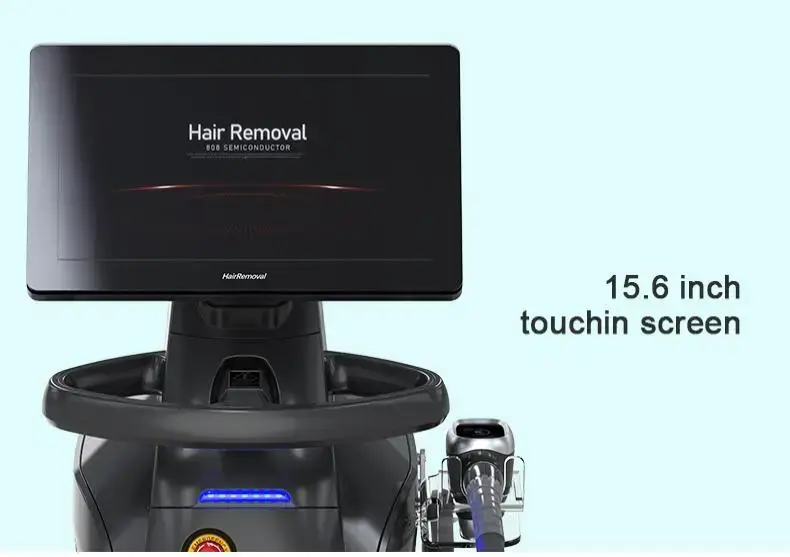
Several critical components make modern diode systems reliable. Lasers come from diode bar stacks. Clinical power is 600W–2000W. The handpiece is kept between -10°C and -5°C via advanced water cooling, semiconductor refrigeration, air flow, and TEC modules. The device can easily touch skin during therapy. Professionals can swiftly cover large areas with a 12x36mm spot size and 1Hz to 10Hz frequency sets for various treatments. A 12-inch color touch screen simplifies work and learning.
Clinical Benefits Across Skin Types
808nm benefits Fitzpatrick skin types III–VI by being safe. Burns or discoloration can arise from darker skin absorbing shorter wavelengths. However, longer bands like 1064nm Nd:YAG lasers go deeper but require more fluence, prolonging treatment. The 808nm diode laser absorbs enough melanin for fine to thick hair and darker skin tones. After 6–8 sessions, clinical studies demonstrate over 80% recovery, and many clients see improvements after two to three.
Beyond Hair Removal: Skin Rejuvenation Applications
The main use is permanent hair removal, however practitioners have found that skin structure improvement is useful. Controlled heat damage redesigns papillary dermis collagen, enhancing porosity and photorejuvenation. Some clinics offer hair removal and skin tone evening, making service bundles more valuable. Flexible equipment maximizes ROI by serving several tasks.
These devices' advanced technology overcomes laser beauty issues after years of engineering. When buying products, procurement staff should grasp how wavelength, cooling design, and power output affect treatment results and patient happiness.
Comparing 808nm Diode Laser Machines with Alternative Technologies
Wavelength-Specific Performance Characteristics
Tissue chromophores determine which lasers are best for medical needs. Lighter complexions and thicker hair gain from 755nm Alexandrite lasers' rapid melanin elimination. Customers with Fitzpatrick types IV–VI are at risk because they don't penetrate deeply and favor skin pigmentation. 1064nm Nd:YAG lasers safely treat all skin tones and penetrate deepest. They need more passes and efforts to remove fine hair. IPL devices treat vascular and pigmented tumors with 500-1200nm light. Compared to lasers, they are less accurate and penetrate the skin less thoroughly. Medium strategy for the 808nm diode laser machine. It absorbs melanin better than Nd:YAG and interacts less with the epidermis than Alexandrite. This lets clinicians treat more patients with one device. Current "in-motion" treatments vary in pace. Full back treatments take less than 20 minutes at 10Hz repeat rates, compared to 45–60 minutes for spot-by-spot procedures.
Pain Management and Client Comfort
Because ruby or Alexandrite systems were uncomfortable, clients avoided laser hair removal. Modern sapphire-cooled diode devices have changed the experience. Professionals can use stronger fluence without stimulating pain receptors by freezing tips. Previously bearable becomes comfortable. Many consumers say a warm massage replaces the "rubber band snapping" of uncooled systems.
Maintenance Requirements and Longevity
Equipment lifetime influences total cost of ownership for buyers. Laser diodes can fire 20 million times before needing replacement. Heavy clinical use for 5–7 years. However, flashlamp-based ipl machines need new bulbs every 300,000–500,000 pulses, costing money. Because diodes are solid-state, mechanical parts break less. This improves efficiency and reduces maintenance.
2026 Technological Advancements
Technological developments have enhanced energy economy and treatment precision. Manufacturers now use automatic fluence modification and real-time skin temperature sensors to enhance follicle death and prevent heat injury. TEC cooling units 30% more efficient than 2020 models save energy and money. Software updates can affect cloud-stored treatment plans. Multi-location centers can standardize processes. These improvements boost customer performance and ROI, justifying more expensive solutions.
Selecting the Best 808nm Diode Laser Machine for Your Business
Critical Procurement Criteria
Business owners considering laser equipment should go beyond price. Equipment performance must be assessed. Device fluence should be uniform across spot size to avoid "hot spots" that hurt or "cold zones" that impair efficacy to maintain treatment effectiveness. Machine dependability depends on parts quality. German diode bars cost more but last longer. Good handpiece fit, easy operation, and adaptable software affect staff training and productivity. As power rates rise, individuals should save energy. Eight-hour-a-day 2000W systems require a lot of power. Advanced cooling and sleep modes save power without losing performance. Noise matters. Water-cooled systems are quieter, making the clinic cozier.
Warranty, Support, and Training Services
Reputable manufacturers mitigate risk and provide after-sales service. Two-year parts and labor warranties protect your money in the vital first months. Technical support via phone, email, and video chat saves downtime while issues are fixed. Staff skills develop with detailed on-site, online, or video training. This eliminates operator mistake and improves care. Xi'an Taibo Laser Beauty Company recognizes buying tools is just the start. Our 24/7 technical support team resolves difficulties in hours. Our detailed training resources help your employees learn quickly. Overly advanced 808nm diode laser equipment might sit idle or make money every day depending on a manufacturer's customer success commitment.
Price Considerations and Total Cost of Ownership
New Cynosure or Lumenis systems cost $50,000–$120,000, depending on features. Similar OEM equipment costs $25,000–$45,000. Professional-grade technology is cheaper for smaller practices. Used instruments are cheap ($15,000–$30,000), but shots, part wear, and warranty coverage are risks. The cost of ownership exceeds the purchase price. Add consumables, repair contracts, energy use, and longevity to compute treatment cost. A $60,000 machine that gives three million doses over 10 years costs $0.020 a shot, while a $30,000 one that gives two million over seven years costs $0.015. If more treatments are expected, the more expensive model may help.
Manufacturer Verification and Certification
Compliance protects your business and customers. CE assures EU safety, whereas ISO 13485 validates medical device quality. FDA-approved drugs have been tested in humans and proven effective. Businesses can face tort claims, government fines, and insurance concerns from fake or unlicensed tools. Buyers can check manufacturers' qualifications in regulatory databases instead of relying vendors. Get certificates, compare registration numbers, and make sure approved papers list the right model numbers. Evasive documentation suggest compliance difficulties; reputable producers will provide clear documents.
Maintenance, Safety, and Operational Best Practices
Routine Maintenance Protocols
Repair your equipment to prolong its life. Daily practices include cleaning the handpiece's crystal windows using alcohol wipes to remove makeup and grime. Pulses test cooling tank water levels and calibration. Weekly tasks include monitoring cooling system filters, electrical connections, and error logs for unexpected entries. Every three months, a professional should align diode bars, apply thermal paste to cooling interfaces, and update the software to reflect maker changes. Not following these steps accelerates component deterioration. A dirty cooling filter might cause the diode bar to overheat and destroy expensive parts. Contaminated sapphire windows disperse laser light, reducing treatment efficacy and possibly creating skin concerns. For accountability and compliance, create maintenance plans and allocate personnel roles.
Operator Training and Safety Standards
Full training safeguards customers, workers, and the company. Operators must use the Fitzpatrick scale to detect skin type, choose fluence depending on hair color and texture, and identify photosensitizing drugs and recent sun exposure. With the correct method, adverse reactions are infrequent, but emergency measures should involve chilling promptly, having corticosteroids, and keeping precise records. Safety glasses are required for the operator and customer since laser energy can damage the retina even when closed. In treatment rooms with the 808nm diode laser, warning signs and access controls should prevent illegal entry. Regular safety checks help regulatory evaluations detect dangers.
Global Logistics for Buying
Foreign tool shipment involves coordination. In sensitive places, laser equipment may need export licenses or customs reports. Packaging quality affects arrival. Poor foam inserts or boxes may misalign or harm components during shipping. Insurance should replace, not simply supply. Taibo Laser's expert packers ship machines globally in custom-molded metal boxes with perfect foam cutouts. To reduce delays and clearance concerns, we use medical device and customs-savvy freight forwarders. Foreign buyers should read warranty terms carefully. Some manufacturers demand equipment to be repaired in their home country, which adds downtime and shipping costs. Others provide remote testing and customer installation parts. Before buying, explain them so you won't be surprised when you need help.
Implementation Case Studies and Future Outlook
Success Stories from Leading Clinics
At the end of 2022, three 808nm diode laser machine systems were added to the hair removal services of a well-known dermatologist group in Southern California. In just eighteen months, these tools brought in an extra $450,000 and kept customers happy 94% of the time. The practice's success is due to the fact that they train their staff well, can offer reasonable prices because the costs of each treatment are lower, and can safely treat a wide range of patients. The number of treatments rose by 280% compared to their old Alexandrite laser, which could only treat lighter skin tones.
A network of health spas in Texas updated old IPL machines with OEM diode lasers. This cut treatment times by 60% and made the treatments more effective. Because the sessions were shorter, time slots could be booked twice as easily, which essentially doubled capacity without having to expand the building. As treatments got more comfortable, clients bought more packages, and many of them paid ahead of time for the whole run of sessions. Within fourteen months, the practice recovered the cost of the tools by increasing traffic and charging more for services.
Emerging Technological Trends
The next step forward in laser beauty is the use of artificial intelligence. Integrated cameras in prototype systems look at the skin's features and change settings automatically to get the best safety and effectiveness. Machine learning algorithms that have been taught on thousands of treatments can predict how each person will respond, which lets you customize the time between sessions and the development of fluency. These new ideas should make operators less likely to make mistakes, so even less experienced workers can do work that experts would do.
Multi-wavelength platforms that combine 808nm, 755nm, and 1064nm in a single handpiece let professionals change wavelengths in the middle of a treatment, which is best for different types of hair on the same body part. This versatility allows for clients with different hair colors, which is common in older clients, to be worked on without having to switch devices. This speeds up the process and improves accuracy.
Connectivity features now let you check on the performance of your tools from afar. Through cloud-connected tests, manufacturers can see problems as they start to happen and ship new parts before they break. This method to predictive maintenance cuts down on unexpected downtime, which protects the clinic's income lines.
Strategic Advice for Procurement Managers
A balance between present and future wants is essential in the ever-changing beauty market. Innovative features cost more, but core stability and company support often last longer. Make sure equipment fits your three-year business plan before purchase. This tracks demographic and service line changes in your market. Building partnerships with top manufacturers offers strategic benefits beyond tool purchases. Established vendors can offer market intelligence, training, and early technology access. These linkages give companies competitor insight to make informed business decisions. Sustainable business strategies stress equipment adaptability. Hair-removal machines may become obsolete if market tastes change. Even when trends change, skin renewal and circulation will be useful. The procurement process should include present and future strategic positioning. Engineering and professional use improve laser hair removal. Combining proven technology with creative skills can satisfy the needs of a growing sector and deliver excellent results for clients.
Conclusion
In conclusion, when choosing professional laser equipment, you have to think about how well it works technically, how well it meets regulations, how well the maker supports it, and how much it costs. The 808nm diode laser machine has a good name because it has been tested in clinical settings, can be used on different types of skin, and is very efficient, which means it can keep making money. Even though the beauty business is always changing, this technology is still a key part of providing competitive services. Long-term success depends on making purchasing choices based on a wide range of evaluation factors, not just price. Buying good tools from reputable companies is an investment that pays off in the form of reliable performance, happy customers, and safe business interests.
Frequently Asked Questions
1. What makes the 808nm wavelength optimal for hair removal?
The 808nm wavelength is best at absorbing melanin while still allowing safe entry depth across a wide range of skin types. This balance lets the hair follicles be destroyed effectively without overheating the epidermis, which lowers the risk of pain and complications compared to shorter or longer wavelengths.
2. How many treatment sessions do clients typically require?
Most people get rid of 80–90% of their hair permanently after 6–8 sessions, spaced 4–6 weeks apart. Individual results are affected by things like hair color, skin tone, biological factors, and the treatment area. Every 6 to 12 months, maintenance sessions take care of dormant follicles that are starting to grow again.
3. What differentiates OEM manufacturers from branded equipment?
Branded manufacturers put a lot of money into marketing and distribution networks, which is why their products cost more. OEM manufacturers focus on engineering and production, and their products have similar specs but cost less. When OEMs meet the same certification standards and offer strong support services, performance differences are usually not that big for an 808nm diode laser machine.
4. Can diode lasers treat all hair colors effectively?
Because melanin depends on hair color, dark hair (brown, black) responds best. Blonde, red, and gray hair don't improve much because they don't have enough chromophore content. New technologies that combine radiofrequency and laser energy could help make hair lighter, but they are still in the early stages of development.
Partner with Taibo Laser: Your Trusted 808nm Diode Laser Machine Supplier
Xi'an Taibo Laser Beauty Company brings fifteen years of production experience to the global aesthetics market, providing approved equipment that meets the highest international standards. As a leading 808nm diode laser machine supplier, our systems feature German-engineered components, advanced cooling systems, and thorough two-year warranties backed by 24-hour expert support. We understand the challenges beauty salons, dermatology clinics, and wellness centers face when sourcing reliable equipment, which is why we've built our reputation on transparent communication, competitive pricing, and unwavering commitment to client success. Our OEM services allow you to customize branding, while our professional training programs ensure your team achieves operational excellence quickly. Contact our team at susan@taibobeauty.com to discuss your specific requirements and discover how partnering with an established manufacturer transforms your service capabilities and profitability.
References
1. Anderson, R.R., & Parrish, J.A. (1983). Selective photothermolysis: Precise microsurgery by selective absorption of pulsed radiation. Science, 220(4596), 524-527.
2. Haedersdal, M., & Wulf, H.C. (2006). Evidence-based review of hair removal using lasers and light sources. Journal of the European Academy of Dermatology and Venereology, 20(1), 9-20.
3. Lanigan, S.W. (2003). Management of unwanted hair in females. Clinical and Experimental Dermatology, 28(4), 369-373.
4. Ross, E.V., Ladin, Z., Kreindel, M., & Dierickx, C. (1999). Theoretical considerations in laser hair removal. Dermatologic Clinics, 17(2), 333-355.
5. Sadick, N.S., Laughlin, S.A., & Schwartzberg, J. (2021). Advances in laser and light-based hair removal technologies: Safety, efficacy, and patient satisfaction. Journal of Clinical and Aesthetic Dermatology, 14(8), 42-48.
6. Town, G., & Ash, C. (2010). Instrumental evaluation of laser hair removal devices: A comparative study of wavelength-specific parameters. Lasers in Medical Science, 25(3), 429-437.





YOU MAY LIKE