
A Beginner’s Guide to Q Switch 1064 Laser Treatments
2026-08-31 09:08:16
If you're running a tattoo studio or considering expanding into tattoo removal and pigmentation treatments, understanding the q switch 1064 laser system can open doors to high-margin services your clients already want. The Q-switched Nd:YAG laser operates by delivering nanosecond pulses at 1064 nm wavelength, creating photoacoustic waves that shatter deep pigments without damaging surrounding skin tissue. This makes it perfect for removing dark ink, treating melasma, and offering carbon peel treatments—services that charge more per session than tattooing itself and generate recurring revenue. Within minutes, you'll understand how this technology works, what treatments it supports, and why it's becoming the go-to investment for studios across the U.S.
Understanding Q Switch 1064 Laser Technology
How Q-Switching Works
A laser's "Q-switch" briefly stops the cavity so that energy can build up before it is released in a very short burst. The peak power of these pulses is high enough to break up pigment particles mechanically instead of burning them away. They last for about 6 nanoseconds. People who use this type of photoacoustic laser repair faster and with less heat damage than people who use older continuous-wave lasers.
The 1064 nm frequency skips over the melanin in the epidermis and goes straight for the deeper layers of skin. Lasers with lower bands, like 532 nm, can be dangerous for people with darker skin (Fitzpatrick types IV–VI). This makes the laser safer for them. It works great on colors that won't come off, like Nevus of Ota, professional tattoos, and age spots that are below the skin's surface because it goes deep.
Core Technical Specifications
Different wavelengths of light are sent out by modern systems. For example, 1064 nm is used for deep black and blue colors, 755 nm is used for green tones, and 532 nm is used for red and orange inks. It is possible to change the working frequency (1–10 Hz) and spot size (2–10 mm). This lets workers change the treatment strength based on the skin's sensitivity, color depth, and ink density.
Ocular danger distances can reach up to 1 km, so safety rules say that workers must wear goggles that are rated for the colors being used. Most tools made for professionals have two ways to cool them down: one uses air and the other uses water. This keeps the performance steady over long sessions and stops the parts inside from getting too hot.
Why Studio Owners Choose This Technology
To get rid of a tattoo, each treatment costs between $200 and $500. Most people need between 6 and 10 sessions, eight weeks between each one. You could charge once for that way of making money, so it's clear why this is a good business idea. Carbon peels and pigmentation treatments (for freckles, sunspots, and melasma) can help you get people who want more than just tattoos. They may also want to fight age and make their skin look younger.
People who aren't medical experts can learn how to safely use lasers through structured training programs that are generally over in a few days. Systems that watch over 30 checkpoints have built-in self-inspection features that make it easier to learn how to use them and help operators avoid making mistakes that could lead to bad things.
Applications and Effectiveness in Clinical and Cosmetic Fields
Tattoo Removal Across Color Spectrums
For tattoos that are mostly black, blue, or dark green, the 1064 nm frequency works great to break them up. It works best on brighter colors like red, orange, and yellow at 532 nm. This is why systems with more than one frequency can get rid of so many colors. Tattoos that were done by amateurs usually heal faster than ones that were done by professionals. This is because the ink isn't as dense and the placement isn't as deep.
Most treatment plans start slowly. For example, the first sessions might use lower energy settings to see how the skin responds. As time goes on, the settings are slowly increased. The first session generally makes things 30–50% better for most clients, but it usually takes more than one session to fix the problem for good. Eight to twelve weeks between sessions gives the lymphatic system time to get rid of pigment particles that have been broken up. This also gives the skin time to heal.
Pigmentation Treatment Solutions
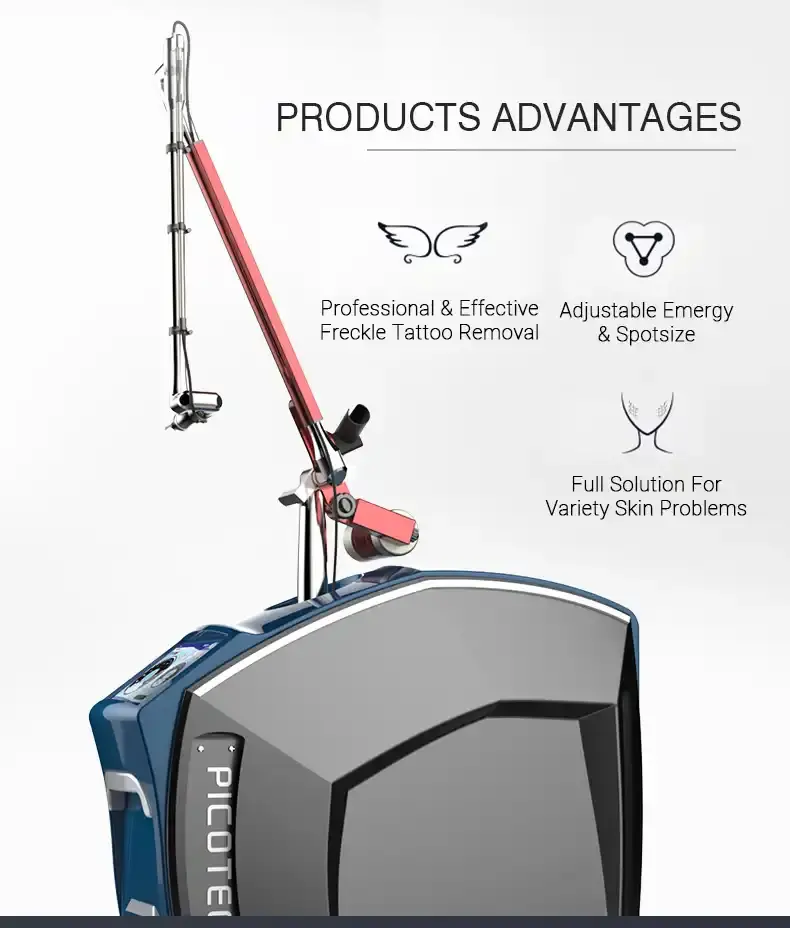
For people with melasma, Hori's macules, or Nevus of Ota, q switch 1064 laser treatments can help even out their skin tone. This is because the laser light can reach deep pigmentation spots without hurting the top layer of skin. You can also get rid of freckles, age spots, and sun damage on your skin. Because they are so close to the surface, they usually only need a few sessions.
Photoacoustic cracking breaks pigment into bits that macrophages can easily take in and get rid of. In this way of biological clearance, results don't show up right away after each session. They take a few weeks to appear.
Carbon Peel Rejuvenation
Doctor-strength carbon cream is put on the face for carbon peels, and it works its way deep into the pores. When the laser hits the carbon particles, it sends out tiny blasts that get rid of dead skin cells, shrink pores, and make more collagen. This treatment will help people get better skin without having to take time off, which makes it a great thing to give.
People can go back to their normal lives right away after 20 to 30 minute sessions. You can be sure that your school will make steady money if you tell people that they should get therapy once a month for best results.
Comparing Q Switch 1064 Laser to Other Laser Technologies
Q-Switch vs. Picosecond Lasers
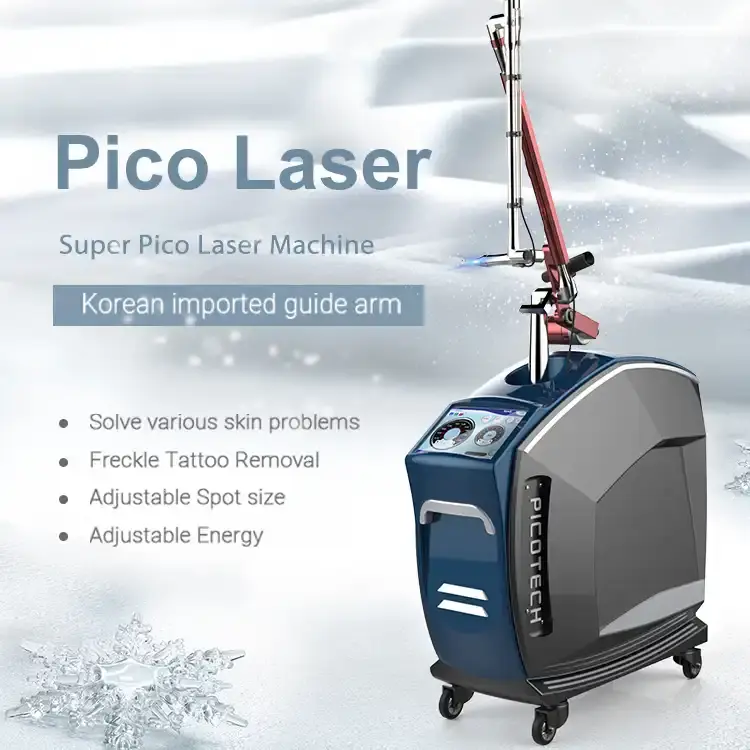
Picosecond lasers send out pulses that last between 350 and 750 picoseconds. Q-switched systems, on the other hand, send out pulses that last only one nanosecond. This shorter pulse width should break up color into even smaller pieces, which could mean that you need fewer treatment sessions overall. Good Q-switched systems cost between $15,000 and $45,000, while picosecond devices cost between $80,000 and $150,000.
Q-switched technology is a tried-and-true choice for studio owners who want to add a laser service line. It's also affordable, so studio owners can see their money grow faster. Most of the time, clients don't just choose between technologies based on how well they work. How skilled the operator is, how well the parameters are chosen, and how realistic the expectations are set are more important.
Q-Switch vs. Fractional CO2 Lasers
That's how fractional co2 lasers work: they remove very thin layers of skin to help the body heal and build up collagen. It takes 7–14 days to heal from them, and darker skin is more likely to get hyperpigmentation. However, they are great at getting rid of acne scars, deep lines, and problems with the structure of the skin.
With the Q-switched method, treatments are softer and healing times are faster, which is better for people who need to be at work. Studios geared toward workers can benefit from adding this feature for ease of use.
Investment Considerations
Don't just look at how much a machine costs when you judge it. Some important things to think about are the warranty time (two years should be normal), how easy it is to get replacement parts, how good the training is, and how quickly expert support can help. Products from well-known brands usually have CE and ISO13485 ratings, which mean they meet safety standards around the world.
Stable energy output is very important. For 1,000 shots in a row, machines should be able to keep their output within a 3-5% range. As energy moves around in an unstable way, it can damage things or leave areas that aren't being handled enough.
Procurement Guide for Q Switch 1064 Laser Machines
Evaluating Suppliers and Manufacturers
It's usually cheaper to buy straight from the maker than to buy through a dealer. This is especially important for studios that want to buy more than one unit as their business grows. Companies that hire outside factories to make their products are less likely to be able to control quality and offer quick support than well-known companies that have their own R&D departments and factories.
Be sure to ask for proof of credentials. For instance, a CE mark means that the product meets safety standards in Europe, and ISO13485 means that the product has quality control systems that are meant to work with medical devices. FDA approval should eventually be given to U.S.-made equipment, but many studios start out with CE-certified gear while they wait for approval from U.S. regulators.
Understanding Pricing and Financing
Starter Q-switched systems for small studios cost around $12,000 to $18,000. Better models with more bands and better cooling systems cost around $20,000 to $35,000 more. The most expensive ones cost over $45,000. There are many companies that let you spread out your payments over 12 to 36 months, so you don't have to pay as much all at once.
Be sure you know how much money you expect to make with the q switch 1064 laser. For example, if you charge $300 per session and only get two customers a week for tattoo removal (each for an average of eight sessions), this service will bring in $38,400 a year. You can buy things that pay for themselves in 6 to 12 months if you plan your money well.
Technical Support and Training Essentials
For complete training, you should learn basic laser science, how to tell what kind of skin you have, how to make treatment plans, how to handle problems, and how to talk to clients. Video guides are helpful, but the best way to boost operator confidence is to see live demonstrations, either in person or through detailed video calls.
When there is always technical help available, small problems don't turn into costly downtime. You can keep your clients happy and solve problems quickly if your suppliers offer support by phone, email, and chat apps 24 hours a day, seven days a week. Guaranties that cover both parts and work for two years will keep your money safe during the most important part of building a business: making money.
Real-World User Experiences and Professional Reviews
Clinical Evidence and Case Studies
A study that was made public shows that the Q-switched Nd:YAG laser works well in several cases. When standard treatments were added to studies on how to treat onychomycosis, the nails looked better and the fungus went away much faster. Researchers who looked at acne scars found that collagen remodeling and texture change could be seen after several treatments, with few side effects being reported.
How well tattoo removal works for each person depends on the type of ink used, how deep the tattoo was put in, and how their immune system reacts to it. But most people whose tattoos fade a lot do so by following the right steps. A tattoo with professional inks may need more sessions than one with home inks because the professional inks are deeper and have more color.
Managing Client Expectations
A lot of people come in thinking they can get rid of all their tattoos in just one or two treatments because of false advertising. Being honest about what you want, like saying that most tattoos take between 6 and 10 sessions and that some colors don't fade as quickly, helps people trust you and lessens their sadness. Picture of real cases before and after helps clients understand how things usually change.
Some common short-term side effects are instant whitening (frosting), mild swelling, and darkening of pigmented areas that only lasts a short time before going away. Scarring or hyperpigmentation are rare problems that usually happen because the operator used too much energy or the patient didn't do what they were told during the treatment.
Building Credibility Through Transparency
You can build trust in your studio by displaying your equipment certifications, operator training certificates, and client reviews. This makes people who come in for suggestions more likely to buy from you. A lot of companies that do well take pictures at every session and put together portfolio albums with treatment sets. This shows that they are professionals because it shows that they can get things done.
Having professional relationships with doctors who can handle tough cases or issues can boost your reputation and give you access to helpful networks for getting new patients. This is very important as your laser service business grows and you take on cases that were too hard for you to handle at first.
Conclusion
Tattoo shops can make more money with the q switch 1064 laser because it lets them get into the growing market for scar and tattoo removal. Clinics can make a lot of money with this technology if they use the right tools, train their clients well, and teach them in a way that is true to life. It's important to choose manufacturers with a good reputation who offer full support, know how to make sure the machine works safely, and come up with treatment plans that always work. Studios that take the time to learn how to deal with clients and do things right will make the most money from laser services.
FAQ
1. How long does each treatment session typically last?
Each treatment is different based on the size of the tattoo, but most last between 15 and 30 minutes. A small tattoo might only take 5–10 minutes, but a full sleeve could take up to 45 minutes. When you count the time it takes to get ready, carbon peels, which are used to treat discoloration, take about 25 to 30 minutes.
2. Can I treat all skin types safely?
The 1064 nm range is safe for all Fitzpatrick skin types (I–VI) because it doesn't affect epidermal melanin and instead goes straight for deeper colors. For those with darker skin, you should start with smaller energy sets to see how they. You should always treat small areas on new clients first before moving on to bigger ones.
3. What's the realistic return on investment timeline?
It takes six to nine months for studios that charge $250 to $400 per session and do three to five treatments a week to get their money back on the equipment they bought. The process goes faster if you offer extra services like color treatment and carbon peels to boost your return on investment. How long it takes to get treatments will depend on how much they cost in your area, how well your marketing works, and how many treatments you need.
Partner with TB for Your Laser Equipment Needs
If you need a specialized q switch 1064 laser, Taiwan Beauty (TB) has been helping tattoo shops and beauty clinics for more than 15 years. It does all of its own research and production. Multiple frequencies are used by our devices to send 100–2000 mJ at 1064 nm, 755 nm, and 532 nm wavelengths. This covers all tattoo colors and problems with coloring. You can choose between harsh removal and gentle face treatments because the pulse length is only 6 ns and the spot size can be changed from 2 mm to 10 mm.
We cover both parts and labor for two years for the q switch 1064 laser, and every system comes with both air and water cooling to keep it running smoothly for longer. The CE and ISO13485 marks on our medical devices show that they meet standards from other countries. TB has more to offer than just gear. They also give you full video training, technical support 24 hours a day through a number of channels, and ongoing help as you build your laser service business.
Tattoo shops in more than 180 countries trust TB products because we know the issues artists have when they first start using tattoo removal items. We do more than just sell tools; we also help your business grow by giving you training, paperwork, and quick service. These things will determine whether your laser investment pays off or just sits there gathering dust.
You can email susan@taibobeauty.com to talk about your specific needs, get help with treatment plans, or set up equipment tests. Taibolaserbeauty.com has all of our products and case studies. You are already being asked to help people move, so make sure you are ready to get paid for it.
References
1. Anderson, R. R., & Parrish, J. A. (1983). Selective Photothermolysis: Precise Microsurgery by Selective Absorption of Pulsed Radiation. Science, 220(4596), 524-527.
2. Bernstein, E. F. (2007). Laser Treatment of Tattoos. Clinics in Dermatology, 25(4), 388-396.
3. Chan, H. H., et al. (2001). A Retrospective Analysis of Complications in the Treatment of Nevus of Ota with the Q-Switched Alexandrite and Q-Switched Nd:YAG Lasers. Dermatologic Surgery, 27(11), 937-941.
4. Kilmer, S. L., & Anderson, R. R. (1993). Clinical Use of the Q-Switched Ruby and Q-Switched Nd:YAG Lasers for Treatment of Tattoos. Journal of Dermatologic Surgery and Oncology, 19(4), 330-338.
5. Taylor, C. R., & Anderson, R. R. (1993). Ineffective Treatment of Refractory Melasma and Postinflammatory Hyperpigmentation by Q-Switched Ruby Laser. Journal of Dermatologic Surgery and Oncology, 20(9), 592-597.
6. Wenande, E., et al. (2017). Fundamentals of Laser Dermatology: Technologies and Indications. Lasers in Medical Science, 32(3), 697-708.





YOU MAY LIKE