
1064 Q Switched Nd Yag Laser Applications in Dermatology
2026-09-23 00:00:00
Struggling with stubborn pigmentation, unwanted tattoos, or visible vascular lesions that resist conventional treatments? The 1064 q switched nd yag laser has revolutionized modern dermatology by offering precise, effective solutions for skin concerns that once seemed impossible to treat. This advanced technology delivers targeted energy pulses in nanoseconds, selectively destroying unwanted pigment and vascular structures while preserving surrounding healthy tissue, making it an indispensable tool for dermatologists and aesthetic practitioners worldwide seeking superior treatment outcomes with minimal downtime.
Understanding 1064 Q Switched Nd Yag Laser Technology in Dermatological Practice
The 1064 q switched nd yag laser represents a breakthrough in medical aesthetics, operating at a specific wavelength of 1064 nanometers that penetrates deeper into the skin compared to shorter wavelengths. This Q-switched technology generates ultra-short pulse durations measured in nanoseconds, creating a photomechanical effect rather than thermal damage. When the laser energy is delivered in these incredibly brief pulses, it shatters targeted chromophores like melanin and hemoglobin into tiny particles that the body's lymphatic system can naturally eliminate over time. The fundamental principle behind this technology lies in selective photothermolysis, where specific wavelengths target specific structures without affecting surrounding tissues. Modern 1064 q switched nd yag laser systems incorporate advanced cooling mechanisms, adjustable spot sizes ranging from 2mm to 10mm, and energy fluences that can be precisely calibrated from 1 to 10 J/cm², allowing practitioners to customize treatments based on individual patient needs, skin types, and specific conditions being addressed. Xi'an Taibo Laser Beauty Company has perfected this technology through 15 years of manufacturing experience, ensuring their Q-switched ND:Yag Laser systems deliver consistent, reliable results across diverse dermatological applications, from superficial pigmentation to deep-seated vascular concerns.
Mechanism of Action and Tissue Interaction
The 1064 q switched nd yag laser operates on the principle of selective photothermolysis, where the laser's pulse duration must be shorter than the thermal relaxation time of the target chromophore. When nanosecond pulses strike melanin granules or tattoo ink particles, the rapid absorption of energy causes instantaneous heating and expansion, creating a photoacoustic shockwave that fragments these structures into microscopic particles typically measuring less than 10 microns in diameter. These fragmented particles are then recognized as foreign material by the body's immune system, particularly macrophages, which engulf and transport them through the lymphatic channels for eventual elimination through natural metabolic processes. The 1064nm wavelength specifically targets deeper skin layers, making it ideal for treating dermal pigmentation, deeper tattoo ink, and vascular lesions in the reticular dermis. Unlike continuous wave lasers that primarily produce thermal effects, the Q-switched mechanism confines energy delivery to such brief timeframes that heat dissipation to surrounding tissues is minimized, significantly reducing the risk of scarring, post-inflammatory hyperpigmentation, and other adverse effects that commonly plagued earlier laser technologies.
Key Technical Parameters and Clinical Significance
Professional-grade 1064 q switched nd yag laser systems incorporate multiple adjustable parameters that directly influence treatment efficacy and safety profiles. Pulse duration, typically ranging from 5 to 10 nanoseconds in advanced systems, determines the mechanical versus thermal ratio of tissue interaction, with shorter pulses favoring photomechanical disruption. Energy fluence, measured in joules per square centimeter, must be carefully selected based on the Fitzpatrick skin type, depth of target chromophore, and specific indication being treated, with typical ranges spanning from 2 J/cm² for superficial pigmentation to 8 J/cm² for resistant deep dermal lesions. Spot size selection influences both penetration depth and treatment coverage, with smaller spots providing higher energy density for stubborn lesions while larger spots enable faster treatment of extensive areas. Repetition rate, the frequency of laser pulses per second, affects treatment speed and heat accumulation in tissues, with modern systems offering adjustable rates from 1 to 10 Hz to accommodate different clinical scenarios. Xi'an Taibo Laser Beauty Company's Q-switched systems integrate these parameters into user-friendly interfaces with preset protocols for common indications, while maintaining full manual control for experienced practitioners who require precise customization for complex cases or unique patient presentations.
Clinical Applications of 1064 Q Switched Nd Yag Laser in Pigmentation Disorders
Pigmentation disorders represent one of the most challenging categories in dermatology, affecting patients' quality of life and self-esteem significantly. The 1064 q switched nd yag laser has emerged as the gold standard treatment for numerous hyperpigmentation conditions, offering superior outcomes compared to topical agents, chemical peels, or older laser technologies. This wavelength demonstrates particular efficacy in treating melasma, post-inflammatory hyperpigmentation, solar lentigines, café-au-lait macules, nevus of Ota, and Hori's nevus, conditions that previously had limited effective treatment options. The laser's ability to penetrate to the dermal layer while minimizing epidermal damage makes it suitable for darker skin types (Fitzpatrick IV-VI) that historically experienced high complication rates with ablative lasers or intense pulsed light devices. Treatment protocols typically involve multiple sessions spaced 4 to 6 weeks apart, allowing adequate time for pigment clearance and skin recovery between treatments. The 1064 q switched nd yag laser achieves pigment reduction through fragmentation of melanin granules in both epidermal and dermal layers, with the fragmented particles subsequently removed through transepidermal elimination and phagocytosis by dermal macrophages. Clinical studies consistently demonstrate 50-90% improvement in pigmentation after a series of 4 to 8 treatment sessions, with results varying based on lesion depth, chronicity, and patient compliance with photoprotection measures during the treatment course.
Treatment of Melasma and Post-Inflammatory Hyperpigmentation
Melasma, a chronic acquired hypermelanosis characterized by irregular brown patches typically affecting the face, poses significant therapeutic challenges due to its multifactorial etiology involving hormonal influences, UV exposure, genetic predisposition, and vascular components. The 1064 q switched nd yag laser addresses both epidermal and dermal melasma components through targeted melanin destruction while stimulating collagen remodeling that may help normalize underlying vascular abnormalities implicated in melasma pathogenesis. Treatment requires low fluences (2-3 J/cm²) with large spot sizes (6-8mm) delivered in multiple passes, a technique often termed "laser toning" or "laser facial," which achieves gradual pigment reduction while minimizing the risk of post-inflammatory hyperpigmentation that can paradoxically worsen melasma. Post-inflammatory hyperpigmentation, occurring after inflammatory dermatoses, trauma, or aggressive cosmetic procedures, responds favorably to 1064 q switched nd yag laser treatment, particularly when pigmentation extends to the dermis where topical treatments demonstrate limited penetration. The laser's ability to target dermal melanophages containing phagocytosed melanin makes it uniquely effective for these deeper pigmentation patterns, with visible improvement typically observed after 3 to 5 treatment sessions combined with appropriate topical regimens including hydroquinone, kojic acid, or vitamin C derivatives to enhance and maintain results.
Tattoo Removal Using 1064 Q Switched Nd Yag Laser Technology
Tattoo removal has evolved dramatically with the introduction of Q-switched laser technology, particularly the 1064 q switched nd yag laser, which demonstrates superior efficacy for dark ink colors including black, dark blue, and brown pigments that comprise the majority of professional and amateur tattoos. The laser's nanosecond pulses fragment tattoo ink particles into smaller fragments that macrophages can process and eliminate through the lymphatic system, gradually fading the tattoo over multiple treatment sessions. Treatment efficacy depends on numerous variables including ink color, density, depth, tattoo age, patient's immune response, and presence of scarring from the original tattooing process. Black ink, containing carbon particles, absorbs the 1064nm wavelength most efficiently, making it the easiest color to remove, with clinical studies reporting 95% clearance rates after 8-12 sessions. Professional tattoos placed deeper in the dermis with higher ink density require more sessions compared to amateur tattoos which typically use less ink and shallower placement. The 1064 q switched nd yag laser from Xi'an Taibo Laser Beauty Company incorporates high peak power outputs exceeding 1000 watts, ensuring sufficient energy delivery to fragment even densely packed ink particles while maintaining nanosecond pulse durations that minimize thermal damage and scarring risk. Treatment intervals of 6-8 weeks between sessions allow adequate time for ink particle clearance and skin healing, with gradual progressive fading observed throughout the treatment course rather than dramatic changes after individual sessions.
Vascular Lesion Treatment and Skin Rejuvenation Applications
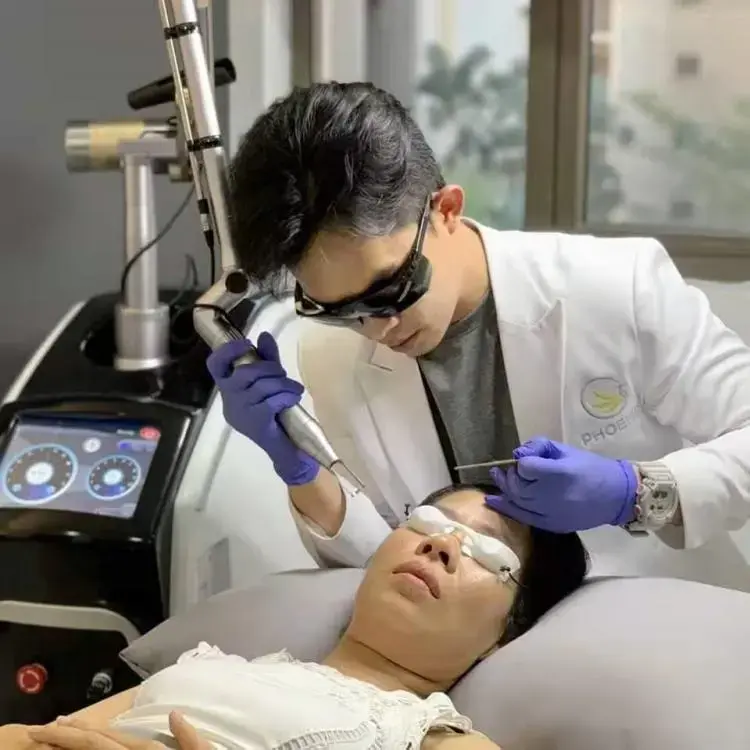
Beyond pigmentation and tattoo removal, the 1064 q switched nd yag laser demonstrates remarkable efficacy in treating vascular lesions including spider veins, telangiectasias, cherry angiomas, and even deeper vessels contributing to conditions like rosacea and venous lakes. The 1064nm wavelength penetrates to the reticular dermis where it is absorbed by oxyhemoglobin in blood vessels, causing selective thermal injury to vessel walls while sparing surrounding tissues. This leads to vessel coagulation, thrombosis, and eventual reabsorption by the body over several weeks following treatment. Facial telangiectasias and spider veins typically respond to 1-3 treatment sessions, while larger leg veins may require additional sessions for complete clearance. The laser's deeper penetration compared to shorter wavelengths makes it particularly effective for treating bluish reticular veins that appear prominently on facial and leg skin. Additionally, the 1064 q switched nd yag laser has gained recognition for non-ablative skin rejuvenation through its ability to stimulate dermal collagen remodeling and neocollagen synthesis. Low-fluence treatments, often called "laser toning," delivered in weekly sessions over several months produce cumulative improvements in skin texture, pore size, and overall skin quality through controlled dermal heating that activates fibroblasts and promotes extracellular matrix remodeling without causing epidermal injury or requiring downtime.
Safety Considerations and Patient Selection for 1064 Q Switched Nd Yag Laser Treatments
While the 1064 q switched nd yag laser demonstrates an excellent safety profile across all skin types, proper patient selection and treatment parameter optimization remain critical for achieving optimal outcomes while minimizing adverse effects. Comprehensive patient evaluation should include detailed medical history focusing on photosensitizing medications, history of keloid formation, active infections in the treatment area, and realistic expectation assessment regarding treatment outcomes and required number of sessions. The Fitzpatrick skin type classification guides initial parameter selection, with darker skin types (IV-VI) requiring more conservative fluences initially with gradual increases based on skin response to minimize post-inflammatory hyperpigmentation risk. Contraindications include pregnancy, active skin infections, recent isotretinoin use within 6-12 months, history of gold therapy, and unrealistic patient expectations regarding single-session clearance of pigmentation or tattoos. Pre-treatment preparation involves strict sun avoidance for 4 weeks prior, discontinuation of photosensitizing agents, and occasionally pre-treatment with topical skin lightening agents for pigmentation cases to reduce baseline melanin and decrease post-inflammatory hyperpigmentation risk. Immediate post-treatment care includes application of cooling measures, gentle cleansing, broad-spectrum sunscreen application, and avoidance of harsh topical products for several days. Expected side effects include transient erythema and edema resolving within hours to days, temporary hyperpigmentation or hypopigmentation typically resolving within weeks to months, and pinpoint bleeding following tattoo treatments. Serious complications including scarring, permanent pigmentary changes, or paradoxical darkening remain rare when appropriate parameters are selected and proper technique employed by trained practitioners using quality equipment from reputable manufacturers like Xi'an Taibo Laser Beauty Company.
Conclusion
The 1064 q switched nd yag laser has fundamentally transformed dermatological practice by providing safe, effective solutions for pigmentation disorders, tattoo removal, vascular lesions, and skin rejuvenation across all skin types with minimal downtime and excellent safety profiles when proper protocols are followed.
Cooperate With Xi'an Taibo Laser Beauty Company
As a leading China 1064 q switched nd yag laser manufacturer with over 15 years of production experience, Xi'an Taibo Laser Beauty Company stands ready to support your practice with high quality 1064 q switched nd yag laser systems at competitive 1064 q switched nd yag laser prices. As a trusted China 1064 q switched nd yag laser supplier and China 1064 q switched nd yag laser factory, we offer comprehensive solutions including professional Q-switched ND:Yag Laser equipment for sale, complete with CE, ISO13485, and SGS certifications ensuring regulatory compliance worldwide. Our commitment extends beyond equipment sales, providing two-year warranties, 24-hour technical support, detailed training materials, OEM/ODM services, and professional packaging ensuring your investment arrives safely and performs reliably for years. Whether you're establishing a new practice, expanding treatment offerings, or seeking China 1064 q switched nd yag laser wholesale opportunities as a distributor, Taibo Laser delivers the expertise, quality, and support needed for success in today's competitive aesthetic market. Contact us today at susan@taibobeauty.com to discuss your specific requirements, request detailed specifications, schedule a factory visit, or receive a customized quote for our professional laser systems. Bookmark this comprehensive guide for future reference when evaluating treatment protocols or educating patients about their laser treatment options.
References
1. "Q-Switched Lasers in Dermatology: A Comprehensive Review" by Anderson RR and Parrish JA, published in Journal of Investigative Dermatology, discussing selective photothermolysis principles and clinical applications.
2. "Treatment of Pigmented Lesions with the Q-Switched Nd:YAG Laser" by Chan HH, Lam LK, and Wong DS, published in Dermatologic Surgery, examining outcomes across various pigmentation disorders.
3. "Tattoo Removal with Q-Switched Lasers: A Systematic Review" by Bernstein EF and Schomacker KT, published in Lasers in Surgery and Medicine, analyzing clearance rates and optimal treatment parameters.
4. "Laser Toning for Melasma: Clinical Efficacy and Safety in Asian Skin" by Kim JE and Chang SE, published in Journal of the European Academy of Dermatology and Venereology, evaluating low-fluence protocols.
5. "Vascular Lesion Treatment with Long-Pulsed Nd:YAG Lasers" by Tanghetti EA and Sherr EA, published in Clinical, Cosmetic and Investigational Dermatology, reviewing mechanism and clinical outcomes.





YOU MAY LIKE